Walk out to your yard one morning and find a young tree with its bark scraped or shredded, and it is hard not to worry. Late November is still part of Delaware’s deer breeding season, so deer may be on the move around neighborhoods.
But a scraped trunk does not always mean a buck did it, and the right next step depends on what you see. Here is how to read the clues, pick a sturdy guard, and care for a wound without falling for quick fixes.
Late November remains within Delaware’s rut window
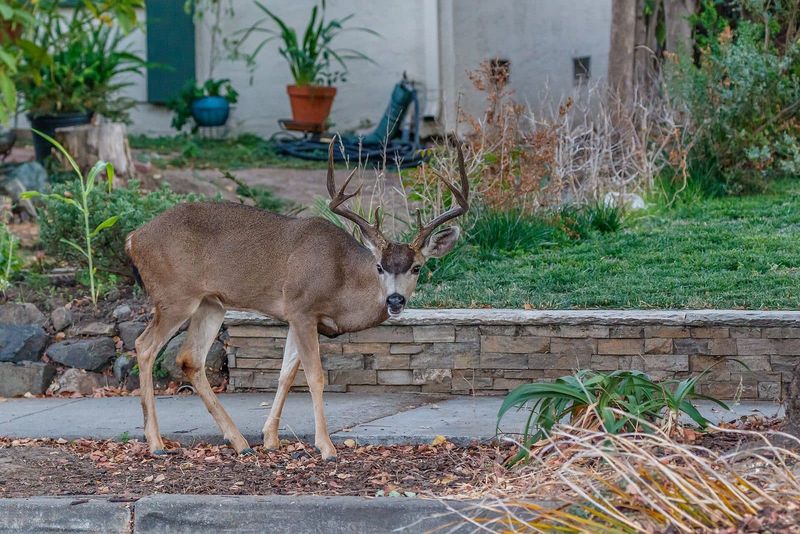
Mid-morning on a cold November day, a deer crossing a Delaware yard is not a surprise. According to a Delaware state news release on deer activity, the rut generally runs from mid-to-late October through late November and into December.
As of November 21, 2026, we are still inside that window.
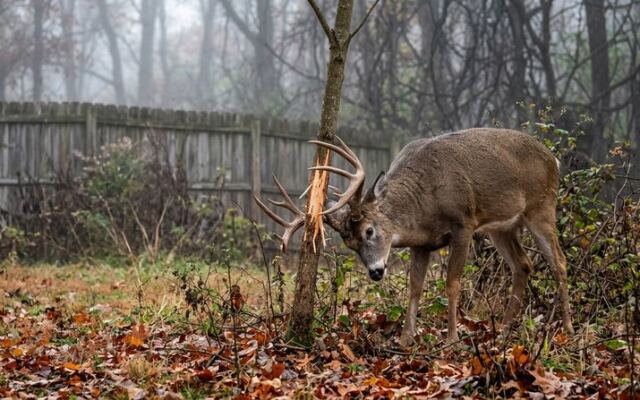
That timing matters because bucks rub their antlers on trees during fall and the breeding season. Rubbing did not just begin this week, though.
The season started weeks ago, so a fresh scrape could be new, or it could be part of a pattern that has been building since October.
Velvet is a separate matter. The soft covering on antlers is usually shed in late August or early September, ahead of breeding season, according to University of Missouri Extension.
So a buck working over a sapling in late November is not cleaning off velvet. Whatever is driving that behavior now, velvet removal is not the explanation.
Here is the part that is easy to miss. Knowing it is rut season tells you that deer are active and that rubbing is possible.
It does not prove that any one damaged tree was rubbed by a buck. Think of the calendar as a reason to look closely and protect your trees, not as a verdict on what happened to the one in your yard.
The next section covers what to look for on the trunk itself, so you can match the wound to a likely cause before you spend money on protection.
Use the damage pattern as a clue, not a diagnosis
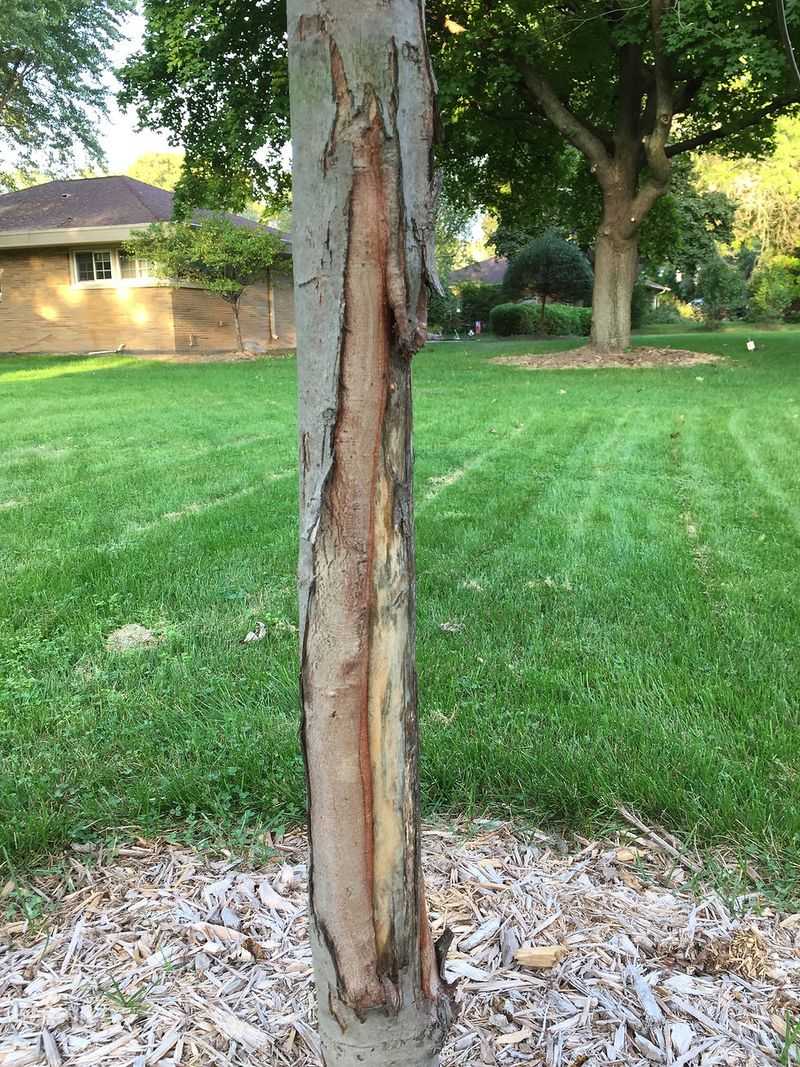
Start by kneeling next to the tree and looking at the wound the way a detective would. Antler rubbing often leaves shredded, ragged bark, with strips hanging or torn away along the trunk.
Iowa State Extension reports that this kind of damage typically shows up about 1½ to 3½ feet above the ground.
Height is a clue, not a test. A wound in that range fits a buck rub, but snow, a sloping yard, or a leaning trunk can change where damage lands.
Treat it as one piece of the puzzle.
Now compare it with other culprits. Rabbits and voles feed on bark over winter, and University of Minnesota Extension separates that damage from antler rubbing.
Small feeders tend to leave neater chewed patches, often lower on the trunk and sometimes with tiny tooth marks. Snow cover can raise the height of rabbit feeding, so check the surface of the wound, not just its position.
Walk around the trunk and note how far the damage wraps. Look nearby for other signs, such as scattered scraped saplings along a deer path or tracks in soft soil.
If the evidence is mixed, say so to yourself and protect the tree anyway. A sturdy guard helps against more than one kind of trouble, and you do not need a perfect diagnosis to make a sensible next move.
Just avoid assuming that every bark wound came from deer.
Extensive bark loss can girdle and threaten a tree
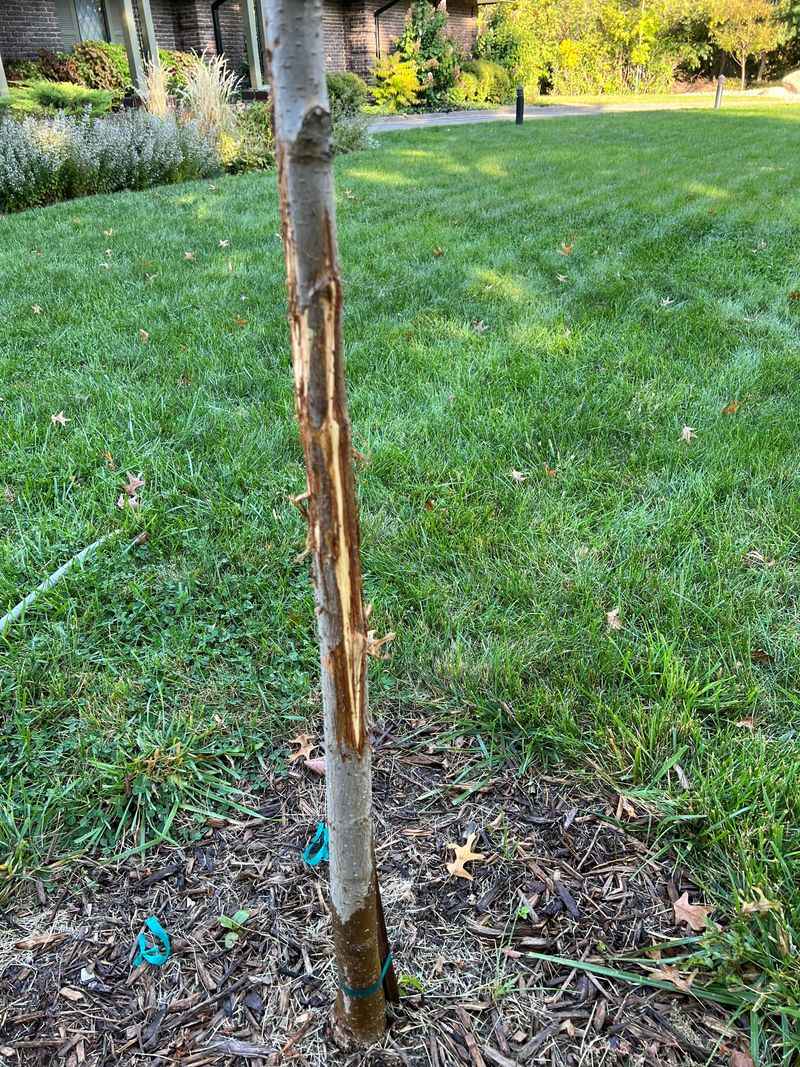
A sapling’s bark is thin, and just under it runs the living layer that moves water and sugars between roots and leaves. Smooth-barked, flexible young trees are especially easy for a buck to damage, as Iowa State Extension explains.
They bend against an antler tine and have little protective bark to absorb the scraping.
When bark is removed around a large part of the trunk, or all the way around, the tree is girdled. That cuts the supply line, and growth above the wound can eventually be lost.
A ring of missing bark is far more serious than a scrape along one side.
That said, serious does not mean certain. How a tree fares depends on how much of the circumference is hurt, how deep the wound goes, where it sits, and the tree’s overall condition.
There is no single percentage of bark loss that marks safe from doomed, and nobody can honestly say your tree will be dead by spring from a photo of a rub.
A practical approach is to measure what you can. Note roughly how much of the trunk is injured, take a dated photo, and look again in spring when buds should open.
Leaf-out on the branches above the wound is a useful sign to watch.
Small-trunk species and recently planted trees have less to spare, so they deserve the earliest attention. Extensive or complete girdling is the situation to take most seriously, and it is worth asking a local arborist or your county extension office to look at it in person.
Choose a sturdy guard suited to the tree
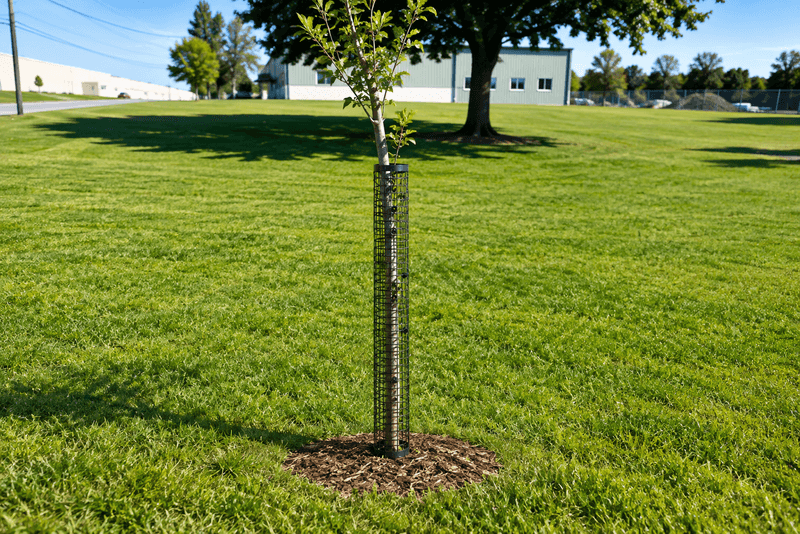
Two kinds of individual-tree protection come up again and again: a freestanding cage around the plant, and a guard that wraps the trunk. They solve a similar problem in different ways, and their height advice is not interchangeable.
For cages, DNREC’s fencing guidance describes a wire cage roughly 4 feet tall and 1½ feet in diameter as protection for an individual plant against antler rubbing. It also favors sturdy mesh attached to sturdy stakes over a flimsy barrier.
A floppy cage that a deer can push against will not do much.
Trunk guards are a separate option. Delaware’s Tree Owner’s Manual suggests plastic tubing or hardware cloth around the trunk, and for deer it advises making the guard as tall as practical.
That is a general direction, not a fixed number, and it is not the same thing as the cage dimensions above.
Which should you pick? A cage works well for a slim sapling with branches low enough to fit inside it, since it keeps antlers away from the whole young plant.
A trunk guard suits a tree with a single stem you can wrap, and it takes less room in a tight bed.
Watch out for short rodent sleeves. A sleeve that stops at ankle height may handle mice but will not cover the knee-to-waist zone where buck rubs often land.
Pick material you can see through and cut, such as hardware cloth, so the trunk stays easy to inspect all winter.
No guard stops every bit of future damage, but a sturdy one lowers the chance of more contact. Choose one that stays upright in wind and tugging.
Fit the guard loosely and check it as the tree grows
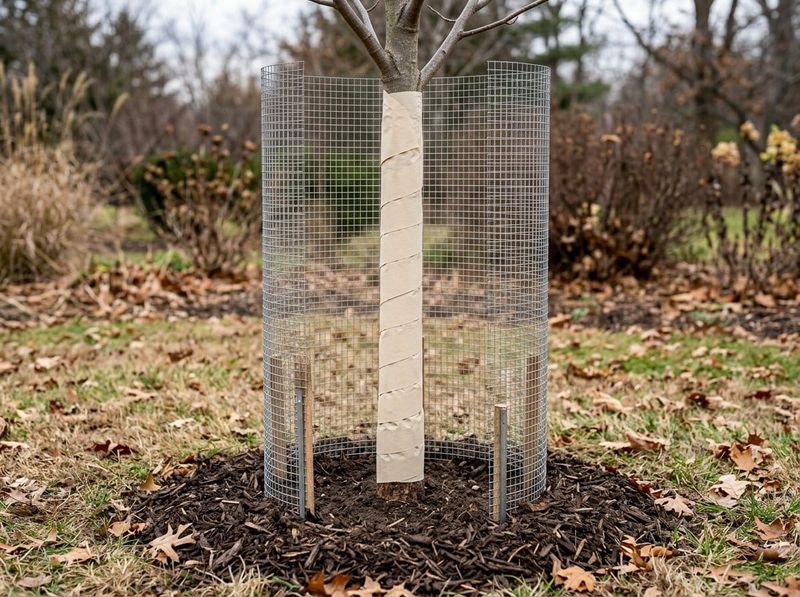
A guard that hugs the bark can cause its own trouble, so fit matters as much as material. Delaware’s Tree Owner’s Manual recommends leaving 1 to 4 inches of clearance so the guard does not touch the bark.
Slide a few fingers or a ruler into the gap as you work to confirm the space all the way around.
If the guard wobbles or leans, anchor it. Pound in sturdy stakes beside the tree, not into the root zone, and attach the guard to them.
This echoes DNREC’s advice to pair sturdy mesh with sturdy stakes. Press the bottom edge firmly against the ground so nothing slips underneath.
Put a reminder on your calendar. Trunks thicken over the seasons, and a guard that was roomy in November can pinch in a year or two.
Check it at least when you do other yard chores, and look for bark pressed against the material.
When the gap shrinks, act before the guard squeezes the trunk. Enlarge it if you can, or take it off and replace it with a bigger one.
Removing it is better than letting it constrict the tree.
Here is a useful way to think about timing. Putting a guard up this week protects against further contact, which matters if deer are still passing through.
It does nothing to repair bark that is already gone, so treat it as protection going forward, not as a fix for the wound you found.
Leave an existing wound exposed
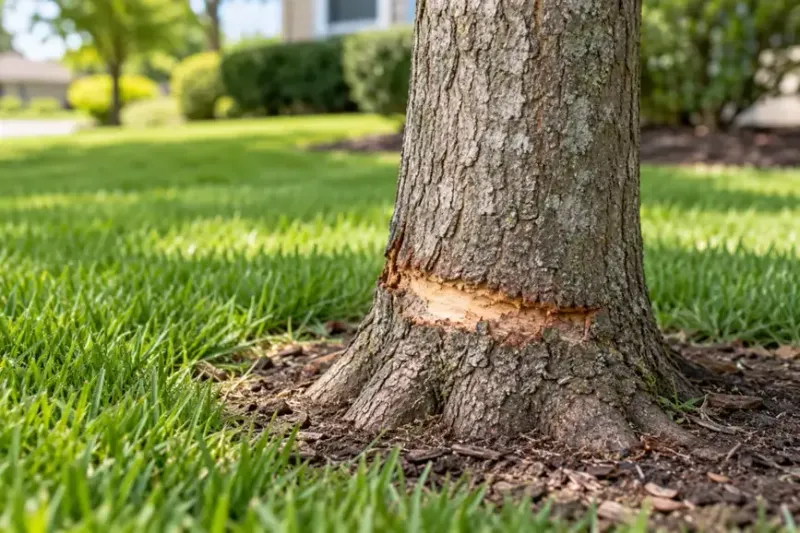
Once the guard is up, turn to the wound itself. Begin by checking how much of the trunk’s circumference is affected, since a scrape on one side is a very different problem from a ring around the whole stem.
Take a photo and measure with a tape if you can.
Next, tidy only what is loose. Utah State University Extension advises removing loose bark or wood and then leaving the wound exposed.
Use clean, sharp tools, and do not chase the edges or cut into healthy bark that is still attached.
It is tempting to cover the injury with something. Skip the paint, sealant, and wrap.
Iowa State Extension says wound dressings and paints do not rescue severely damaged trees, and the cited guidance does not recommend them as treatment.
Extensive damage is serious, especially when it reaches most of the way around the trunk. Still, nobody can promise how a particular tree will respond, and there is no set date by which decline will show.
Ordinary care gives the tree its best chance: water during dry spells, and avoid heavy fertilizing or other new stresses.
Plan to look again when growth resumes in spring. If buds open above the wound, that is encouraging.
If the damage is extensive or the tree is valuable to you, a certified arborist can judge it in person.
A bare wound may look unfinished, but leaving it alone is the careful choice.
Share this story