Step outside on a cold Delaware night in late November and you might hear something spooky drifting through the trees. Those sounds usually come from two big owls, the Great Horned Owl and the Barred Owl, and both get extra chatty as winter nesting season gets close.
Learning their calls is free, fun, and a great way to know who shares your neighborhood after dark. Once you can tell them apart, every quiet evening walk turns into a little mystery you can solve.
1. Great Horned Owl
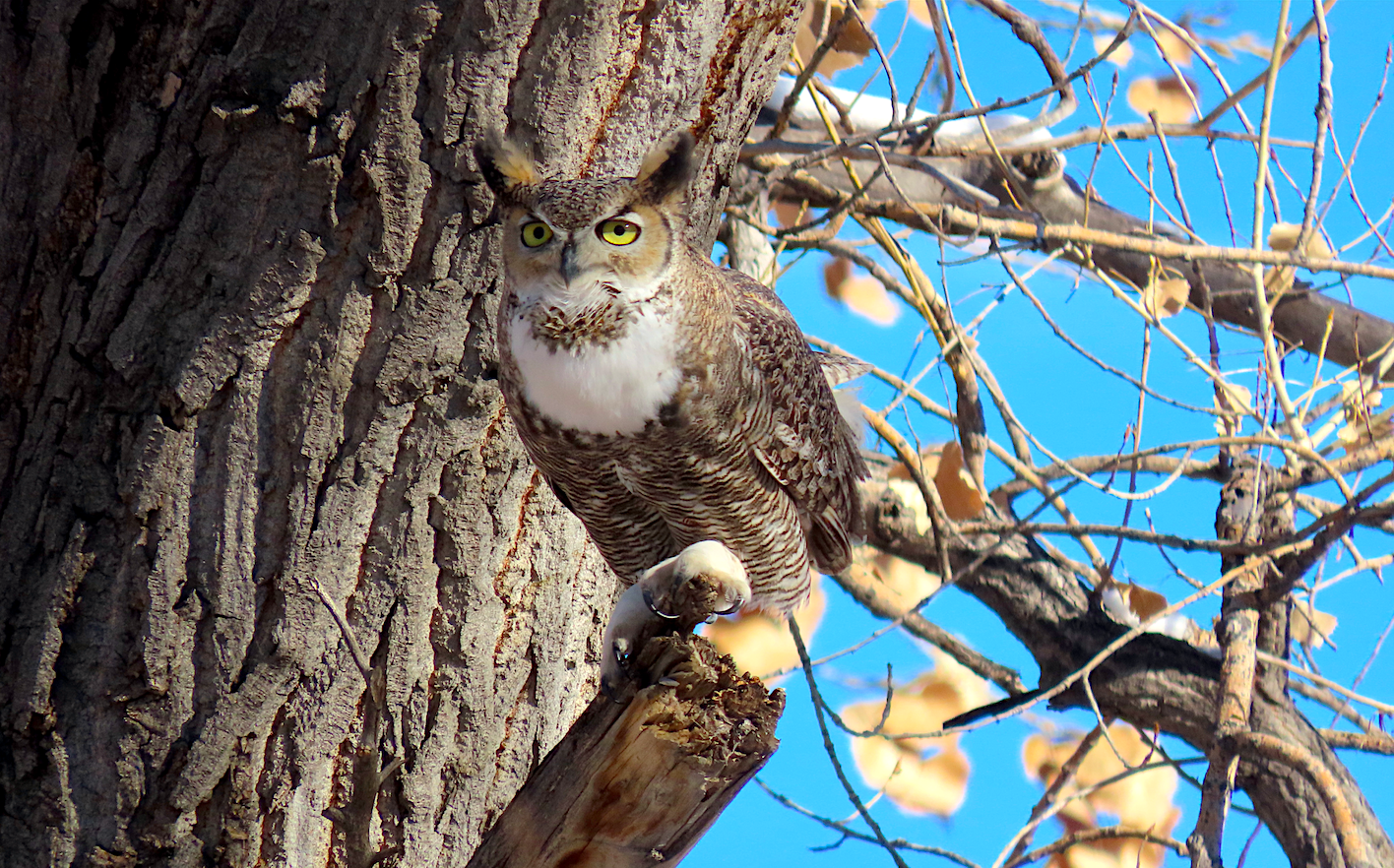
Picture a deep, soft hoot that sounds almost like someone blowing gently across the top of a bottle. That calm, low voice belongs to the Great Horned Owl, one of the earliest nesting birds in Delaware.
Pairs often lay eggs by January, so late November and December are when they talk the most.
Listen for a rhythm of about four to six hoots, often written as “hoo-h’HOO-hoo-hoo.” The pattern sounds steady and serious, a bit like a slow drumbeat. Males and females often hoot back and forth, and the female’s voice is actually higher, even though she is the bigger bird.
You can find these owls almost anywhere, from farm fields near Dover to wooded parks around Wilmington. They like open spaces next to trees, where they can watch for rabbits and rodents.
Fun fact: they are fierce enough to hunt skunks, and they hardly mind the smell.
2. Barred Owl
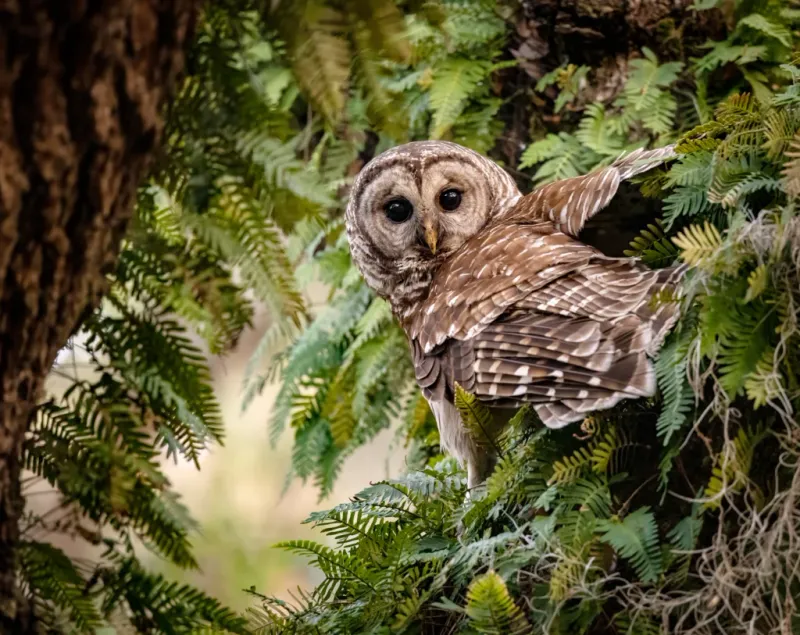
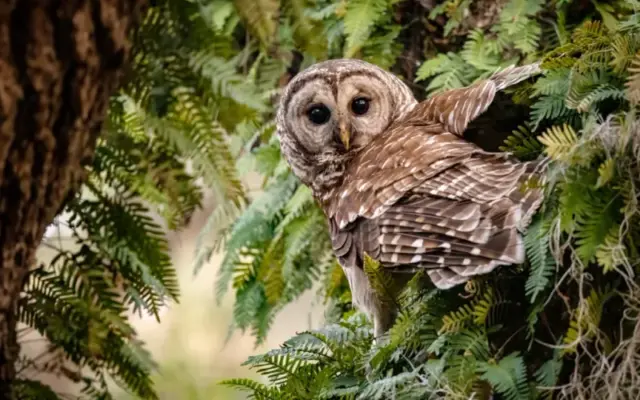
“Who cooks for you? Who cooks for you-all?” Birders have used that silly question for years to remember the Barred Owl’s call, and once you hear it, you will never forget it.
The phrase has a bouncy, rolling beat that rises and then drops at the end.
Barred Owls are the loud, dramatic cousins of the owl world. When two of them meet up, they can burst into a wild duet of cackles, hoots, and monkey-like screeches.
People camping near Trap Pond State Park sometimes think a crowd is laughing in the woods!
These owls love wet forests, swamps, and creek bottoms, which makes southern Delaware a perfect home. Their faces look round with no ear tufts, and their dark brown eyes give them a friendly, puppy-like look.
Quick way to tell the two apart: the Great Horned Owl sounds slow and steady, while the Barred Owl sounds like a question with plenty of attitude. Grab a warm jacket, stay quiet, and see which one answers first.
Share this story