Walk across a damp patch of lawn after a spring rain and you might spot a small tower of mud with a hole in the middle. It looks like something a tiny builder left behind.
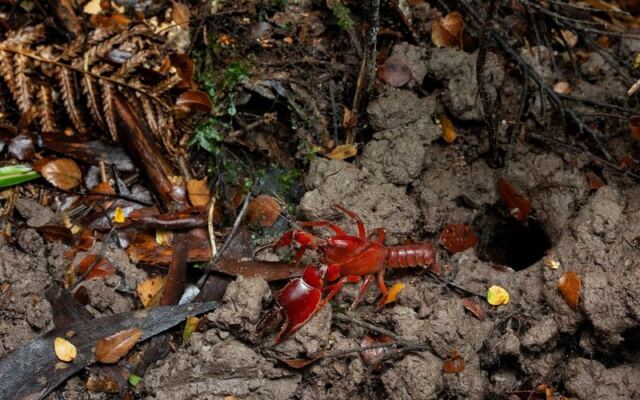
In many cases, that builder is a crayfish living underground. Knowing what the mound does and does not tell you can save you from needless worry and from the wrong kind of fix.
A round opening and irregular mud pile point to a burrowing crayfish
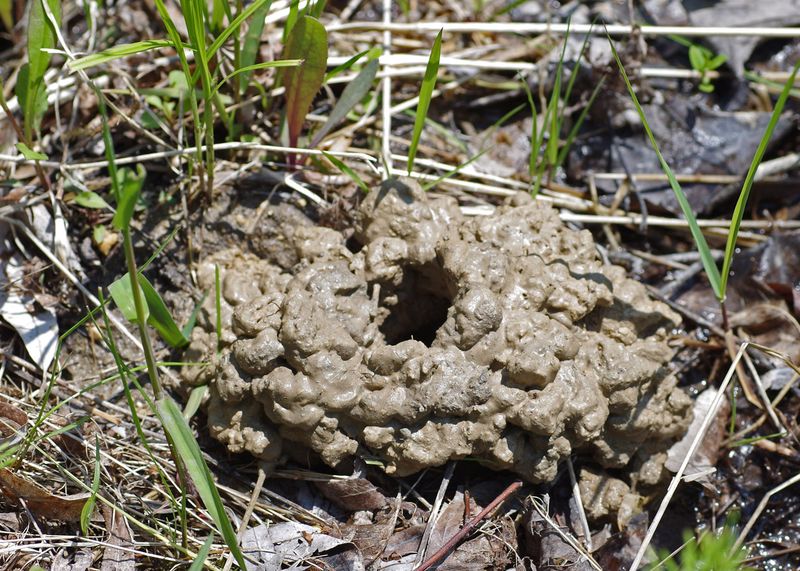
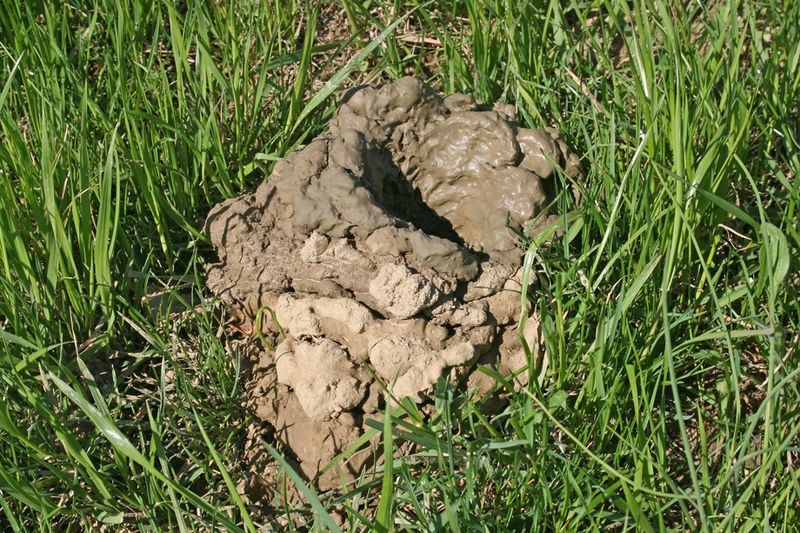
Look for a round hole, roughly the width of a finger or thumb, ringed by a lumpy pile of mud. The pile is made of little pellets and clumps of soil that were pushed up from below.
Stacked together, they can look like a miniature chimney, though the shape is usually rough rather than neat.
Soft, damp ground is where this pattern shows up most. The U.S.
Army Corps of Engineers Midwest wetland manual describes crayfish burrows as round openings with chimney-like piles of excavated mud, often in wet soils.
Think of the mound as a strong clue, not a signed confession. A mud pile with a round opening in a soggy spot fits a burrowing crayfish well, but the mound alone cannot prove who dug it.
It also cannot tell you what kind of crayfish is down there, and it says nothing certain about whether other animals have used the hole.
A few details can help you judge your own yard. Fresh mud that looks wet and crumbly suggests recent digging.
Several mounds scattered across the lowest, dampest corner of the lawn fit the same story better than one lone pile on a dry slope. Take a photo with a coin beside it for scale, and you will have something useful if you ever want a second opinion.
Why a chimney can appear without a pond nearby
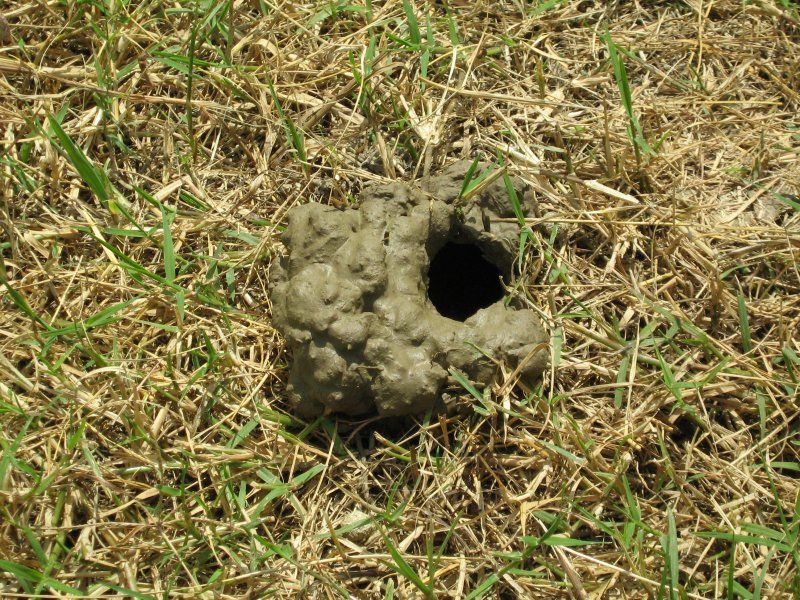
No pond, creek, or puddle in sight can still be a perfectly good setting for a crayfish burrow. Burrowing crayfish favor soft soils, and those soils often sit near ditches, in wet meadows, or over a shallow or seasonal water table.
The ground may look merely moist on the surface while staying wet a bit deeper down.
The Army Corps manual makes the point directly: its crayfish burrow indicator notes that burrows can occur in wet meadows without open water nearby. So visible water is not a requirement for this kind of burrow.
That makes a chimney a habitat clue. It hints that the soil stays soft and damp at least part of the year, perhaps in a low corner, near a roadside ditch, or where snowmelt lingers.
It does not turn your yard into a wetland. The Corps lists crayfish burrows only as a secondary wetland indicator, meaning one supporting sign among others.
Whether land counts as a wetland depends on a fuller look at soils, plants, and water, and a few mud mounds cannot settle that question. If a wetland status question ever matters for a project, ask the proper agency or a qualified specialist rather than relying on the mounds.
The chimney cannot identify which Wisconsin crayfish made it
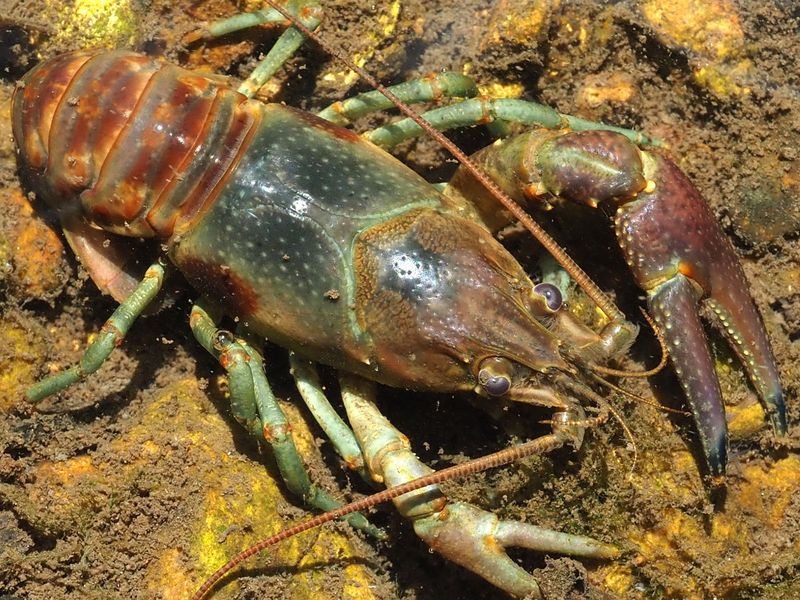
Wisconsin is home to several crayfish species, and the mud pile gives no hint about which one is below. The state’s Wisconsin DNR crayfish identification guide describes the Devil crayfish as found statewide and fairly common, even if people rarely come across one.
It lists the Prairie crayfish as limited to far southeastern Wisconsin.
The same guide cautions that crayfish vary in appearance and that its simplified key should not be relied on when an exact identification is critical. In other words, even a good look at the animal can be tricky, and a mound alone is far less informative.
The Prairie crayfish deserves a special note. The DNR species page lists it as a State Special Concern species and describes deep, branching burrows with characteristic mud chimneys.
That does not mean every chimney in the southeast belongs to a Prairie crayfish. Other burrowing crayfish may build similar mounds.
Still, if you live in that corner of the state, it is a good reason not to casually collect or kill an unidentified crayfish. A photo and a note of the location are a better first step.
Water access and chimney ventilation are different questions
Two separate ideas often get blended together: how deep a burrow goes, and what the chimney on top is for. Burrowing crayfish may extend their tunnels toward the water table, as the Army Corps wetland manual notes.
That is a statement about the tunnel below ground.
The chimney is a different matter. In a peer-reviewed experiment, a Journal of Crustacean Biology study found support for chimneys working as burrow-ventilation structures, helping air move through the burrow.
Neither idea is a full answer for every mound in your yard. A study that tests how chimneys can ventilate does not show that each chimney does so.
Likewise, a deep tunnel reaching damp soil does not mean the chimney exists to reach water.
So when a neighbor says the crayfish built it to get to water, or that it is simply an air vent, a fair reply is that scientists have good evidence for some pieces of the puzzle, not a single rule that covers every chimney. For a homeowner, the practical point is simple.
You do not need to explain the chimney’s purpose to decide what to do about it.
The usual lawn problem is a mound, not a grass-eating crisis

Mowing over a mud pile is annoying, and that is often the full extent of the trouble. NC State Extension’s crayfish in turf guidance describes turf disturbance as generally limited, with soil mounds and mowing inconvenience as the more practical concerns.
That is general advice from outside Wisconsin, but it offers a useful sense of scale.
Notice what is missing from that picture. Crayfish are not described as chewing up lawn grass or wiping out turf.
A chimney by itself is not proof that your grass is being eaten or destroyed.
If patches of lawn look thin or brown, look for other explanations first. Soggy soil, compaction, shade, and ordinary lawn diseases can all make grass struggle in damp ground, and they can happen with or without crayfish nearby.
A realistic expectation helps. Expect lumpy spots that dull a mower blade or scatter mud across short grass, especially after rain when new pellets appear overnight.
Expect the chimneys to cluster in the dampest areas. Do not expect a dramatic lawn crisis, and do not treat a few mounds as an emergency that calls for drastic action.
Choose gentle cleanup and local advice over chemicals
When mounds get in the way of the mower, the simplest fix is also the mildest. NC State Extension says mounds can be gently raked smooth or dispersed with a stream of water.
Treat that as general low-impact advice from another state, not a Wisconsin-specific rule.
If the ground stays soggy, check the easy culprits before anything else. Too much irrigation or a downspout dumping water into one spot can keep soil wet.
Major drainage work can be costly, and a few chimneys alone are no reason to go that route.
Skip pesticides and homemade remedies such as boiling water or other chemicals poured down the hole. University of Arkansas extension guidance warns that chemicals in wet soils can affect other organisms and nearby water.
Product rules vary by place, so this is a caution, not a legal claim about Wisconsin.
If you spot a crayfish, do not grab it by hand. EEK!
Wisconsin warns about the pincers. Take a photo, note where you saw it, and ask Wisconsin DNR or your local extension office for help, keeping in mind that DNR’s own identification guide says its simple key is not enough when exact identification matters.
A mud chimney is a clue to a possible burrow and damp soil. It is not proof of the species or of wetland status.
Share this story