
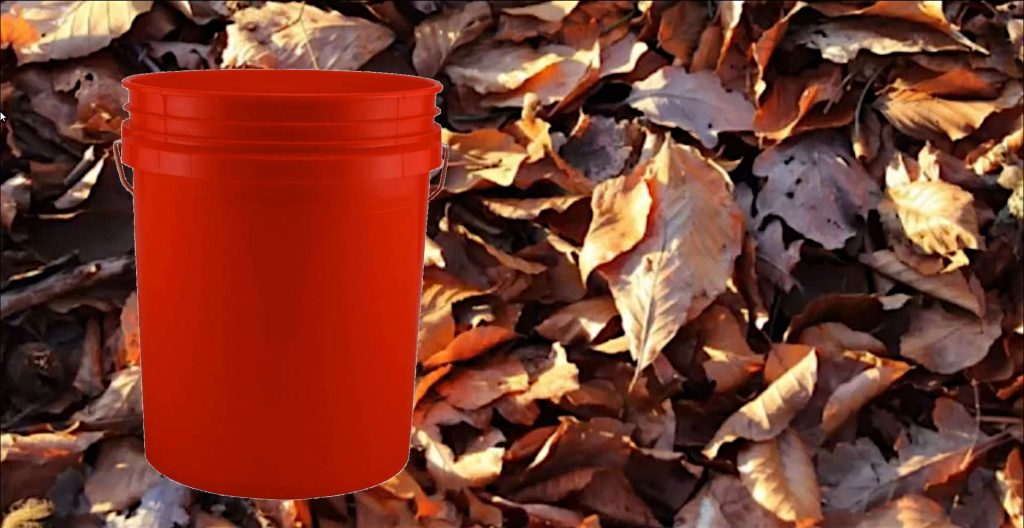
Bucket composting is an excellent way to produce compost especially if you don’t have enough space to build a compost pile.
Download FREE Composing Guide
This FREE 29-page guide helps you turn kitchen scraps and garden waste into valuable compost. In side you will find a section dedicated to the Bokashi bucket process as well as comprehensive details on hot, cold and worm composting, and no-turn (passive) composting methords with clear technical diagrams, detailed instructions and practical solutions for common composting problems.
What is bucket composting?
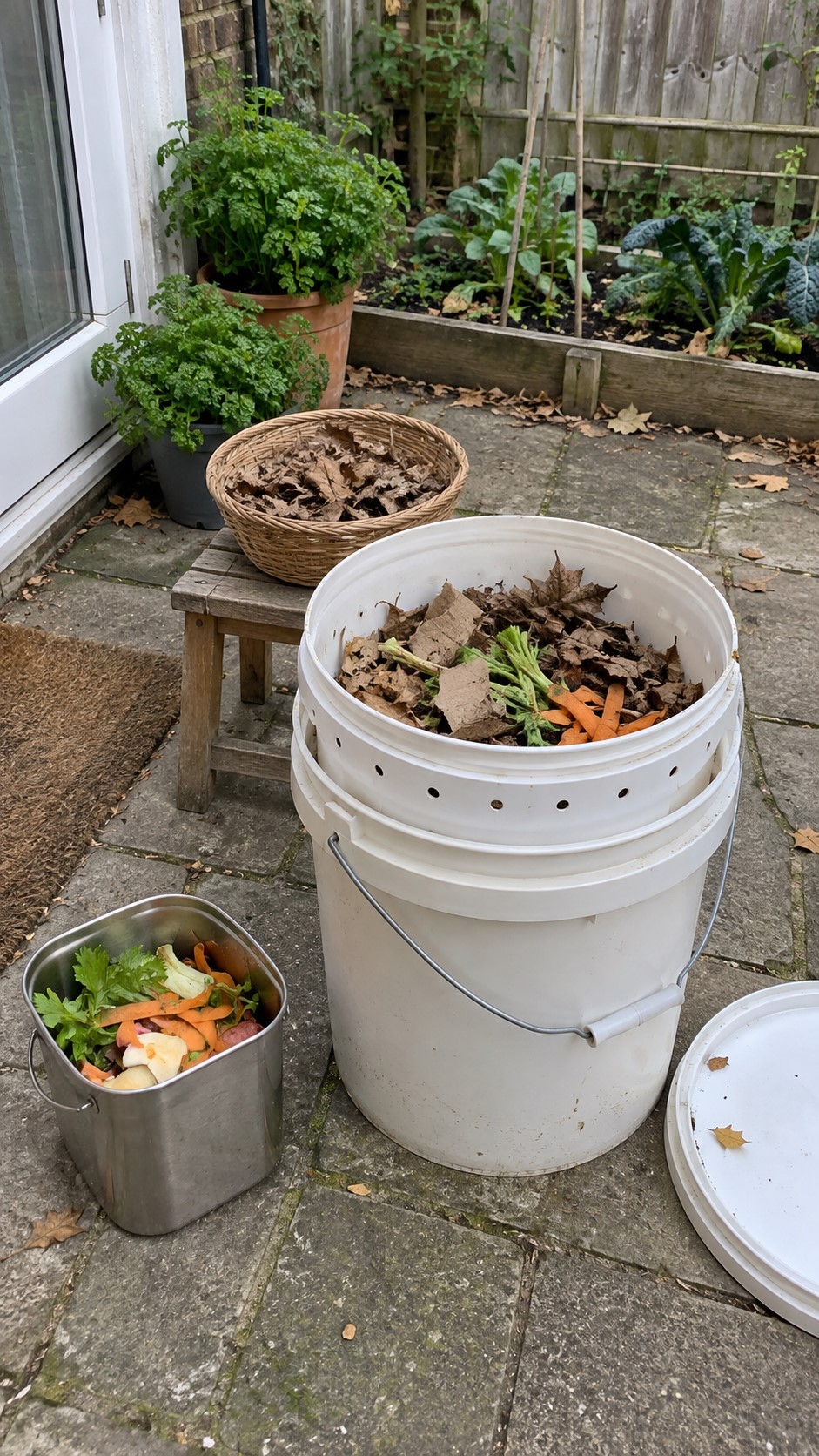
Bucket composting is the process of creating a compost pile inside of a standard bucket. The bucket acts as an enclosed container. Once you have adapted your buckets the process is pretty much the same as normal cold composting. You build up the material in your bucket by adding brown and green layers ( organic material and kitchen scraps.
The bucket composting method can be readily scaled up or down to match your requirements. If you are on your own or don’t generate a lot of scraps for composting, you can use a smaller bucket. On the other hand, if you have a big household and or generate a lot of scraps you could use a trash bin. Whatever your situation the same method of building your compost bucket and using it applies.
What is Bokashi bucket composting
The term Bokashi is a Japanese term that means “fermented organic matter.” It is essentially a means of helping the decomposition process in bucket composting. Essentially Bokashi is an activator, an concentration of bacteria and microbes that break down the material that you are looking to compost. It is usually added to green material before they are added to the composting bucket.
The composting bucket is adapted in exactly the same way as you would do you standard bucket composting.
It has its roots in traditional Asian practices. For generations, farmers have been collecting and cultivating naturally occurring soil microorganisms, and applying these cultures to crop soils is thought to reduce the requirement for artificial soil supplements.
The most common use of Bokashi is most often used as an additive to your bucket composting, it may also be added to an aerobic compost pile, mixed directly into the soil, or used to make compost tea for watering plants.
The reasons why you should start bucket composting
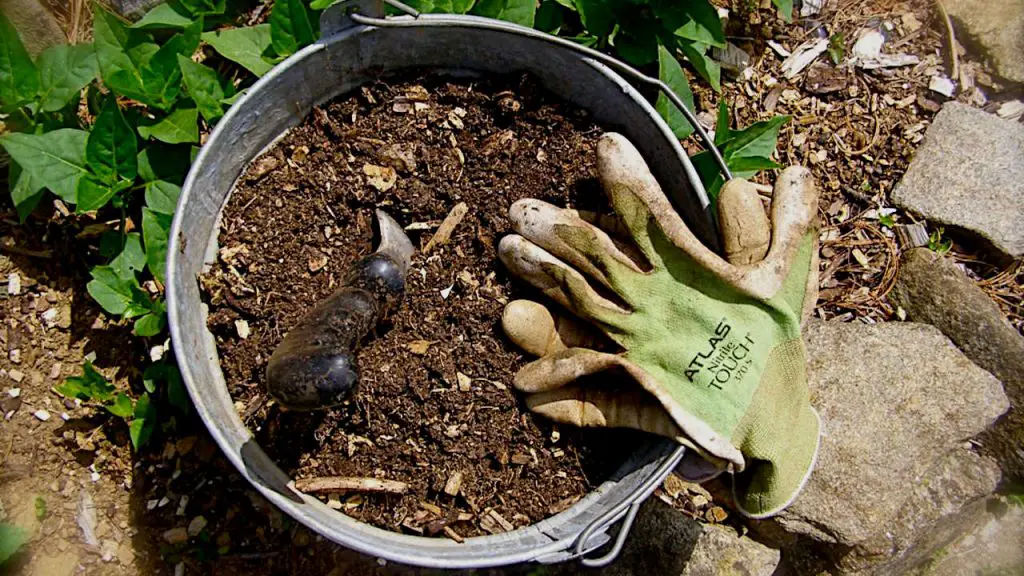
If you’ve always liked the idea of composting but have been intimidated by the process, then bucket composting might be for you. Composting is a great way to recycle your household’s food waste. Since a lot of food scraps and yard waste is compostable, composting is a great way to reduce your household’s carbon footprint.
Bucket composting is also a great way to save money on your gardening and landscaping efforts. Composted material will enrich your yard and garden soil, thereby making it healthier and more fertile. Compost will also reduce your household’s need to purchase commercial fertilizers since composted material is full of nutrients.
Bucket composting can be done indoors or outdoors and doesn’t require a lot of space. If you’ve always thought of composting as “too complicated,” then bucket composting might be for you. Bucket composting is quick and easy and doesn’t require a lot of yard space.
- Composting buckets are a great way to reduce the amount of waste your household sends to the landfill.
- Composting buckets are inexpensive, and won’t break the bank.
- Composting buckets are portable, so you can move them around your yard.
- Composting buckets are fun to build, and a great way to spend time with the family.
- Composting buckets look great, and will provide years of inexpensive composting.
- Bucket composting can be employed in the winter months as well as the warmer months.
How to make a bucket composting system
A bucket composting system can be built in as little as one hour, making them a great choice for busy families. Building a bucket composter is a great way to get the kids involved in recycling and eco-living.
There are of course a number of different ways in which you could create a bucket composting system. Here we will look at probably the easiest and most cost-efficient method.
Tools and Materials required for bucket composting
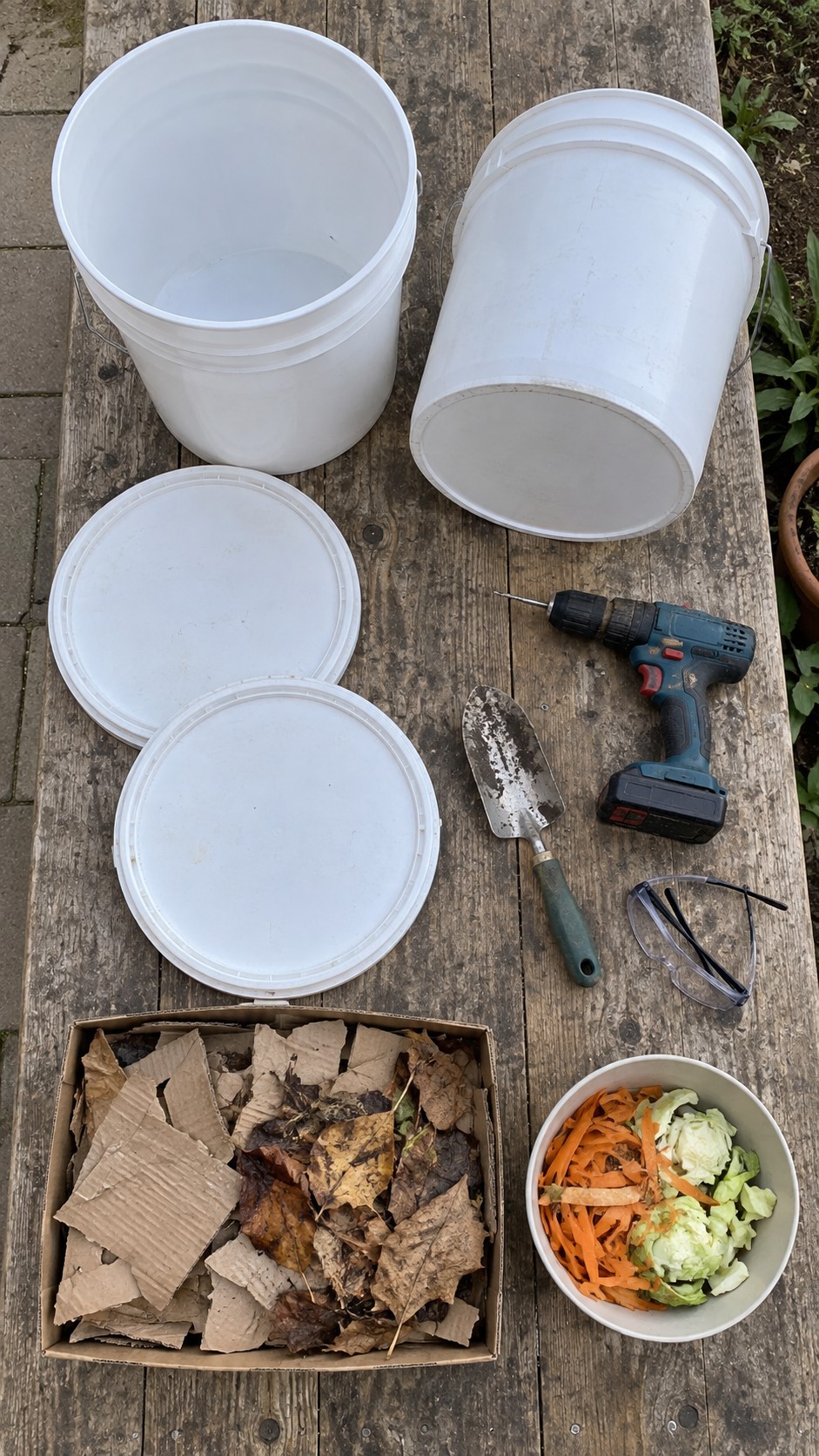
You’ll need a few basic tools, most of which you probably already have. For this project, you’ll need two 5-gallon buckets with lids (buckets with a raised ridge about two inches from the rim are best) and a small trowel or a shovel. You will also need a drill or a sharp implement that can make holes.
Setting up your bucket composting system
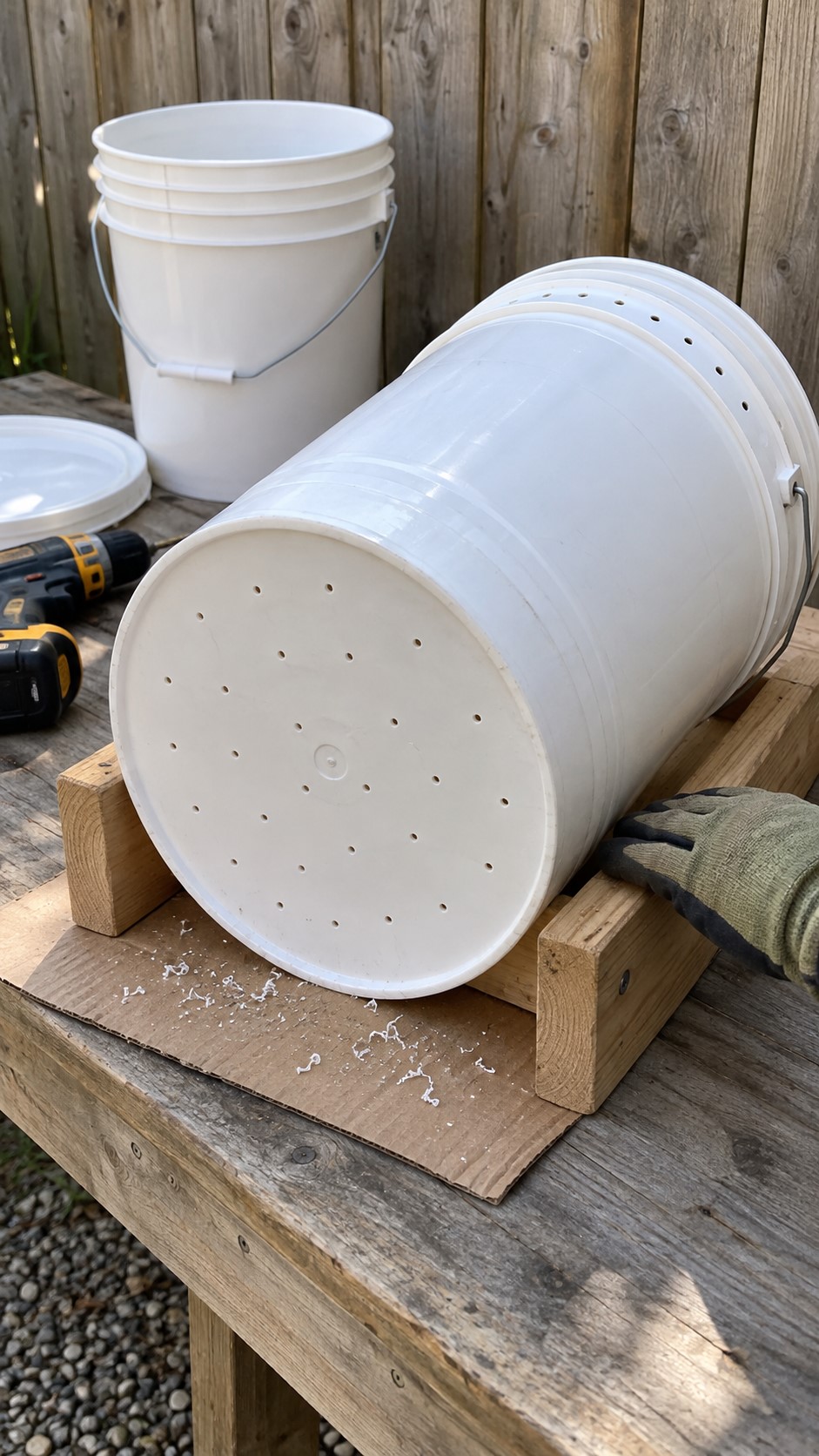
Take the first bucket and drill the bottom full of holes. about an eighth of an inch is fine as, if the holes are too big, the material could fall through. These holes allow excess water to escape into the second bucket which will be stacked below. This liquid is called “compost tea” and is very good for your plants and lawn as it contains a lot of the nutrients that the finished compost will have.
Then around the top of the first bucket, between the raised ridge and the rim, drill a row of holes all the way around the bucket. These holes will allow air to enter the compost. The circulation of air is important because it allows the microbes, the bacteria which break down the composting material, to thrive.

When you have that you have drilled holes into the first bucket, stack it inside the second bucket and from here you can start adding your composting materials.
Adding your waste to your bucket composting system
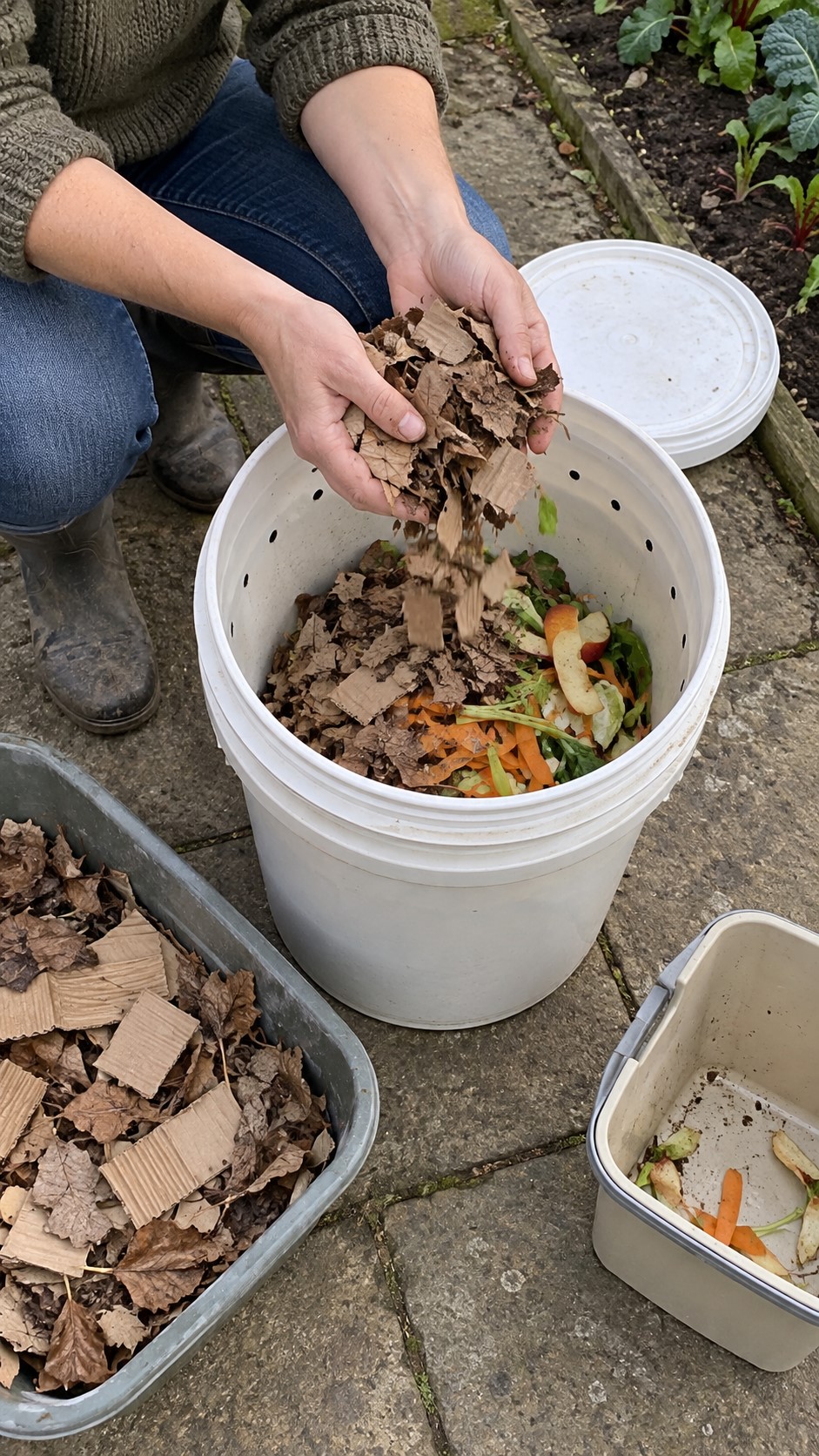
The first layer along the bottom should be cardboard, newspaper, wood chips and organic garden material. These are called brown materials or can be referred to as the dry layer. When you add this layer tear up any paper or cardboard into smaller pieces as it will aid the decomposition process.
The second layer should be kitchen scraps. This layer is called the green or wet layer and should be slightly thicker than the first brown layer.
Keep layering until you have used up your composting materials. The top layer should ideally be a brown layer
Once you have finished adding your layers you should then add water. Not too much, you don’t want to drown the composting materials but enough to wet them. The moisture that is added with the water is important as it is essential to kick start the decomposition process. The liquid will eventually filter down into the bottom bucket and this is known as composting tea which you can use on your plants and lawn.
The rules for bucket composting are pretty much the same as for any cold composting method. Mix and ratios are crucial as the compost material will break down over time. If you are looking to hasten the process then you could add more nitrogen-rich material. You can find more details here about the best ratios and mixes for cold composting.
Adding Bokashi Bran to The Composting Bucket
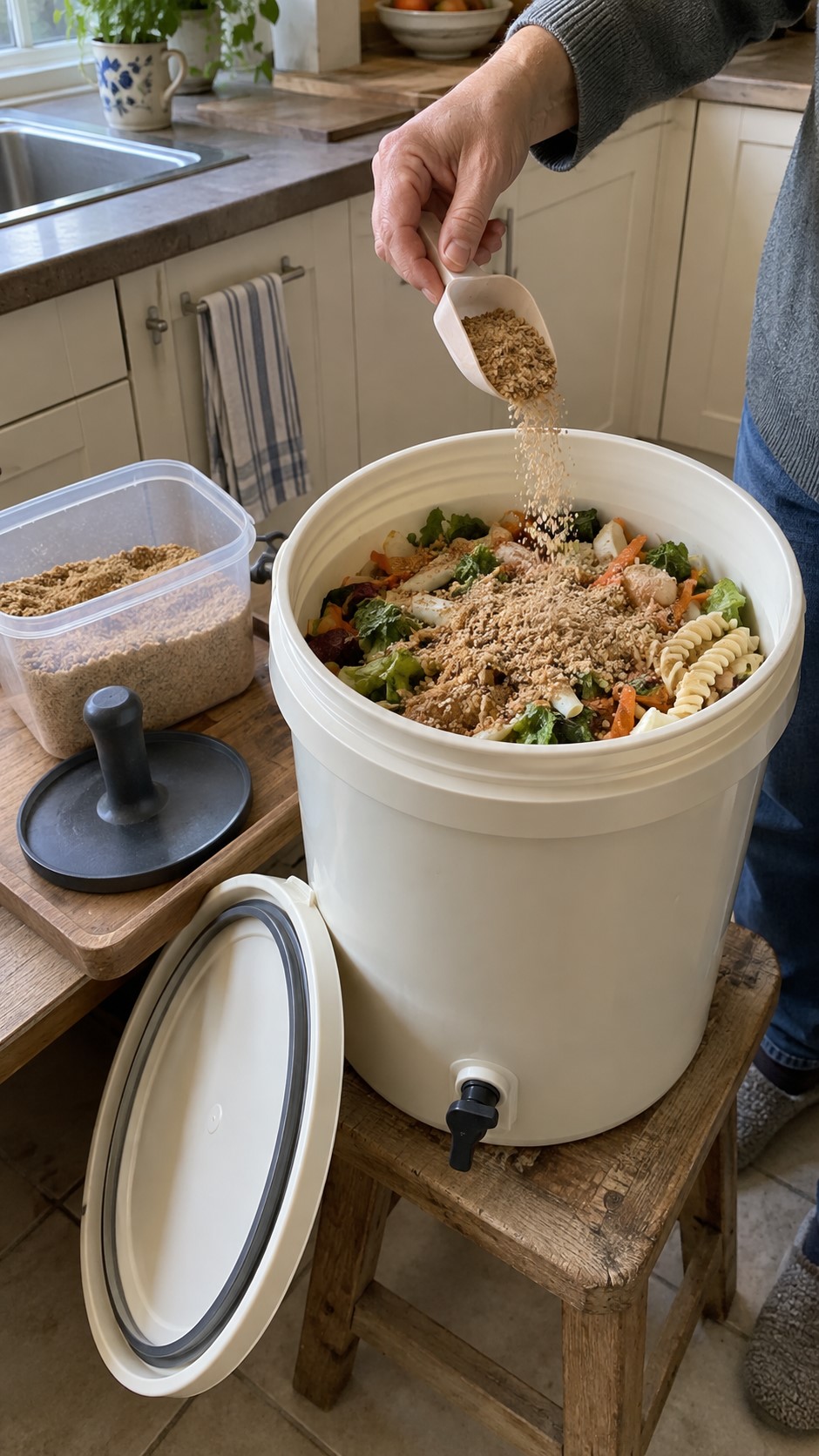
You can add bokashi bran to your composting bucket. You can get this from bost Garden Centers or even online. The Bokashi bran acts as an activator and speeds up the decomposition process. In addition, you do not necessarily have to layer your material, although it won’t harm the process if you do.
The procedure itself is straightforward. Every day, combine your kitchen trash with a cupful of Bokashi sprinkled evenly over the kitchen scraps then add these to the bucket, and replace the lid.
Although with most cold composting techniques it is advisable not to add animal products or bones when using the bokashi activator the process is sped up so that these should decompose quickly. For optimal efficiency, you should break up bones into little bits. If don’t do this the decomposition process will take longer but will still eventually break down the bigger elements.
What materials not to compost
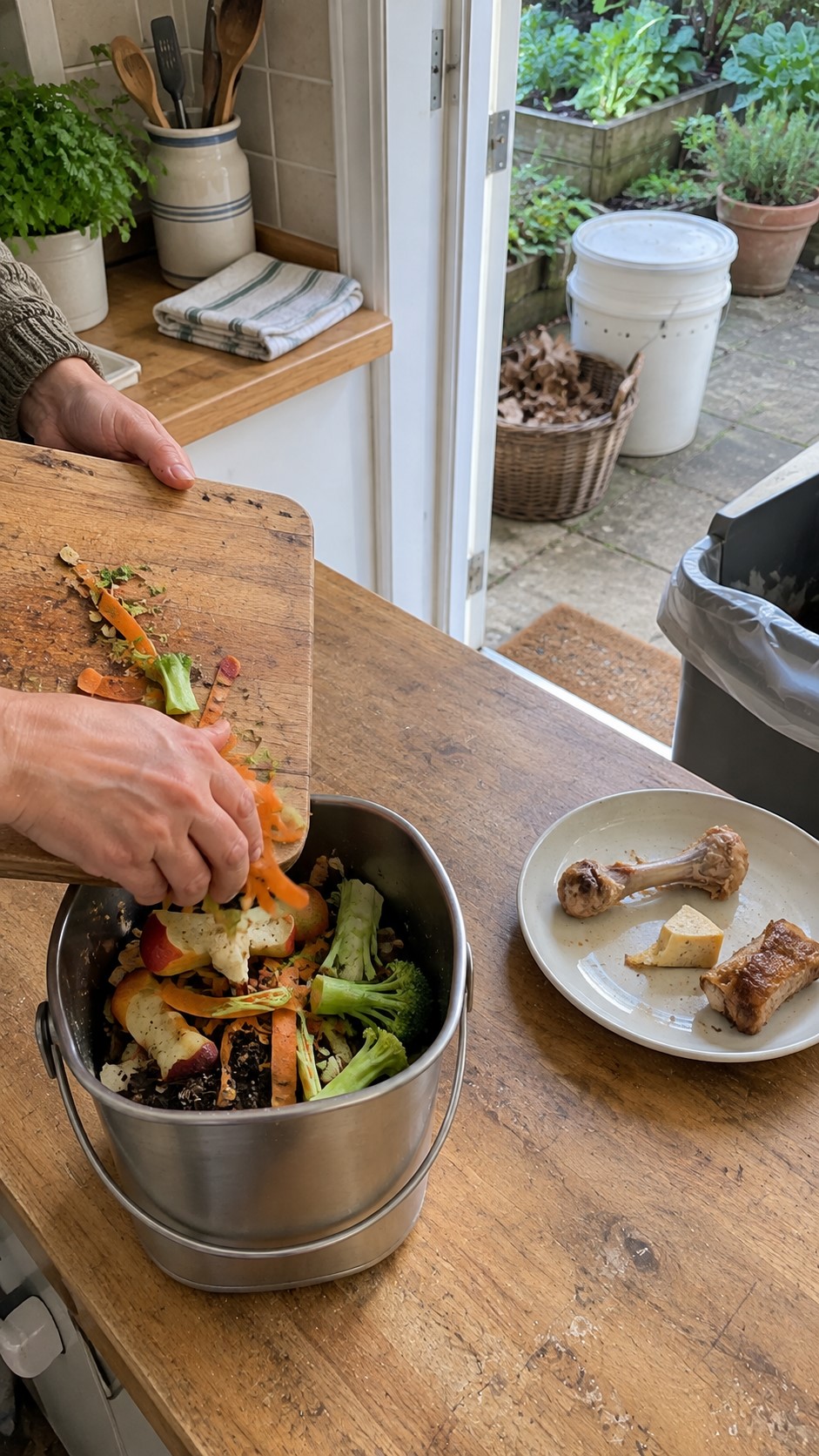
As with the standard cold composting method, there are some materials that you should look to avoid composting. These are primarily animal products and byproducts. The reason for this is that they give off a worse stench and general kitchen waste and are a magnet for vermin. Although the bucket offers an enclosed system you might find them being attacked or eaten away.
Final Thoughts | Bucket Composting
Composting is nature’s way of recycling and reusing organic matter and bucket composting is a clean and efficient way of composting.
By composting food scraps and yard waste you reduce the amount of waste your household sends to the landfill. Composting food scraps and yard waste also help reduce your household’s carbon footprint. Not only that but the finished compost bucket composting produces adds nutrients to your soil, making it healthier and more fertile.
Share this story


