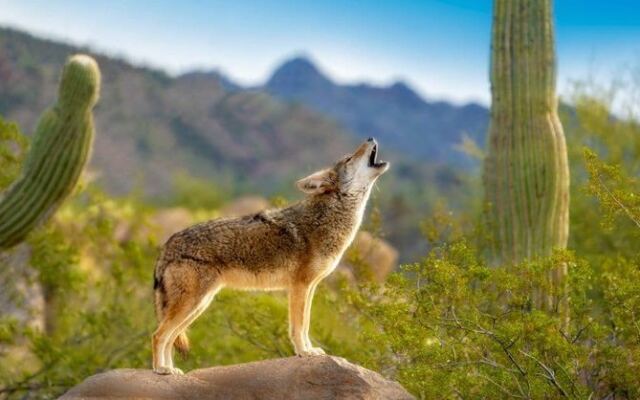
Those high, wavering yips drifting over your block after dark are coyotes talking to each other. They are not a play-by-play of a hunt, and no listener can translate one exact message from a neighborhood chorus.
Still, knowing what the sounds can and cannot tell you helps you protect your pets and yard without losing sleep. Here is what the calls mean, why you may notice them in fall, and what to do about it.
A chorus is communication, not a play-by-play
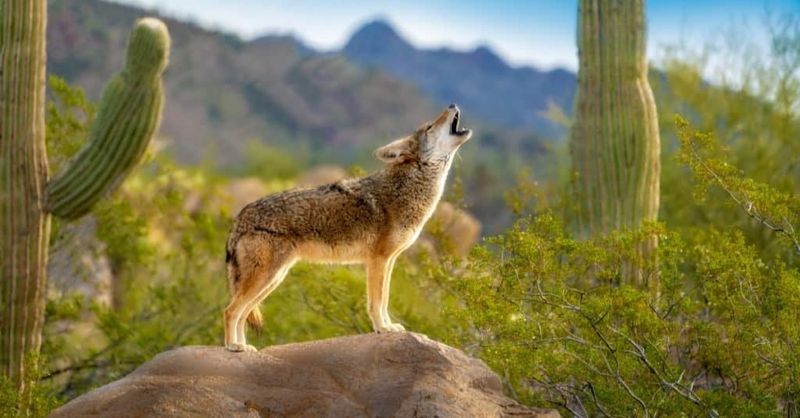
Coyotes mix yips, barks, and howls in many combinations, and Arizona wildlife managers describe howls, yelps, and barks as sounds regularly heard at night across the state. These calls are a way to talk.
They can help family members find one another and can signal that a territory is occupied.
Research on long-distance coyote calls, such as a 1975 Journal of Mammalogy study, has looked at how far these sounds carry and what they might convey. How much information each call holds is still not fully understood.
So no one can listen to a neighborhood chorus and say for sure what it means.
A popular story says the noise means coyotes just made a kill. A chorus does not reliably report a kill or a hunt.
Wildlife officials in Massachusetts, in their coyote FAQ, also note that howling is not more frequent during a full moon, so the moon is not the trigger either.
Think of it more like neighbors calling across a wide field. You can tell someone is talking, but you cannot read the whole conversation.
Arizona Game and Fish also says most coyotes are wary of people, and that interactions are generally rare.
Why might the calls seem louder in fall?
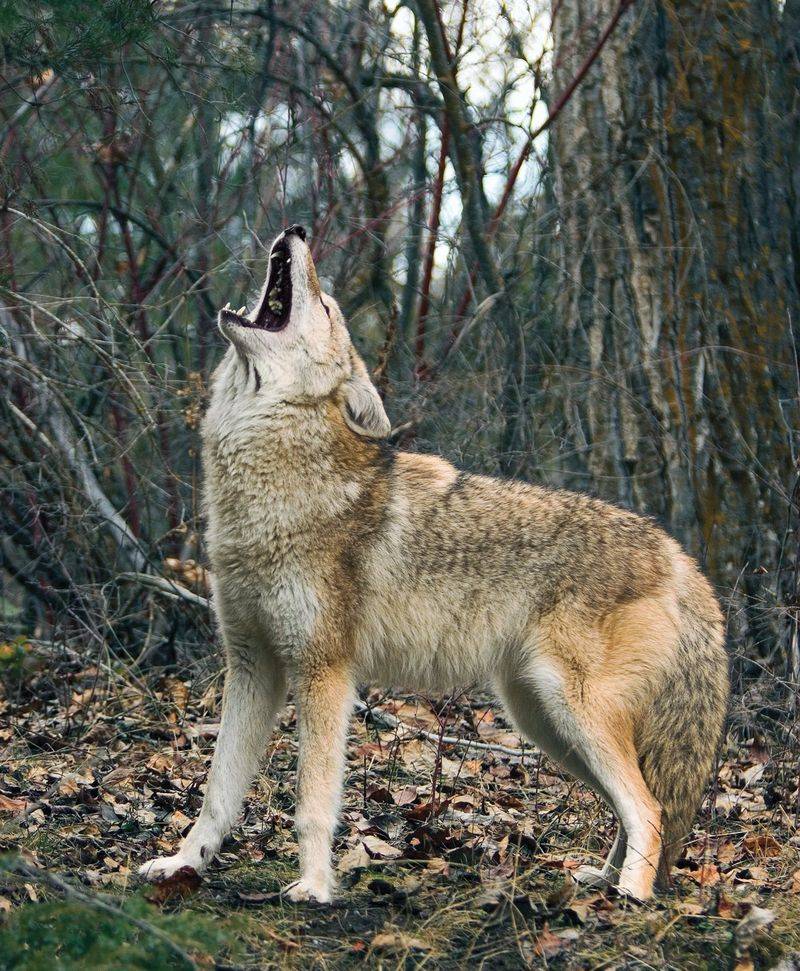
Plenty of Arizona residents say they notice more yipping as the weather cools. There may be a seasonal reason, though it is not a rule.
Nobody can say that Arizona coyotes call more every fall.
Coyotes in Arizona commonly breed around February. According to Arizona Game and Fish, male pups leave their mother between 6 and 9 months old.
Counting forward from a late-winter breeding season, that timing could land in fall or early winter.
Dispersal is a time when young coyotes move away from where they were born, and researchers have linked it with howling. A technical guide from USDA APHIS covers coyote ecology, including this stage of life.
Not every young coyote leaves at the same time, so the age range only offers a possible explanation.
That also means you cannot point at tonight’s chorus and say it is young coyotes leaving home. Work on howling and its seasonal timing, including a Texas study on how people perceive coyote groups, was not done in Arizona.
It helps explain the pattern in general but does not give exact local numbers or dates.
Another possibility is simple. Cooler evenings mean more people have windows open and spend time outside, so more people hear what was always there.
What a chorus can—and can’t—tell you
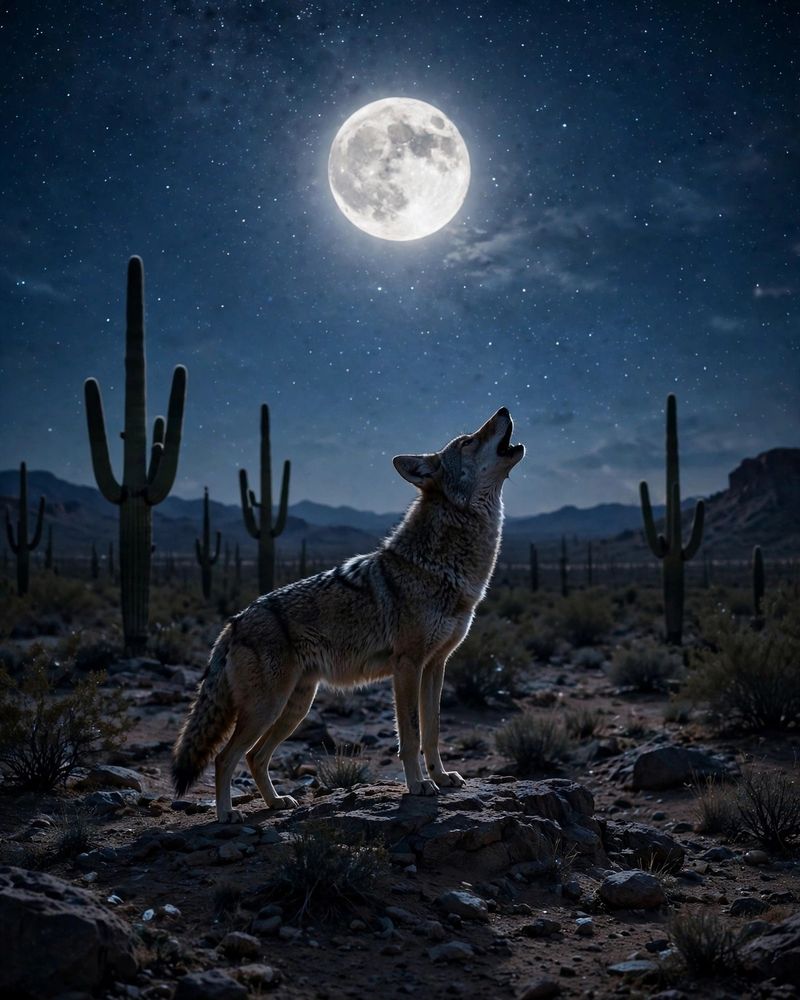
Hearing a chorus may mean coyotes are within earshot. That is about as far as the sound can take you.
It cannot reliably show exactly where they are, whether they are in your particular yard, or how many are nearby.
Coyote calls can travel a long way, so the animals may be well beyond your block. Sound also bounces off walls and washes in a neighborhood, which makes direction hard to judge.
Arizona Game and Fish notes that coyotes are often active at night and around sunrise, so hearing them then is normal.
Counting by ear is even trickier. In a Texas study, people who heard recordings of one to four coyotes guessed nearly twice as many, on average.
That result is about human hearing. It is not an estimate of how many coyotes live in Arizona.
Finally, a call does not show that coyotes are focused on pets. Pet precautions make sense because, as AZGFD explains, coyotes can prey on unattended pets.
The reason is the opportunity, not the yipping.
Safer yards depend on removing attractants
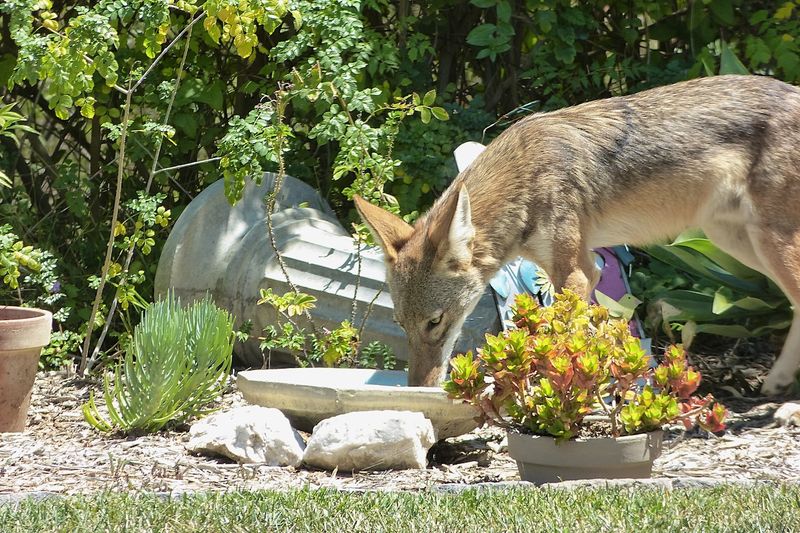
Coyotes may use a block where food, water, or shelter is easy to find. Arizona Game and Fish recommends a neighborhood-wide effort, since one tidy yard helps less if the next three are open buffets.
These steps are simple prevention, not a sign that a coyote is right outside.
Start with food. Bring pet food inside, and keep garbage in secured containers.
Pick up fallen fruit from citrus and other trees, and be careful with birdseed and water sources, which can draw the rodents and rabbits coyotes hunt.
Next, think about your pets. Supervise them outside and keep them leashed on walks.
Small pets should not be left alone outdoors, especially at dusk, dawn, and overnight.
If a small pet must be outside unattended, a sturdy enclosure with a roof is the better choice. A six-foot fence is not necessarily adequate protection, so do not treat it as a guarantee.
A quick evening walk around the yard to check for food, fruit, and open bins takes only a few minutes and does more good than listening for calls.
What to do if a coyote approaches

Most sightings end quietly, but it helps to have a plan. If a coyote approaches, do not run and never approach it.
AZGFD guidance is to keep your distance, make noise, appear larger, and move toward people or a building.
Clap, shout, and raise your arms while you back toward safety. Hazing like this is meant only as a deterrent.
Do not corner a coyote, and do not go looking for a den.
On a walk, pick up a small pet if you meet a coyote. Keeping the leash short and your pet close lowers the chance of trouble.
Hearing a coyote, or even seeing one trot through at dawn, is not an emergency. Some situations are different.
If a coyote attacks a person, report it to AZGFD or call 911, and anyone who is bitten should seek medical attention.
Also call 911 or AZGFD’s nearest office if an animal shows possible rabies symptoms. That applies even when no one has been bitten.
The useful takeaway is precaution, not panic
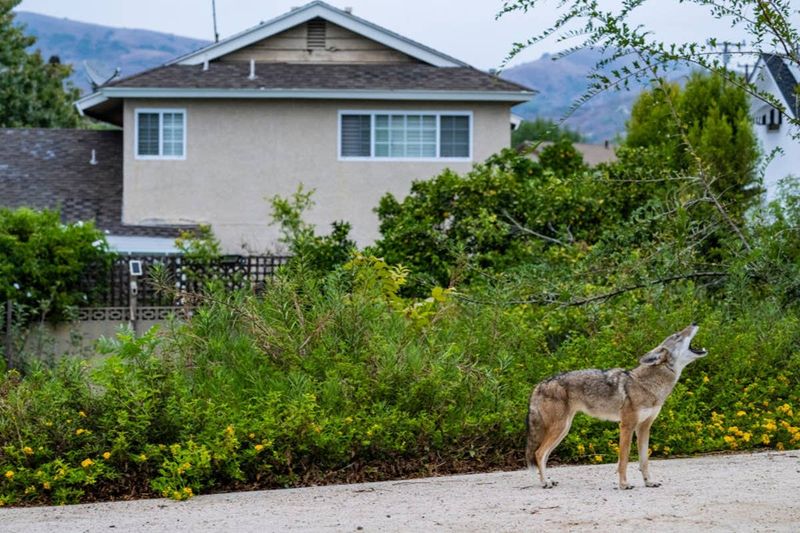
A nighttime chorus tells you coyotes are talking and may be within earshot. It does not tell you a kill happened, how many animals are around, or that a pet is in immediate danger.
Coyotes are a regular part of Arizona nights.
What you do in daylight matters more than what you hear after dark. Keep food and water out of reach and stay with small pets outside, as the AZGFD tips suggest.
Then the yips can simply be the sound of the desert next door.
Share this story