Get the latest garden guides in your inbox →
Gardening Latest
  • General Gardening
  • Lawn Care
  • Plant Care
  • Composting
  • Soil Health
  • Backyard
  • Garden Muse Magazine
  • General Gardening
  • Lawn Care
  • Plant Care
  • Composting
  • Soil Health
  • Backyard
  • Garden Muse Magazine
  • News
  • Gardening Calendar
  • Garden Structures
  • Vegetable Garden
  • Vertical Garden
  • Raised Beds
  • Hydroponics
  • General Equipment
  • Community Gardens
Garden Themes
  • Spiritual Garden
  • Hydroseeding
  • Seeding and Laying Sod
  • Artificial Grass
  • Lawn Care Equipment
  • Plants
  • Trees
  • Planting Tools
  • Composting Basics
  • Fertilizer
  • Alternative Growing Mediums
  • Front Yard
  • Backyard Activities
  • Landscaping
Gardening Latest

Explore by state

Which state is your garden in?

Currently viewing Ohio

All states

Northeast

  • Connecticut —
  • Delaware 19
  • Maine —
  • Maryland 5
  • Massachusetts 22
  • New Hampshire —
  • New Jersey 5
  • New York 15
  • Pennsylvania 15
  • Rhode Island —
  • Vermont —

Southeast

  • Alabama 5
  • Arkansas —
  • Florida 5
  • Georgia 6
  • Kentucky 19
  • Louisiana 4
  • Mississippi —
  • North Carolina 3
  • South Carolina 18
  • Tennessee 2
  • Virginia 4
  • West Virginia —

Midwest

  • Illinois 4
  • Indiana 7
  • Iowa 18
  • Kansas —
  • Michigan 6
  • Minnesota 4
  • Missouri 4
  • Nebraska —
  • North Dakota —
  • Ohio 6
  • South Dakota —
  • Wisconsin 20

Southwest

  • Arizona 5
  • Colorado —
  • Nevada —
  • New Mexico —
  • Oklahoma —
  • Texas 4
  • Utah —

West

  • Alaska —
  • California 5
  • Hawaii —
  • Idaho —
  • Montana —
  • Oregon —
  • Washington —
  • Wyoming —

No state matches that search.

Site menu

Gardening Latest
  • General Gardening
    • News
    • Gardening Calendar
    • Garden Structures
    • Vegetable Garden
    • Vertical Garden
    • Raised Beds
    • Hydroponics
    • General Equipment
    • Community Gardens
    Garden Themes
    • Spiritual Garden
  • Lawn Care
    • Hydroseeding
    • Seeding and Laying Sod
    • Artificial Grass
    • Lawn Care Equipment
  • Plant Care
    • Plants
    • Trees
    • Planting Tools
  • Composting
    • Composting Basics
  • Soil Health
    • Fertilizer
    • Alternative Growing Mediums
  • Backyard
    • Front Yard
    • Backyard Activities
    • Landscaping
  • Garden Muse Magazine

Explore

  • About GardeningLatest.com
  • Contact Us

Get the latest from the garden

New guides on lawn care, plants and backyard projects, sent when they go up.

Subscribe →

Follow

  • Facebook
  • X
  • Pinterest
  • YouTube
Ohio Gardening

The Ohio Tree Squirrels Are Busy Burying All Over Your Yard Right Now

Ohio squirrels are busy burying nuts in late fall, and some of those hiding spots may be in your own yard.

MK

By Margaret Kessler

November 22, 2026 · 6 min read

The Ohio Tree Squirrels Are Busy Burying All Over Your Yard Right Now

Ohio squirrels are busy burying nuts in late fall, and some of those hiding spots may be in your own yard. Each buried acorn, hickory nut, or walnut is a snack saved for winter.

Once in a while, a seed that never gets dug up can sprout into a tree. Here is what that could mean for your yard next spring, and what no one can promise.

At a glance

Where
Ohio Gardening
Hardiness zone
6 −10 to 0°F
Read
6 minutes
Published
November 22, 2026

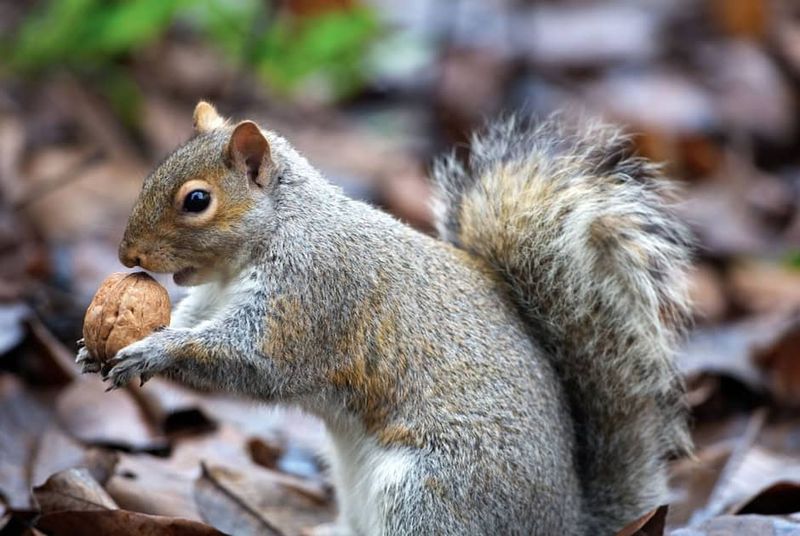
Ohio squirrels have several likely nut sources
Ohio squirrels have several likely nut sources
© Farmers’ Almanac

Eastern gray squirrels are common in wooded urban and suburban parts of Ohio, which means plenty of backyards sit right in their territory. Ohio’s field guide to mammals describes the gray squirrel as a familiar neighbor in these settings.

If you have mature trees nearby, you are likely sharing space with them.

So what are they gathering? Ohio State University Extension lists several oaks, hickories, and black walnut in its guide to hard-mast producers.

Hard mast is the wildlife term for tough-shelled nuts such as acorns, hickory nuts, and walnuts. Squirrels and many other animals eat them.

Late fall is when these foods drop, and squirrels respond by stashing some for later. That makes caching in a yard a very believable sight.

A squirrel pawing at the lawn and tamping down soil could be doing exactly that.

There are limits to what we can say, though. Nothing in these sources shows that squirrels are unusually busy this year, that every yard has active caches, or that Ohio has a big nut crop in 2026.

Think of oak, hickory, and walnut as the trees that could supply the nuts, not a list of seedlings you are sure to find. Your own yard’s story depends on which trees are close by and what the squirrels decide to do.

A squirrel hides food, not a future tree
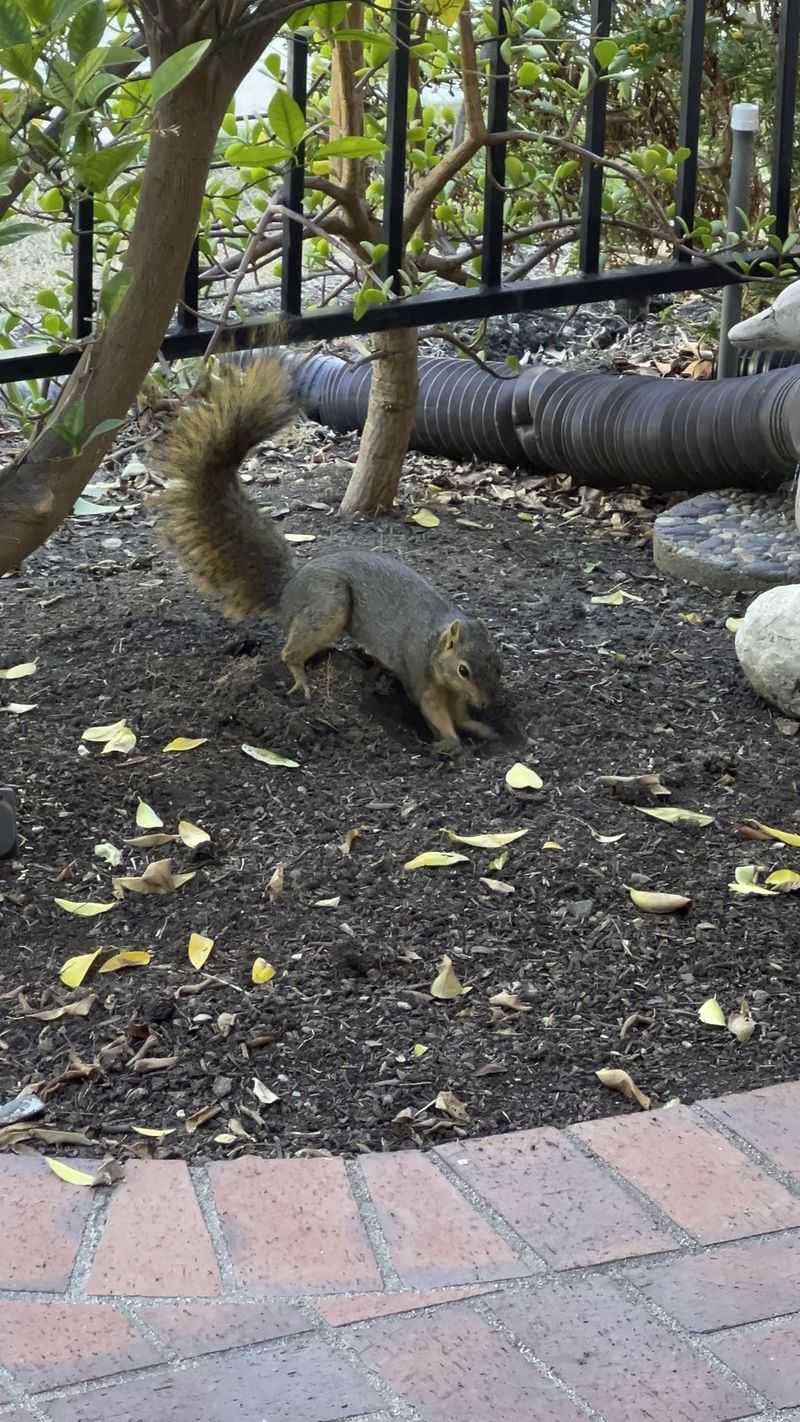
A squirrel hides food, not a future tree
© Reddit

When a squirrel buries a nut, it is saving dinner. Planting a tree is not on its mind.

Researchers describe this as scatter-hoarding, where food is spread across many small hiding spots instead of one big pile.

The first threat is the squirrel itself, since a cache is a pantry, and the owner may come back to eat what it stored.

That habit can move seeds away from the parent tree. In a review of squirrel-seed relationships, a paper in Frontiers in Ecology and Evolution explains that squirrels act as both seed predators and seed dispersers.

They eat many seeds and damage others. Some viable seeds may stay unrecovered, and a few of those could end up somewhere they can grow.

Squirrels are also good at finding their stashes. A 1991 study on grey squirrels showed they remember where nuts were buried.

Another project, a study of fox squirrels, found they sorted caches by nut type in some conditions.

Because of that memory, it would be wrong to say squirrels forget most of their nuts. No single percentage fits every squirrel, place, or year.

A better way to see it is that some caches get emptied, and some seeds may be left behind.

Oak acorns do not all follow the same spring schedule
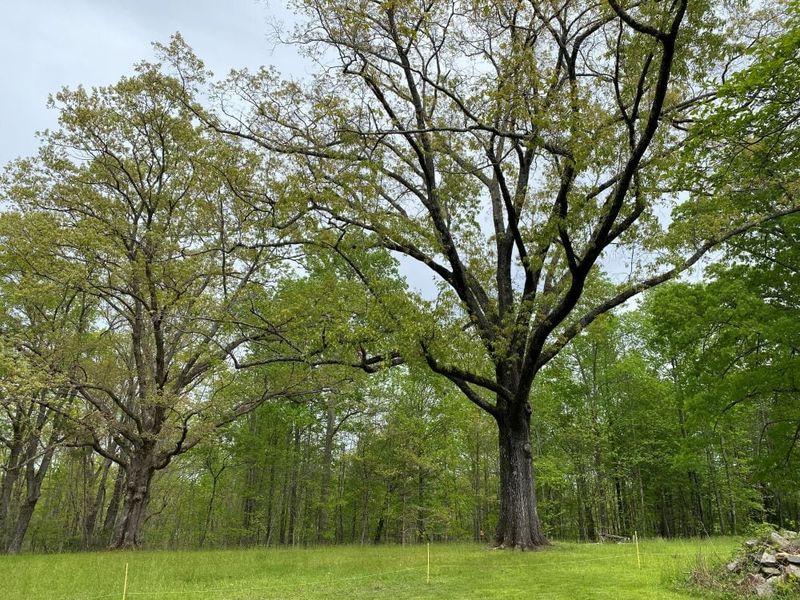
Oak acorns do not all follow the same spring schedule
© Conserving Carolina

Whether an acorn sprouts in spring depends partly on which oak it came from. Oaks fall into groups, and each group keeps its own calendar.

That is why a seedling’s timing is not one-size-fits-all.

Acorns from the white oak group may start growing roots in fall. According to the USDA Forest Service profile of white oak, root growth can begin before winter while the shoot waits until spring.

So a buried white oak acorn might already be anchored underground, with nothing showing on top.

Northern red oak works differently. The Forest Service entry on northern red oak says its acorns generally germinate the following spring, after winter dormancy is broken.

Cold weather does part of the work for them.

General guidance on acorn germination and seedling establishment adds that species and conditions both matter. Treat these two patterns as common tendencies, not exact rules for every acorn.

If a small oak appears in April or May, there is no way to read the date and know how its acorn got there.

A buried seed can fail before it becomes a seedling
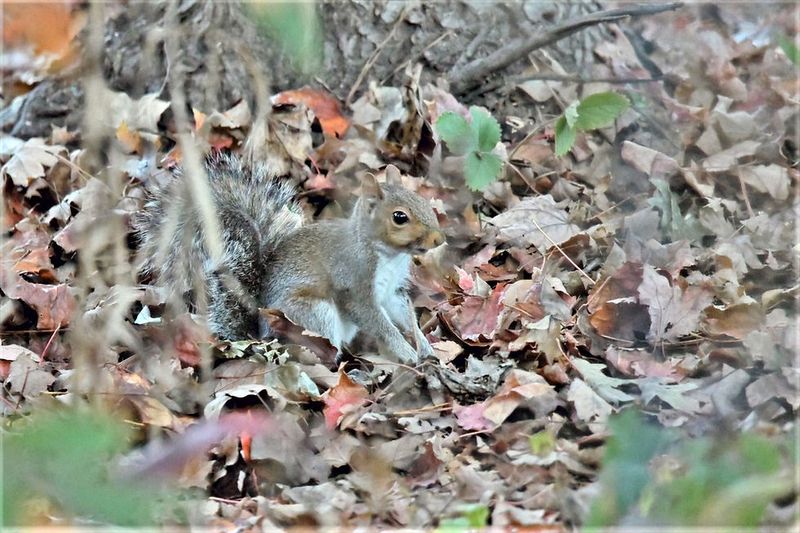
A buried seed can fail before it becomes a seedling
© Nurture Native Nature

A hidden nut has a long road ahead of it. Many never make it to spring as seedlings.

The first threat is the squirrel itself, since a cache is a pantry, and the owner may come back to eat what it stored.

Squirrels can also damage seeds before burying them. The Frontiers review notes that some eastern gray squirrels remove the embryo from white oak acorns before storing them, which stops those acorns from germinating.

That does not happen in every cache, but it shows why a buried acorn is not always a living one.

Other things can go wrong too. A seed may dry out, rot, or land where conditions do not suit it.

Forest Service material on acorn germination cautions that thick leaf litter can block oak emergence, and the same point appears for northern red oak.

For a yard, that means a deep blanket of leaves could keep a sprouting acorn from reaching light. A cache is a chance, not a guarantee.

Plenty of buried seeds will never show a shoot.

To grow an oak, give the acorn a deliberate start
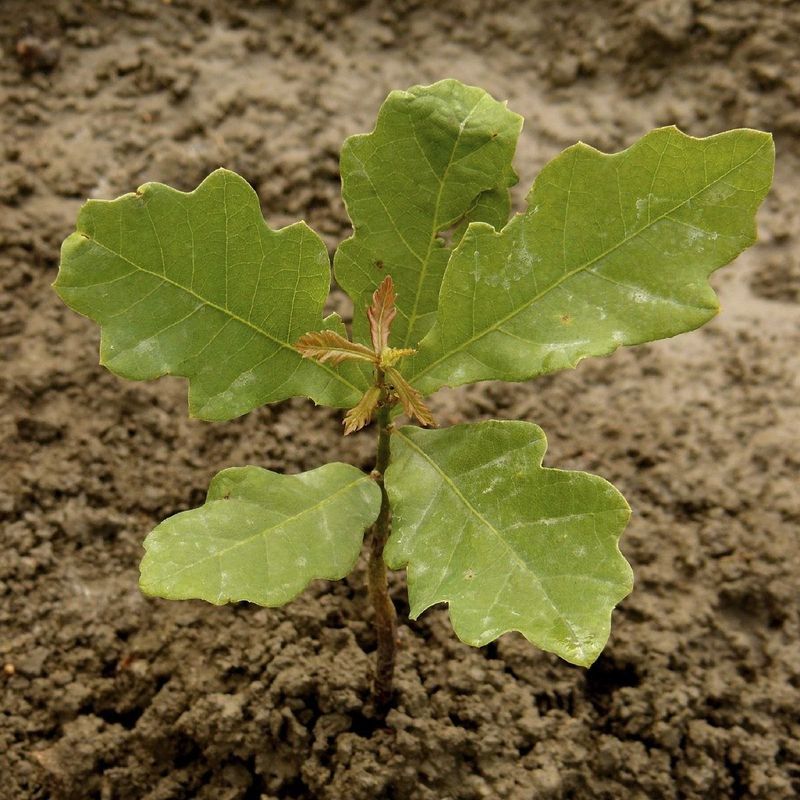
To grow an oak, give the acorn a deliberate start
© Gardening Know How

If you would rather not leave an oak to chance, you can start one yourself. The advice depends on the species, so it helps to know which oak your acorns came from.

Iowa State University Extension’s guide to handling acorns lays out the basics.

White oak acorns are suited to fall sowing, since they are ready to root soon after dropping. Red oak and certain other oaks need moist, cool stratification, which means a period of damp chill that mimics winter before planting.

Do not apply one species’ steps to every acorn in your pile.

Before planting, many people try the sink or float test. Drop acorns in water, and the ones that sink are the better bet.

Most floating acorns are likely nonviable, but not necessarily all, so the test is a quick screen and not a final verdict.

Pick a spot with room, since oaks grow large over time. Once seeds are in the ground, patience does the rest.

Even a deliberate start has no promise, but it tips the odds your way.

A new shoot is possible, but its origin may stay uncertain
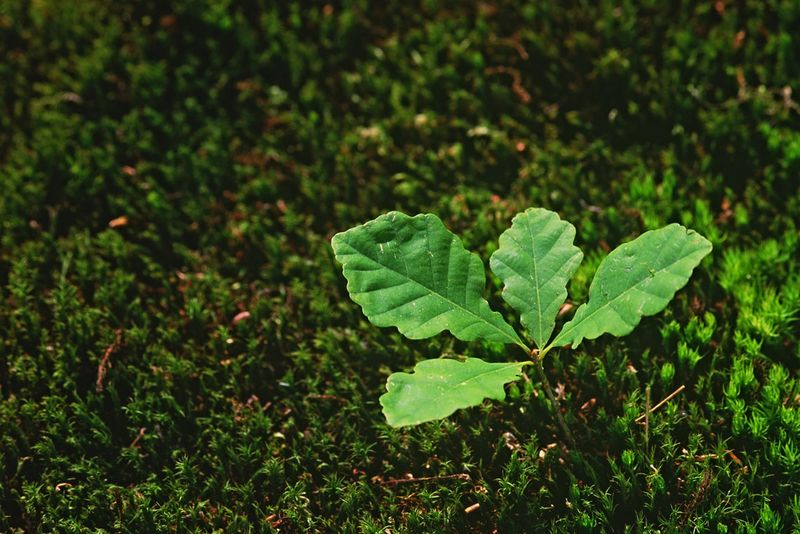
A new shoot is possible, but its origin may stay uncertain
© Wildlife Online

So could a squirrel’s cache give you a new tree next spring? It could.

An unrecovered, viable oak, hickory, or walnut seed might sprout, drawing on the trees Ohio State Extension lists and the gray squirrels Ohio’s wildlife guide describes.

But a seedling alone cannot prove a squirrel put it there, and neither can a hole in the lawn. Wind, gravity, and other animals can also move seeds, and as the Frontiers review shows, squirrels are seed eaters as much as seed movers.

Watch the ground this spring, and enjoy whatever turns up. Some mysteries are best left as mysteries.

Share this story

MK

Written by

Margaret Kessler

More from Margaret Kessler →

About Gardening Latest

Gardening Latest provides in-depth guides to maintaining and enhancing your garden and backyard. Learn how to make the most of the space you have and create a beautiful garden.

More about us →

Latest stories

  • Michigan GardeningIs Putting Out Corn for Deer in Your Michigan Yard Actually Legal This Winter

    Is Putting Out Corn for Deer in Your Michigan Yard Actually Legal This Winter

    4 min ago
  • Massachusetts GardeningShould You Cut That Giant Flower Stalk Off Your Massachusetts Rhubarb? Here’s Why It Shows Up

    Should You Cut That Giant Flower Stalk Off Your Massachusetts Rhubarb? Here’s Why It Shows Up

    9 min ago
  • New York GardeningWhat It Really Means When a Red Fox Keeps Visiting Your New York Yard

    What It Really Means When a Red Fox Keeps Visiting Your New York Yard

    19 min ago
  • Indiana GardeningTiny Red Dots Moving Across Your Sunny Indiana Windowsill Are Clover Mites

    Tiny Red Dots Moving Across Your Sunny Indiana Windowsill Are Clover Mites

    31 min ago
  • Pennsylvania GardeningThose Purple Berries On Bright Magenta Stems In Pennsylvania Yards Are Worth A Second Look

    Those Purple Berries On Bright Magenta Stems In Pennsylvania Yards Are Worth A Second Look

    36 min ago

Gardening by state

Stories for your state, and the hardiness zone most of it gardens in.

Keep exploring

Read next

All Ohio Gardening →
Ohio Gardening9 Backyard Features Ohio Towns Are Quietly Starting to Ban
Ohio Gardening

9 Backyard Features Ohio Towns Are Quietly Starting to Ban

3 hr ago
Ohio GardeningThe Simple Late-Fall Fix That Stops Mice From Wintering in Your Ohio Garage
Ohio Gardening

The Simple Late-Fall Fix That Stops Mice From Wintering in Your Ohio Garage

6 hr ago
Ohio GardeningThe Persimmon Seed Folklore Some Ohioans Know: Spoon, Knife, or Fork?
Ohio Gardening

The Persimmon Seed Folklore Some Ohioans Know: Spoon, Knife, or Fork?

Nov 12

More from Ohio Gardening

  • What It Really Means When a Red Fox Keeps Visiting Your New York Yard

    19 min ago
  • Tiny Red Dots Moving Across Your Sunny Indiana Windowsill Are Clover Mites

    31 min ago
Back to top

Leave a response Cancel

Your email address stays private. Required fields are marked with an asterisk.

Gardening Latest

In-depth guides to maintaining and enhancing your garden and backyard: how to make the most of the space you have, and how to make it beautiful.

  • Facebook
  • X
  • Pinterest
  • YouTube

We may earn a portion of sales from products or services that are purchased through our site as part of our affiliate partnerships with retailers.

Explore

  • About GardeningLatest.com
  • Contact Us
  • Terms and Conditions
  • Privacy
  • Editorial Note:
  • FTC Disclosure

Newsletter

New garden guides and seasonal tips, straight to your inbox.

We’ll email you a link to confirm. Unsubscribe any time.

Almost there! Check your inbox and tap the link to confirm.

© 2026 Gardening Latest. All rights reserved.

Back to top