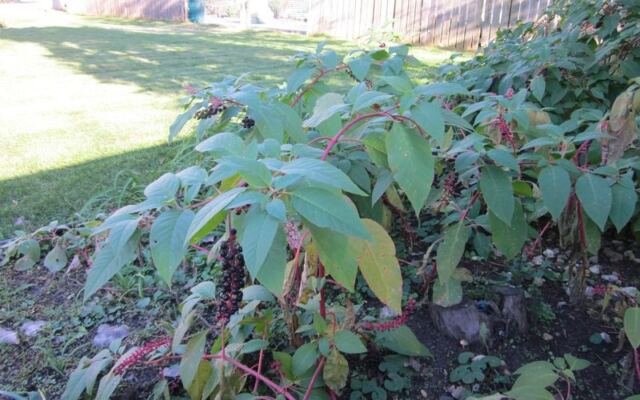
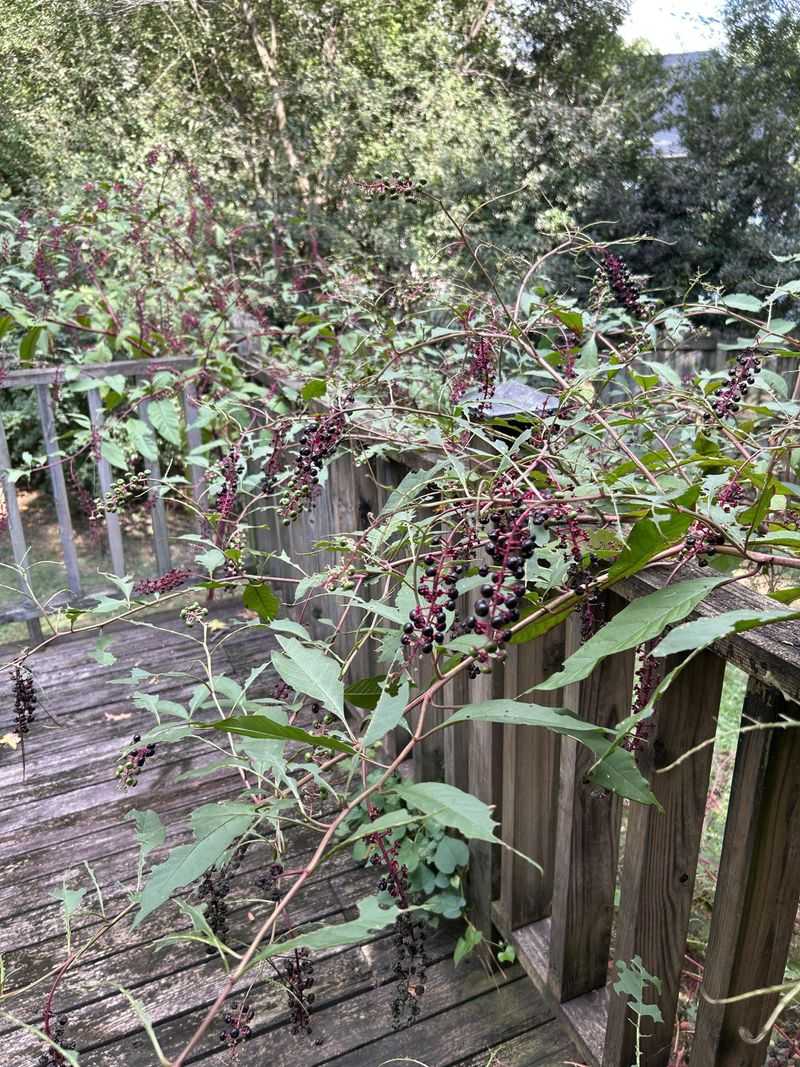
Those dark purple berries hanging from bright magenta stems in your Pennsylvania yard are most likely American pokeweed. It is a native plant that shows up in fence lines, garden edges, and empty corners every late summer.
The berries look tempting to some people, but the plant is toxic if eaten. Knowing what it is, who it helps, and when to manage it makes decisions about your yard much easier.
How to recognize likely pokeweed
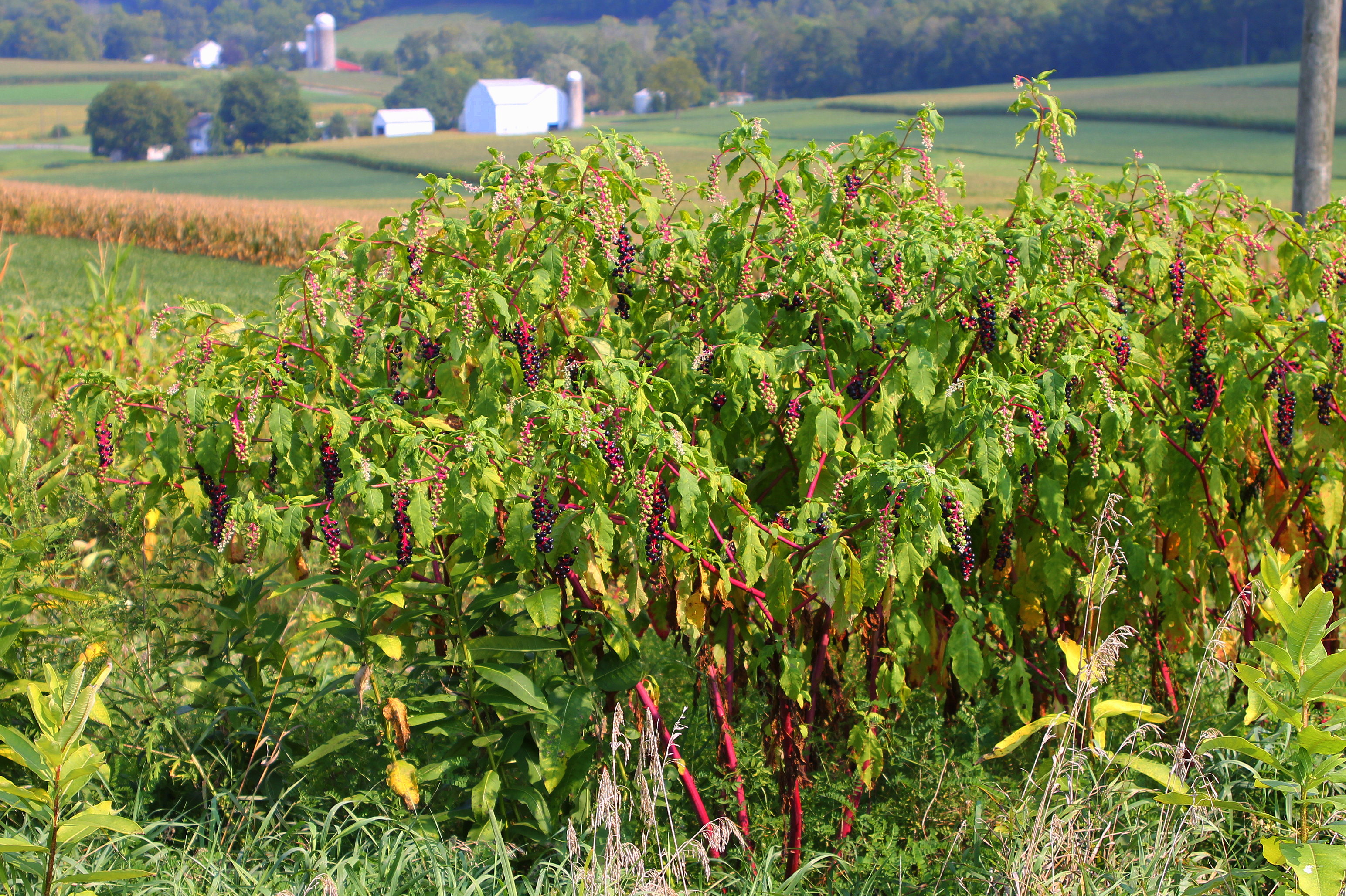
Picture a tall, bushy plant that seems to appear overnight and keeps climbing. American pokeweed (Phytolacca americana) is a branching perennial that can reach roughly 4 to 10 feet tall, according to UC Statewide IPM Program.
Its size alone often surprises homeowners who remember a small seedling in spring.
The leaves are large, smooth-edged, and pointed, and they alternate along the stems. As the season goes on, the mature stems often turn reddish or purple, which creates the bright magenta color many people notice first.
That color is one of the best clues for spotting the plant from a distance.
The berries are the other giveaway. They grow in long clusters that droop from the stems, starting out green and ripening to a glossy purple-black.
Pennsylvania’s flora resource, Pennsylvania Flora, describes the same fruiting habit.
A plant that matches these features is likely pokeweed. Still, a written description cannot confirm any single plant in your yard.
If you need certainty, compare it with photos from a trusted source or ask your county Penn State Extension office to help.
Native does not mean it cannot spread

Pokeweed belongs here. Pennsylvania Flora lists it as native and present throughout the state, so it is not a nonnative invader that arrived from somewhere else.
Calling it a weed describes where it grows, not where it came from.
Native status does not tell you whether it suits your particular yard, though. Pokeweed can spread by seed, and it can resprout from its root after the top growth is cut.
In some settings it can crowd out plants you actually want, as UC Statewide IPM Program notes.
Think about location. A single plant at the back of a wild corner may cause no trouble at all, while one that pops up in a vegetable bed or a young shrub border can quickly take over space and light.
Nothing here means every plant must come out. Some owners leave one in a spot away from children and pets, and others prefer a tidy yard with none.
Either choice is reasonable, as long as you understand how the plant behaves and plan around it.
Why people should not eat the berries
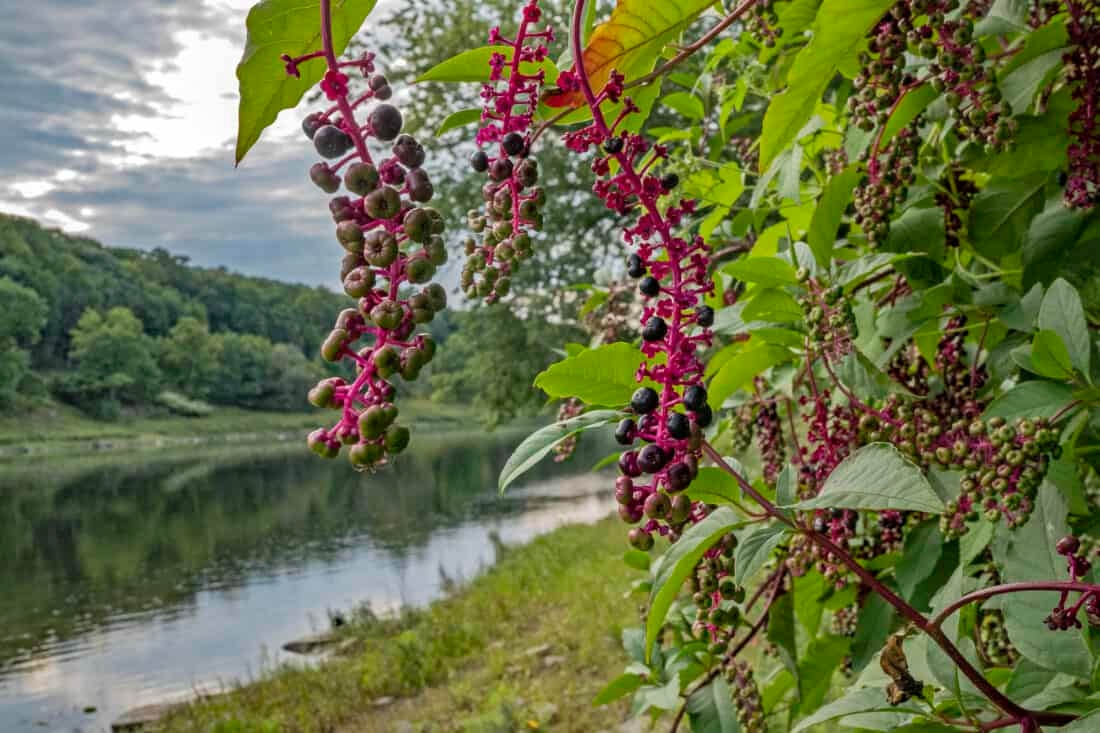
Here is the plain rule: do not eat pokeweed. According to MedlinePlus, all parts of the plant are considered toxic if eaten, and the roots are especially hazardous.
Eating it can cause stomach and bowel symptoms, and serious effects have been reported.
You may read that the berries are less toxic than other parts. That is true in some medical and extension sources, but less toxic does not mean safe.
The berries are dark, juicy, and easy for children to mistake for something edible, which is why poison experts bring them up. The National Capital Poison Center even compares them to wild grapes.
You might also come across old recipes or advice about boiling pokeweed in several waters. Skip them.
Home cooking and folk preparation methods do not guarantee safety, and MedlinePlus does not recommend eating cooked plant material.
Reactions vary from one exposure to the next, so no berry count can tell you what will happen. Teach children early that these berries are look-but-do-not-touch, and keep the plant out of reach where small kids play.
What to do after a person eats pokeweed
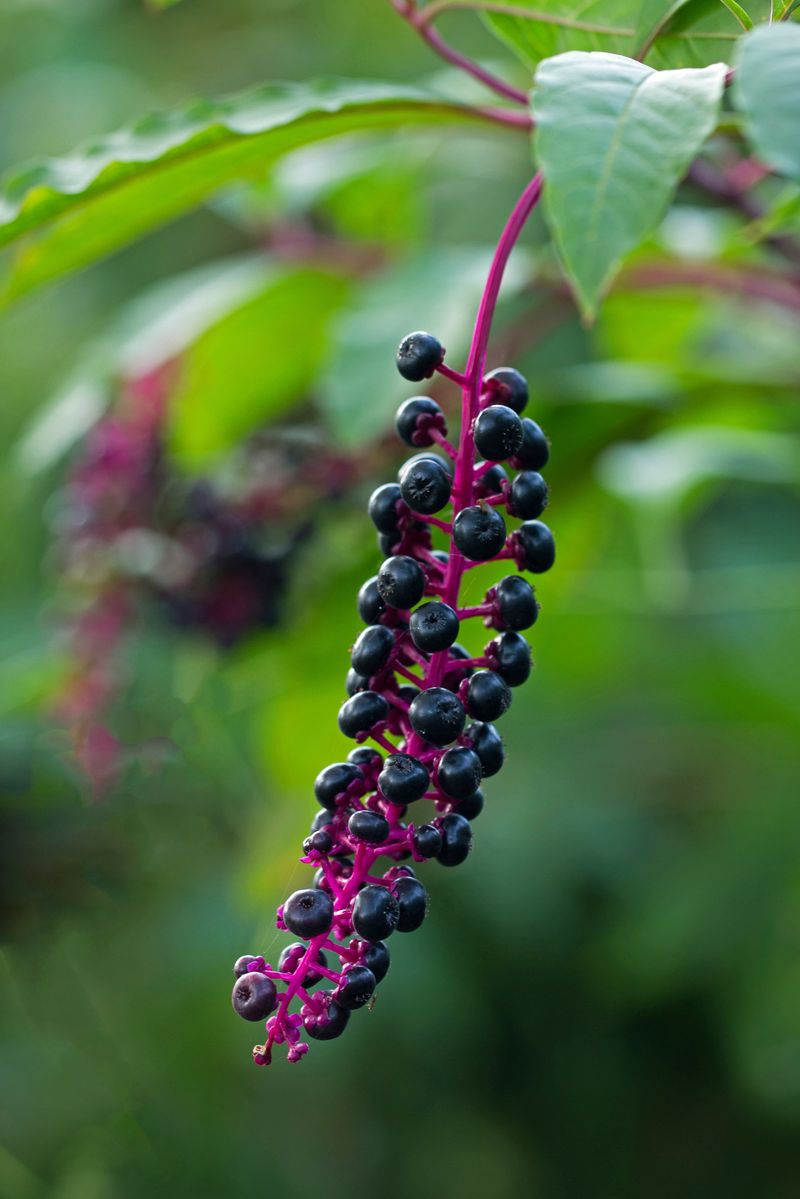
If someone eats any part of pokeweed, call Poison Help at 1-800-222-1222. The line connects you to poison specialists who can give advice based on the person’s age, symptoms, and what was eaten.
Try to have the plant details ready, and keep a sample or photo if that is easy to do.
Do not try to make the person vomit unless poison control or a health professional tells you to. MedlinePlus gives this same instruction for pokeweed poisoning.
It can be tempting to count berries and decide how worried to be. Outcomes vary, and the National Capital Poison Center notes that a berry or two is unlikely to cause symptoms in a child while several can cause illness.
That is not a safe amount, so let the specialists judge the situation.
Not every exposure is an emergency, and no exposure should be brushed off as harmless. A quick call gets you individualized guidance, and the specialists will tell you if the person needs medical care right away.
Birds eat the berries and spread the seeds
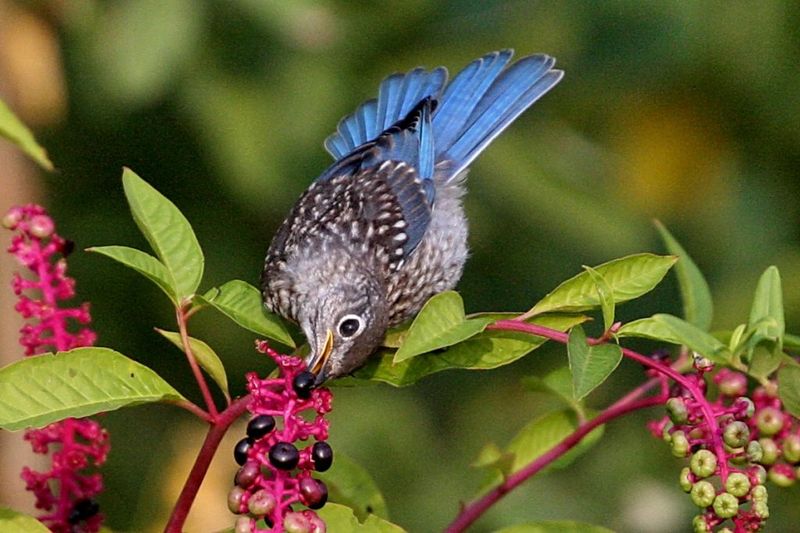
Watch a pokeweed plant in September and you will probably see visitors. Many birds eat the berries, and they help move the seeds around, as noted by UC Statewide IPM Program.
This is a big reason pokeweed pops up under fences, power lines, and tree branches where birds like to perch.
That seed travel can explain a surprise plant in a spot you never planted. A bird eats berries somewhere nearby, lands in your yard, and drops seeds in its droppings.
The result is a new seedling in a corner you thought was safe. Pennsylvania Flora places the plant across the state, so there are plenty of seed sources.
Bird feeding does not tell you the berries are safe for people. A food that suits some birds can still make a person sick.
It also does not mean every bird or every other animal is unaffected, so avoid assuming that wildlife behavior is a guide for your family.
If you enjoy the bird activity, you can still pick a spot away from play areas and keep an eye on where new seedlings appear.
Take a separate precaution with pets
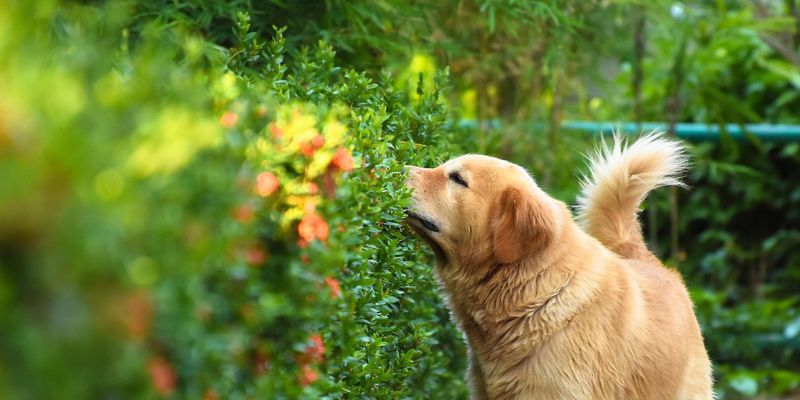
Dogs explore with their noses and mouths, which makes berries on low branches a real concern. Pokeweed can cause illness in pets, according to Pet Poison Helpline.
Cats and other animals can be affected too.
If your pet eats any part of the plant, contact your veterinarian or an animal poison service right away. Do not guess whether the amount was small enough to ignore.
Pets cannot tell you how much they ate, and size and health change how an animal reacts.
Seeing birds enjoy the berries is not a reason to relax. What works for a bird says little about a dog or a cat.
Treat pets as a separate case with their own risks.
A few practical steps help. Fence off or remove plants in areas where pets spend time, pick up fallen berries, and watch curious puppies closely.
If you do get a call through, mention the plant and, if you can, bring a photo or a piece of it so the staff can help quickly.
Remove unwanted plants before they spread
Timing and size matter most. Small plants are easier to pull or dig out, especially when the soil is damp.
Established plants are another story, because they grow large taproots that can be very hard to remove, as described by UC Statewide IPM Program.
If a plant is already carrying berries, cut off the ripe clusters before they fall or birds carry them off. That can reduce seed spread while you work out a longer plan.
Bag the clusters instead of tossing them on the ground or a compost pile.
Wear gloves and protective clothing, such as long sleeves and pants. Skin irritation has been reported, and an extension expert on Ask Extension says pokeweed does not contain poison ivy’s urushiol.
So blisters like poison ivy are not expected, but covering up is still sensible. Wash your hands and tools afterward.
If you decide to use an herbicide on large plants, follow the product label and any site restrictions exactly. Labels cover where, when, and how to use a product safely, so skip homemade application advice.
Pokeweed is stubborn, but a bit of steady attention each season keeps it where you want it.
Share this story