Yes, if you grow rhubarb for pie and sauce, cut that giant stalk off near the base. It is the plant’s flower stalk, and it is a normal part of how rhubarb grows, not a sign your plant is dying.
Seeing one tells you a little about your plant, but it does not decide its fate. Here is what it means and what to do next in a Massachusetts garden.
What that tall stalk means
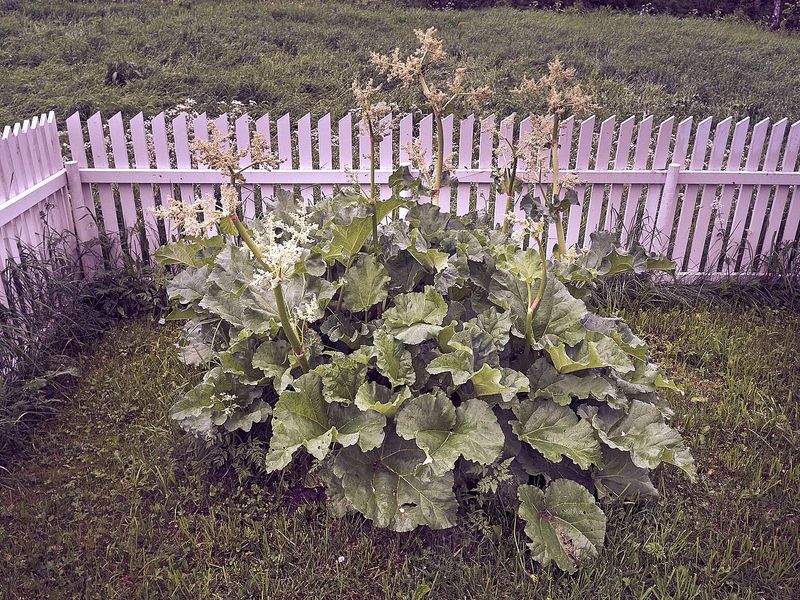
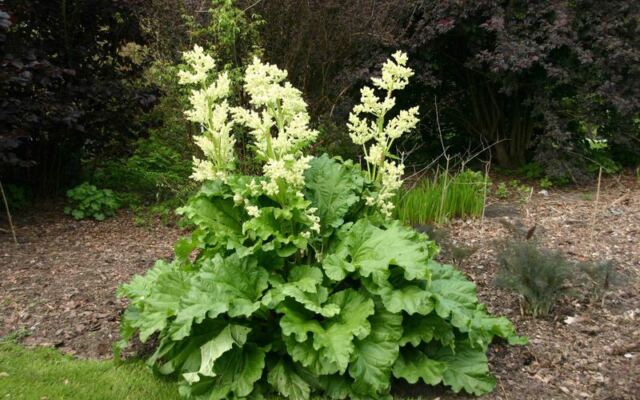
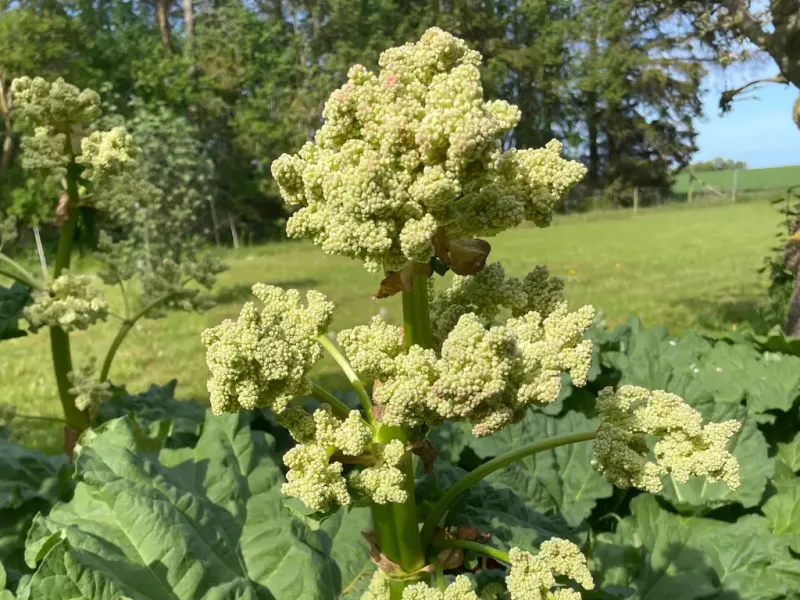
Walk out to the rhubarb patch one morning and you might spot something odd: a thick, tall stalk shooting up from the middle of the plant, topped with a lumpy, budlike cluster. That is the flower stalk, also called a seed stalk or a bolt.
It can climb several feet, and it looks very different from the rest of the plant.
Here is an easy way to tell the two apart. The edible leafstalks are the red or green-pink stalks that each hold up one big leaf.
The flower stalk has no large leaf on it. It rises straight from the crown, the center of the plant, and ends in a branching flower head that opens into small creamy blooms, as described in Oregon State Extension’s rhubarb guide.
Do not treat the flower stalk as something to cook. It is not the part gardeners harvest, so leave it out of the kitchen.
Flowering is simply part of rhubarb’s reproductive cycle. Like many perennials, the plant eventually tries to make seed.
Iowa State Extension treats it as a common event and not an emergency.
So one tall stalk is not a diagnosis. Your plant is doing something rhubarb does, and the leaves around it can look perfectly healthy.
Why rhubarb sends up a flower stalk
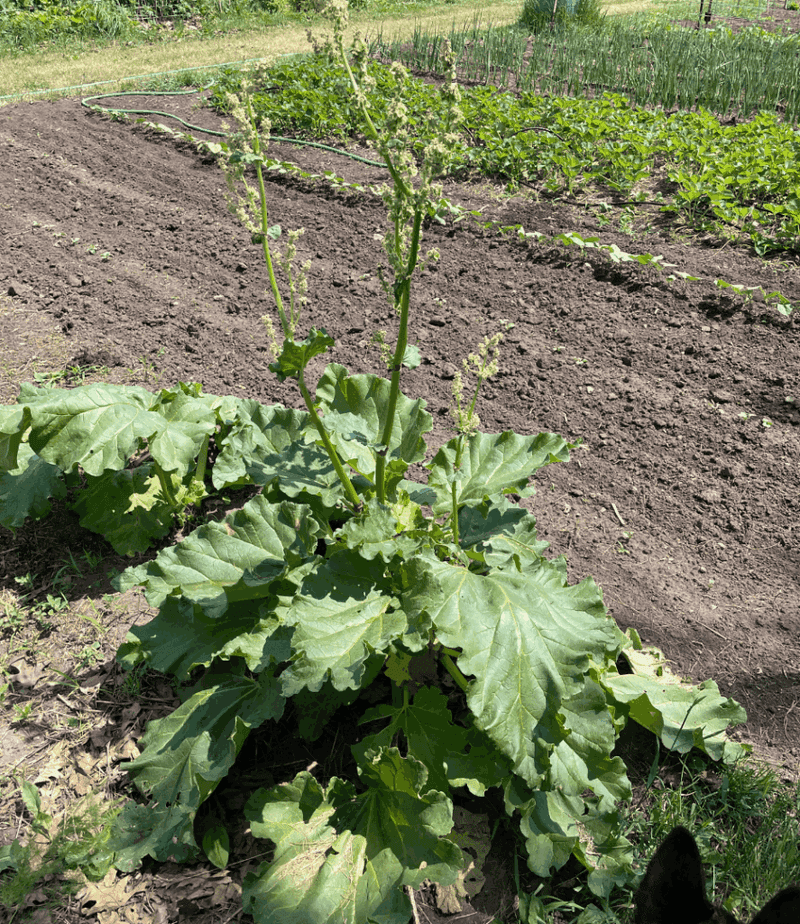
Rhubarb is a perennial, and perennials are programmed to flower and make seed. The stalk you see is the plant starting that job.
According to Purdue Extension, flowering is part of the normal cycle, and some plants simply do it more readily than others.
Age and variety play a role. Older plants tend to flower more often, and certain cultivars are more prone to it than others.
If you inherited a clump from a neighbor and do not know the variety, that alone could explain it.
Growing conditions may also nudge a plant toward flowering. Oregon State and other sources mention heat, drought, swings in cold weather, and poor fertility as possible contributors.
Think of these as clues to consider, not a sure answer for your own plant. A Massachusetts spring that jumps between warm spells and chilly nights is one example of conditions that could play a part.
Why does it matter? Making flowers and seed takes energy, and that is energy the plant could otherwise spend on leaves and on storing food in its roots for next year.
That is the reason Iowa State advises pulling the stalks.
Still, cutting one does not guarantee fatter stalks next week. It simply keeps the plant from pouring more resources into seed.
How to remove the flower stalk
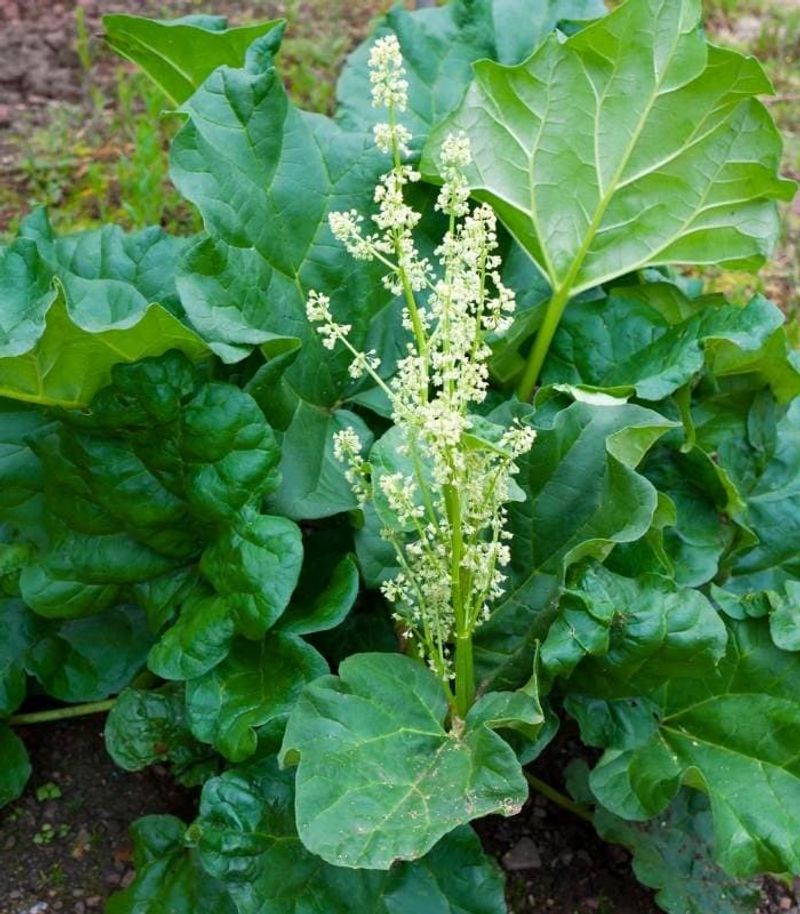
If you grow rhubarb for eating, cut the flower stalk as soon as you notice it. The sooner it goes, the less energy it uses.
UMass Extension tells Massachusetts gardeners to remove and discard seed stalks as they appear.
Cut as close to the crown as you can while staying careful. The crown is the knobby center where all the new growth starts, and nicking it can invite problems.
Clean pruners or a sharp knife work well, and a firm twist and pull on a young stalk can also do the job, as Iowa State notes about pulling flower stalks.
Hold the stalk low and steady so you do not yank on the surrounding buds. If the base is tough, shears give you more control than force.
Toss the removed stalk in the trash or a hot compost pile instead of leaving it on the bed. Leaving it behind defeats the purpose, especially if seed heads are forming.
Think of this as upkeep, not a magic fix. Removing the stalk limits wasted effort and supports the plant’s overall strength, but it does not promise more or larger leafstalks right away.
Another flower stalk may appear
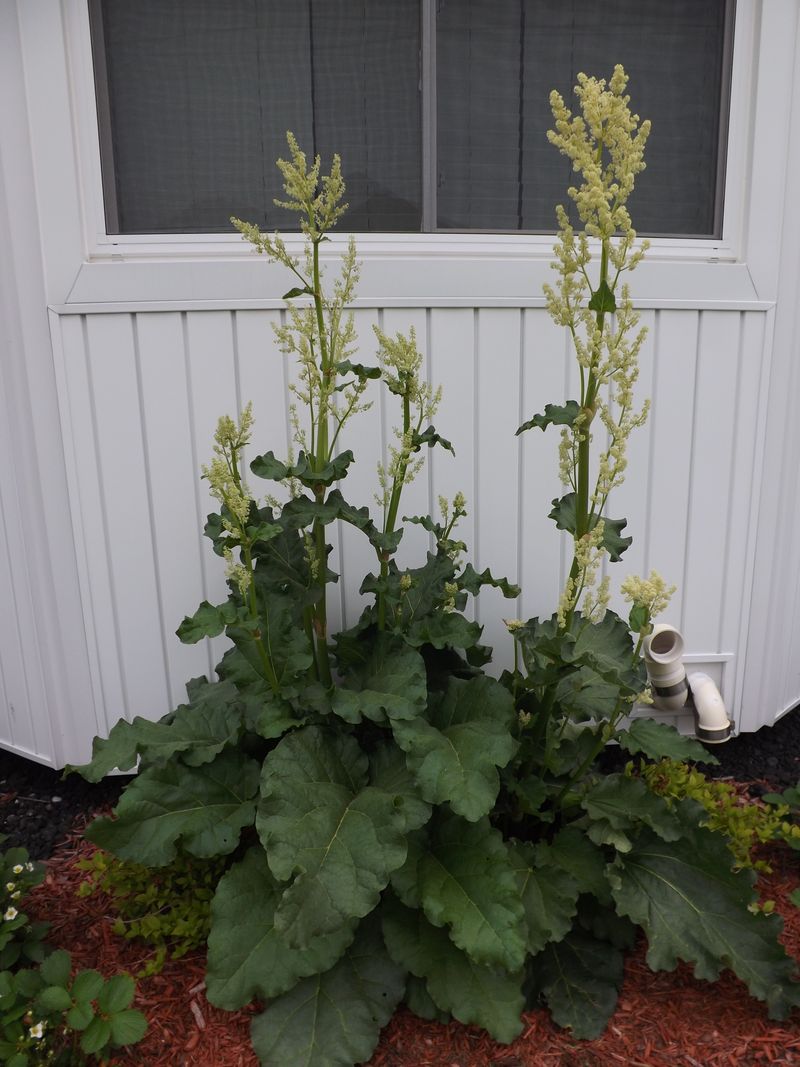
Do not be surprised if a second stalk pops up a week or two later. Purdue Extension notes that rhubarb may send up another flower stalk after the first is removed.
When that happens, repeat the same step.
A quick check every few days during late spring makes this easy. A young flower stalk is much simpler to snap off than a tall, tough one.
Some gardeners like the look of the blooms and want to enjoy them. That is a fair choice if you treat it as a separate, ornamental option.
You can let a stalk stand for a short time, then cut it after flowering and before seeds mature.
Keep in mind that this is not the recommended path for a plant you rely on for leafstalks. Every day a flower stalk stays, the plant spends energy on it.
If food is your goal, cut early and often. If the flowers are your goal, set a time limit and remove the stalk before seed forms.
Flowering does not make leafstalks poisonous
A common worry is that a flowering plant turns toxic. It does not.
Purdue Extension says culinary rhubarb’s ordinary leafstalks stay edible whether or not a flower stalk is present.
The leaf blades are another matter. Never eat them, and trim and discard them when you harvest.
The edible part is only the firm leafstalk.
First, make sure you have culinary rhubarb. Oregon State cautions that ornamental rhubarb, such as Rheum palmatum, has stalks that are not edible.
If you are not sure what you planted, do not eat it until you know.
Freeze damage is where sources disagree. UConn and Oregon State warn that freezing can move oxalic acid from leaves into stalks.
Washington State says that belief lacks published support, and Purdue’s plant lab says the question is not settled.
Given that split, a simple rule works. Iowa State advises discarding stalks that look damaged, soft, or mushy.
A light frost on firm, healthy stalks is not a reason to throw out the whole patch.
Follow harvest advice for the plant’s age
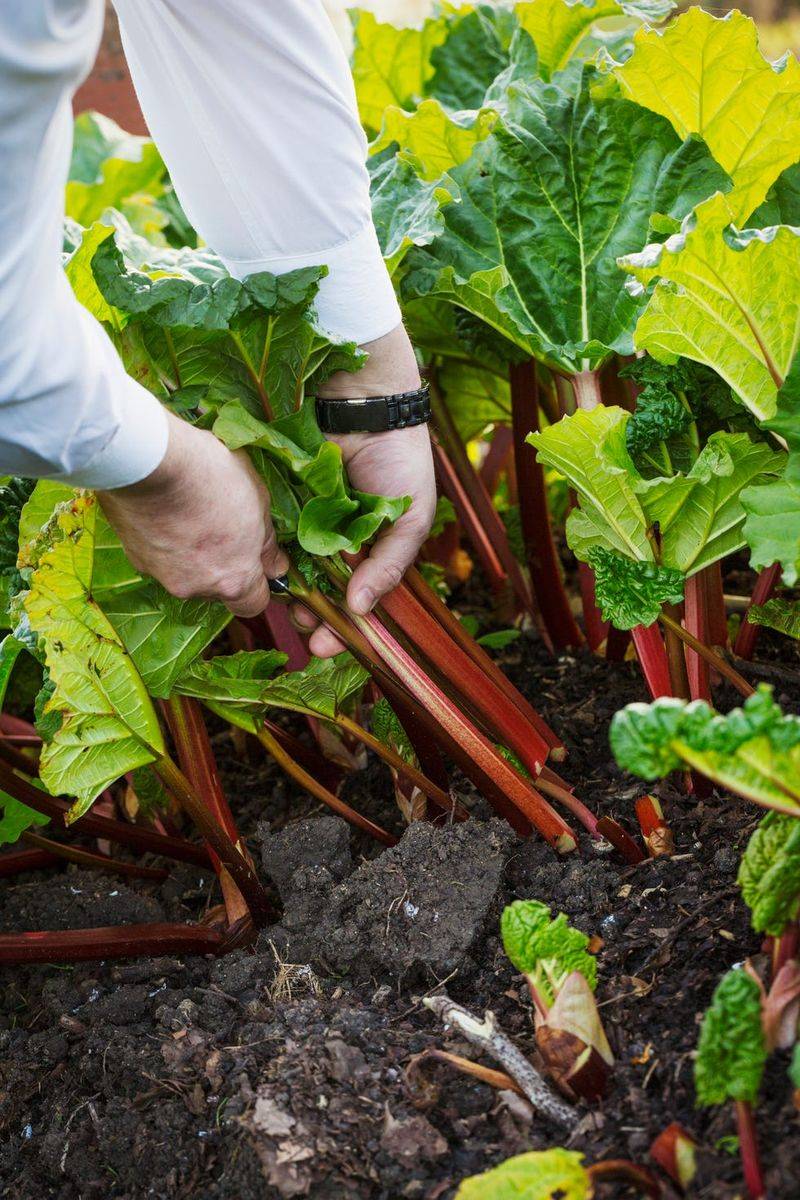
Harvest timing is a separate question from flower stalks, and Massachusetts gardeners get clear guidance on it. UMass Extension says not to harvest leafstalks during the first two years after planting.
Young plants need every leaf to build strong roots.
During those years, still remove any seed stalks as they appear. Skip the harvest, but keep up the stalk removal.
Established plants can handle more. UMass allows occasional, modest summer and fall harvests, so you do not have to stop the moment June arrives.
Pull a few stalks and leave plenty of leaves to feed the roots.
Some other extension guides suggest ending regular harvest earlier so plants can recover. That is about plant strength, not safety.
University of Minnesota Extension calls the idea that summer stalks turn poisonous a myth, and Iowa State agrees.
A simple way to sort your choices: the plant’s age decides whether you harvest, and the season mostly decides how much. The flower stalk gets cut either way if you want leafstalks.
When to look beyond the flower stalk
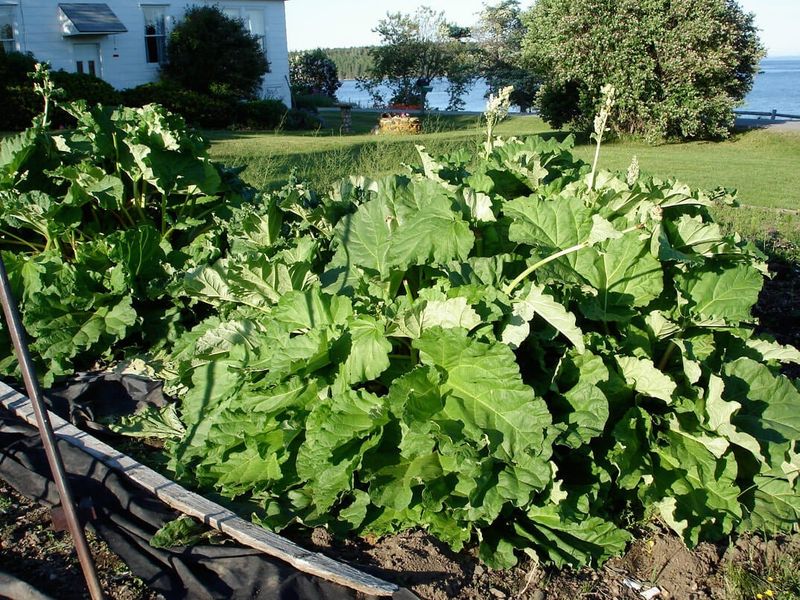
One flower stalk is not a reason to dig up the plant. Age, cultivar, and growing conditions can all influence flowering, as Purdue Extension describes, so a single stalk does not diagnose anything.
Look at the whole clump instead. Is it many years old, crowded in the center, or putting up thin, spindly stalks?
Those are better signs it may be time to divide. UConn lists seedstalks among possible division clues, while Oregon State points to several influences.
If your clump is young and productive, leave it alone. If it is old and cramped, plan to divide it in early spring or fall while the plant is dormant.
For now, the plan is simple: cut the flower stalk near the crown if you grow for food, watch for another, and judge the plant by its overall vigor.
A rhubarb plant that throws one tall stalk is usually just showing off.
Share this story