Stop touching the area, get any caterpillar off your skin with a tool, and wash with soap and water. Then press tape on the spot and lift it off to pull away some tiny hairs or spines.
You may not know for sure which caterpillar caused the burn, and that is okay, because Poison Control can help with that. Here is what to do next, what symptoms to expect, and when to get urgent help.
Remove the caterpillar and wash the area
Start by avoiding any more contact. Do not grab, rub, or crush a suspected stinging caterpillar with bare hands, because the hairs or spines can break off and stick in your skin.
If the caterpillar is still on you, gently remove it with a tool or another object, such as a stick, tweezers, or a folded piece of paper. Flick it away from where you are working so it does not land on you again.
Next, wash the affected skin gently with soap and water. According to Poison Control guidance, the next step is to press a piece of tape onto the area and lift it off to remove some embedded hairs or spines.
Use a fresh piece of tape each time, since old tape loses its stickiness and may put hairs back on the skin.
Keep your expectations realistic. Tape and washing may take away some irritants, but they cannot be counted on to remove every hair or spine or to stop the reaction.
University of Kentucky Extension cautions that there are no really effective home first-aid treatments, and NC State Extension also recommends washing first and then using adhesive tape for any spines left behind.
Avoid scrubbing hard, since that can push spines deeper or irritate the skin further. Gentle and quick is the goal here.
Could it be a saddleback?
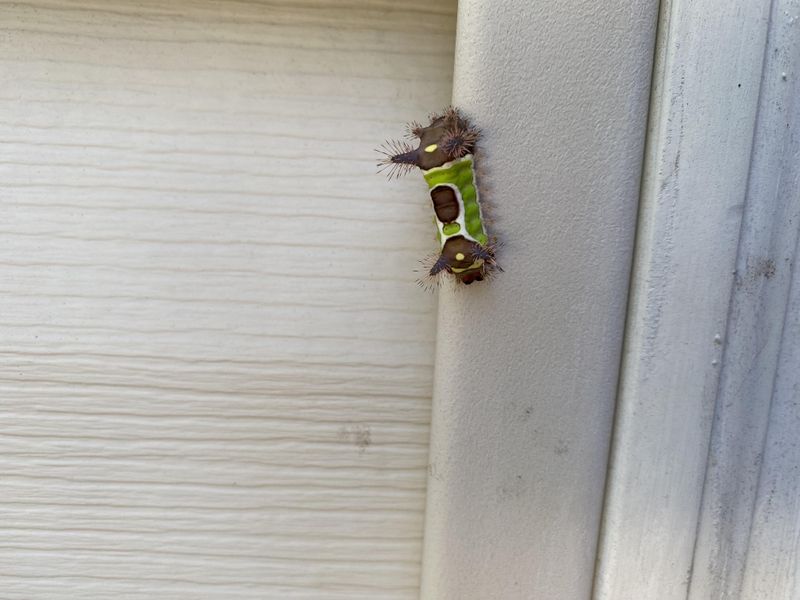
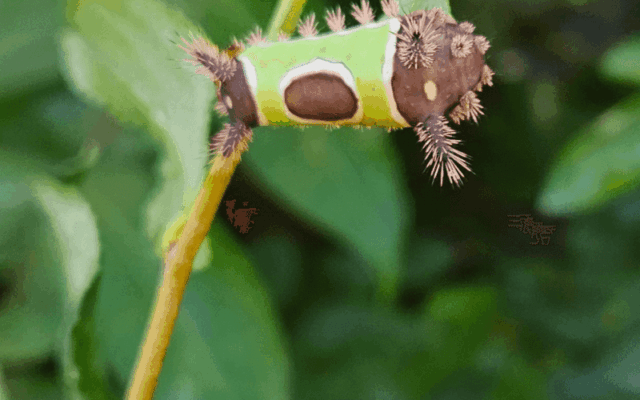
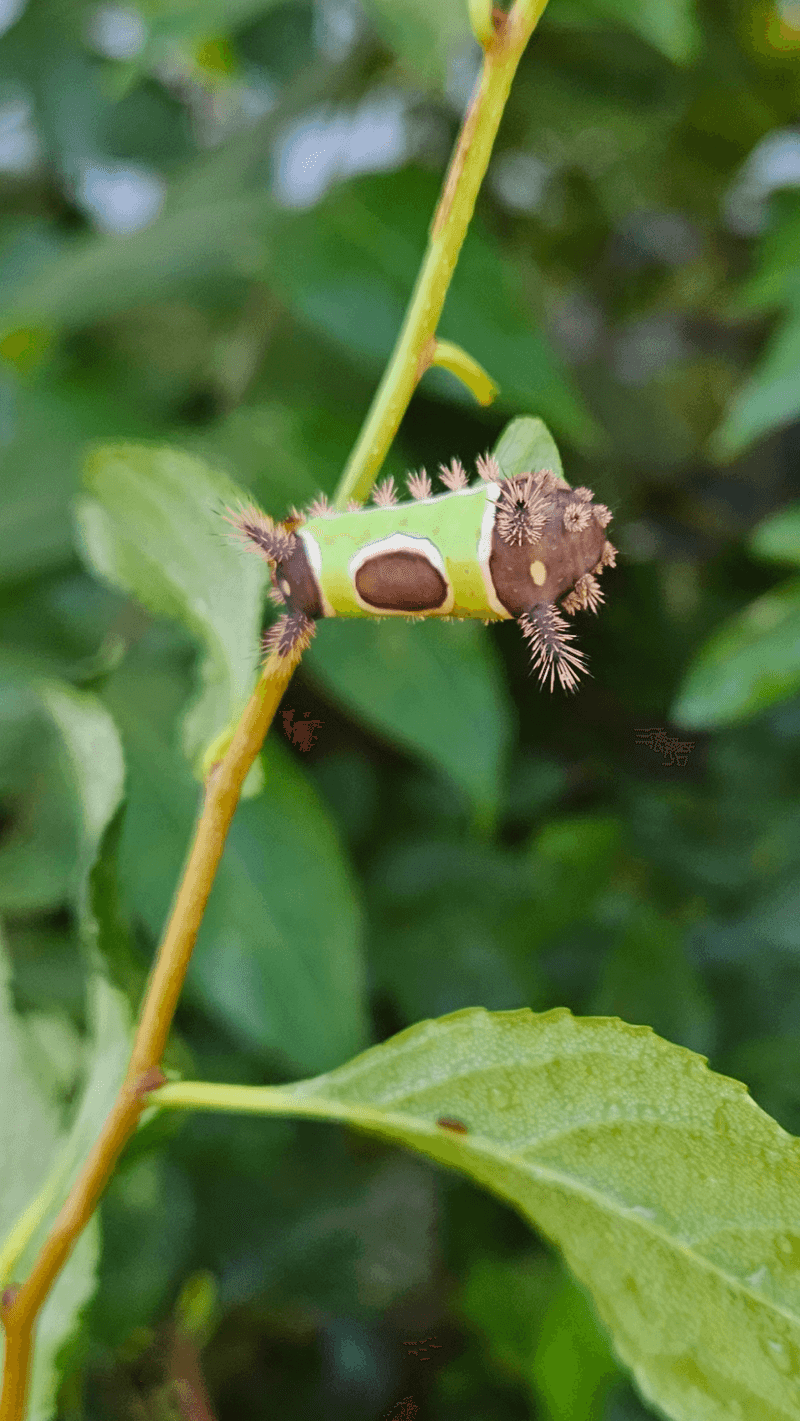
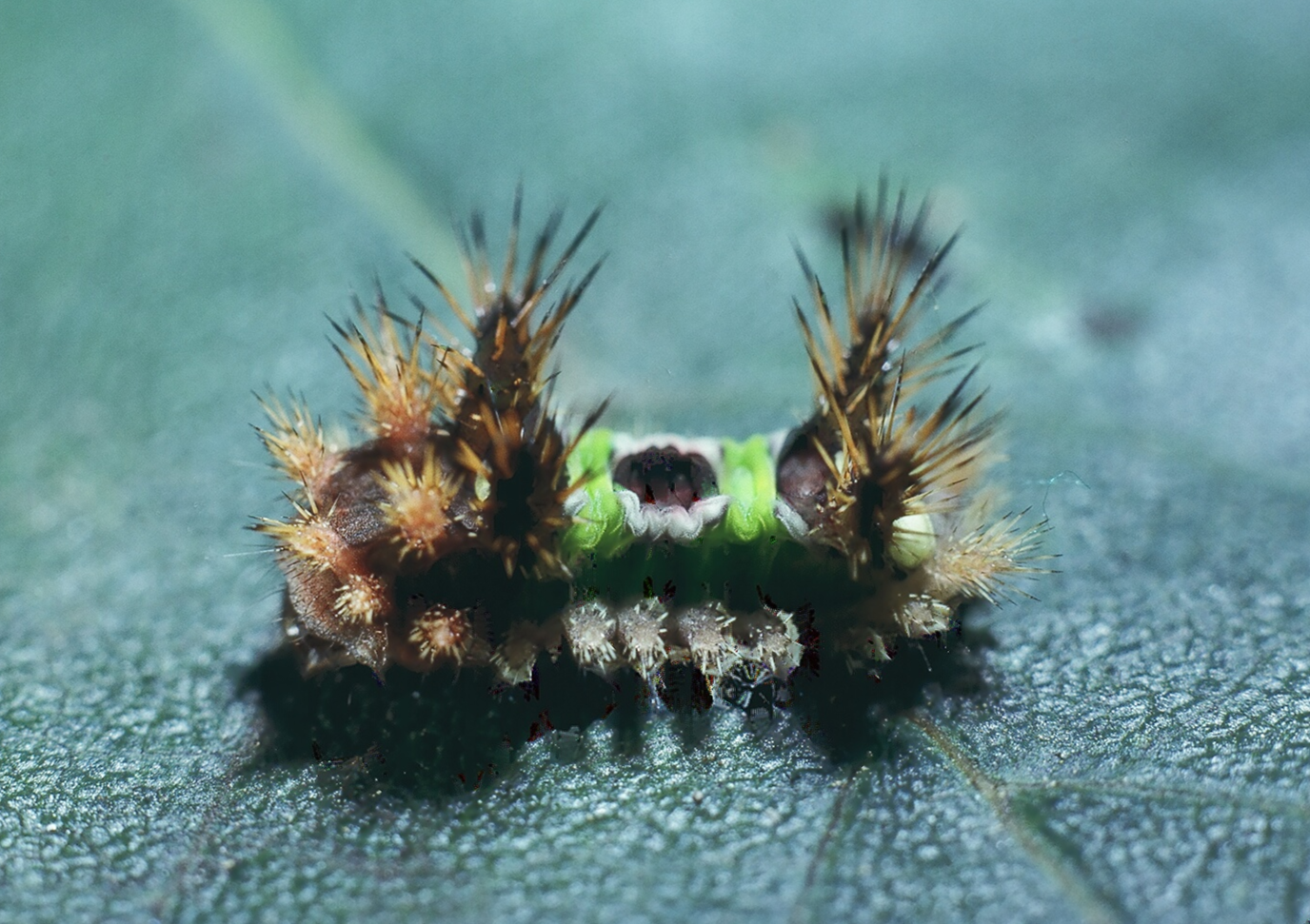
Many people only realize something stung them after the pain starts, so it helps to know what to look for. The saddleback caterpillar has a distinctive green patch on its back, outlined in white, with a brown center spot, set against a brown body.
It also has fleshy, spiny horns at each end of its body.
That look is a clue, not proof. UF/IFAS describes the saddleback as native to a large range in the eastern United States, which makes it plausible in a Tennessee garden.
Still, living in Tennessee does not prove a saddleback caused your reaction.
The phrase caterpillar sting is common shorthand. It does not work like a bee or wasp sting.
Instead, hairs or spines on certain caterpillars can break off on contact and release irritants. Most caterpillars are harmless, and a fuzzy or colorful look alone does not tell you which one you met.
If you are unsure, do not handle the caterpillar or try to catch it. Instead, describe what happened to Poison Control, including what it looked like if you noticed, where you were, and what you are feeling.
A phone photo taken from a safe distance can help.
Pain and skin reactions can vary
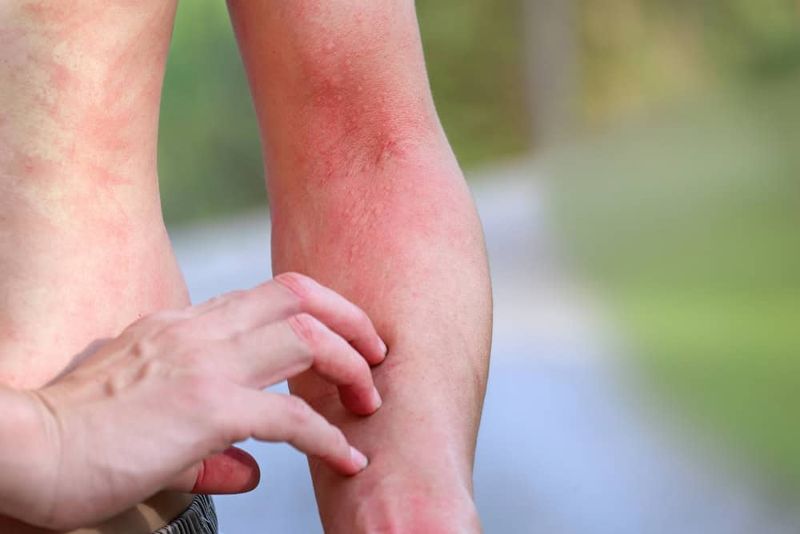
Reactions to suspected caterpillar contact are not the same for everyone. Some people feel a sudden burning or sharp pain within moments.
Others notice itching, redness, or a rash that shows up a little later.
Swelling is common around the spot, and some people develop blisters. As Poison Control describes, caterpillar contact can lead to pain, redness, swelling, and itching, with the exact mix depending on the person and the exposure.
How long it lasts also varies. NC State Extension notes that redness and swelling can last more than a week in some cases.
So there is no reliable timeline, and it is best not to expect the skin to look normal within a set number of hours or days.
Pay attention to how the area changes. A reaction that stays mild and slowly settles is different from one that spreads or gets worse.
Later in this article, you will find the signs that call for medical care.
Keep the spot clean and avoid scratching, which can irritate the skin even more.
Simple measures may ease discomfort

Once the area is washed and taped, comfort is the next goal. Poison Control says ice and oral pain relievers may help with the discomfort.
Wrap ice in a thin cloth so it does not sit directly on your skin.
For itching, Poison Control suggests hydrocortisone. Follow the directions on the package, and ask a pharmacist or Poison Control if you have questions about using it on a child or on sensitive skin.
Think of these as ways that may take the edge off, not as a cure. Nothing here is guaranteed to make the pain or itch go away.
University of Kentucky Extension says home first-aid options are not reliably effective, and it reports that antihistamines are often ineffective for caterpillar stings.
You may see other remedies online, such as baking-soda paste. Guidance on those differs, and they are not proven fixes, so there is no need to count on them.
If the pain is hard to manage, call Poison Control for advice based on your situation.
When should you call Poison Control?

If you are not sure what touched you or what care you need, call Poison Control. The Tennessee Poison Center lists its 24/7 Poison Help number as 1-800-222-1222, so you can reach someone at any hour.
The call is a good fit when the cause is uncertain. You do not have to know the species, and you do not need to be sure it was a saddleback.
The Tennessee Poison Center can walk you through what to expect when you call.
Be ready to describe what happened. Mention where on your body the contact occurred, what the caterpillar looked like if you saw it, what you have done so far, and what symptoms you have.
Also share the age of the person affected and any known allergies.
There is no set number of stings that you must reach before calling. If you are worried or the pain is not settling, make the call.
The specialist can give advice that fits the person’s symptoms and circumstances, which Poison Control points to as the reason to reach out.
Some symptoms need urgent medical care
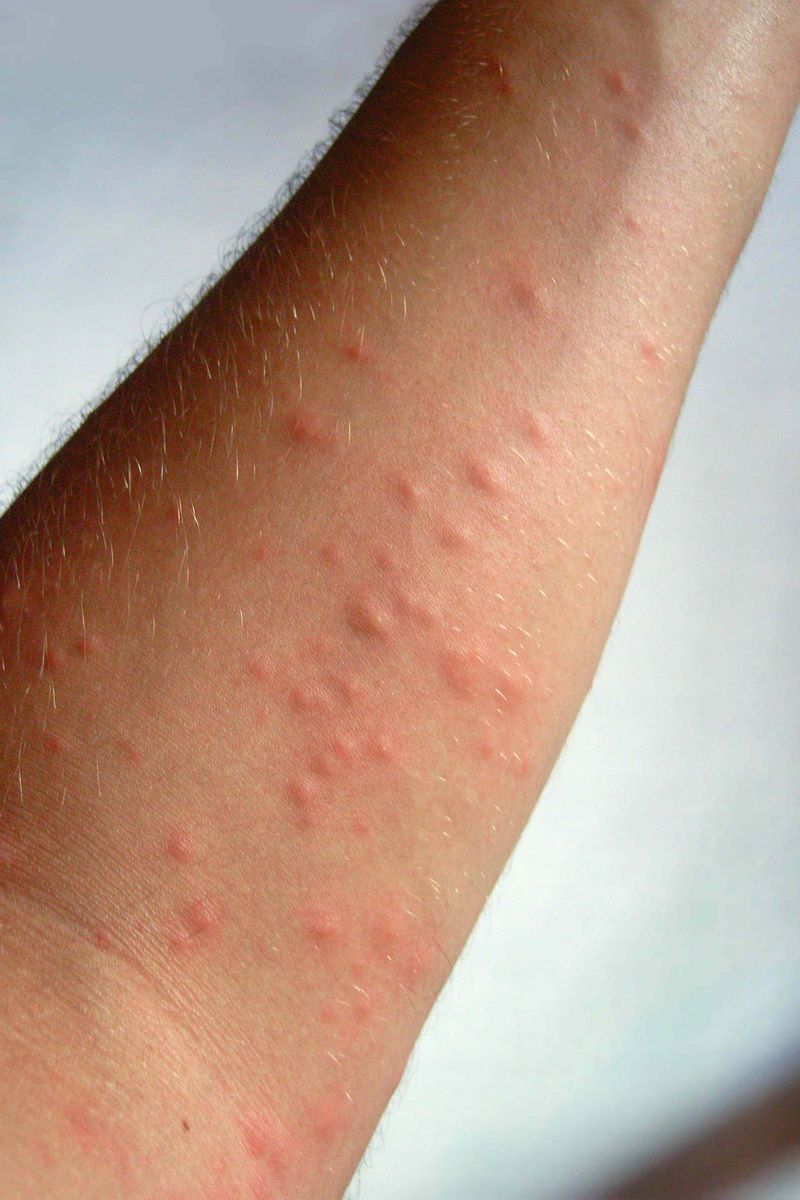
Call 911 right away for breathing trouble, fainting, or swelling of the lips, face, or tongue. Poison Control treats these as emergencies, and they should not wait for a phone consultation.
Other situations call for medical care, though not necessarily an ambulance. Seek care for a severe or worsening reaction, significant blistering, or if you have breathed in caterpillar hairs.
MedlinePlus offers similar guidance on when caterpillar contact needs a professional’s attention.
If a hair or spine gets in your eye, rinse the eye with water. Get medical advice if irritation persists, since an eye can be harder to treat at home than skin.
Notice that none of this depends on counting stings. Emergency care is tied to how a person is doing, not to a magic number.
If you are unsure which category your symptoms fall into, Tennessee Poison Center can help at 1-800-222-1222. When symptoms involve breathing or swelling of the face, skip the call and dial 911.
Reduce the chance of another garden encounter
A few habits can lower your chances of another painful surprise. Do not touch or crush an unfamiliar caterpillar, even if it looks small or harmless.
If one has to be moved, use a tool such as a stick or tongs rather than your bare hands, as University of Kentucky Extension advises, since spines can break on contact.
Gloves and long sleeves add a layer of protection when you are pulling weeds or trimming shrubs. Look at a leaf before you grab it, because caterpillars often sit on the underside.
How likely is a run-in here? Sources like UF/IFAS and NC State Extension make the saddleback’s presence in the region plausible, but they do not show a current Tennessee outbreak or how common encounters are.
There is no need to start routine spraying. If you want pest-management advice for your yard, ask your local Extension office and follow the product label for anything you use.
A careful eye usually does more than a sprayer.
Share this story