Get the latest garden guides in your inbox →
Gardening Latest
  • General Gardening
  • Lawn Care
  • Plant Care
  • Composting
  • Soil Health
  • Backyard
  • Garden Muse Magazine
  • General Gardening
  • Lawn Care
  • Plant Care
  • Composting
  • Soil Health
  • Backyard
  • Garden Muse Magazine
  • News
  • Gardening Calendar
  • Garden Structures
  • Vegetable Garden
  • Vertical Garden
  • Raised Beds
  • Hydroponics
  • General Equipment
  • Community Gardens
Garden Themes
  • Spiritual Garden
  • Hydroseeding
  • Seeding and Laying Sod
  • Artificial Grass
  • Lawn Care Equipment
  • Plants
  • Trees
  • Planting Tools
  • Composting Basics
  • Fertilizer
  • Alternative Growing Mediums
  • Front Yard
  • Backyard Activities
  • Landscaping
Gardening Latest

Explore by state

Which state is your garden in?

Currently viewing Tennessee

All states

Northeast

  • Connecticut —
  • Delaware 21
  • Maine —
  • Maryland 7
  • Massachusetts 23
  • New Hampshire —
  • New Jersey 7
  • New York 16
  • Pennsylvania 16
  • Rhode Island —
  • Vermont —

Southeast

  • Alabama 7
  • Arkansas —
  • Florida 7
  • Georgia 7
  • Kentucky 21
  • Louisiana 6
  • Mississippi —
  • North Carolina 5
  • South Carolina 20
  • Tennessee 4
  • Virginia 6
  • West Virginia —

Midwest

  • Illinois 6
  • Indiana 8
  • Iowa 20
  • Kansas —
  • Michigan 7
  • Minnesota 6
  • Missouri 6
  • Nebraska —
  • North Dakota —
  • Ohio 7
  • South Dakota —
  • Wisconsin 22

Southwest

  • Arizona 6
  • Colorado —
  • Nevada —
  • New Mexico —
  • Oklahoma —
  • Texas 6
  • Utah —

West

  • Alaska —
  • California 6
  • Hawaii —
  • Idaho —
  • Montana —
  • Oregon —
  • Washington —
  • Wyoming —

No state matches that search.

Site menu

Gardening Latest
  • General Gardening
    • News
    • Gardening Calendar
    • Garden Structures
    • Vegetable Garden
    • Vertical Garden
    • Raised Beds
    • Hydroponics
    • General Equipment
    • Community Gardens
    Garden Themes
    • Spiritual Garden
  • Lawn Care
    • Hydroseeding
    • Seeding and Laying Sod
    • Artificial Grass
    • Lawn Care Equipment
  • Plant Care
    • Plants
    • Trees
    • Planting Tools
  • Composting
    • Composting Basics
  • Soil Health
    • Fertilizer
    • Alternative Growing Mediums
  • Backyard
    • Front Yard
    • Backyard Activities
    • Landscaping
  • Garden Muse Magazine

Explore

  • About GardeningLatest.com
  • Contact Us

Get the latest from the garden

New guides on lawn care, plants and backyard projects, sent when they go up.

Subscribe →

Follow

  • Facebook
  • X
  • Pinterest
  • YouTube
Tennessee Gardening

Seeing a Red Fox Cross Your Tennessee Yard This Winter Means It’s Busy With Something Important

A red fox trotting across your yard in winter is busy with something, most likely finding food or moving through the area…

JM

By Jolene Mabry

November 23, 2026 · 6 min read

Seeing a Red Fox Cross Your Tennessee Yard This Winter Means It’s Busy With Something Important
Seeing a Red Fox Cross Your Tennessee Yard This Winter Means It's Busy With Something Important

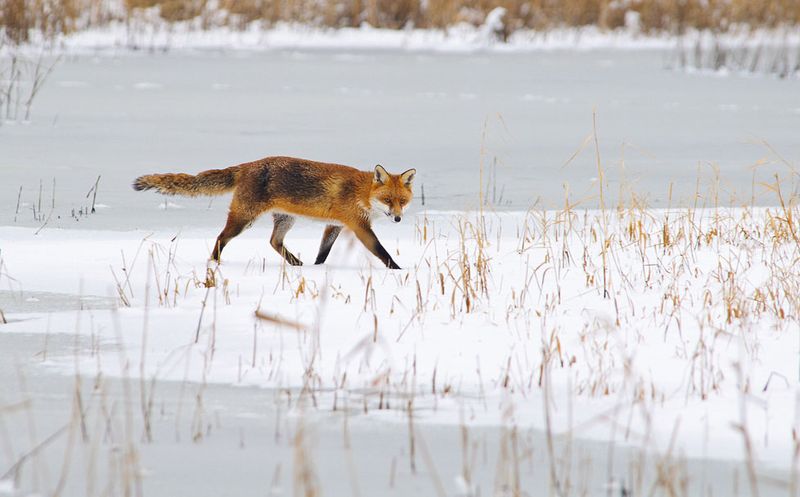
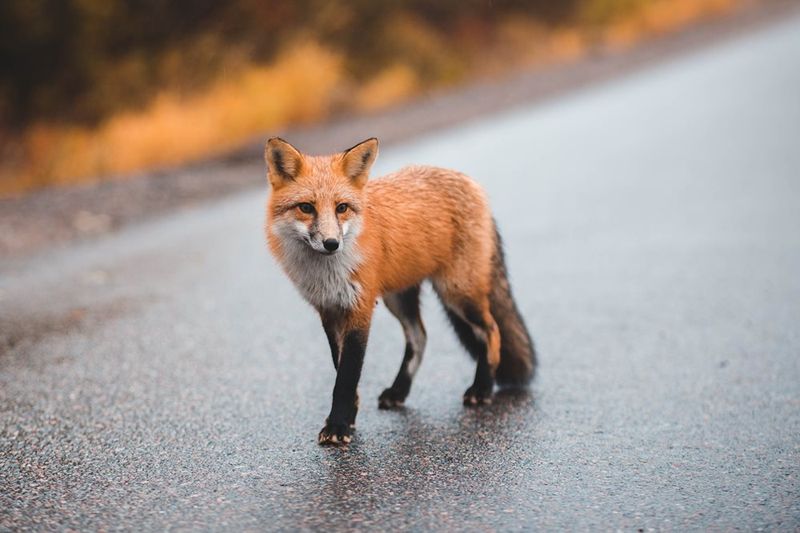
A red fox trotting across your yard in winter is busy with something, most likely finding food or moving through the area it calls home. In late winter it may also be part of Tennessee’s usual mating season.

You can’t tell exactly which one by watching a few seconds of a crossing. Knowing the plausible reasons, and what to do about them, helps you enjoy the sighting without worry or guesswork.

At a glance

Where
Tennessee Gardening
Hardiness zone
7 0 to 10°F
Read
6 minutes
Published
November 23, 2026

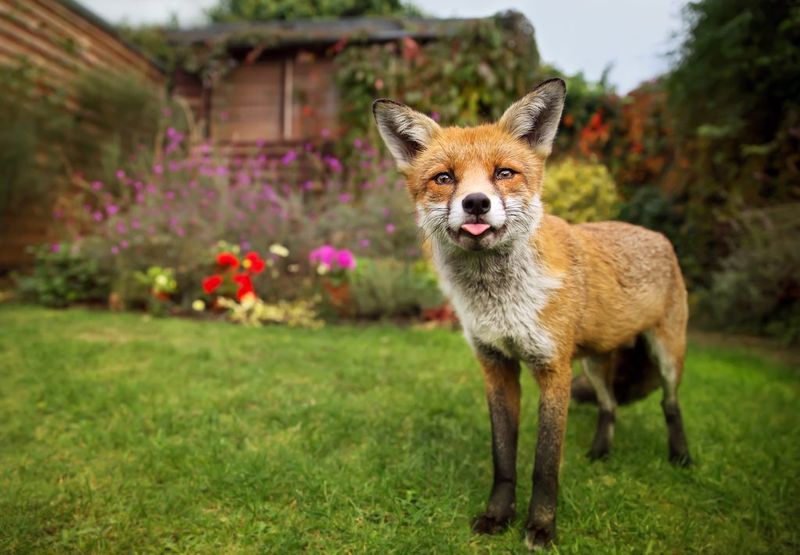
Red foxes live across Tennessee

Red foxes live across Tennessee
© BBC Wildlife Magazine

If a red fox crossed your yard, you saw an animal that belongs in Tennessee. According to the Tennessee Wildlife Resources Agency red fox profile, red foxes are common statewide.

That includes the hills of East Tennessee, the farmland of the Middle part of the state, and the flatter country out west.

Foxes also frequently use urban areas. Neighborhoods, golf courses, greenbelts, cemeteries, and the edges of shopping centers can all offer cover and food.

A yard crossing fits what we know about where these animals live, so it does not mean something unusual is going on.

The same TWRA profile says red foxes primarily eat rabbits and small rodents. They are not picky, though, and they eat other foods as well.

Fruit, insects, and birds can all be part of a fox’s menu depending on the season and what is easy to find.

That variety is worth keeping in mind. A fox passing through your property does not prove it was hunting there, and it does not mean it is controlling mice or rabbits for you.

A single sighting cannot show what the animal has eaten or what effect it has on your neighborhood.

What you can say is simple. Red foxes are neighbors that share human-inhabited places across Tennessee, and seeing one now and then is a normal part of living here.

What a winter crossing might mean
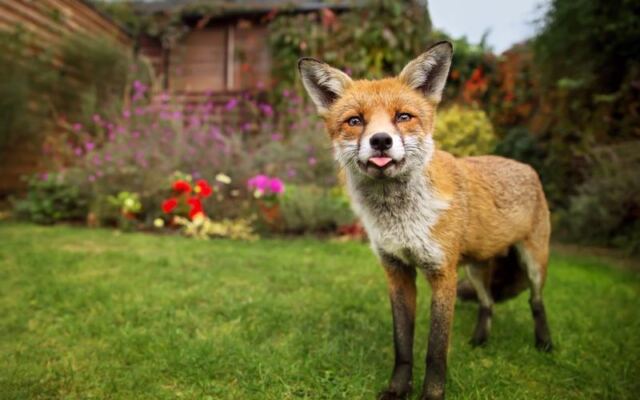
What a winter crossing might mean
© Wildlife Online

Two everyday explanations come to mind first. The fox may be foraging, looking for something to eat along fence lines, brush, or open lawn.

Or it may simply be traveling through part of its territory, using your yard as a shortcut between wooded spots.

The most useful thing you can do is make your yard less appealing as a food stop.

Nothing about a quick crossing tells you which one applies. Both are plausible, and a fox can do both in the same evening.

Treat them as reasonable possibilities rather than answers.

Foxes can also be active in daylight, so a sighting at noon is not automatically strange. Utah State University Extension notes that daytime activity alone does not indicate rabies.

That does not make a fox safe to approach, though. Keep your distance whatever time of day you see one.

For a picture of winter hunting, the National Park Service offers one example. In its red fox species spotlight, it describes foxes hunting rodents in winter, including during the day, in a northeastern setting with snow.

Tennessee winters are different, and that account does not prove what a fox in your yard is doing.

It is better to think of the sighting as a snapshot. A quiet look at a fox moving with purpose is enough to enjoy, without needing to name the reason.

Tennessee’s usual mating season falls in January and February
Tennessee’s usual mating season falls in January and February
© A Stamp A Day – WordPress.com

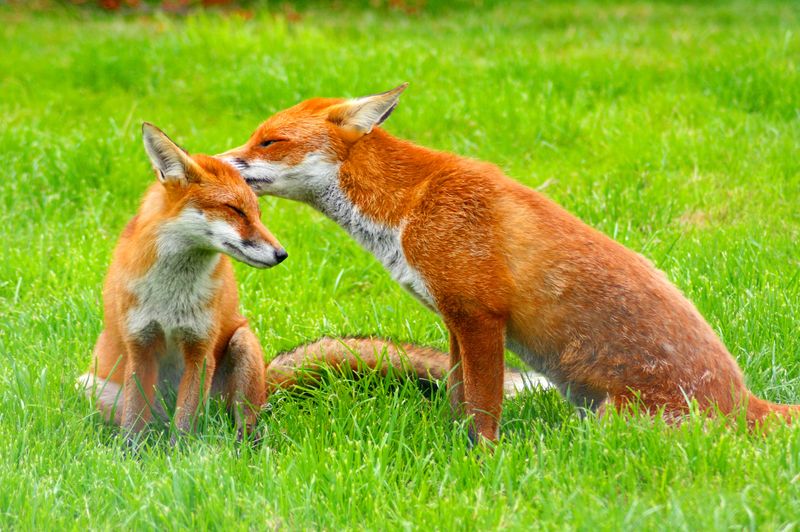
Late winter has its own rhythm for red foxes. The TWRA red fox profile gives January and February as the usual mating months in Tennessee.

Young are typically born in March or April.

That timing adds a third possibility to the list. A fox you see in midwinter may be moving around more because it is breeding season.

Foxes may range farther at that time of year, which can bring them through places you do not usually see them.

Still, these dates describe a general pattern across the state. They do not show that the fox in your yard is seeking a mate.

A fox seen in January could just as easily be hunting or passing through, just as it might in October.

The calendar also says nothing about where the fox is headed. A crossing does not mean it is going to a den, and it does not mean young foxes are nearby.

Pups arrive weeks later, and one passing animal cannot tell you where, or whether, a family is being raised.

So if a fox crosses your lawn in February, it is fair to say the timing fits the usual season. It is not fair to say more than that.

Reduce attractants without confronting the fox
Reduce attractants without confronting the fox
© Yahoo

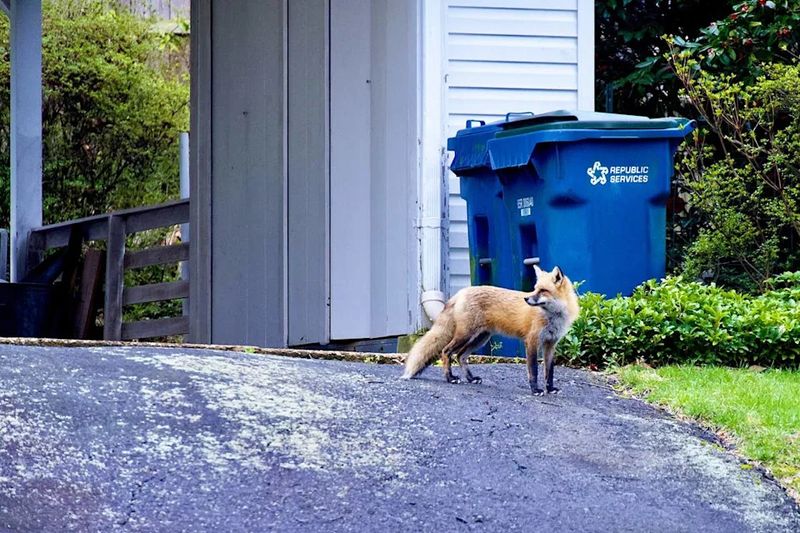
The most useful thing you can do is make your yard less appealing as a food stop. Secure trash cans with tight lids or keep them in a garage until pickup morning.

Bring pet food inside, and pick up fallen fruit from trees and the ground.

Both Utah State University Extension and Tennessee wildlife guidance point to food as the main draw. The TWRA wildlife disease page also advises people to keep their distance from wildlife and not to feed it.

Do not feed a fox, even casually. Leaving out scraps teaches it to return and can bring it too close to people and pets.

Also avoid approaching, chasing, or handling one, however calm it looks.

Supervise pets when they are outside, especially small ones, and consider keeping cats indoors. A short leash walk after dark is a good habit.

A quick check of the yard with a porch light before letting dogs out is a simple precaution.

These steps are practical habits, not guarantees. A fox may still pass through now and then, and that is fine.

The goal is to make your yard a place to cross rather than a place to linger.

When to contact an expert
When to contact an expert
© Patify

Most fox sightings need nothing more than a look from the window. A fox that trots through and keeps going is behaving the way foxes do.

Action makes sense when something seems truly off.

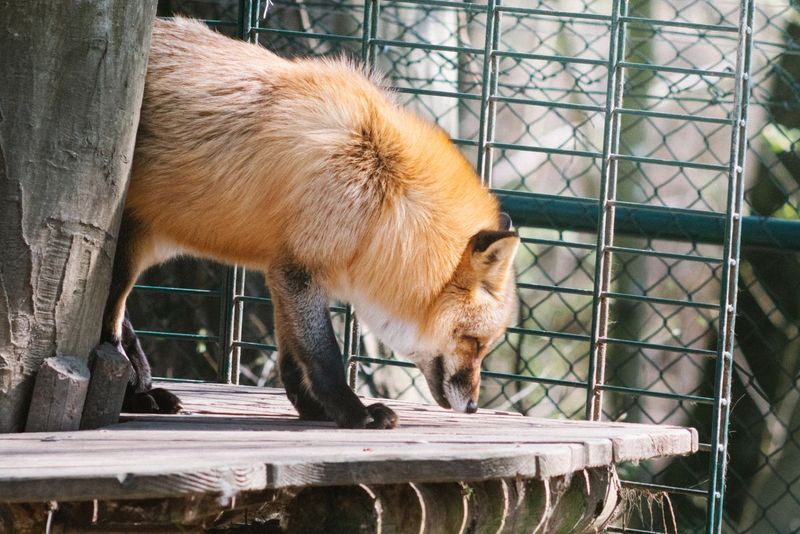
If a fox looks sick or injured, keep your distance and call animal control or wildlife authorities. Signs might include stumbling, trouble standing, obvious wounds, or behavior that seems unusual rather than just daytime activity.

The TWRA wildlife disease page is a good place to start for guidance.

A bite or other possible exposure to a wild carnivore such as a fox is a different matter. Talk with public-health officials promptly.

The Tennessee Department of Health rabies page explains how to reach them and what to expect. Do this even if the wound seems small.

Sometimes the issue is a genuine nuisance, such as a fox repeatedly damaging property after you have removed attractants. TWRA’s wildlife damage control information lists animal-damage-control operators who handle these cases.

Please do not try to trap a fox and drive it somewhere else. Live wildlife cannot be transported and released without a permit in Tennessee.

Leave capture and removal to licensed professionals.

Observe from a distance
Observe from a distance
© Critter Control

Foraging, travel, and the usual January and February mating season are all reasonable explanations for a winter crossing, but one sighting cannot tell you the fox’s purpose or whether a den is nearby. Watch from a window, keep food out of reach, and call for help only if the fox seems sick, injured, or truly troublesome.

The TWRA red fox profile and its wildlife disease page are good places to learn more.

The fox probably has its own plans for the night, and they do not include you.

Share this story
JM

Written by

Jolene Mabry

More from Jolene Mabry →

About Gardening Latest

Gardening Latest provides in-depth guides to maintaining and enhancing your garden and backyard. Learn how to make the most of the space you have and create a beautiful garden.

More about us →

Latest stories

  • Texas GardeningThis Invasive Tree Is Spreading Through Texas Neighborhoods Faster Than You Can Pull It

    This Invasive Tree Is Spreading Through Texas Neighborhoods Faster Than You Can Pull It

    4 min ago
  • Wisconsin GardeningWisconsin Has Two Kinds of Bats That Spend the Whole Winter Inside People’s Homes

    Wisconsin Has Two Kinds of Bats That Spend the Whole Winter Inside People’s Homes

    15 min ago
  • Missouri GardeningWhat to Do the Moment a Saddleback Caterpillar Stings You in Your Missouri Garden

    What to Do the Moment a Saddleback Caterpillar Stings You in Your Missouri Garden

    21 min ago
  • Alabama GardeningThat Messy Bundle High In Your Alabama Oak Isn’t A Bird Nest At All

    That Messy Bundle High In Your Alabama Oak Isn’t A Bird Nest At All

    33 min ago
  • Minnesota GardeningCoyotes Are Pairing Up Across Minnesota Right Now, So Keep a Closer Eye on Your Dog

    Coyotes Are Pairing Up Across Minnesota Right Now, So Keep a Closer Eye on Your Dog

    39 min ago

Gardening by state

Stories for your state, and the hardiness zone most of it gardens in.

Keep exploring

Read next

All Tennessee Gardening →
Tennessee GardeningA Saddleback Caterpillar Just Stung You in Your Tennessee Garden? Here’s What to Do First
Tennessee Gardening

A Saddleback Caterpillar Just Stung You in Your Tennessee Garden? Here’s What to Do First

2 hr ago
Tennessee GardeningTennessee Gardeners Share Their Yards With a Venomous Mammal That Weighs Under an Ounce
Tennessee Gardening

Tennessee Gardeners Share Their Yards With a Venomous Mammal That Weighs Under an Ounce

6 hr ago
Tennessee GardeningThese Venomous Critters Hide in Tennessee Gardens Every Year, and Here’s How to Spot Them
Tennessee Gardening

These Venomous Critters Hide in Tennessee Gardens Every Year, and Here’s How to Spot Them

9 hr ago

More from Tennessee Gardening

  • Coyotes Are Pairing Up Across Minnesota Right Now, So Keep a Closer Eye on Your Dog

    39 min ago
  • The Quiet Owl Hunting Your Illinois Backyard After Dark Is Busy Clearing Out Your Mice

    45 min ago
Back to top

Leave a response Cancel

Your email address stays private. Required fields are marked with an asterisk.

Gardening Latest

In-depth guides to maintaining and enhancing your garden and backyard: how to make the most of the space you have, and how to make it beautiful.

  • Facebook
  • X
  • Pinterest
  • YouTube

We may earn a portion of sales from products or services that are purchased through our site as part of our affiliate partnerships with retailers.

Explore

  • About GardeningLatest.com
  • Contact Us
  • Terms and Conditions
  • Privacy
  • Editorial Note:
  • FTC Disclosure

Newsletter

New garden guides and seasonal tips, straight to your inbox.

We’ll email you a link to confirm. Unsubscribe any time.

Almost there! Check your inbox and tap the link to confirm.

© 2026 Gardening Latest. All rights reserved.

Back to top