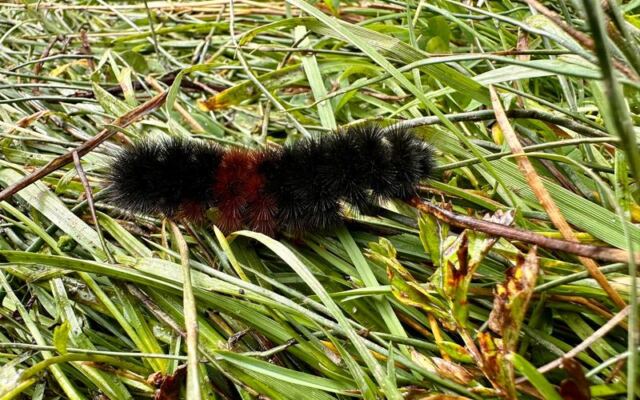
Every fall, fuzzy black and rusty-orange caterpillars scoot across New York roads, trails, and sidewalks. Folklore says the width of their orange band tells you how harsh the winter will be.
It is a fun story to share with a neighbor, but does it hold up? Let’s see what the science says before the first snow arrives.
A New York outing helped popularize the woolly-bear legend
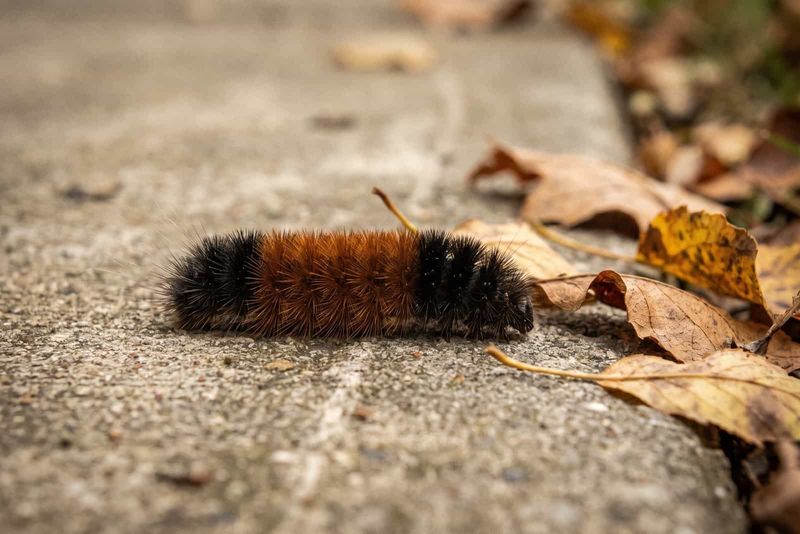
Short answer: no. The width of a woolly bear’s orange band does not reliably forecast the coming winter. The familiar claim says a wide orange band means a mild winter and lots of black means a harsh one, but that is folklore, not a tested forecasting method.
So why does the story stick around? Part of the answer comes from New York.
In 1948, an outing at Bear Mountain involving 15 specimens helped popularize the legend, and the tale spread through newspapers and conversation from there. Plenty of people still repeat it every October.
That outing was a small episode, though. It was not strong scientific validation, and nobody ran it again as a replicated forecasting test.
National Weather Service material on the woolly bear treats the winter-predictor idea as a popular tale rather than a dependable method.
Think of the Bear Mountain story as a good reason the legend is famous, not a good reason to trust it. A catchy tradition and a reliable forecast are two very different things, and the caterpillar only really earns the first label.
The caterpillar is preparing to survive winter, not predict it
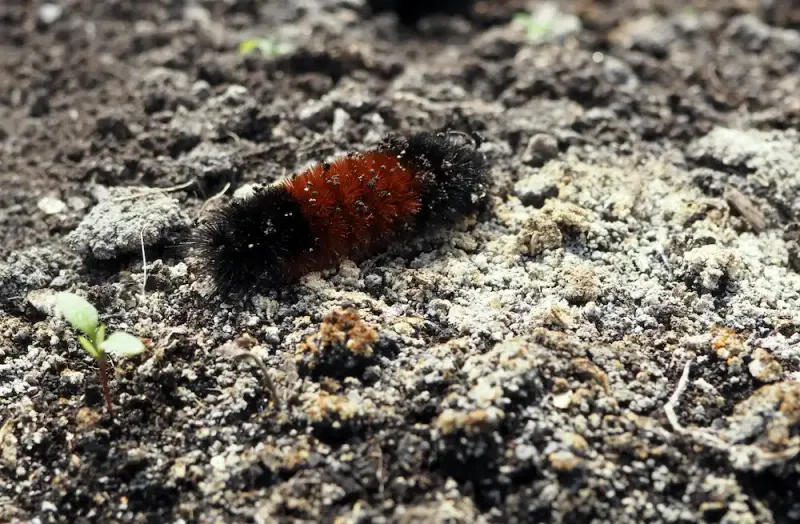
The classic woolly bear, black at both ends with a rusty band in the middle, is the larva of the Isabella tiger moth, Pyrrharctia isabella. Unlike many insects, it spends the winter as a caterpillar instead of as an egg or adult.
That is why you see so many of them wandering in autumn.
Those fall travelers are often looking for shelter, such as leaf litter, logs, or loose bark. Cornell’s wildlife health team describes the woolly bear among wildlife that prepare for winter in clever ways.
A caterpillar on the move in October is simply getting ready, and its hurry says nothing about how severe the winter will be.
Here is the key difference. Surviving cold is a skill the caterpillar uses on its own behalf.
It does not mean the animal can sense or announce what the weather will do across a whole region.
Extension specialists make the same point. As University of Missouri Extension explains, its coloring comes down to biology, not weather prophecy.
A tough winter coat for one caterpillar is not a crystal ball for the Catskills or Long Island.
Its orange and black bands change as it grows
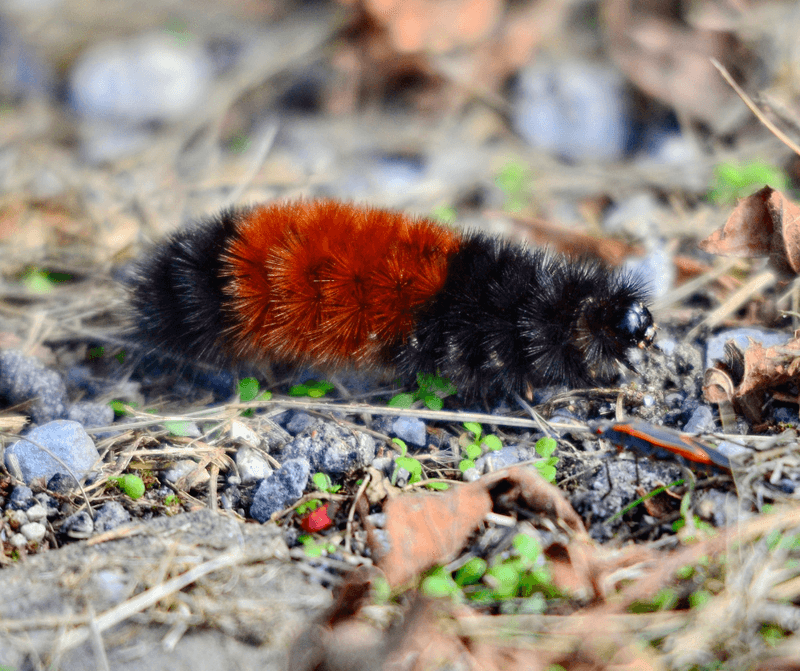
A woolly bear does not keep one fixed look. Its banding shifts as it grows and molts, shedding its skin several times before cold weather arrives.
A caterpillar you see in September may look a little different from the same animal earlier in the season.
Age matters, and so do feeding and growing-season conditions. A caterpillar that has molted more times, or has eaten well, can show a different mix of black and orange than a younger or less well-fed neighbor.
University of Missouri Extension points to these kinds of factors as the real reason for color differences.
That means the band you see today is a snapshot of one stage in a changing animal. It is not a fixed message about the months ahead.
Two caterpillars on the same sidewalk can look quite different for ordinary biological reasons.
Some people suggest the bands may reflect past growing conditions, and that idea sounds neat. Even so, it does not turn one caterpillar into a trustworthy weather diary.
The National Weather Service also notes that caterpillar color varies for reasons unrelated to the winter forecast.
If you want a fun fall project, watch how a woolly bear looks over several weeks. Just enjoy the change as a growth story rather than a weather clue.
No established rule turns band width into a winter forecast
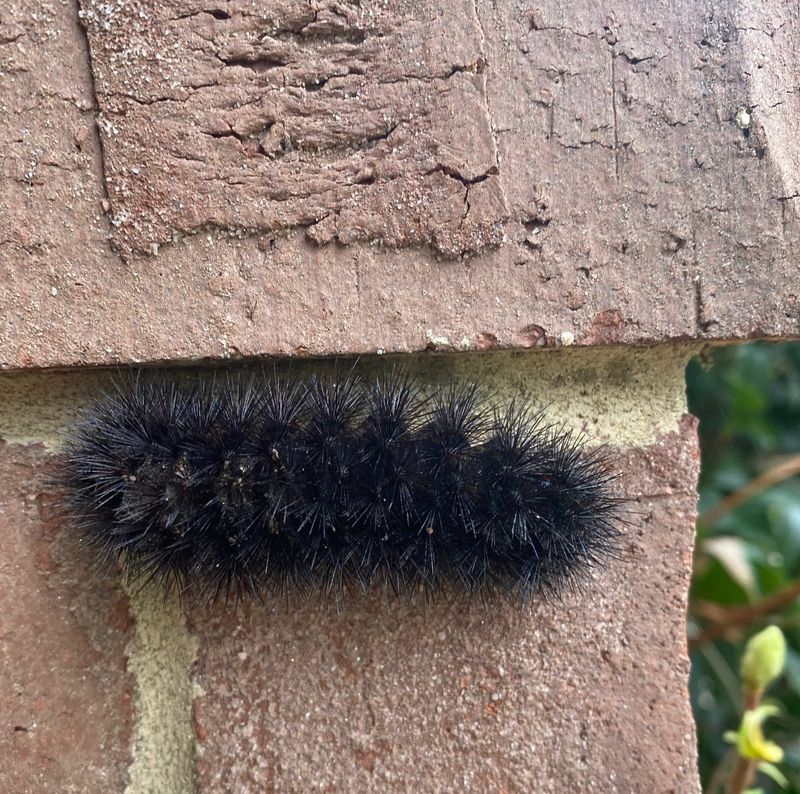
Let’s test the folklore directly. The popular claims say a wide orange band means a mild winter, while more black means a harsh one.
No reliable forecasting rule backs either idea, and there is no useful band-width threshold that anyone has established.
Check the caterpillars themselves and you will see the problem. Neighbors in the same town can find woolly bears with quite different bands in the same week, and both cannot be right about the same winter.
Both the National Weather Service and University of Missouri Extension describe the claim as folklore rather than a validated method.
You may also hear fancier versions. Some say the position of the band shows which part of winter will be coldest, that the 13 body segments stand for 13 winter weeks, or that the direction a caterpillar crawls signals severity.
These are all folk traditions, not practical forecast methods.
A few lucky matches over the years do not prove a pattern. People tend to remember the winters when the caterpillar seemed right and forget the ones when it missed.
Without a clear, repeatable test, a handful of stories is just a handful of stories.
The fair conclusion is simple. The legend is charming, but nobody has shown that it works.
NOAA offers a broad, probabilistic view of the coming winter
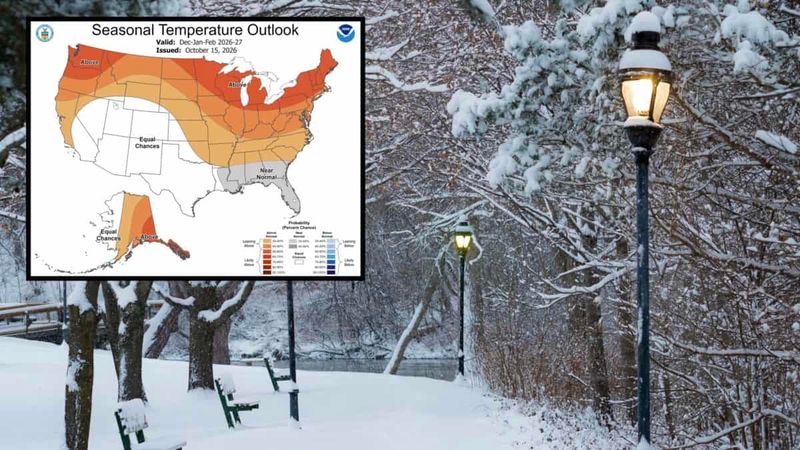
If you want seasonal context, look to NOAA’s Climate Prediction Center. In its November 19, 2026 discussion, the December through February outlook favored above-normal temperatures across the Northeast.
It also showed an increased chance of above-normal precipitation there, according to NOAA’s seasonal outlook discussion.
Notice the wording: favored, and increased chance. This is a broad, probabilistic outlook, which means it shifts the odds across a large region over three months.
It is not a promise.
That also means it does not tell you what will happen in a particular New York location. It does not pinpoint individual storms, and it is not a prediction of snowfall.
A mild-leaning winter can still bring a cold snap or a big snow day.
Compare that with the caterpillar. NOAA’s outlook comes from a dated, public discussion that explains its reasoning and its limits.
A woolly bear’s band comes with no such explanation, and nothing shows it tracks the season ahead.
Use the outlook the way you would use odds, not guarantees. It can help set expectations while still leaving room for the daily forecast to surprise you.
A fuzzy caterpillar is not always a woolly bear
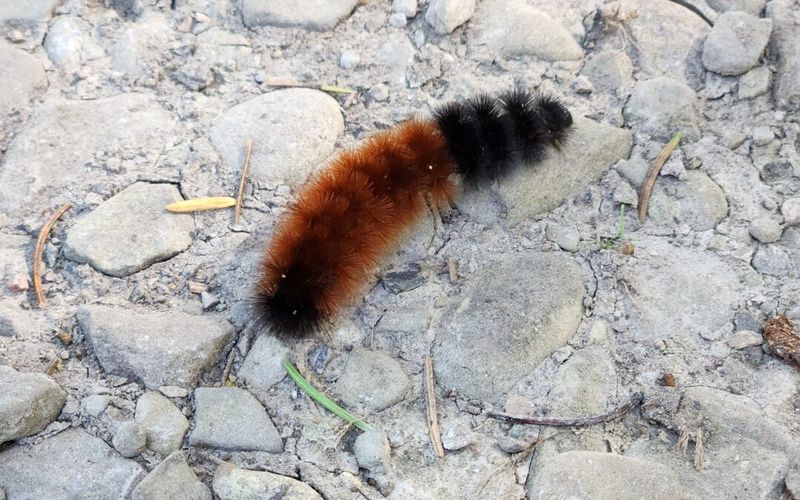
Here is a quick safety note, separate from the weather debate. The name woolly bear can refer to more than one kind of hairy caterpillar.
Fuzziness alone is not enough to know what you are looking at, so avoid assuming an unfamiliar caterpillar is the Isabella tiger moth larva or safe to touch. Penn State Extension’s page on the wooly banded caterpillar is a reminder of how much naming can vary.
Woolly-bear bristles do not inject venom, but Missouri Extension notes they may cause dermatitis in some people. That is a skin reaction, and it can happen even without a sting.
If hairs do touch you, MedlinePlus advises removing them with sticky tape and then washing the area. Seek medical help if hairs get in the eyes or are inhaled.
The easy habit is to look, photograph, and let the caterpillar go on its way. That keeps you comfortable and keeps the animal undisturbed.
Use a seasonal outlook, not a caterpillar, to plan
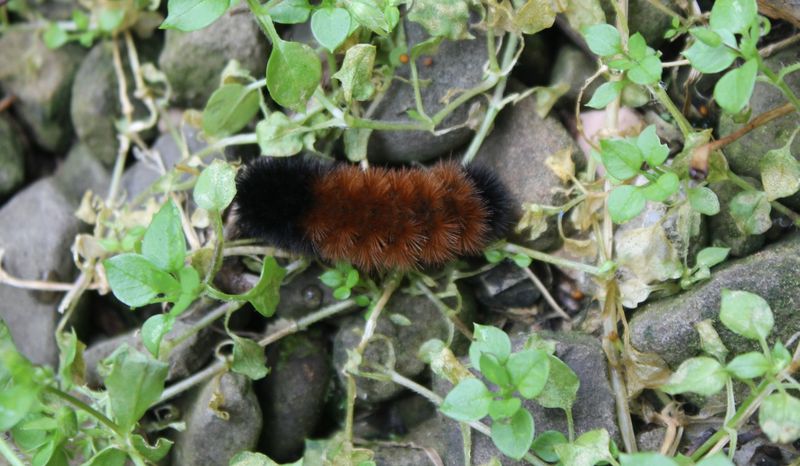
Go ahead and enjoy woolly bears. They are charming bits of autumn wildlife, and spotting one is a fine reason to slow down on a walk.
Just leave the winter planning to better tools.
For broad context, check NOAA’s seasonal outlook, and remember it describes regional odds, not your street. Your local forecast will fill in the details as each week arrives.
The caterpillar may not know the weather, but it does know how to find a warm spot under the leaves.
Share this story