Get the latest garden guides in your inbox →
Gardening Latest
  • General Gardening
  • Lawn Care
  • Plant Care
  • Composting
  • Soil Health
  • Backyard
  • Garden Muse Magazine
  • General Gardening
  • Lawn Care
  • Plant Care
  • Composting
  • Soil Health
  • Backyard
  • Garden Muse Magazine
  • News
  • Gardening Calendar
  • Garden Structures
  • Vegetable Garden
  • Vertical Garden
  • Raised Beds
  • Hydroponics
  • General Equipment
  • Community Gardens
Garden Themes
  • Spiritual Garden
  • Hydroseeding
  • Seeding and Laying Sod
  • Artificial Grass
  • Lawn Care Equipment
  • Plants
  • Trees
  • Planting Tools
  • Composting Basics
  • Fertilizer
  • Alternative Growing Mediums
  • Front Yard
  • Backyard Activities
  • Landscaping
Gardening Latest

Explore by state

Which state is your garden in?

Currently viewing Indiana

All states

Northeast

  • Connecticut —
  • Delaware 24
  • Maine —
  • Maryland 10
  • Massachusetts 27
  • New Hampshire —
  • New Jersey 11
  • New York 20
  • Pennsylvania 20
  • Rhode Island —
  • Vermont —

Southeast

  • Alabama 10
  • Arkansas —
  • Florida 10
  • Georgia 11
  • Kentucky 24
  • Louisiana 9
  • Mississippi —
  • North Carolina 9
  • South Carolina 23
  • Tennessee 7
  • Virginia 9
  • West Virginia —

Midwest

  • Illinois 9
  • Indiana 12
  • Iowa 23
  • Kansas —
  • Michigan 11
  • Minnesota 9
  • Missouri 9
  • Nebraska —
  • North Dakota —
  • Ohio 11
  • South Dakota —
  • Wisconsin 25

Southwest

  • Arizona 10
  • Colorado —
  • Nevada —
  • New Mexico —
  • Oklahoma —
  • Texas 9
  • Utah —

West

  • Alaska —
  • California 10
  • Hawaii —
  • Idaho —
  • Montana —
  • Oregon —
  • Washington —
  • Wyoming —

No state matches that search.

Site menu

Gardening Latest
  • General Gardening
    • News
    • Gardening Calendar
    • Garden Structures
    • Vegetable Garden
    • Vertical Garden
    • Raised Beds
    • Hydroponics
    • General Equipment
    • Community Gardens
    Garden Themes
    • Spiritual Garden
  • Lawn Care
    • Hydroseeding
    • Seeding and Laying Sod
    • Artificial Grass
    • Lawn Care Equipment
  • Plant Care
    • Plants
    • Trees
    • Planting Tools
  • Composting
    • Composting Basics
  • Soil Health
    • Fertilizer
    • Alternative Growing Mediums
  • Backyard
    • Front Yard
    • Backyard Activities
    • Landscaping
  • Garden Muse Magazine

Explore

  • About GardeningLatest.com
  • Contact Us

Get the latest from the garden

New guides on lawn care, plants and backyard projects, sent when they go up.

Subscribe →

Follow

  • Facebook
  • X
  • Pinterest
  • YouTube
Indiana Gardening

Those Bright Orange Berries Bursting On Indiana Tree Vines Are Strangling The Tree

Those bright berries bursting along a vine in an Indiana tree may look festive, but the plant can squeeze and harm…

DH

By Dale Hutchins

November 23, 2026 · 6 min read

Those Bright Orange Berries Bursting On Indiana Tree Vines Are Strangling The Tree

Those bright berries bursting along a vine in an Indiana tree may look festive, but the plant can squeeze and harm the tree holding it up. Oriental bittersweet is a nonnative climbing vine, and it can wrap trunks, shade leaves, and add heavy weight to branches.

Indiana also has a native bittersweet that looks similar, so a quick check matters before anyone starts cutting. Here is how to tell them apart and what to do safely.

At a glance

Where
Indiana Gardening
Hardiness zone
6 −10 to 0°F
Read
6 minutes
Published
November 23, 2026

How the vine can damage trees

How the vine can damage trees
© Reddit

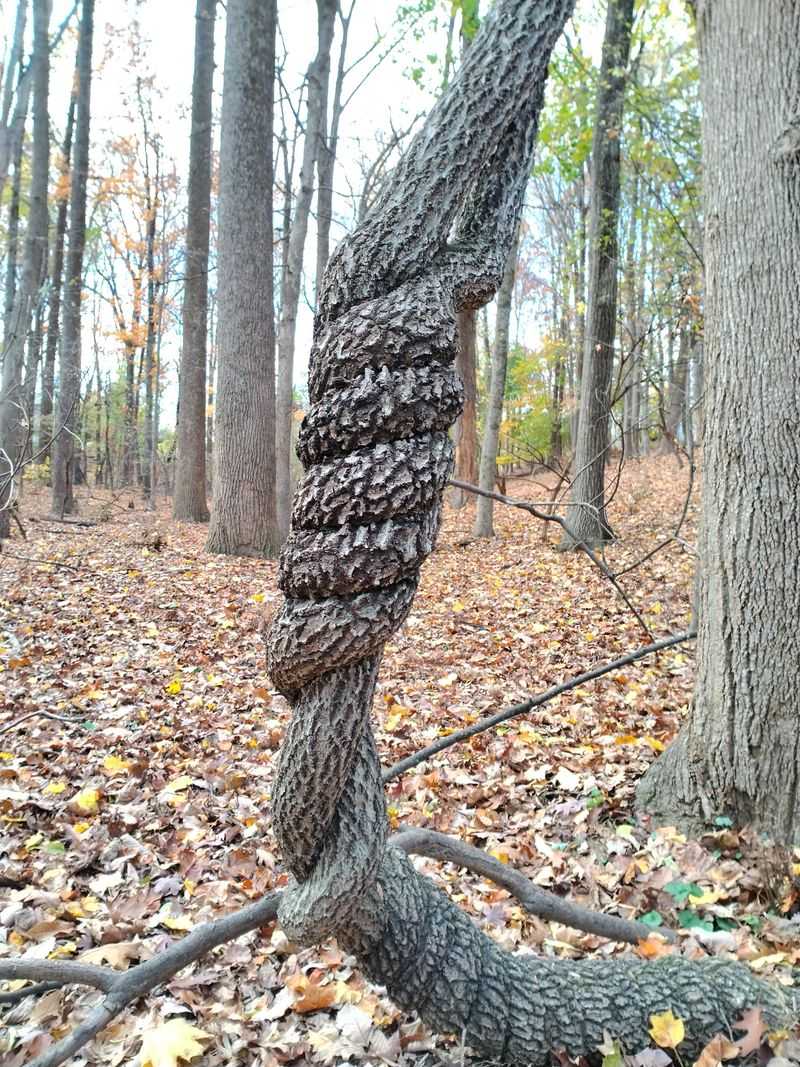
Oriental bittersweet (Celastrus orbiculatus) is a nonnative, woody climbing vine that has been recorded in Indiana. It climbs by twining around whatever it can reach, including saplings, shrubs, and mature trees.

Over time, the stems thicken into ropes that can tighten around a host.

That tight wrapping can girdle trunks and branches, which means it squeezes the layer just under the bark that moves water and food. Dense vine growth can also shade the host’s leaves and the plants below it.

A tree that gets less light has less energy to work with, especially if it was already stressed.

Weight is another problem. A canopy loaded with vine leaves and stems catches more wind and holds more ice, so branches are more likely to snap in a storm.

A USDA Forest Service assessment of oriental bittersweet in northern forests describes these kinds of impacts on forest trees and other plants.

These are risks, not guarantees. How much harm a vine does depends on how long it has been growing, how large it is, and how healthy the tree is.

Still, the USDA Forest Service species review shows why a vine that has reached the canopy deserves attention. A young tree with vines winding up its trunk is the most worrying case, since it has the least strength to spare.

Check where the fruit clusters grow
Check where the fruit clusters grow
© NAISMA

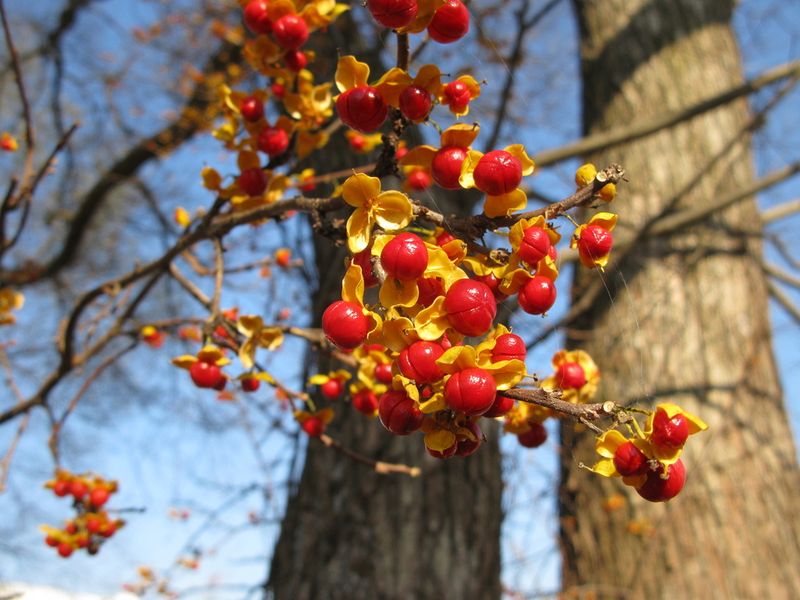
Color is a poor guide here, because both bittersweets have showy fruit. Placement is the better clue.

Indiana’s Oriental bittersweet fact sheet points to where flowers and fruit sit on the stem.

If the infestation is new and the vines are young, hand-pulling can work, but only when you get the roots out too.

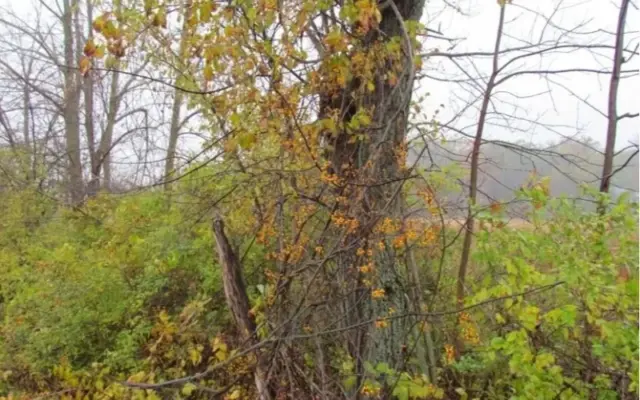
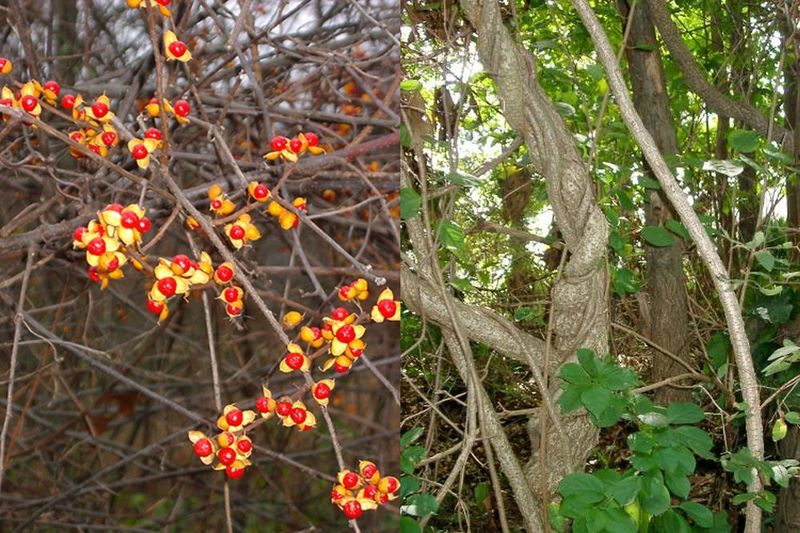
On Oriental bittersweet, the clusters grow in small groups along the stem, tucked into the leaf axils, which are the spots where a leaf stalk meets the stem. On native American bittersweet (Celastrus scandens), the clusters grow at the ends of the branches instead.

A University of Illinois Extension comparison lays out the same difference side by side.

Look closely at the fruit itself. The outer capsule on Oriental bittersweet is yellowish to yellow-orange, not truly bright orange.

When it splits open, it exposes red or red-orange fleshy coverings around the seeds.

Leaf shape will not settle the question either. The leaves are alternate on the stem, but their shapes can vary, so treat them as a supporting detail only.

If the vine has no fruit or flowers yet, wait for them or get help before deciding what you have.

What Indiana’s rule prohibits
What Indiana’s rule prohibits
© Michiana Shores

Indiana treats this plant as a regulated invasive. The state Department of Natural Resources lists Asian bittersweet, Celastrus orbiculatus, among the plants covered by the Terrestrial Plant Rule, as shown on the DNR page on terrestrial invasive plants.

Under that rule, it is illegal to sell, gift, barter, exchange, distribute, transport, or introduce listed plants in Indiana. That covers more than nursery sales.

Handing cuttings to a neighbor or moving the plant to another property would fall under the same list of prohibited actions.

This matters in autumn, when the fruiting stems are sometimes cut for wreaths and arrangements. Fruit-bearing stems can carry seeds, so moving them around is exactly what the rule is meant to prevent.

DNR also invites reports of suspected invasive species and prefers that they include photos. If you find a vine you think is Oriental bittersweet, a clear picture of the stem, the leaves, and the fruit placement gives staff something useful to work with.

Remove small plants with their roots
Remove small plants with their roots
© Caldwell County Center – NC State University

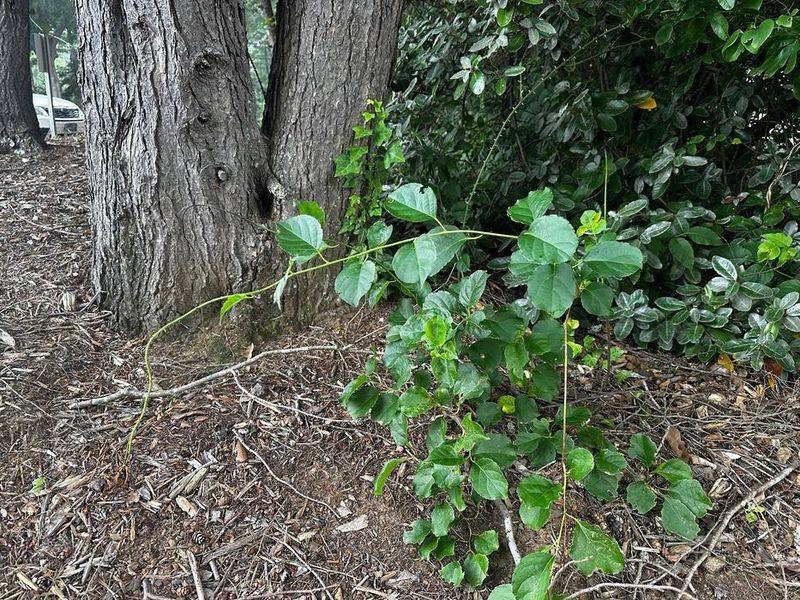
Small plants offer the best chance for an easy win. If the infestation is new and the vines are young, hand-pulling can work, but only when you get the roots out too.

Soft, damp soil makes that much easier, so a day after rain is a good time to try.

Loosen the soil around the base with a trowel or digging fork, then lift the whole plant. A stem snapped off at the surface leaves the root behind, and University of Maryland Extension guidance on Oriental bittersweet notes that established plants can resprout.

Bag any fruit-bearing pieces rather than leaving them on the ground, so the seeds do not get a fresh start.

Plan to come back. Mark the spot on a calendar and check it through the growing season and again the next year.

New shoots or missed seedlings are common, and control often takes repeated follow-up.

This method is for small, newly established plants only. A vine with a thick trunk or one climbing high into a tree needs a different approach.

Control established vines without pulling them down
Control established vines without pulling them down
© Trees Atlanta

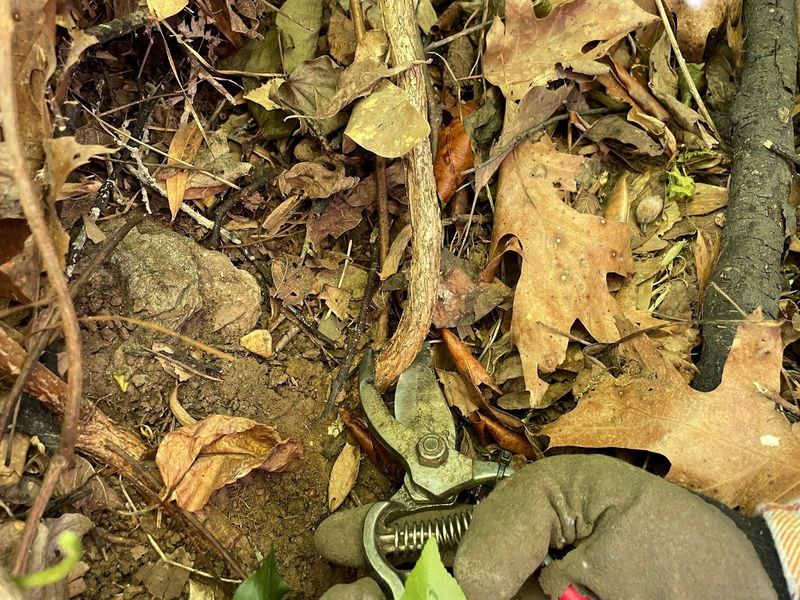
Once a vine has grown thick and climbed into a tree, the plan changes. Cutting the stem near the ground can stop it from climbing further, because the upper growth loses its connection to the roots.

The catch is that the roots may stay alive and send up new shoots.

For that reason, cutting is usually just the first step. University of Maryland Extension describes pairing cutting with follow-up control of regrowth, and the USDA Forest Service species review also covers how resprouting affects control.

One cut or one treatment should not be expected to wipe out an infestation or save a tree.

If you consider herbicide, read the label for the specific product you plan to use and follow it exactly, along with any local rules. There is no single product, strength, or schedule that fits every site.

Do not yank the cut vine out of the tree. Ontario Invasive Plant Council best practices warn that falling vines or branches can injure people, and pulling can break limbs or harm the host tree.

Leave the severed upper growth in place so it can dry out, decompose, and fall on its own. Wear gloves, eye protection, and a hard hat while cutting.

For large vines or those reaching into the high canopy, hire a qualified tree care or invasive plant professional.

Confirm the plant before taking action
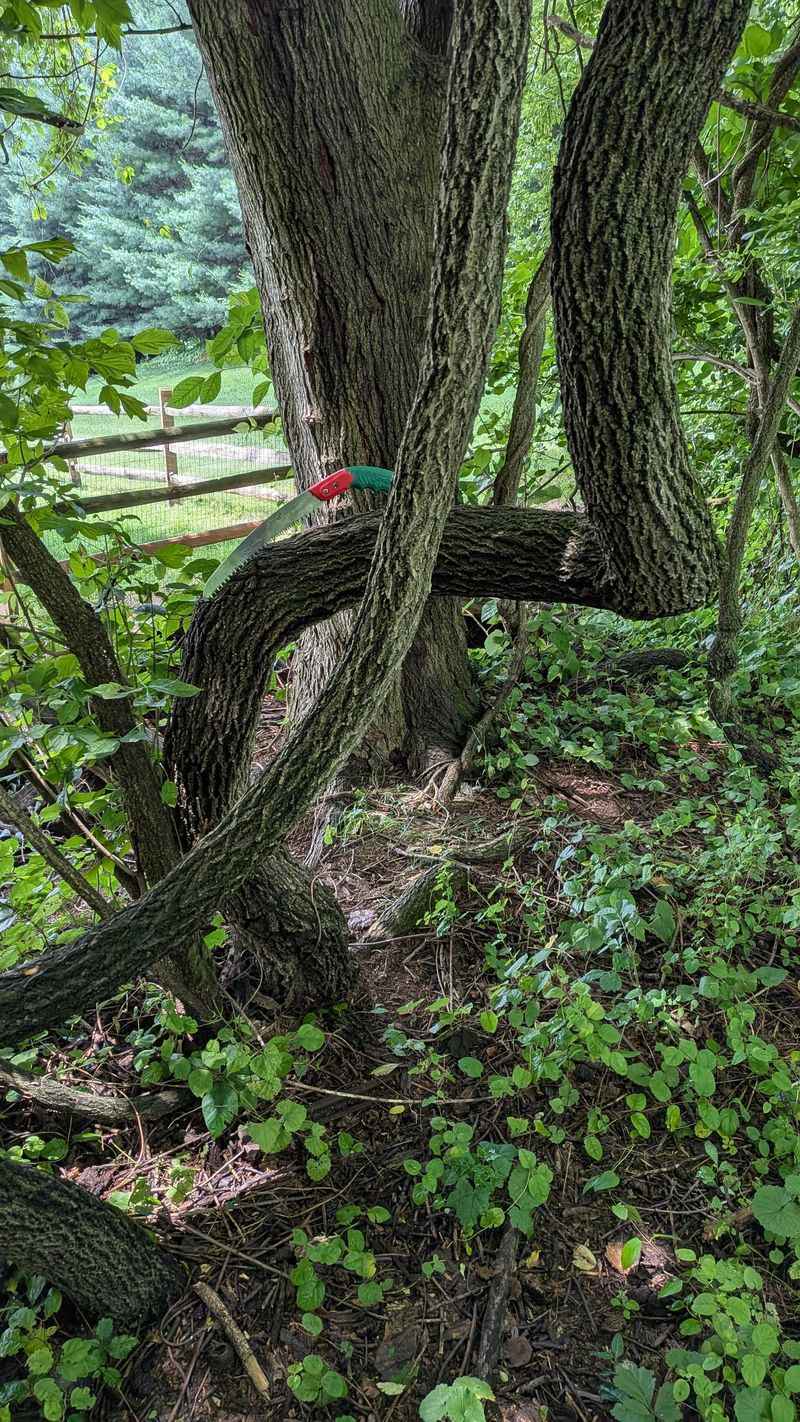
Confirm the plant before taking action
© Reddit

Start with the fruit or flower placement, since the Illinois Extension comparison and Indiana’s fact sheet both rely on it. If you are still unsure, take photos and ask an expert before cutting anything.

Match the method to the job: roots and follow-up for small plants, careful cutting for big ones, and professional help up high. Keep in mind that Ontario’s best practices advise against pulling large vines down.

A festive-looking vine is still a vine that deserves a second look.

Share this story
DH

Written by

Dale Hutchins

More from Dale Hutchins →

About Gardening Latest

Gardening Latest provides in-depth guides to maintaining and enhancing your garden and backyard. Learn how to make the most of the space you have and create a beautiful garden.

More about us →

Latest stories

  • New Jersey GardeningThese 8 Scary-Looking New Jersey Neighbors Seem Dangerous But Are Actually Totally Harmless

    These 8 Scary-Looking New Jersey Neighbors Seem Dangerous But Are Actually Totally Harmless

    2 min ago
  • North Carolina GardeningWhy Some North Carolina Homeowners Are Learning to Live With the Squirrels Instead

    Why Some North Carolina Homeowners Are Learning to Live With the Squirrels Instead

    8 min ago
  • Michigan GardeningMichiganders Who Eat Celery Every Day Are Discovering What It Actually Does To Their Bodies

    Michiganders Who Eat Celery Every Day Are Discovering What It Actually Does To Their Bodies

    13 min ago
  • Massachusetts GardeningMassachusetts Neighborhoods Are Filling Up With an Invasive Tree You Can’t Pull Fast Enough

    Massachusetts Neighborhoods Are Filling Up With an Invasive Tree You Can’t Pull Fast Enough

    18 min ago
  • California GardeningThe Backyard Crops That Quietly Break California Law, Even When They Grow Like Weeds

    The Backyard Crops That Quietly Break California Law, Even When They Grow Like Weeds

    23 min ago

Gardening by state

Stories for your state, and the hardiness zone most of it gardens in.

Keep exploring

Read next

All Indiana Gardening →
Indiana GardeningBefore You Clear Out Your Indiana Garage This Winter, Check The Corners For These Egg Sacs
Indiana Gardening

Before You Clear Out Your Indiana Garage This Winter, Check The Corners For These Egg Sacs

40 min ago
Indiana GardeningThe Gray Paper Balls Showing Up In Leafless Indiana Trees Are Old Hornet Nests
Indiana Gardening

The Gray Paper Balls Showing Up In Leafless Indiana Trees Are Old Hornet Nests

6 hr ago
Indiana GardeningThose Brown Cones Dangling From Your Indiana Arborvitae Are Actually Full Of Eggs
Indiana Gardening

Those Brown Cones Dangling From Your Indiana Arborvitae Are Actually Full Of Eggs

9 hr ago

More from Indiana Gardening

  • Black-And-Red Bugs on Your Sunny Indiana Wall: Fall Clusters May Include Bugs Seeking Winter Shelter

    Nov 12
  • Asian Lady Beetles Were Deliberately Released in North America for Pest Control, but Where Indiana’s Swarms Came From Is Uncertain

    Nov 12
Back to top

Leave a response Cancel

Your email address stays private. Required fields are marked with an asterisk.

Gardening Latest

In-depth guides to maintaining and enhancing your garden and backyard: how to make the most of the space you have, and how to make it beautiful.

  • Facebook
  • X
  • Pinterest
  • YouTube

We may earn a portion of sales from products or services that are purchased through our site as part of our affiliate partnerships with retailers.

Explore

  • About GardeningLatest.com
  • Contact Us
  • Terms and Conditions
  • Privacy
  • Editorial Note:
  • FTC Disclosure

Newsletter

New garden guides and seasonal tips, straight to your inbox.

We’ll email you a link to confirm. Unsubscribe any time.

Almost there! Check your inbox and tap the link to confirm.

© 2026 Gardening Latest. All rights reserved.

Back to top