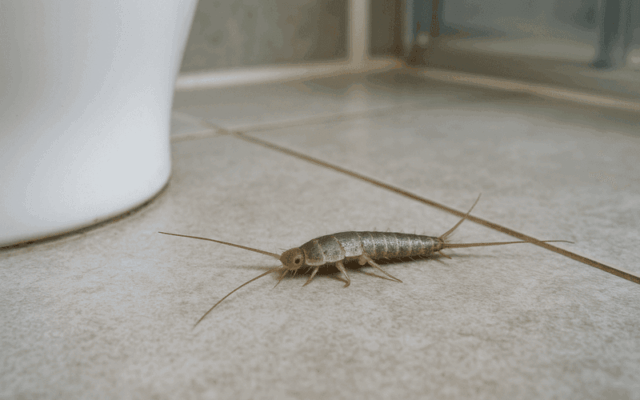
That shiny little bug zipping across your tub at night will not bite you, sting you, or make you sick. It is most likely a silverfish, a creepy-looking but common household visitor in New Jersey homes.
Knowing what it is and what it likes can help you stay calm and decide what, if anything, to do. A few simple habits can also protect your books, clothes, and pantry.
Could the bug be a silverfish?
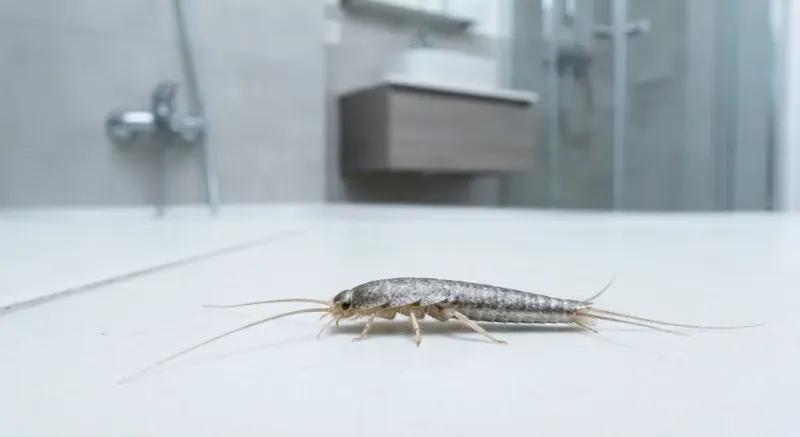
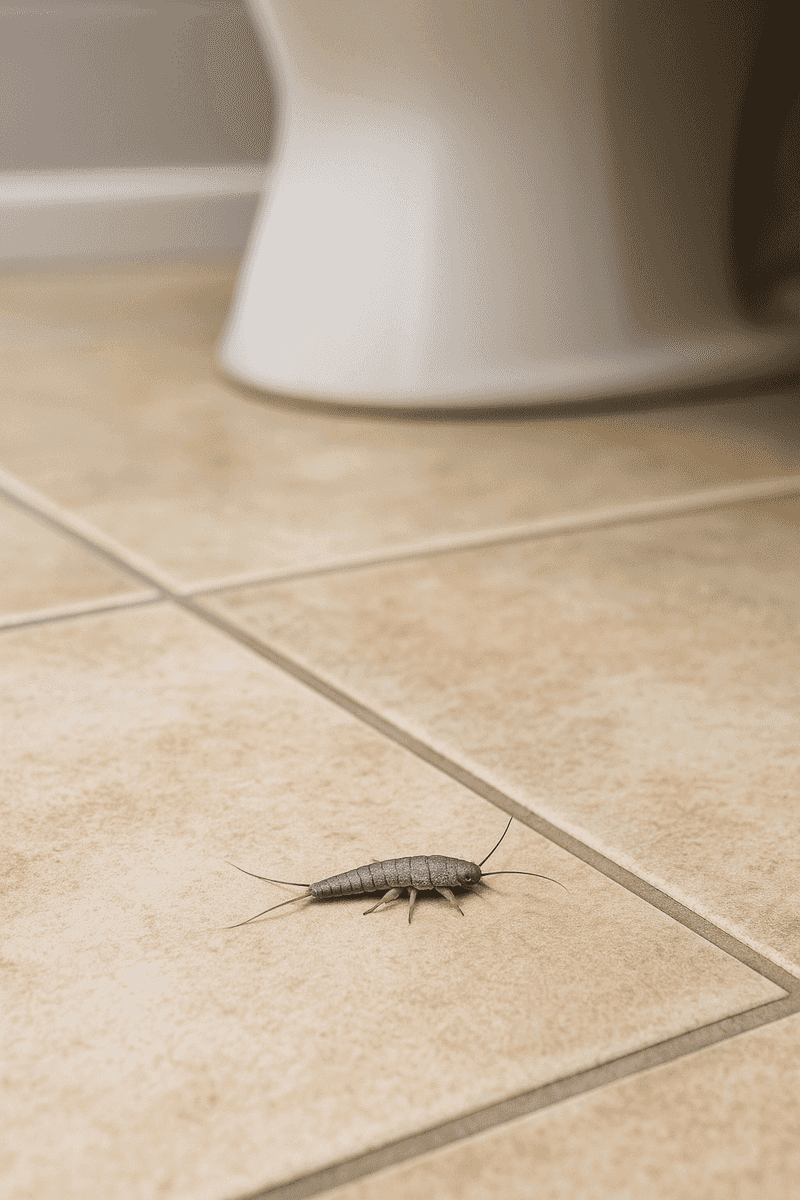
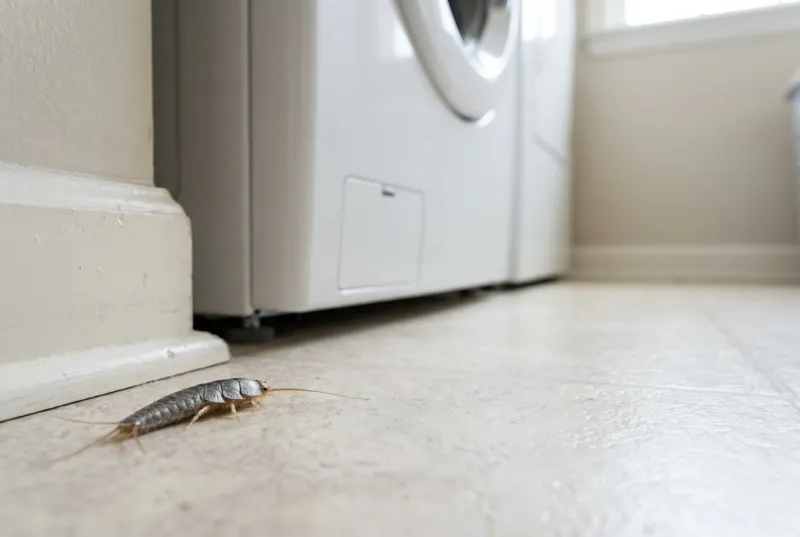
Picture a small, shiny, pearl-gray or silver insect, flat and tapered like a tiny carrot, with no wings. If it has two long antennae up front and three tail-like appendages at the back, that matches a common silverfish.
National Pesticide Information Center descriptions list these same features.
Speed and timing add to the picture. Silverfish dart away fast and tend to move around at night, so a quick flash of silver when you flip on the bathroom light fits.
Still, those clues only point toward a silverfish. They cannot confirm it.
Some look-alikes can fool the eye. Firebrats are close relatives with a similar shape, but they are usually mottled gray or brown and favor warmer spots.
New Jersey’s IPM guidance also describes booklice, which are smaller and lack the three tail bristles.
If you can, look closely at the tail end and the color. A clear phone photo helps a lot, and it is something you can share with a local extension office if you want a firmer answer.
Virginia Cooperative Extension also notes that firebrats and silverfish are often grouped together, so a precise label matters less than what you do next.
Bathrooms offer the damp conditions silverfish favor
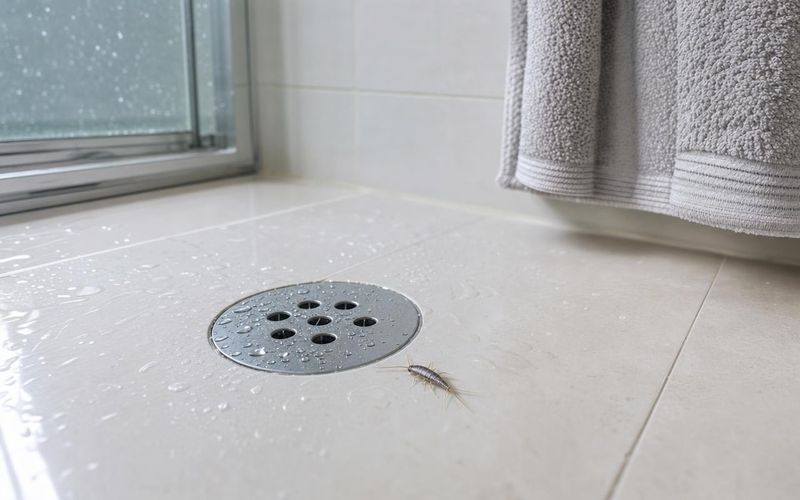
Think of a bathroom from a silverfish’s point of view. After a hot shower, the room is humid, the tub and tile stay damp, and the nighttime quiet is perfect for roaming.
Silverfish are active after dark, and they look for both food and water.
Sources describe them as favoring cool, damp environments. The guidance from New Jersey’s IPM program lists bathrooms and kitchens among the moisture-associated places where they turn up.
That makes a bathroom sighting a plausible, ordinary event. A damp shower corner, a stack of towels, or a cardboard tissue box can all offer the right mix of moisture and shelter.
Bits of paper, soap residue, and similar scraps can serve as snacks.
None of this means you have a leak or a big problem. One insect on one night tells you very little about the rest of your home.
Treat it as a cue to look around the room with fresh eyes rather than a warning sign.
Notice how the room feels and smells, whether the fan runs well, and whether anything stays wet for long. Those quick observations are the useful part, and they set you up for the steps later in this article.
Does a bathtub sighting mean it came from the drain?
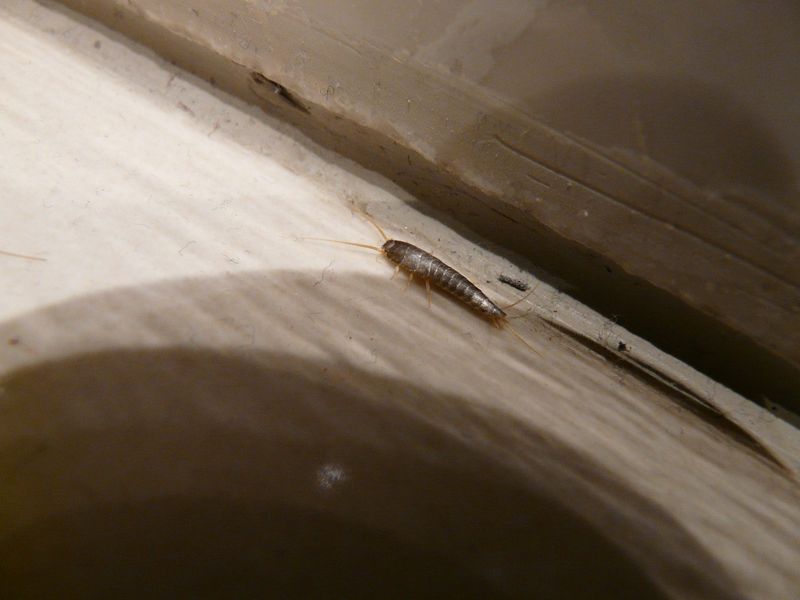
Not necessarily, and the sources do not say so. Nothing in the guidance reviewed shows that a silverfish found in a tub came up through the drain or lives and breeds there.
They describe damp hiding places instead.
The smooth porcelain of a tub is also a trap. New Jersey guidance notes that silverfish may be found in sinks after falling in.
A tub works the same way, so the insect may simply have wandered over the edge and been unable to climb back out.
That is different from evidence of drain breeding. Falling in explains why you see one in the morning or at night, but it says nothing about where it started.
A single insect also does not point to a plumbing defect. If you had a real drain or pipe problem, you would likely see other signs, such as slow draining, odors, or visible moisture around fixtures.
Silverfish alone are not that kind of clue.
You can learn more from NPIC’s overview, which focuses on where silverfish hide rather than on drains. Check nearby baseboards, cabinet corners, and stored paper for a better sense of where it came from.
They do not threaten people, but they can damage belongings
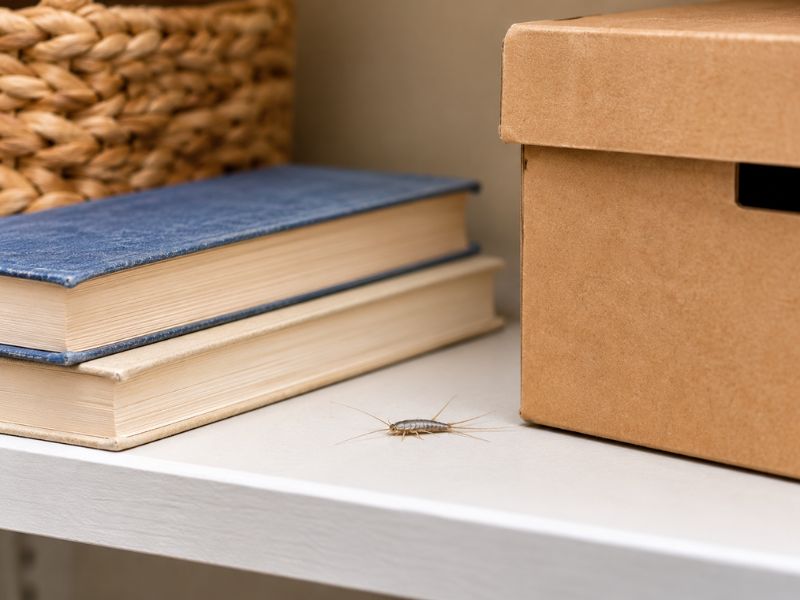
Here is the reassuring part. Silverfish do not bite or sting people, and they do not transmit disease, according to Virginia Cooperative Extension.
You do not need to worry about your family’s health because one crossed your tub.
Your belongings are a separate matter. Silverfish can chew on paper, book bindings, and some textiles, and they may get into stored foods.
That is why calling them totally harmless would go too far.
Damage usually shows up as irregular, scraped patches on paper or glue-bound items, or as small holes and yellowish stains on fabric. NPIC also lists dry goods like cereal and flour among items they may feed on.
Where would you check? Start with places that hold paper and stay undisturbed: old photo boxes, stacked magazines, and the back of a closet shelf.
Then glance at pantry items that are opened but rarely used.
If everything looks fine, you can relax. The goal is not to fear the insect but to keep valuable paper and food away from the conditions that attract it.
One sighting cannot show how widespread the problem is
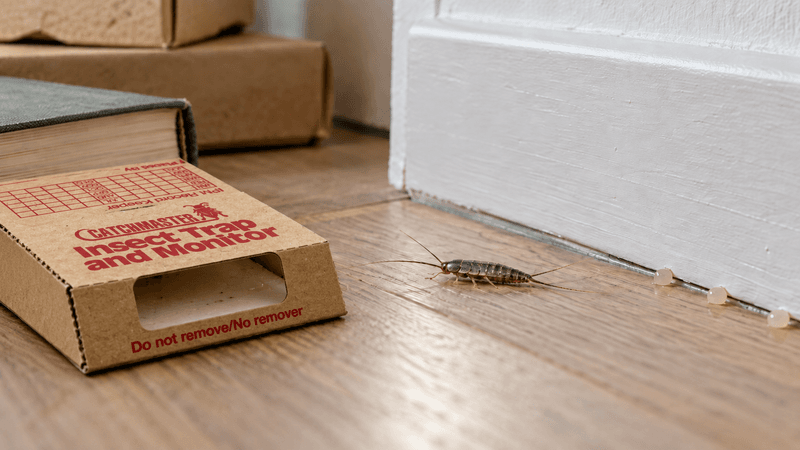
A lone silverfish is a data point, not a diagnosis. It does not tell you how many others exist, whether your home is dirty, or whether you have serious water damage.
Many clean homes see an occasional one.
To find out more, watch for a pattern. UC IPM guidance suggests using sticky insect traps or a jar trap placed along a wall or near places where you suspect activity.
Put a few traps in spots where silverfish travel, such as along the base of a bathroom wall, under the sink, or near a bookshelf. Check them every few days and note what you catch and where.
If the traps stay empty, that is useful news.
Catching one or two over a couple of weeks tells a different story than finding many in the same place. The sources do not give a universal number for when to call a professional, so rely on what your traps show and how comfortable you feel.
Repeated catches in one location can show you where to focus your cleanup and moisture fixes. A mixed pattern across rooms may call for a closer look at stored items.
Either way, observing first keeps you from overreacting.
Reduce moisture, food, and hiding places first
Because silverfish want damp, sheltered spots with something to eat, the best first moves take those away. These are sensible steps for any home, not proof that yours is dirty or has water damage.
Start with moisture. Fix leaky faucets and dripping pipes, run the bathroom fan during and after showers, and wipe down wet surfaces.
A dehumidifier can help in basements or other humid rooms where it fits. UC IPM lists moisture reduction as a key part of control.
Next, thin out the hiding places. Stacks of newspapers, cardboard boxes, and cluttered shelves give silverfish cover and sometimes a meal.
Plastic bins with lids are a good swap for cardboard storage.
Food comes next. Keep dry items like cereal, flour, and pasta in sealed containers so they are not an easy snack.
A quick wipe of crumbs on pantry shelves helps too.
Finally, close the doors on entry and shelter points. Seal gaps around pipes, baseboards, and other openings with caulk where practical.
NPIC also points to these nonchemical measures as the foundation of prevention.
Pick one or two jobs this weekend and keep your traps out to see if the catches drop. Small changes often add up faster than you would expect.
When should you consider pesticide treatment?
An occasional silverfish does not call for pesticide. UC IPM recommends saving insecticides for larger infestations, and still working on moisture, food, and hiding places at the same time.
So if your traps stay quiet or catch only a stray insect now and then, nonchemical steps are usually enough. A treatment is something to weigh only when activity keeps showing up despite those changes.
If you do consider a product, choose one labeled for the pest and for the location where you will use it. Read the label and follow it exactly.
Do not use outdoor chemicals indoors, because they are not made for those spaces.
EPA guidance favors targeted applications over spraying an entire room. That means treating the spots where insects hide or travel, not fogging or soaking the bathroom.
Keep children and pets away as the label directs.
If the situation feels beyond your comfort level, a licensed pest professional or your local extension office can help you sort out the next step. There is no set number of insects that triggers a call, so trust what your monitoring shows.
A silverfish in the tub is usually just a night visitor who took a wrong turn.
Share this story