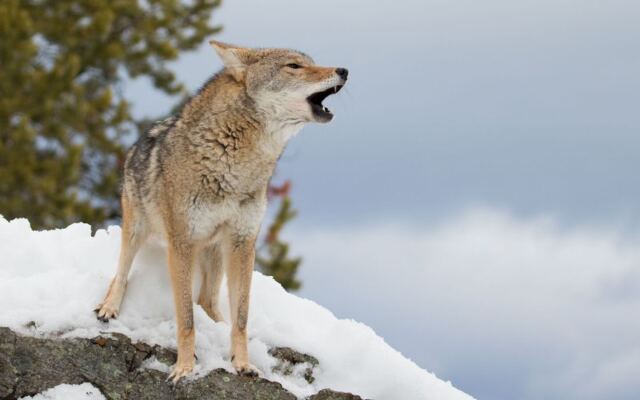
Those yips and howls outside your window are coyotes talking to each other. They are calling to family members, marking out their space, and sometimes answering other loud noises.
Nighttime calls can feel spooky, but a sound alone says less than you might think. Here is what the calls can tell you, what they cannot, and what to do about it.
Coyotes live across Alabama
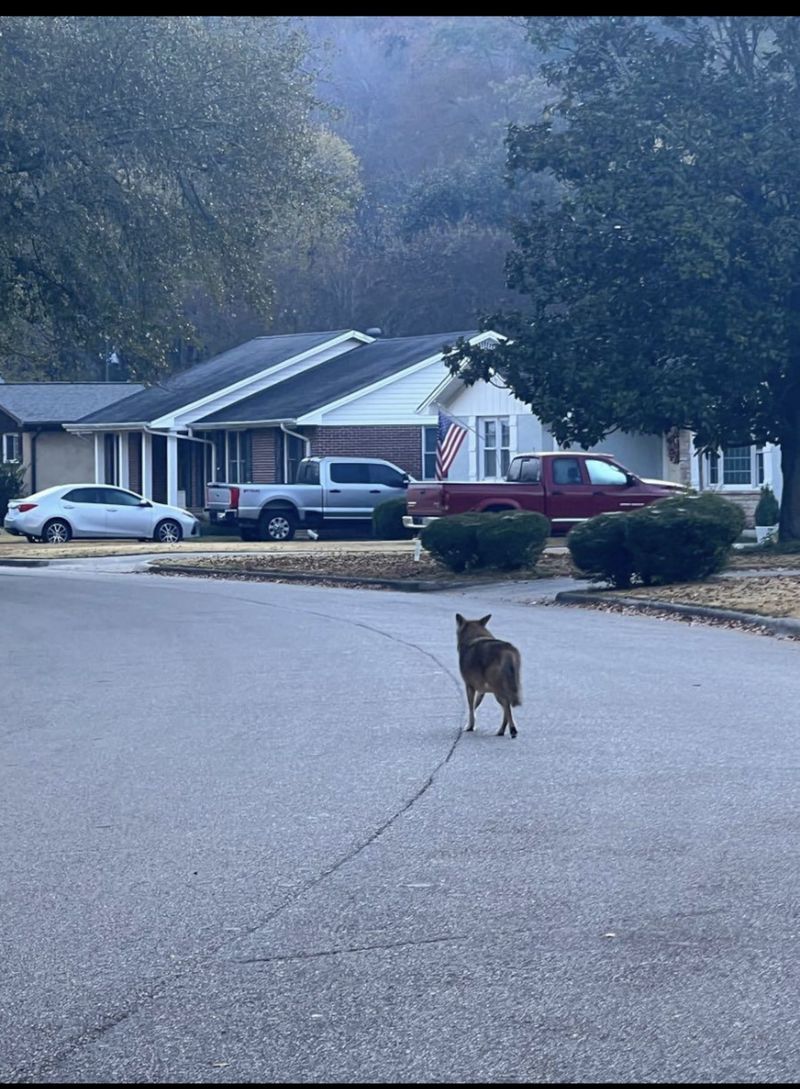
Hearing a coyote near your house is not a sign that something strange has happened. Alabama’s wildlife agency notes that coyotes live statewide, and that includes towns and cities as well as farms and forests.
Many of them have been living near people for years without anyone noticing.
That does not mean every neighborhood has the same amount of coyote activity. Some streets may hear calls often, while others rarely hear a thing.
Things like nearby woods, creeks, open fields, and greenways can all change how many coyotes pass through.
Night makes sound feel bigger. In the dark you cannot see what is making the noise, so your mind fills in the blanks, and a high-pitched chorus can sound like a crowd right outside the fence.
That uneasy feeling is normal.
Still, there is a big gap between hearing a call and knowing what it means. A howl tells you a coyote is somewhere within earshot, and that is about all it tells you for certain.
The next sections sort out what the sounds can suggest, and what no listener can figure out by ear alone.
What coyote calls can communicate
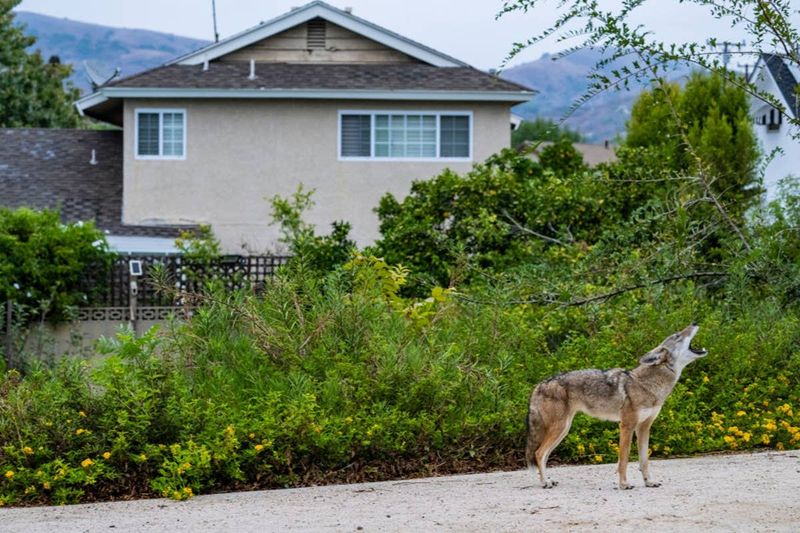
Coyotes use their voices to stay in touch across long distances. Group yip-howls are linked with holding a territory and keeping group bonds strong, according to a Southeastern coyote management synthesis.
A lone howl may help a coyote find or reunite with members of its group.
Research on long-distance calls, such as this analysis from the Jackson Hole Research Station, points to several purposes that overlap. A single burst of yips might be about territory, family, or both at once.
That overlap is the key point. You cannot listen to one call and decide it was a warning, a greeting, or a call for dinner.
Even people who study coyotes do not claim to decode a specific howl by ear.
Outside noises can also set coyotes off. South Carolina wildlife guidance says loud sounds such as sirens can prompt howling.
If a siren passes and the neighborhood coyotes answer, that does not mean they are reacting to a person or pet nearby. They are simply answering a loud sound.
Fall movement does not explain every howl
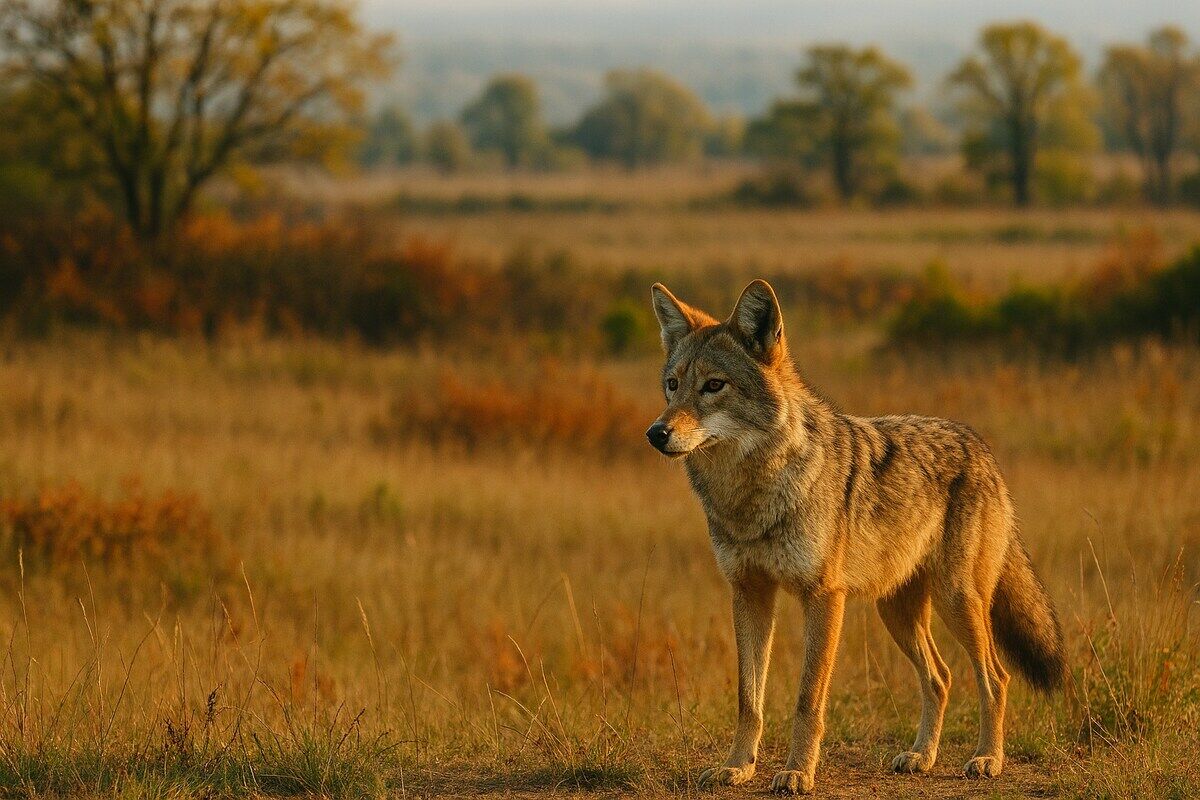
Late fall is a busy time of year in coyote country. Young coyotes in the Southeast may start roaming away from the place they were born in fall and early winter, a pattern called dispersal.
The Southeastern synthesis describes that movement, and howling is reported to be most common during breeding season and dispersal.
So a November night may bring a little more movement through your area. That is a regional seasonal pattern, though, and it is not a rule for any one yard.
Some of the Alabama movement observations in that report are unpublished data.
A coyote howling near your home in November is not proof that it is dispersing. It could be a resident adult keeping up with its family, or it could be answering a siren down the road.
Nobody can assign a season-based meaning to a single howl.
Breeding is a separate matter. Alabama’s wildlife agency says coyotes usually breed in February and March, so the loudest stretch of the year for some listeners may come after the holidays.
A chorus can sound larger than it is
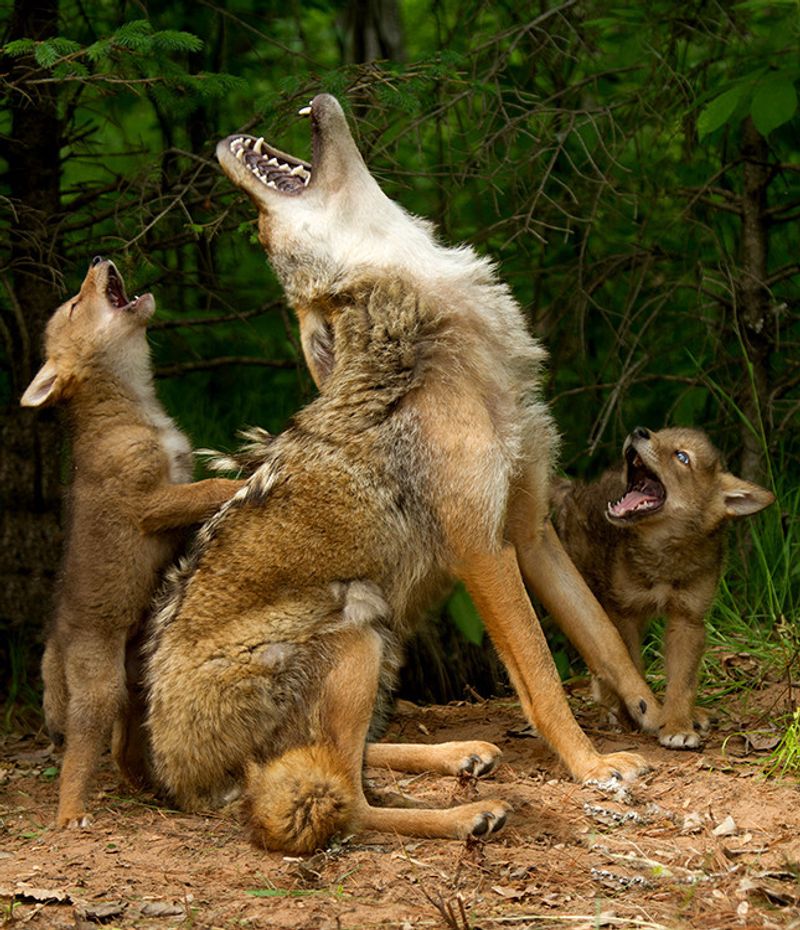
A few coyotes can sound like a whole crowd. Their yips overlap, rise and fall, and bounce off trees and buildings, which makes it hard to tell where one voice stops and another starts.
A study from Texas A&M, “Do You Hear What I Hear?”, tested how well people judge group size by ear. Listeners generally guessed nearly twice the number of coyotes that were actually calling.
That finding has a practical meaning for anyone standing on a porch at night. If the chorus sounds like ten animals, the real number could be much smaller.
A howl is not a dependable way to count coyotes.
The study also does not give you a formula. You cannot take what you heard, cut it in half, and know how many coyotes live nearby.
Distance, wind, terrain, and the way the animals call all change what reaches your ears.
So when a neighbor says there must be a big pack behind the subdivision, the kind answer is that sound alone cannot tell us that.
Vocalizing alone does not show danger
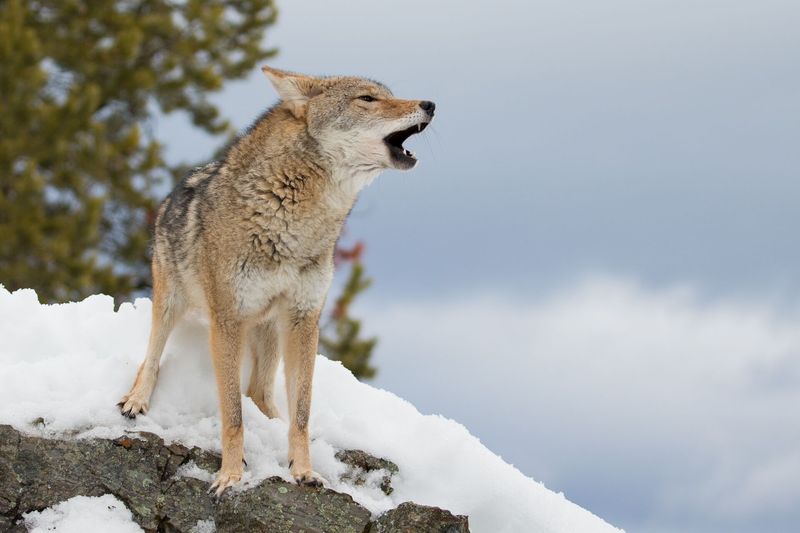
A howl is a sound, and the sound by itself does not prove anything about what is happening nearby. It does not show that a coyote has made a kill, that one is heading toward your house, or that anyone is in danger.
Practical concern should come from what you actually see an animal do.
The numbers favor calm. Alabama Cooperative Extension says attacks on people are extremely unlikely, and that coyote predation on cats and small dogs is uncommon in most Alabama areas.
Uncommon is not the same as never, so pet precautions still make sense. Extension identifies keeping pets inside as the best defense.
Nobody should promise that a pet faces no risk at all.
What deserves more attention is unusual behavior. Alabama Public Health advises caution around animals acting unusually or showing no fear of people.
Seeing a coyote in daylight is not proof that it is sick, since coyotes sometimes move around in the day. A coyote that walks up to people, ignores shouting, or seems oddly bold is a different story.
Ordinary nighttime calling falls well short of that.
Simple habits can reduce avoidable encounters
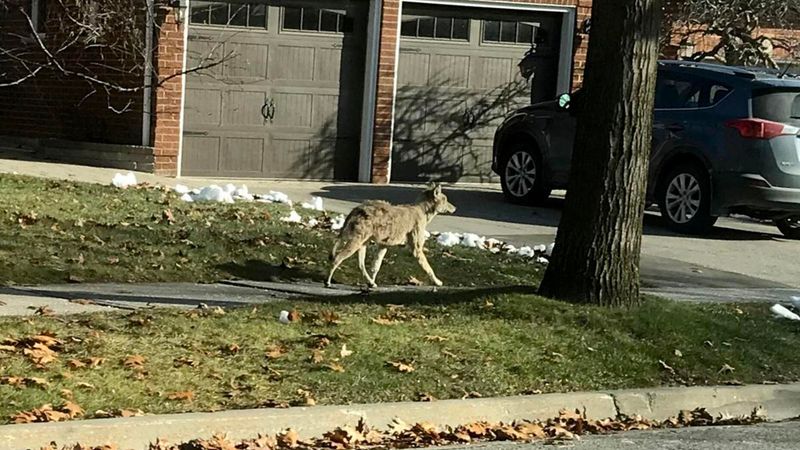
You cannot remove coyotes from your area, and you do not need to. What you can do is make your yard less appealing and your pets safer.
These are everyday routines, and nothing about a howl means you must start them tonight.
Food is the biggest draw. Secure your garbage with tight lids or keep cans in a garage until pickup day, and bring outdoor pet food inside.
Auburn’s animal control guidance recommends removing food sources and leashing pets.
Do not feed wildlife on purpose, either. Tossing out scraps may seem harmless, but it teaches animals that people mean food.
That can bring coyotes closer than they would otherwise come.
For pets, keep cats indoors and keep dogs leashed or supervised when they are outside. Alabama Cooperative Extension calls keeping pets inside the best defense.
A quick check before letting a dog out at night, with a porch light on and a leash in hand, covers most of what you need. Small habits like these protect pets without turning every howl into an emergency.
Respond to an approaching coyote safely
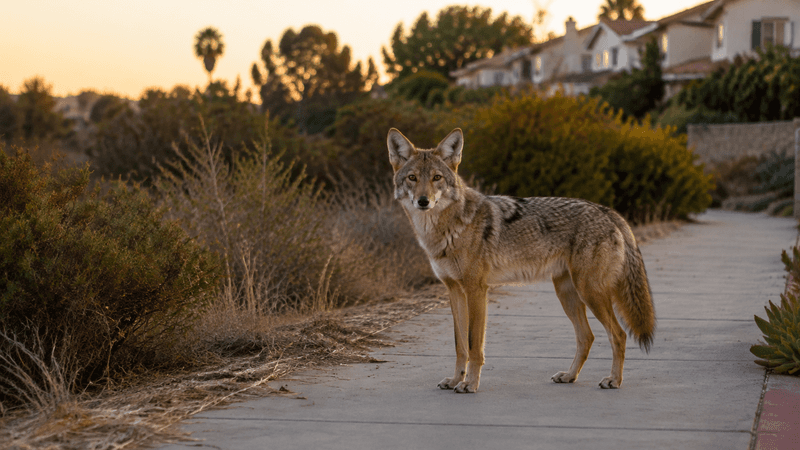
If you see a coyote, give it room. Do not approach it, feed it, corner it, or try to handle it.
A wild animal with no way out is more likely to act defensively.
If one walks toward you, Auburn Animal Control advises making yourself look large and using loud noises to reinforce its fear of people. Raise your arms, stand tall, and shout or clap.
Contact your local animal control about behavior that worries you.
If someone is bitten or scratched, wash the area and seek medical care promptly. Alabama Public Health offers guidance on rabies and on animals that act unusually.
A distant yip-howl is just a coyote being a coyote. A bold animal that will not back away is what calls for action.
Share this story