Get the latest garden guides in your inbox →
Gardening Latest
  • General Gardening
  • Lawn Care
  • Plant Care
  • Composting
  • Soil Health
  • Backyard
  • Garden Muse Magazine
  • General Gardening
  • Lawn Care
  • Plant Care
  • Composting
  • Soil Health
  • Backyard
  • Garden Muse Magazine
  • News
  • Gardening Calendar
  • Garden Structures
  • Vegetable Garden
  • Vertical Garden
  • Raised Beds
  • Hydroponics
  • General Equipment
  • Community Gardens
Garden Themes
  • Spiritual Garden
  • Hydroseeding
  • Seeding and Laying Sod
  • Artificial Grass
  • Lawn Care Equipment
  • Plants
  • Trees
  • Planting Tools
  • Composting Basics
  • Fertilizer
  • Alternative Growing Mediums
  • Front Yard
  • Backyard Activities
  • Landscaping
Gardening Latest

Explore by state

Which state is your garden in?

Currently viewing Arizona

All states

Northeast

  • Connecticut —
  • Delaware 25
  • Maine —
  • Maryland 11
  • Massachusetts 27
  • New Hampshire —
  • New Jersey 11
  • New York 20
  • Pennsylvania 20
  • Rhode Island —
  • Vermont —

Southeast

  • Alabama 11
  • Arkansas —
  • Florida 11
  • Georgia 11
  • Kentucky 25
  • Louisiana 10
  • Mississippi —
  • North Carolina 9
  • South Carolina 24
  • Tennessee 8
  • Virginia 10
  • West Virginia —

Midwest

  • Illinois 10
  • Indiana 12
  • Iowa 24
  • Kansas —
  • Michigan 11
  • Minnesota 10
  • Missouri 10
  • Nebraska —
  • North Dakota —
  • Ohio 11
  • South Dakota —
  • Wisconsin 26

Southwest

  • Arizona 11
  • Colorado —
  • Nevada —
  • New Mexico —
  • Oklahoma —
  • Texas 10
  • Utah —

West

  • Alaska —
  • California 10
  • Hawaii —
  • Idaho —
  • Montana —
  • Oregon —
  • Washington —
  • Wyoming —

No state matches that search.

Site menu

Gardening Latest
  • General Gardening
    • News
    • Gardening Calendar
    • Garden Structures
    • Vegetable Garden
    • Vertical Garden
    • Raised Beds
    • Hydroponics
    • General Equipment
    • Community Gardens
    Garden Themes
    • Spiritual Garden
  • Lawn Care
    • Hydroseeding
    • Seeding and Laying Sod
    • Artificial Grass
    • Lawn Care Equipment
  • Plant Care
    • Plants
    • Trees
    • Planting Tools
  • Composting
    • Composting Basics
  • Soil Health
    • Fertilizer
    • Alternative Growing Mediums
  • Backyard
    • Front Yard
    • Backyard Activities
    • Landscaping
  • Garden Muse Magazine

Explore

  • About GardeningLatest.com
  • Contact Us

Get the latest from the garden

New guides on lawn care, plants and backyard projects, sent when they go up.

Subscribe →

Follow

  • Facebook
  • X
  • Pinterest
  • YouTube
Arizona Gardening

A Roadrunner Visiting Your Arizona Yard Is Telling You Something About the Land Nearby

A roadrunner in your Arizona yard is telling you something about the land nearby: the bird can use some of what…

EM

By Elena Marquez

November 24, 2026 · 6 min read

A Roadrunner Visiting Your Arizona Yard Is Telling You Something About the Land Nearby

A roadrunner in your Arizona yard is telling you something about the land nearby: the bird can use some of what the surrounding area offers, such as open ground, low cover, and places to hunt. That makes the visit a handy clue about the neighborhood’s habitat.

It is a modest clue, though, and it does not grade the land around you. Here is what the sighting can tell you, what it cannot, and how to enjoy it without causing trouble.

At a glance

Where
Arizona Gardening
Hardiness zone
9 20 to 30°F
Read
6 minutes
Published
November 24, 2026

A roadrunner is a clue, not a verdict

A roadrunner is a clue, not a verdict
© Desert Oasis Insider

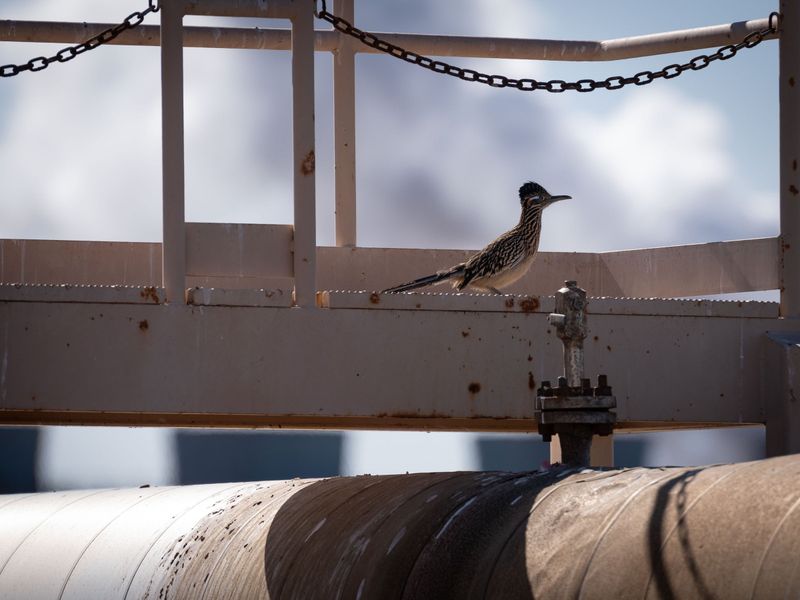
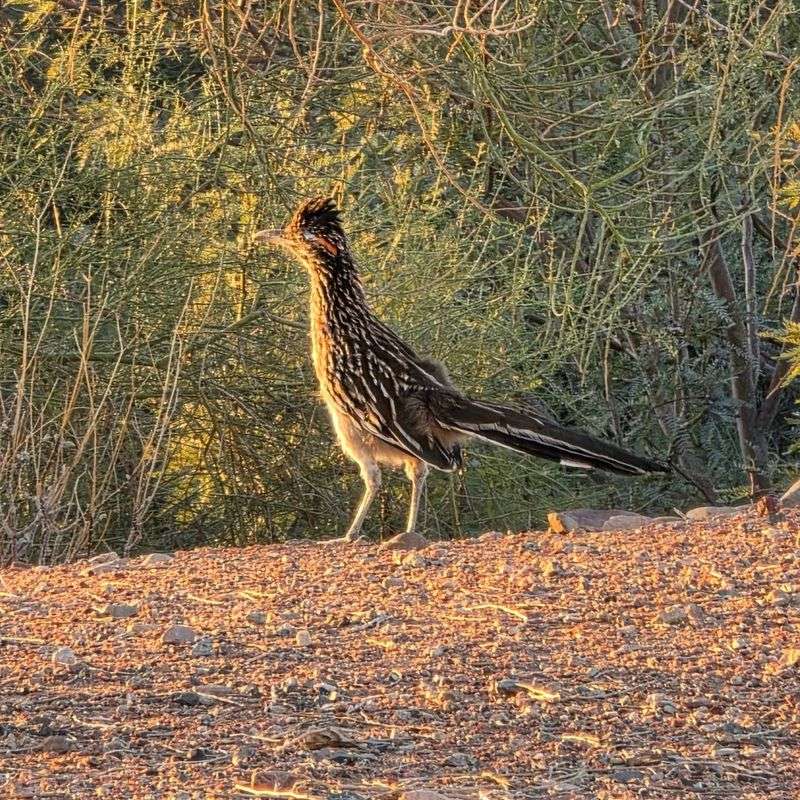
Spot a roadrunner trotting across your gravel, and you have learned something real. The bird can use some of the conditions around your home.

Greater Roadrunners are characteristic birds of open, scrubby country, including Sonoran Desert brush, so a visit hints that your area has some mix of open ground, low cover, and places to find food.

That is a useful starting point for curious neighbors. It tells you the landscape around you has at least some of the pieces this long-legged bird needs to move through and hunt.

What the sighting does not do is certify anything. A roadrunner does not prove the nearby land is pristine, ecologically healthy, or crowded with wildlife.

One bird on one morning is a single data point, and plenty of different places can offer enough for a roadrunner to pass through.

Think of the difference between noticing a bird and judging a landscape. Noticing is where the fun starts.

The rest of this article shows how to read the clue sensibly, and where to stop reading into it.

Open ground and low cover make a usable landscape
Open ground and low cover make a usable landscape
© Owlcation

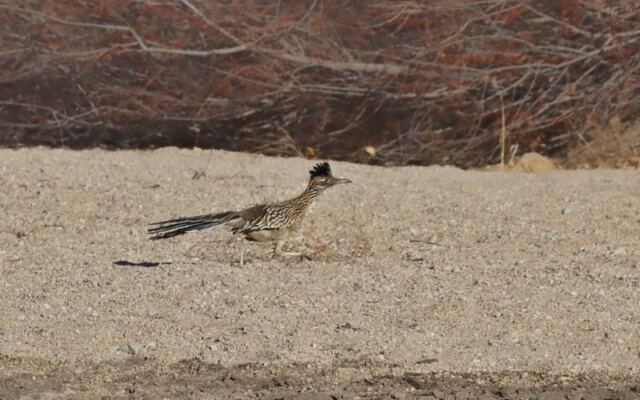
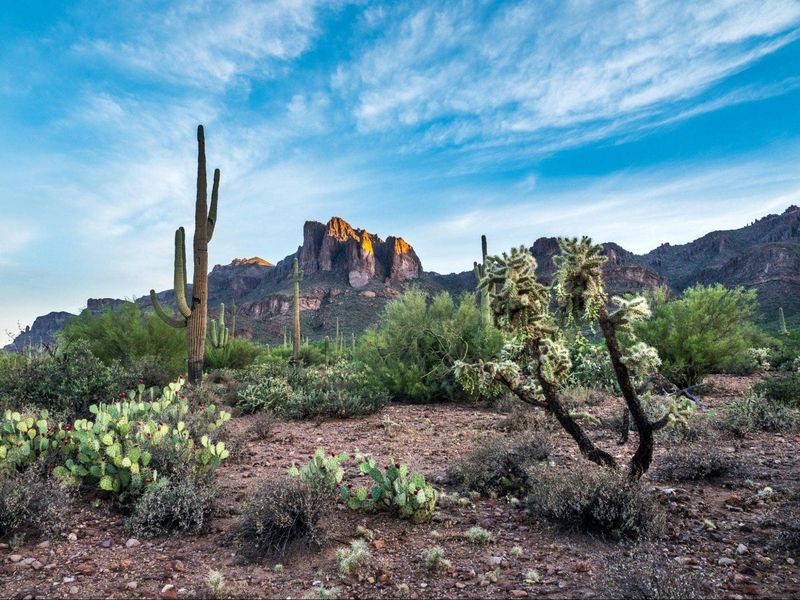
Roadrunners tend to like a mix: bare or open ground to run across, plus scattered or denser low cover nearby. Out in the Southwest, that often looks like desert scrub.

The same Audubon account notes that documented habitats also include grasslands, riparian woodlands, and canyons, so the bird is not tied to one single look.

Cornell’s life history notes describe a bird that can tolerate some development, so suburban edges can work for it.

That variety is the point. A roadrunner crossing your yard might be using a wash, a vacant lot, a ranch edge, or a stretch of native shrubs a few blocks away.

Your own plants may be only a small part of the story.

It is tempting to turn this into a landscaping recipe, but the research does not allow that. In West Texas, a radio-tracking study of roadrunners found the birds selected some vegetation types and avoided others, and the pattern changed depending on the scale researchers looked at.

Treat that study as regional context, not instructions for an Arizona lot. It certainly does not show that adding more brush is always better.

For a yard, the takeaway is simpler: a roadrunner suggests some open space and some cover are within reach, and the details will differ from place to place.

A visit may reflect access to varied prey
A visit may reflect access to varied prey
© Birdfact

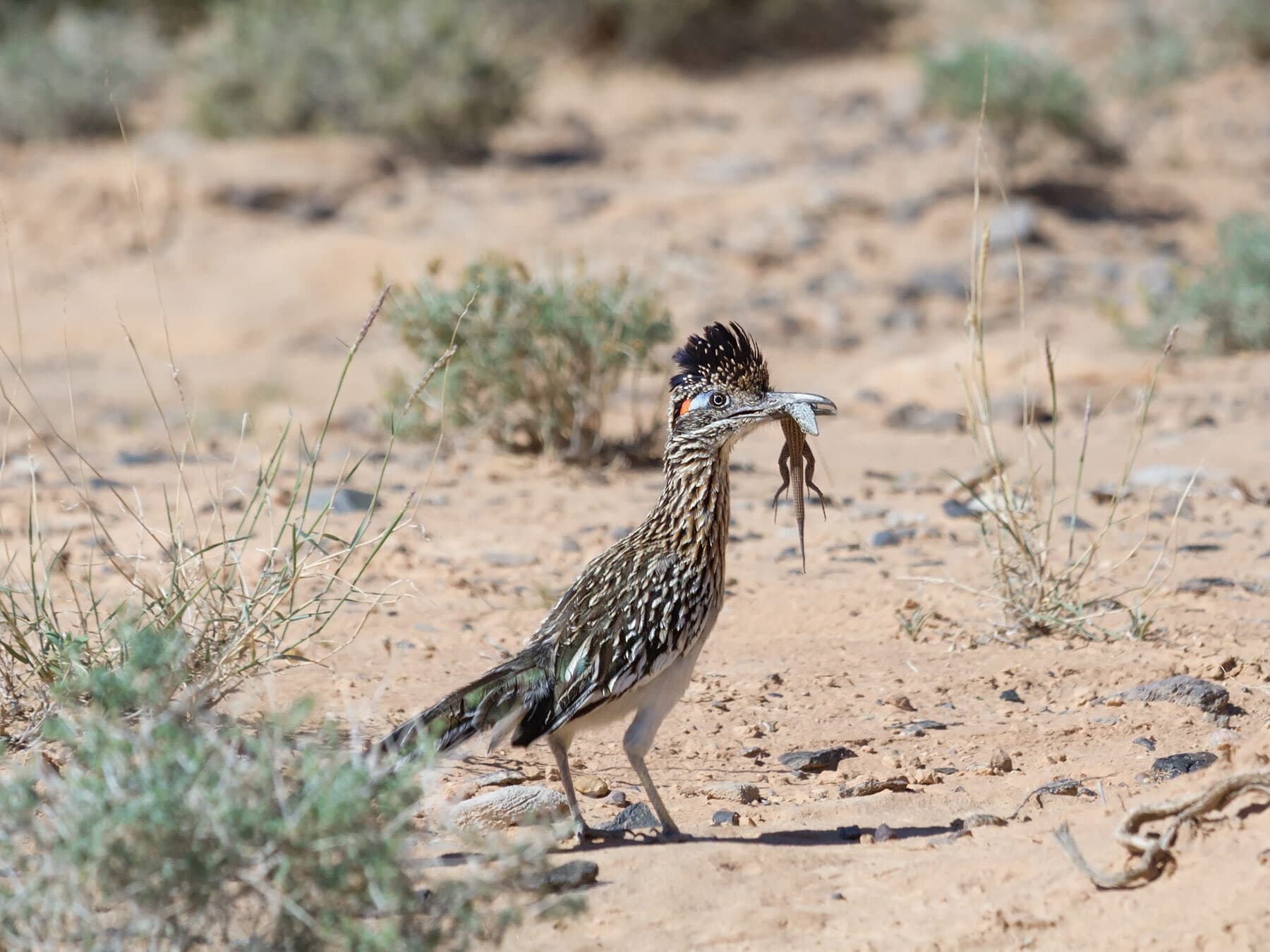
Few birds hunt the way a roadrunner does. It forages on the ground, and its menu is wide.

According to Audubon, it eats insects and other arthropods, lizards, snakes, rodents, birds, and eggs, plus some fruit and seeds.

With a diet that broad, a yard visit may simply reflect access to varied foraging opportunities. Somewhere nearby, the bird may be finding things it can catch or pick up as it moves along.

It is easy to guess more than that. People often say a roadrunner showed up because of lizards, or because of rodents.

Without watching what the bird actually does, there is no way to know which item drew it. It might have been passing through, following a hedge line, or checking a wall for insects.

If you want to learn more, watch behavior instead of guessing. Does the bird stalk along a block wall, poke under shrubs, or pause at the edge of a patio?

Notes like those, jotted down over several visits, tell you far more than a single glimpse. Even then, you are learning about one bird’s habits, not counting the animals around you.

Roadrunners can use suburban edges
Roadrunners can use suburban edges
© Kyle Berglund

Some people assume a roadrunner means the house backs onto untouched desert. Not necessarily.

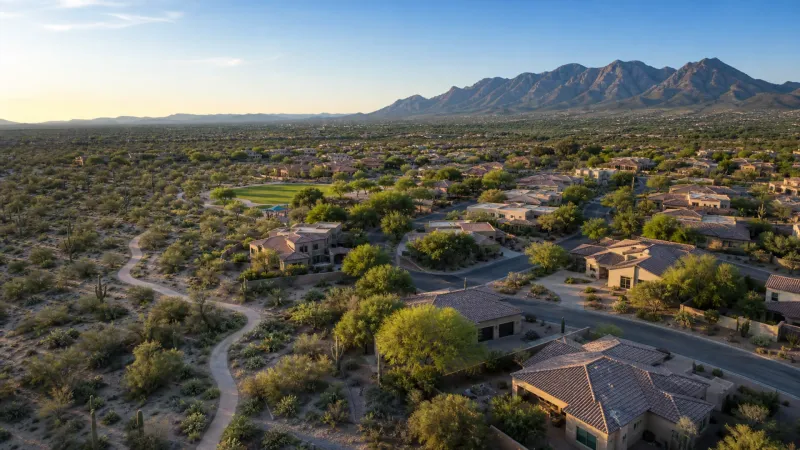
Cornell’s life history notes describe a bird that can tolerate some development, so suburban edges can work for it.

Tucson offers a good local example. In a study of Greater Roadrunners in urban and suburban Arizona, reported and researcher-recorded sightings formed a broad band around the city, with few or none in the middle.

That pattern fits what many residents see. The dense core of town had little roadrunner activity in those records, while the outer neighborhoods, where homes mix with more open or vegetated ground, had more.

For your own yard, the practical lesson is that the setting can be ordinary. A subdivision with washes, vacant lots, or large landscaped parcels nearby may be enough for a visit.

Development also changes the land, and urban growth fragments Sonoran Desert habitat, so a suburban roadrunner is neither a sign that development is harmless nor proof that it is damaging. It simply shows the bird can work with a mixed landscape.

One sighting cannot measure habitat quality
One sighting cannot measure habitat quality
© nationalparknews

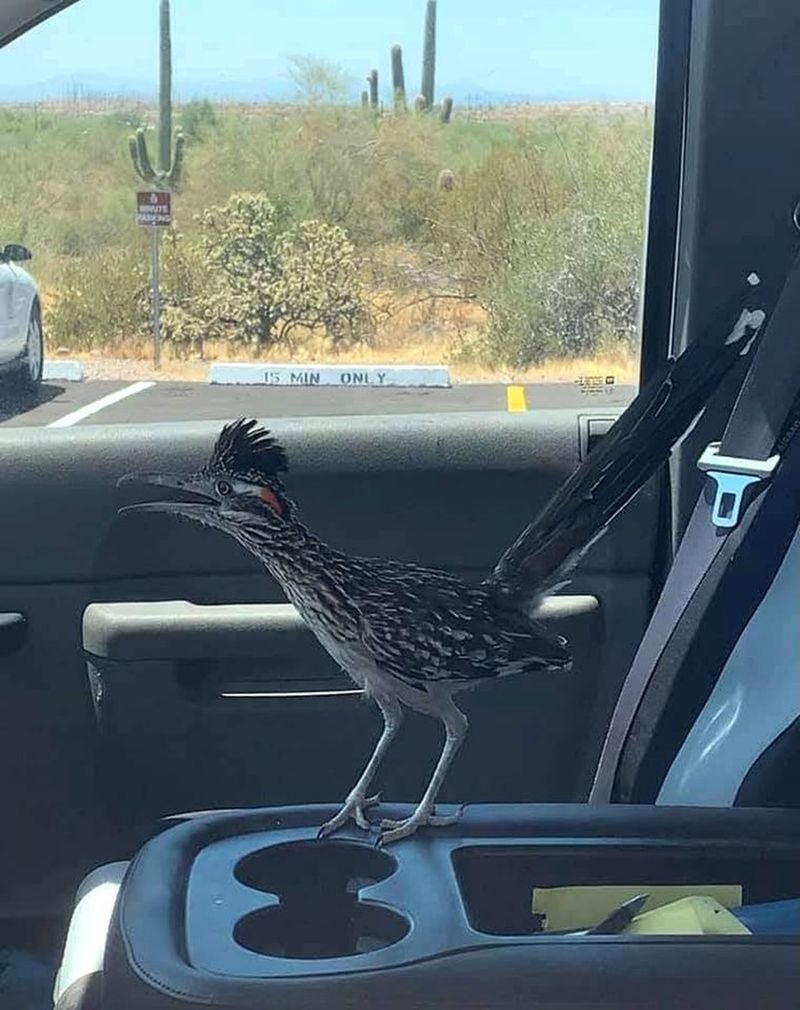
Here is where it pays to be careful. A single sighting cannot tell you how good the habitat is, how many roadrunners live nearby, or whether their numbers are rising or falling.

Those questions need systematic surveys, not one bird on a wall.

The Tucson study makes the same point about its own records. Its authors cautioned that public reports depend on where people notice and report birds.

A neighborhood with many observers may produce more sightings than one with few, even if the birds are equally common in both.

So those records do not directly measure abundance or habitat preference. A gap on a map might mean no birds, or it might mean no one was looking and posting.

That does not make your sighting worthless. It is a real observation of a bird using the area, and it can be a small, honest piece of local knowledge.

Keep it that size. Say that a roadrunner can use some conditions near your home, and leave the bigger claims about ecosystem health or wildlife richness to people who have measured them.

If you like, log the date, time, and what the bird was doing. Over a season, your notes become a clearer picture than any one memory.

Watch without drawing the bird closer
Watch without drawing the bird closer
© foreverfreed

The best way to enjoy a roadrunner is from a distance. Stay back, keep pets inside, and do not try to handle it, feed it, or lure it closer.

Arizona Game and Fish advises keeping wildlife wild and notes that food and other attractants can contribute to wildlife conflicts.

If you come across young wildlife, the default is to leave it alone. Contact a licensed wildlife rehabilitator if the animal appears sick or injured, is unresponsive or lethargic, or has been attacked by a cat or dog, as the department’s guidance explains.

A quiet window, a pair of binoculars, and some patience will do more than any bait could. The roadrunner on your wall is a small clue about the ground around you, worth noticing, and not a ruling on the land.

Share this story
EM

Written by

Elena Marquez

More from Elena Marquez →

About Gardening Latest

Gardening Latest provides in-depth guides to maintaining and enhancing your garden and backyard. Learn how to make the most of the space you have and create a beautiful garden.

More about us →

Latest stories

  • Texas GardeningWho Pays When Your Neighbor’s Tree Limb Smashes Your Roof in Texas

    Who Pays When Your Neighbor’s Tree Limb Smashes Your Roof in Texas

    13 min ago
  • Wisconsin GardeningThe Invasive Tree Wisconsin Gardeners Keep Pulling Is Still Spreading Through Their Neighborhoods

    The Invasive Tree Wisconsin Gardeners Keep Pulling Is Still Spreading Through Their Neighborhoods

    24 min ago
  • Missouri GardeningMissouri’s Venomous Critters Hide Closer Than You Think, And Fall Draws Them Into Yards

    Missouri’s Venomous Critters Hide Closer Than You Think, And Fall Draws Them Into Yards

    30 min ago
  • Tennessee GardeningWho Actually Pays After a Neighbor’s Tree Crashes Down on Your Tennessee Property

    Who Actually Pays After a Neighbor’s Tree Crashes Down on Your Tennessee Property

    36 min ago
  • Alabama GardeningAlabama’s Southern Short-Tailed Shrew: A Tiny, Seldom-Seen Mammal With Possibly Venomous Saliva

    Alabama’s Southern Short-Tailed Shrew: A Tiny, Seldom-Seen Mammal With Possibly Venomous Saliva

    42 min ago

Gardening by state

Stories for your state, and the hardiness zone most of it gardens in.

Keep exploring

Read next

All Arizona Gardening →
Arizona Gardening8 Venomous Creatures Arizona Homeowners Keep Finding Even After the Heat Is Gone
Arizona Gardening

8 Venomous Creatures Arizona Homeowners Keep Finding Even After the Heat Is Gone

2 hr ago
Arizona Gardening7 Things Sitting in Your Arizona Garage Right Now That Scorpions Love Hiding In
Arizona Gardening

7 Things Sitting in Your Arizona Garage Right Now That Scorpions Love Hiding In

6 hr ago
Arizona GardeningThe Arizona Plants That Help Keep Scorpions Away From Your Patio and Front Door
Arizona Gardening

The Arizona Plants That Help Keep Scorpions Away From Your Patio and Front Door

9 hr ago

More from Arizona Gardening

  • The Fruit Tree Arizona Gardeners Say Is Easiest to Plant Before Winter Arrives

    Nov 13
  • 7 Harmless Arizona Critters That Send People Running Because They Look Venomous

    Nov 12
Back to top

Leave a response Cancel

Your email address stays private. Required fields are marked with an asterisk.

Gardening Latest

In-depth guides to maintaining and enhancing your garden and backyard: how to make the most of the space you have, and how to make it beautiful.

  • Facebook
  • X
  • Pinterest
  • YouTube

We may earn a portion of sales from products or services that are purchased through our site as part of our affiliate partnerships with retailers.

Explore

  • About GardeningLatest.com
  • Contact Us
  • Terms and Conditions
  • Privacy
  • Editorial Note:
  • FTC Disclosure

Newsletter

New garden guides and seasonal tips, straight to your inbox.

We’ll email you a link to confirm. Unsubscribe any time.

Almost there! Check your inbox and tap the link to confirm.

© 2026 Gardening Latest. All rights reserved.

Back to top