
The real reason a red fox keeps crossing your Missouri yard is simple: it is most likely just traveling or looking for food. Winter makes these quiet animals easier to spot against bare trees and cold ground.
Food, habitat, and even the winter breeding season can shape where a fox walks. Here is what a sighting can tell you, what it cannot, and what to do about it.
Why does it keep using the yard?

Seeing the same red fox cross your lawn more than once can feel like a message. Most of the time, though, it is a sign of ordinary movement.
Foxes travel through their surroundings every day, and a yard can simply sit along a path they use.
What a sighting cannot do is tell you exactly why the fox picked your route. Repeated appearances do not prove that the fox lives in your yard, that someone is feeding it, or that it is sick.
They also do not mean it is targeting a pet. Territory and resource use vary with habitat and food availability, and, as Rutgers Cooperative Extension explains in its overview of red fox behavior, foxes adjust their movements to what the landscape offers.
Pinning one motive on a single animal from a few glimpses would be guesswork.
Red foxes live statewide in Missouri, and the Missouri Department of Conservation notes they are more common in the northern and western parts of the state. They like forest edges and nearby open land, which describes a lot of neighborhoods, farm edges, and town outskirts.
If your home sits near that kind of mix, a fox walking through is not unusual.
The sections ahead cover the influences that may be at play, including food, habitat, and the winter breeding season. They also cover practical steps to keep your household safe.
None of it claims to explain this one fox. It gives you a sensible way to read what you see and respond calmly.
Think of it like spotting a neighbor walking past your window. You know they passed by, but you do not know where they were headed or why they chose your street.
A little patience and a few good habits go a long way.
Food and habitat can bring a fox through a yard
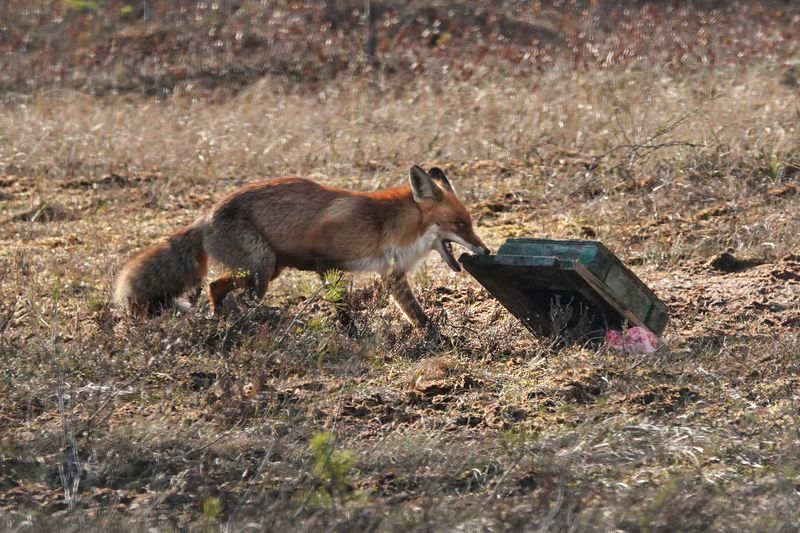
Red foxes are skilled hunters of small animals. According to the Missouri Department of Conservation, they eat mice, rats, rabbits, and other small prey.
They may also scavenge, and they sometimes cache extra food to eat later. That flexible menu is a big part of why foxes show up in so many kinds of places.
Foxes can also make use of human-modified areas where resources are available, a point covered in the Rutgers guide to red fox ecology. Fields, fence lines, wood edges, and neighborhoods can all blend into one hunting and travel landscape from a fox’s point of view.
A yard that touches a tree line or an open lot might simply fall along a convenient path.
Picture a fox moving along a creek bank, slipping past a woodpile, cutting across a lawn, and ducking under a fence. Your yard is one stop on a longer route.
Mice near a shed, rabbits in a garden bed, or a quiet corner that feels safe could each play a part, though none of these is a certain explanation.
That is the key point to keep in mind. Food and habitat are possible influences on where a fox goes, not proof of why this fox came through on this particular day.
You may have no special attractant at all, and the fox may be passing through on a regular loop.
Knowing this can take some pressure off. You do not need to hunt for a hidden cause.
A calmer approach is to notice the setting around your home and tidy up anything that could draw wildlife, which later sections explain in detail.
Breeding is one possible seasonal influence

Winter is also the mating season for Missouri’s red foxes. The Missouri Department of Conservation says they usually mate in January and February.
Mating can happen anywhere from late December through March.
Because of that timing, breeding may be one reason foxes seem to move around more in the coldest months. Animals looking for partners or settling into new areas can cover more ground than usual.
That makes breeding a reasonable seasonal influence to keep in mind.
It is not a full explanation, though. The calendar alone cannot show why one fox crossed your yard on one afternoon.
A fox in January may be hunting, following a familiar route, or yes, even looking for a mate, and a sighting does not reveal which.
So if you see a fox in midwinter, you can enjoy knowing the season is a busy one for them without assuming a story about that animal. Treat the timing as background, not a verdict.
Daylight alone tells you little about health

Many people worry when they spot a fox in the daytime. It is true that foxes are chiefly nocturnal, but the Missouri Department of Conservation says they may be out during the day, especially at dawn and dusk.
A fox trotting through at sunrise or near sunset is behaving within its normal range.
That means daylight activity alone does not show that a fox is sick or has rabies. The time on the clock is simply not a reliable health test.
Guessing from the hour can lead to needless fear, and it can distract you from signs that matter more.
What deserves a closer look is the animal’s visible condition. Severe patchy or absent fur, or a body that looks plainly abnormal, can be a reason for concern about mange.
The Maryland Department of Natural Resources describes mange in foxes and how it affects their coats. Seeing those signs is not a diagnosis, only a prompt to stay careful.
If a fox looks unwell, do not approach it, handle it, or try to treat it yourself. Watch from a safe distance, such as through a window, and keep children and pets inside.
A fox with a full, healthy coat that is walking steadily in the morning light is usually just going about its day.
How can you make the yard less attractive?

The most useful thing you can do is remove easy food. Bring pet food indoors, especially bowls left on porches or patios.
Secure garbage in sturdy containers with tight lids, and wait to set bins out until pickup morning if you can.
Do not feed wildlife on purpose either. The Missouri Department of Conservation’s wildlife control guidelines explain that leaving out food can lead to conflicts.
MDC also reminds the public to keep wildlife wild because animals can start to link people with food. Pet food and unsecured trash are specific examples it names.
A few extra habits help. Pick up fallen birdseed, which can attract mice, and keep compost covered.
Clear brush piles that you do not need and close off gaps under decks and sheds.
These steps may not stop every fox from walking through, and that is fine. The goal is to avoid giving wildlife a reason to linger or lose its natural wariness.
Stick with removing attractants. Frightening, trapping, or relocating a fox is not the answer, and MDC does not recommend moving animals, since it can spread disease and leave them unable to find resources.
Distance protects both pets and foxes

When a fox appears, the best move is to give it space. Do not approach it, touch it, or offer it food.
Wild animals can carry diseases and parasites, which is why CDC guidance on wildlife advises avoiding contact.
Keep pets away from the fox and supervise them whenever they are outdoors. A leash on walks and a quick check of the yard before letting a dog out can make a real difference.
Small pets and cats are best kept close, especially around dawn and dusk when foxes are more likely to be moving about.
None of this means the fox is after your pet. A fox passing through does not show that it is targeting anything, and attacks are not something to expect.
Distance simply lowers the chance of disease, parasites, or a surprise meeting that goes badly for either animal.
Missouri conservation staff make the same point: wildlife does best when left wild. Giving a fox room protects your family and lets the fox move along on its own.
Everyone, including the fox, is safer that way.
After a bite or scratch, act promptly

Most fox sightings never involve contact. If someone is ever bitten or scratched by a wild animal, though, act right away.
Wash the wound promptly with soap and water.
Then contact a healthcare provider or your local health department for advice about rabies risk. CDC guidance on when to seek care lays out this approach.
A professional can ask the right questions and decide what steps make sense.
You do not need to judge the fox yourself. Whether it was out in daylight or how it looked is not enough to settle the question.
Leave that call to the health experts, and make the call soon rather than waiting to see how things turn out.
A crossing is not automatically a nuisance

A fox walking across your lawn is not the same as a fox causing harm. Passing through does not establish damage, and it does not by itself call for wildlife control.
Damage means something concrete, like animals harming property you can point to.
Missouri has rules for that situation. The MDC wildlife control guidelines set specific conditions and reporting requirements for taking wildlife that is damaging property.
If you think you are in that position, read them carefully or contact MDC first.
For a fox that is just crossing, the plan is simple. Remove food attractants, keep a safe distance, and supervise pets.
Avoid drawing big conclusions from a sighting that cannot support them.
Sometimes a quiet winter visitor is only that, a fox on its way somewhere else.
Share this story