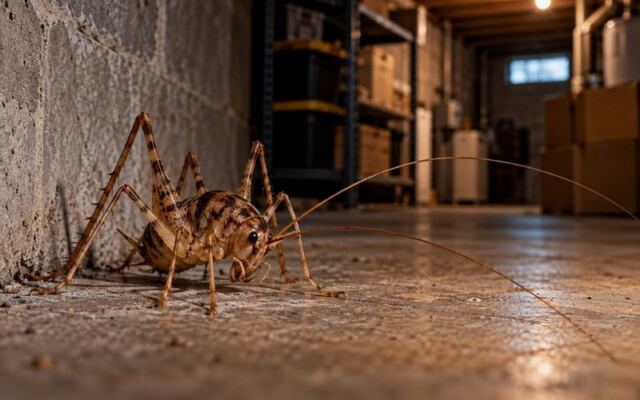
Those humpbacked, long-legged bugs hopping around your basement are not spiders. They are most likely camel crickets, harmless insects that love cool, damp, dark corners.
They can look startling when they spring out of nowhere, but knowing what they are makes them much easier to handle. Here is how to recognize them, what their visits can and cannot tell you, and what to do next.
That spider-like shape belongs to a cricket
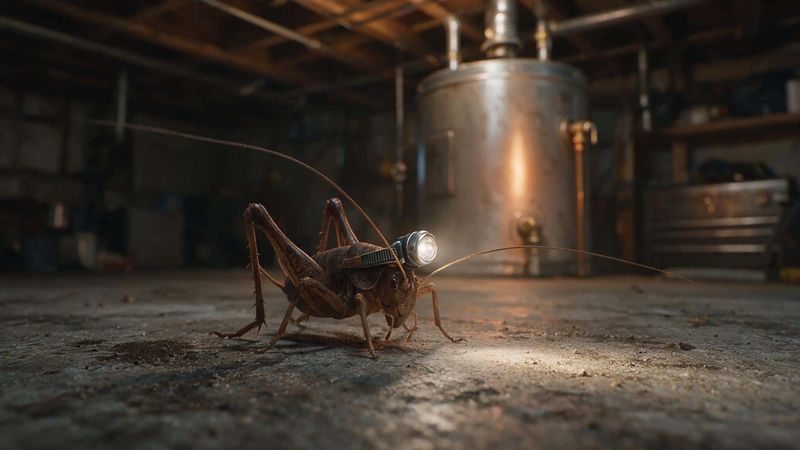
The insects you describe fit the profile of camel crickets, also called cave crickets. They are insects in the order Orthoptera, the group that includes grasshoppers and other crickets, and they are not spiders.
The Missouri Department of Conservation places them in the family Rhaphidophoridae, and Rutgers Cooperative Extension agrees.
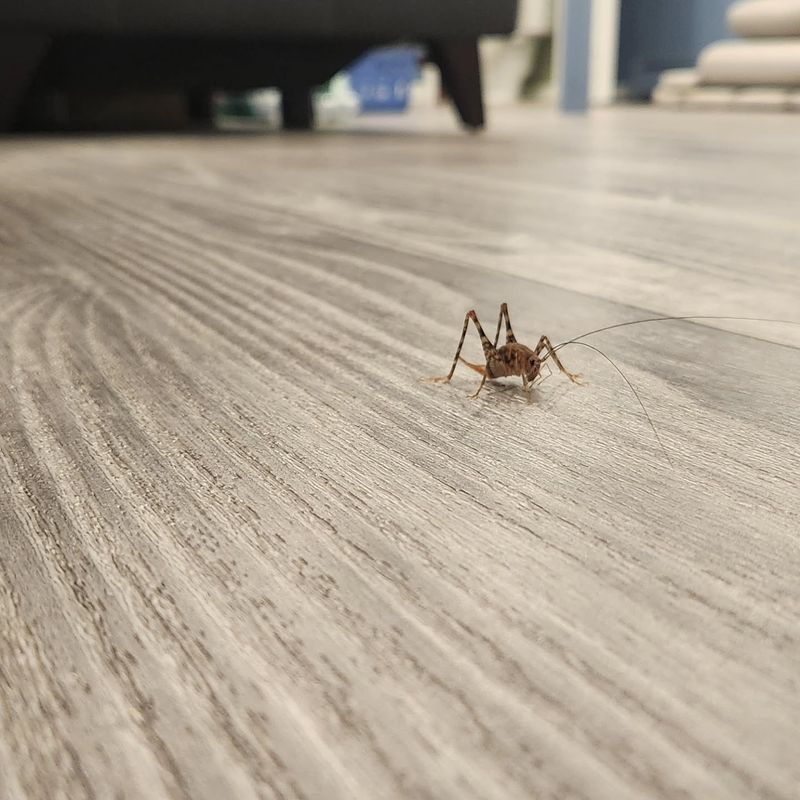
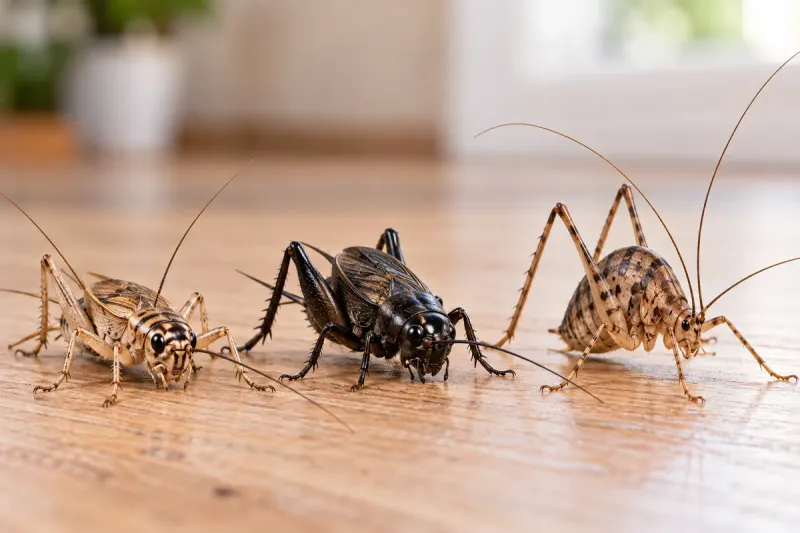
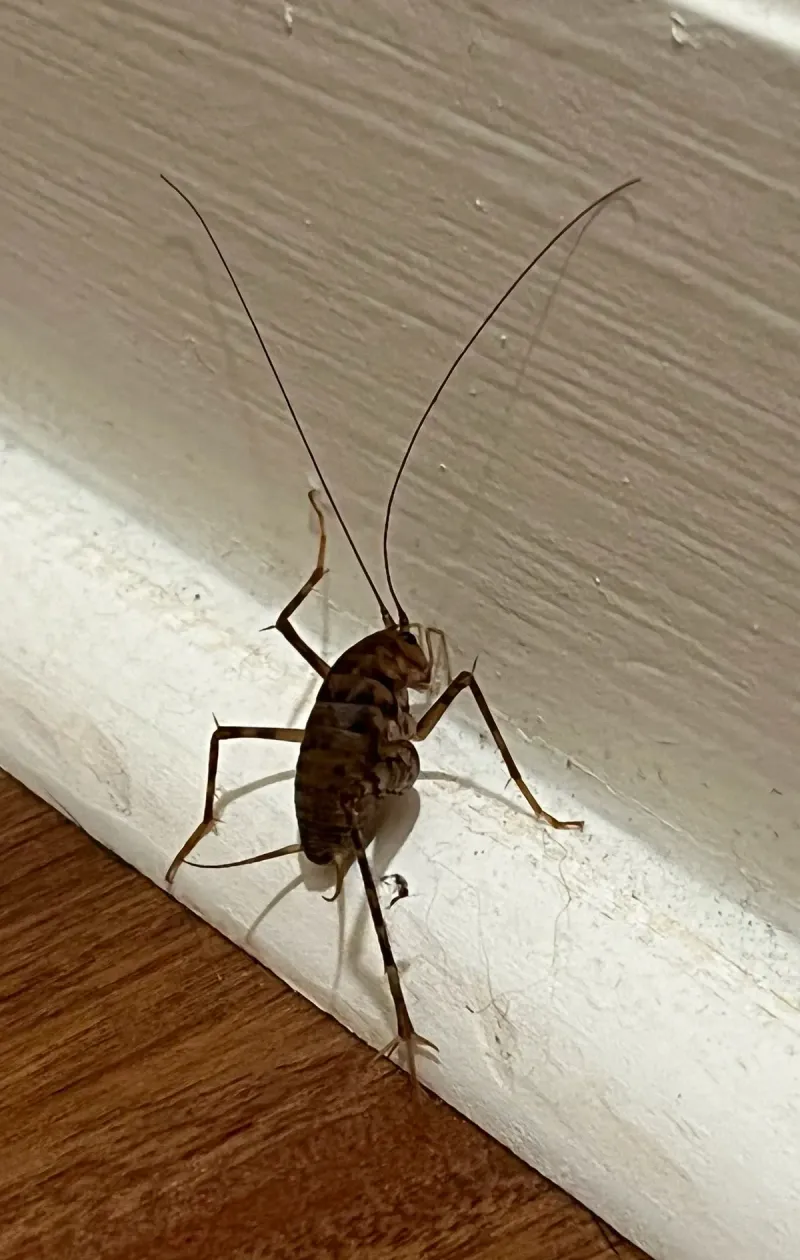
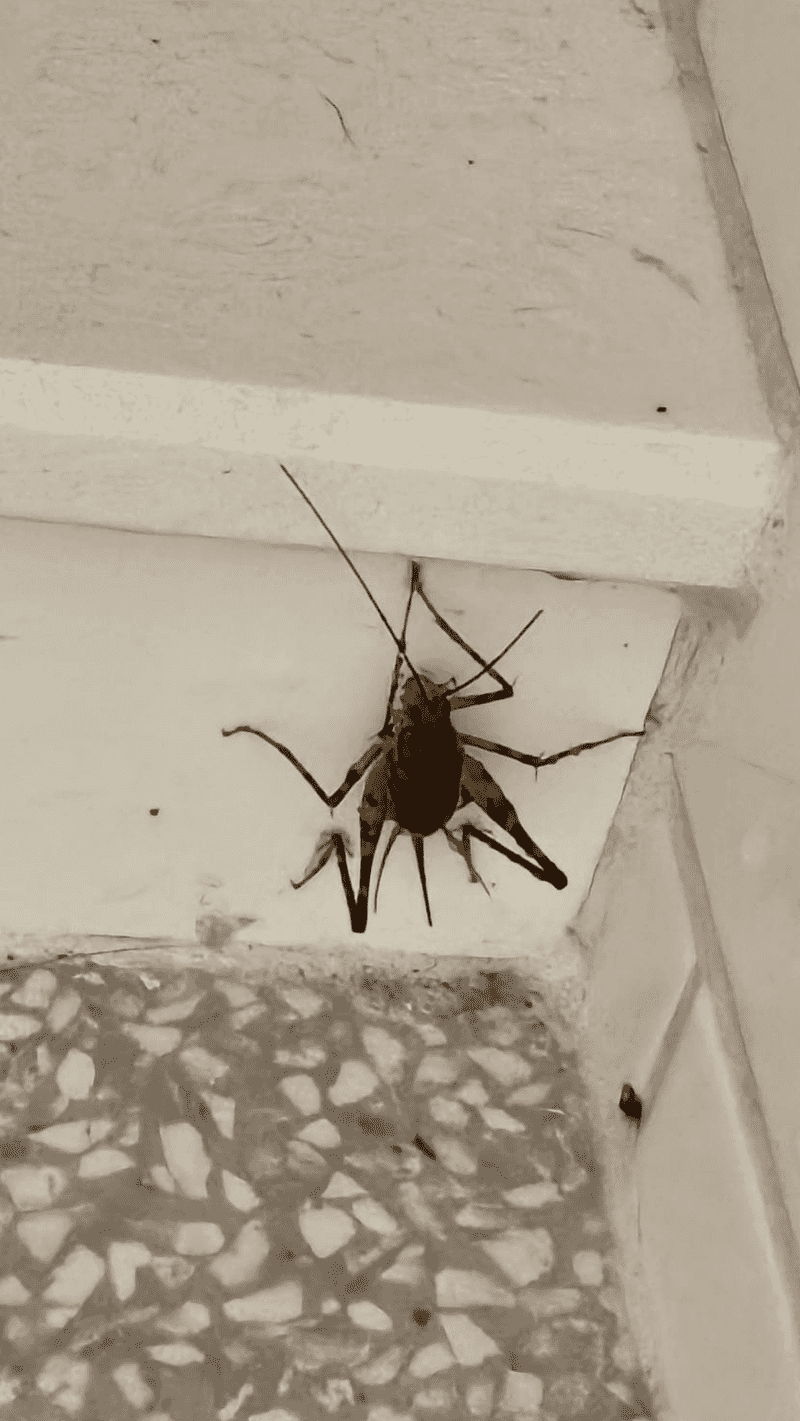
The nickname “spider cricket” comes from looks alone. A camel cricket has a humped back, very long antennae, and big hind legs that launch it in sudden jumps.
Those long back legs and the arched body give it a spidery outline, but it has six legs, not eight.
Camel crickets have no wings and they do not chirp. A silent, wingless, hump-backed jumper is a strong clue, though a photo or a specimen is the only way to be sure of an exact identification.
Indiana homes are a believable setting. A Purdue Extension 4-H guide lists camel crickets and says they may turn up in home basements.
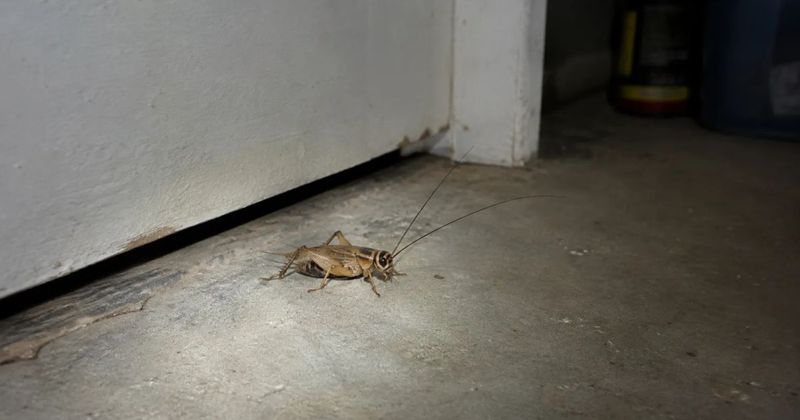
House and field crickets are different. According to University of Maryland Extension, those crickets sing and are drawn to light, while camel crickets do not chirp and are not attracted to light.
A cricket that chirps near a porch lamp is probably not the one in your basement.
Why do they favor basements?
Camel crickets live by a simple rule: cool, dark, and moist. Outdoors they tuck themselves under logs, stones, and similar cover, as noted by University of Minnesota Extension.
A basement or crawl space can feel a lot like that kind of shelter. Concrete walls stay cool, light is dim, and the air is often damper than upstairs.
NC State Extension describes these same spaces as comparable to the places the crickets use outside.
Concealment matters as much as dampness. Stacks of boxes, piles of laundry, firewood, and clutter along the walls give them plenty of places to wedge themselves in during the day.
They tend to be more active at night, so you may see them mostly when you flip on a light.
That said, not every sighting has the same cause. One home may have a damp floor, while another simply has a cozy, cluttered corner near a gap in the foundation.
Crickets may also arrive by different routes, such as around a door, a window well, or a utility opening, so it is wise not to assume one specific entry point.
The takeaway is that a basement offers an appealing package of shelter and humidity. Understanding that package is the first step toward making the space less welcoming.
What does a cluster actually tell you?
Spotting a single camel cricket tells you very little. One can wander in from a garage, a window well, or a pile of leaves outside, and it does not prove you have an infestation, a leak, or a serious moisture defect.
A crowd is a different story. The Missouri Department of Conservation says that numerous crickets could indicate a moisture problem.
Think of that as a nudge to look around, not a diagnosis.
So what should you do with the clue? If you keep finding several crickets over days or weeks, take a closer look at the basement.
Check for musty smells, damp patches on the floor or walls, condensation on pipes, or stored items that feel clammy.
If you find nothing, that is useful too. Crickets may be gathering because of clutter, darkness, or a nearby gap, and the space may be only mildly humid.
A cluster cannot tell you which of these applies, and it cannot pinpoint where water might be getting in.
If you do find signs of dampness, you have a good reason to dig deeper or call a qualified professional. If you find none, a quick tidy and a watchful eye may be enough for now.
Generally not dangerous, but not incapable of damage
Camel crickets are generally not considered dangerous to people. The Missouri Department of Conservation calls them harmless and of no economic importance.
An Extension expert adds that they have chewing mouthparts but no fangs or stinger, and they are not regarded as dangerous to people or pets. That is more careful than saying they never bite, which no source promises.
Harmless to people does not mean harmless to belongings. NC State Extension notes that unchecked crickets may damage stored garments or linens if other food is scarce.
Paper is a separate matter. University of Minnesota Extension says crickets sometimes eat paper products, and rarely fabrics indoors.
In practice, this means a stack of old cardboard boxes, books, or papers is worth a glance, and so is a bin of stored blankets or clothes. Look for ragged edges, small holes, or chewed spots.
For most households the risk is modest. The sensible stance is to relax about your safety and still keep treasured fabrics and papers in sealed containers.
Make the basement less inviting before reaching for pesticides
Start with moisture, because it is the main draw. Fix leaking pipes or gutters, dry damp spots, and consider a dehumidifier.
Cornell IPM says indoor humidity should not exceed 60 percent and ideally stays between 30 and 50 percent, and it lists dehumidification as one option for basements and crawl spaces.
Next, take away the hiding places. Move boxes off the floor, switch to plastic bins with lids, and clear the wall edges.
Fewer nooks means fewer spots for crickets to rest.
Then close the doors they may use. Seal gaps around the foundation, doors, windows, and utility penetrations.
NC State Extension backs this combination of moisture control, cleanup, and exclusion.
For crickets already inside, a vacuum works well, and sticky traps can catch them too. Extension guidance notes that glue traps can also catch unintended animals, so think about pets and wildlife before choosing where to put them.
University of Maryland Extension describes nonchemical control indoors as an option and reserves baits or outdoor perimeter sprays for extreme situations.
If you do use a pesticide, follow the product label exactly. Spraying is no stand-in for repairs or moisture control, and the crickets will keep returning if the basement stays damp and open.
The right response is practical, not panicked
Those leaping basement visitors are most likely crickets, not spiders, and they are generally not considered dangerous. A conservation guide treats a crowd of them as a reason to check for moisture, not as a verdict.
Drying the space and sealing entry points are sensible first moves, in line with Maryland Extension advice.
A camel cricket is a small guest that signals your basement is cozy, nothing more dramatic than that.
Share this story