Get the latest garden guides in your inbox →
Gardening Latest
  • General Gardening
  • Lawn Care
  • Plant Care
  • Composting
  • Soil Health
  • Backyard
  • Garden Muse Magazine
  • General Gardening
  • Lawn Care
  • Plant Care
  • Composting
  • Soil Health
  • Backyard
  • Garden Muse Magazine
  • News
  • Gardening Calendar
  • Garden Structures
  • Vegetable Garden
  • Vertical Garden
  • Raised Beds
  • Hydroponics
  • General Equipment
  • Community Gardens
Garden Themes
  • Spiritual Garden
  • Hydroseeding
  • Seeding and Laying Sod
  • Artificial Grass
  • Lawn Care Equipment
  • Plants
  • Trees
  • Planting Tools
  • Composting Basics
  • Fertilizer
  • Alternative Growing Mediums
  • Front Yard
  • Backyard Activities
  • Landscaping
Gardening Latest

Explore by state

Which state is your garden in?

Currently viewing Alabama

All states

Northeast

  • Connecticut —
  • Delaware 27
  • Maine —
  • Maryland 13
  • Massachusetts 29
  • New Hampshire —
  • New Jersey 13
  • New York 22
  • Pennsylvania 22
  • Rhode Island —
  • Vermont —

Southeast

  • Alabama 13
  • Arkansas —
  • Florida 13
  • Georgia 13
  • Kentucky 27
  • Louisiana 12
  • Mississippi —
  • North Carolina 11
  • South Carolina 26
  • Tennessee 10
  • Virginia 12
  • West Virginia —

Midwest

  • Illinois 12
  • Indiana 14
  • Iowa 26
  • Kansas —
  • Michigan 13
  • Minnesota 12
  • Missouri 12
  • Nebraska —
  • North Dakota —
  • Ohio 13
  • South Dakota —
  • Wisconsin 28

Southwest

  • Arizona 13
  • Colorado —
  • Nevada —
  • New Mexico —
  • Oklahoma —
  • Texas 12
  • Utah —

West

  • Alaska —
  • California 12
  • Hawaii —
  • Idaho —
  • Montana —
  • Oregon —
  • Washington —
  • Wyoming —

No state matches that search.

Site menu

Gardening Latest
  • General Gardening
    • News
    • Gardening Calendar
    • Garden Structures
    • Vegetable Garden
    • Vertical Garden
    • Raised Beds
    • Hydroponics
    • General Equipment
    • Community Gardens
    Garden Themes
    • Spiritual Garden
  • Lawn Care
    • Hydroseeding
    • Seeding and Laying Sod
    • Artificial Grass
    • Lawn Care Equipment
  • Plant Care
    • Plants
    • Trees
    • Planting Tools
  • Composting
    • Composting Basics
  • Soil Health
    • Fertilizer
    • Alternative Growing Mediums
  • Backyard
    • Front Yard
    • Backyard Activities
    • Landscaping
  • Garden Muse Magazine

Explore

  • About GardeningLatest.com
  • Contact Us

Get the latest from the garden

New guides on lawn care, plants and backyard projects, sent when they go up.

Subscribe →

Follow

  • Facebook
  • X
  • Pinterest
  • YouTube
Alabama Gardening

Grabbed a Saddleback Caterpillar While Pulling Weeds in Alabama? Here’s How to Ease That Sting Fast

If you grabbed a saddleback caterpillar and your skin is burning, start with sticky tape, soap and water, and something…

LT

By Loretta Tate

November 24, 2026 · 5 min read

Grabbed a Saddleback Caterpillar While Pulling Weeds in Alabama? Here’s How to Ease That Sting Fast
Grabbed a Saddleback Caterpillar While Pulling Weeds in Alabama? Here's How to Ease That Sting Fast

If you grabbed a saddleback caterpillar and your skin is burning, start with sticky tape, soap and water, and something cold. The pain comes from tiny spines that stick in your skin, not from a bite.

Knowing the right order of steps can help you feel better and spot signs that you need more help. Here is what to do, what to watch for, and when to make a call.

At a glance

Where
Alabama Gardening
Hardiness zone
8 10 to 20°F
Read
5 minutes
Published
November 24, 2026

Lift any spines with tape

Lift any spines with tape
© Baltimore Sun

Start by getting the caterpillar away from your skin. If it is still on you, flick or nudge it off with a stick or a tool, not your fingers.

Touching it again with bare hands can mean more spines in your skin.

Caterpillars do not have to bite to cause trouble. As UF/IFAS Extension explains, hairs or spines can break off on contact, lodge in the skin, and cause irritation or deliver venom.

Saddleback spines in particular may cause intense burning, inflammation, and welts.

Next, press a piece of sticky tape gently onto the affected skin and lift it away. Poison Control recommends using a fresh piece for each pass, so you are not pressing spines back onto your skin.

Repeat a few times, always with clean tape and a light touch.

Poison Control’s sister center in North Carolina gives similar advice. Think of tape as a sensible first step, not a quick cure.

Pain and swelling can still develop, and how long they last varies from person to person.

Wash the skin and cool the sting
Wash the skin and cool the sting
© GoodRx

Once the tape has done its job, wash the area gently with soap and water. Skip hard scrubbing, since rough rubbing may irritate the skin further.

Pat it dry with a clean towel.

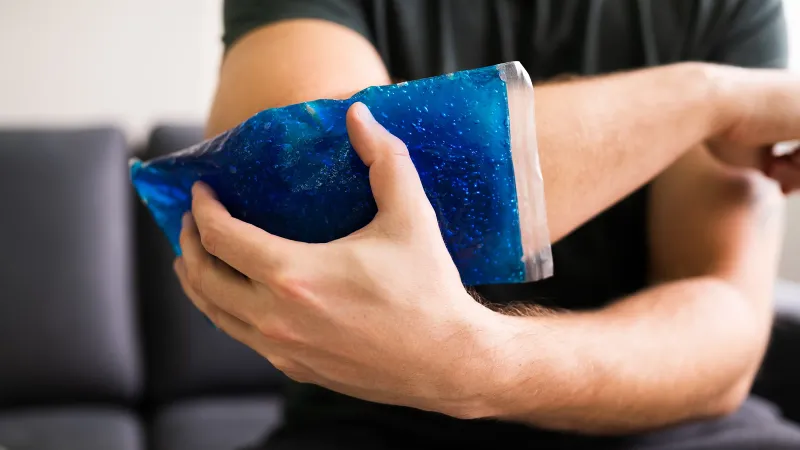
Cooling comes next. A cold compress or an ice pack wrapped in a thin cloth can take the edge off discomfort, and a wrapper keeps ice from sitting directly on your skin.

A puss caterpillar looks soft and furry, but stiff stinging spines hide beneath all that hair.

Poison Control’s caterpillar guidance lists gentle washing and cold as part of symptom relief.

Keep in mind what cold can and cannot do. It may ease burning and swelling, but it does not pull out spines or promise instant relief.

A clinical review of caterpillar envenomation also supports washing and cooling as sensible care.

If the pain stays strong or the skin keeps getting worse, that is a sign to call for advice rather than keep waiting at home.

What symptoms can follow a sting?
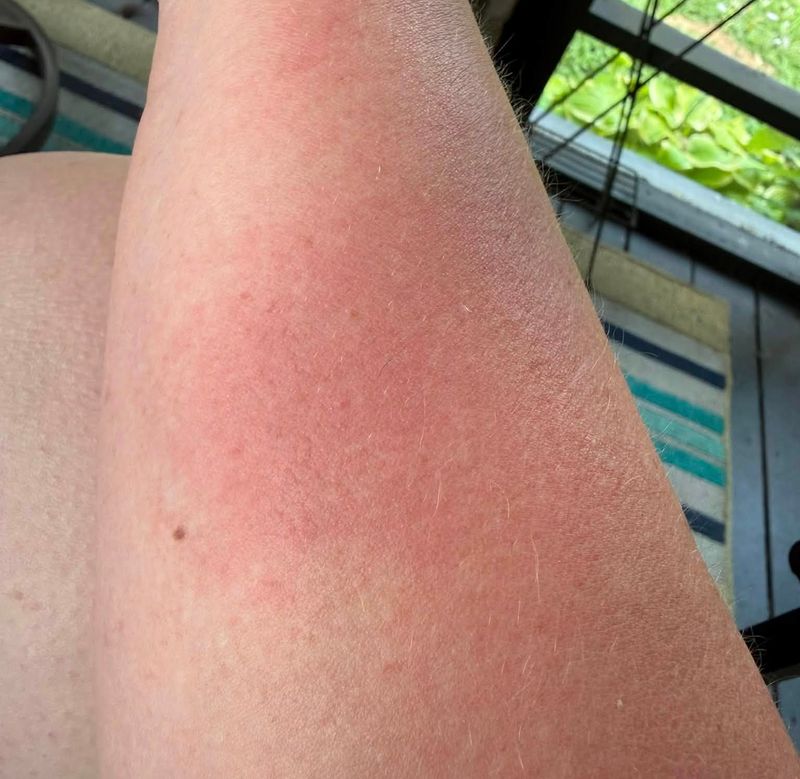
What symptoms can follow a sting?
© outnumbered_acres

Reactions vary quite a bit. Some people feel burning pain right away, while others notice it build over several minutes.

Redness, swelling, itching, welts, and sometimes blisters can follow.

People often want to know how long it will last. Poison Control says pain often improves within a few hours.

For saddlebacks specifically, the LSU AgCenter describes a range of two to eight hours when no blisters form.

Treat those numbers as general expectations, not deadlines. Your sting may calm down sooner, or it may last longer, especially if blisters appear.

For itching, Poison Control suggests hydrocortisone cream. If that does not help, an antihistamine is listed as a possible next step.

Follow the product label, or ask a clinician or poison center which option fits you, particularly for children or anyone taking other medicines.

Skip home pastes as your main plan. Poison Control’s case example reports that a baking soda paste did not relieve one saddleback sting.

How saddleback and puss caterpillars differ
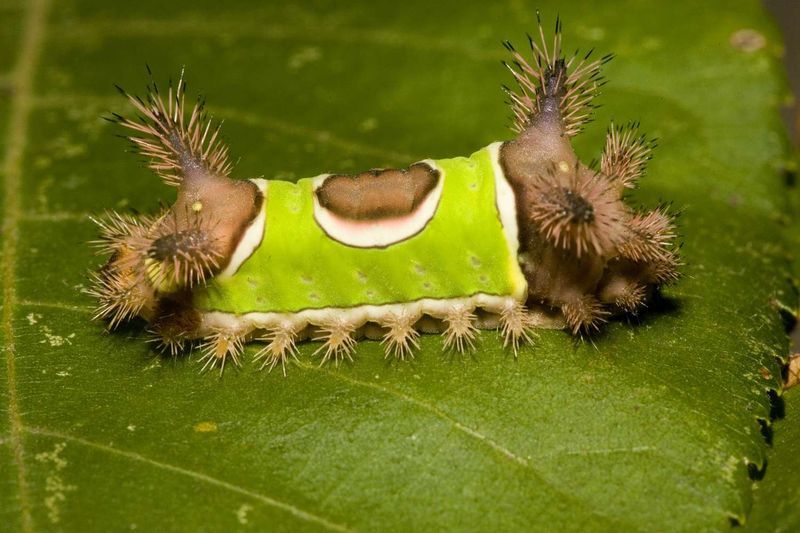
How saddleback and puss caterpillars differ
© ThoughtCo

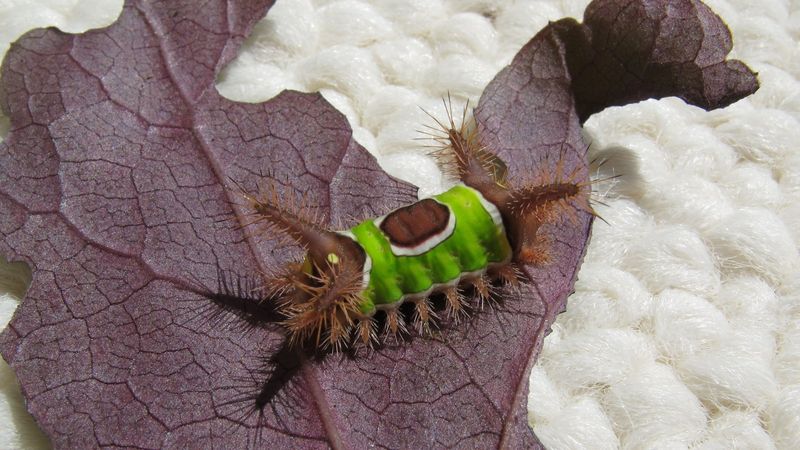
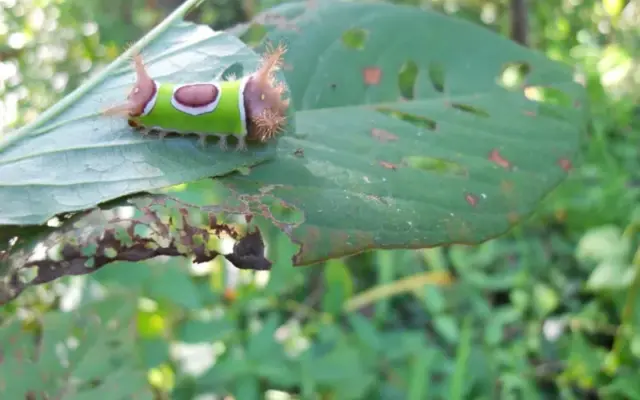
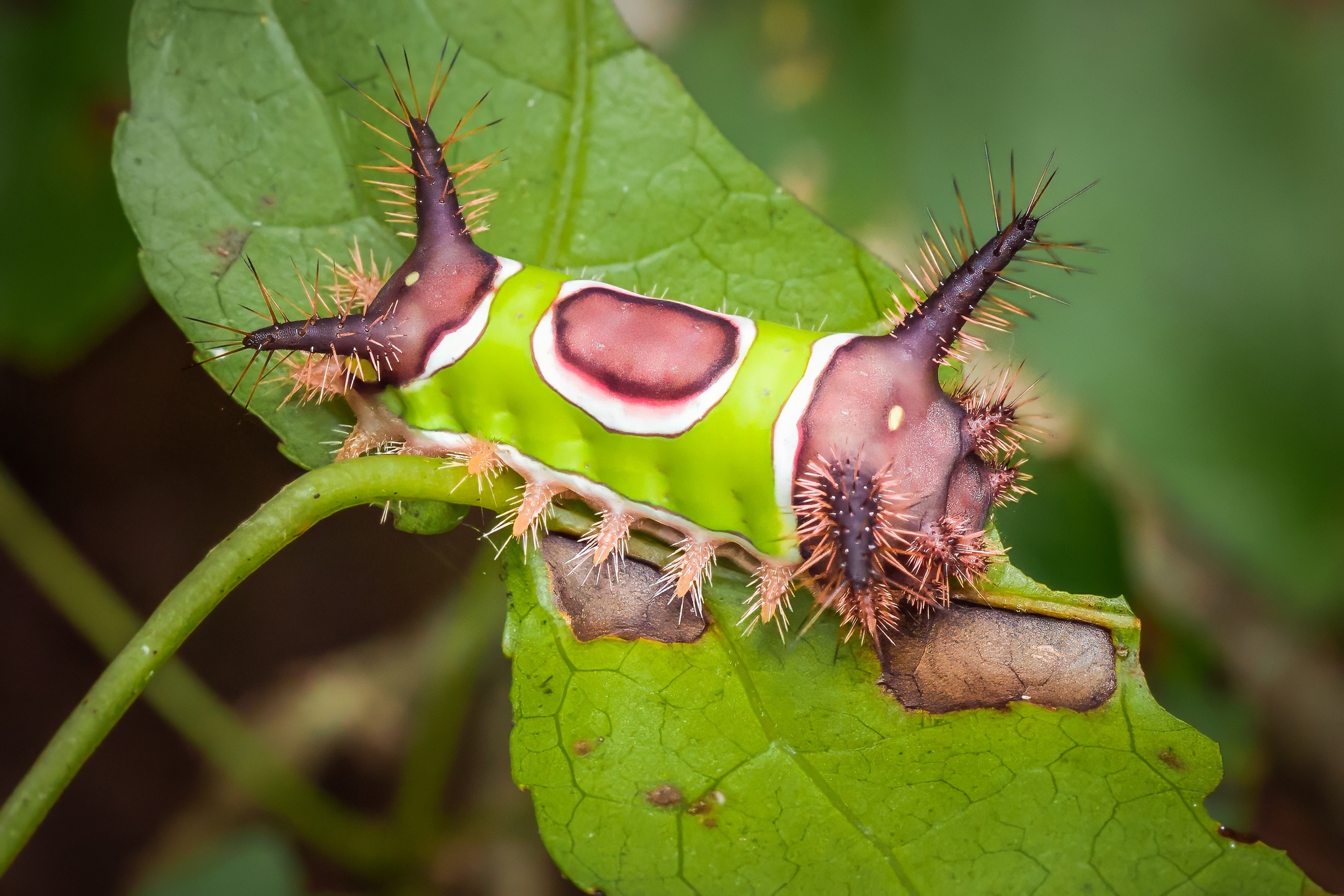
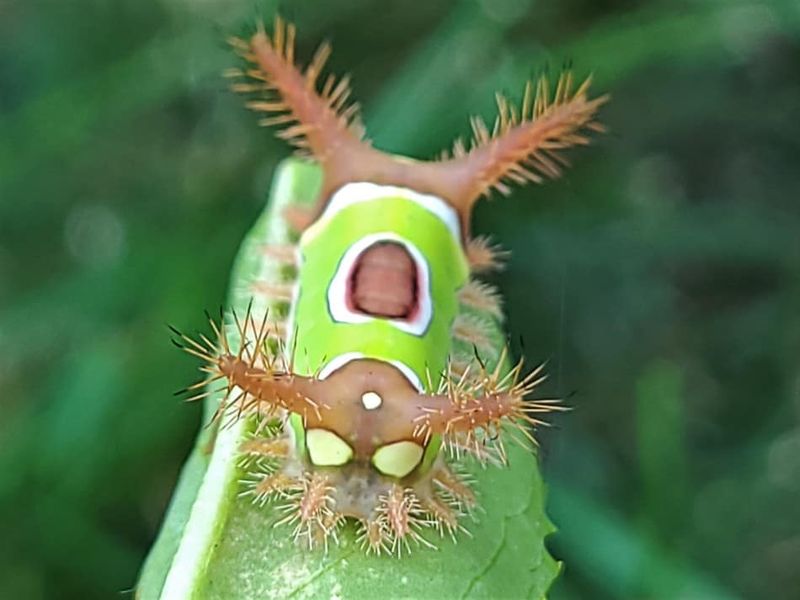
Saddleback and puss caterpillars are different species. A saddleback has a bright green saddle on its back and spiny projections.

A puss caterpillar looks soft and furry, but stiff stinging spines hide beneath all that hair.

Host plants give some clues, though not proof. UF/IFAS lists maple and crape myrtle among saddleback hosts.

It says puss caterpillars use a range of trees and shrubs, often oak and elm.

Timing matters too. An LSU AgCenter source places the saddleback’s second generation from August through October, so late-summer and fall yard work could bring an encounter.

Those sources show where these caterpillars live and when they may be around. They do not show how often Alabama gardeners get stung, or that a surge is underway.

A caterpillar’s looks or the plant it sits on cannot confirm what caused a sting. Many caterpillars on oak or maple are harmless, and some harmless ones look scary.

Treat any suspected sting with the same careful first aid.

When should you get help?
When should you get help?
© Wikipedia

Call 911 right away for trouble breathing, collapse, seizure, or if the person cannot be woken. These are emergencies, not home-care situations.

Poison Control’s emergency guidance makes that line clear.

Eyes need special care. If caterpillar hairs may have reached an eye, rinse it with room-temperature water and contact Poison Control.

Persistent or severe eye symptoms call for urgent medical evaluation, because a clinical review notes that eye injury can need specialist care.

For questions that are not emergencies, call Poison Control at 1-800-222-1222 anywhere in the U.S. Trained staff can walk you through next steps, and Poison Control’s caterpillar page is another place to check.

Do not wait it out if symptoms spread, grow quickly worse, or involve more than the sting site. Those signs deserve a professional’s advice.

Keep the first steps simple
Keep the first steps simple
© GrowIt BuildIT

Move the caterpillar with a stick, lift spines with fresh tape, wash gently, and cool the skin for comfort. If symptoms point to something bigger, use Poison Control or 911 without delay.

A little caution with bare hands saves a lot of burning later.

Share this story
LT

Written by

Loretta Tate

More from Loretta Tate →

About Gardening Latest

Gardening Latest provides in-depth guides to maintaining and enhancing your garden and backyard. Learn how to make the most of the space you have and create a beautiful garden.

More about us →

Latest stories

  • Arizona GardeningWhat It Means When Harvester Ant Mounds Suddenly Pop Up in Your Arizona Yard

    What It Means When Harvester Ant Mounds Suddenly Pop Up in Your Arizona Yard

    1 min ago
  • Texas GardeningHere’s What All That Coyote Howling Outside Your Texas Home After Dark Really Means This Time of Year

    Here’s What All That Coyote Howling Outside Your Texas Home After Dark Really Means This Time of Year

    6 min ago
  • Wisconsin GardeningFall Cleanup Left You With an Io Moth Caterpillar Sting in Wisconsin? Here’s What Helps Right Away

    Fall Cleanup Left You With an Io Moth Caterpillar Sting in Wisconsin? Here’s What Helps Right Away

    17 min ago
  • Missouri GardeningMissouri Yuccas Send Up Those Giant Flower Stalks for a Reason, So Should You Cut Them Off?

    Missouri Yuccas Send Up Those Giant Flower Stalks for a Reason, So Should You Cut Them Off?

    23 min ago
  • Tennessee GardeningTennessee Law Lets You Trim a Neighbor’s Overhanging Branches, as Long as You Stop at the Property Line

    Tennessee Law Lets You Trim a Neighbor’s Overhanging Branches, as Long as You Stop at the Property Line

    29 min ago

Gardening by state

Stories for your state, and the hardiness zone most of it gardens in.

Keep exploring

Read next

All Alabama Gardening →
Alabama GardeningFall Brings Alabama’s Venomous Yard Critters Out Into The Open, Right Where You Garden
Alabama Gardening

Fall Brings Alabama’s Venomous Yard Critters Out Into The Open, Right Where You Garden

35 min ago
Alabama GardeningAlabama’s Southern Short-Tailed Shrew: A Tiny, Seldom-Seen Mammal With Possibly Venomous Saliva
Alabama Gardening

Alabama’s Southern Short-Tailed Shrew: A Tiny, Seldom-Seen Mammal With Possibly Venomous Saliva

18 hr ago
Alabama GardeningCoyotes Yipping and Howling Around Your Alabama Home at Night Are Telling You Something
Alabama Gardening

Coyotes Yipping and Howling Around Your Alabama Home at Night Are Telling You Something

21 hr ago

More from Alabama Gardening

  • Wild Mushrooms Popping Up After Alabama Rains, And How To Tell The Deadly Ones Apart

    Nov 22
  • Spotted A Huge Dark Moth Resting By Your Alabama Front Door? Here’s The Story

    Nov 22
Back to top

Leave a response Cancel

Your email address stays private. Required fields are marked with an asterisk.

Gardening Latest

In-depth guides to maintaining and enhancing your garden and backyard: how to make the most of the space you have, and how to make it beautiful.

  • Facebook
  • X
  • Pinterest
  • YouTube

We may earn a portion of sales from products or services that are purchased through our site as part of our affiliate partnerships with retailers.

Explore

  • About GardeningLatest.com
  • Contact Us
  • Terms and Conditions
  • Privacy
  • Editorial Note:
  • FTC Disclosure

Newsletter

New garden guides and seasonal tips, straight to your inbox.

We’ll email you a link to confirm. Unsubscribe any time.

Almost there! Check your inbox and tap the link to confirm.

© 2026 Gardening Latest. All rights reserved.

Back to top