Those yips and howls outside your window at night are coyotes talking to each other, and spring is the season most tied to their families. The calls can sound eerie, but they are an ordinary part of coyote life in Florida.
Knowing what a howl can and cannot tell you makes the noise a lot less mysterious. Here is how to make sense of it and what to do to keep your pets and family safe.
Coyotes are part of Florida’s nighttime soundscape
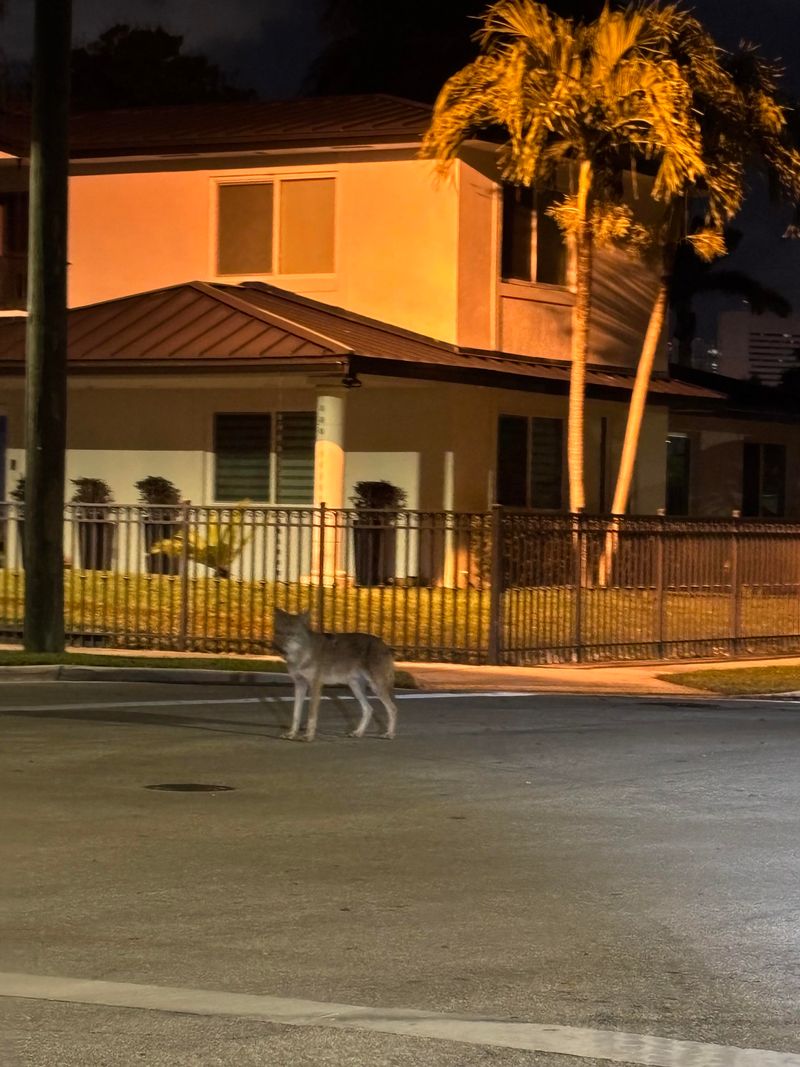
Florida may not be the first place people picture coyotes, but they are here to stay. FWC says coyotes have been documented in all 67 counties, and that includes cities and suburbs.
A neighborhood with sidewalks and streetlights can still be part of a coyote’s home range.
Barks, yips, and howls are normal communication for these animals. UF/IFAS Extension explains that coyotes are territorial and use their voices as part of everyday life.
Hearing them does not mean something unusual is happening.
Still, a burst of high-pitched yipping outside your bedroom window at 2 a.m. can raise your heart rate. That reaction is natural.
Wild sounds in the dark are hard to ignore, especially when you cannot see what is making them.
The good news is that a howl alone is not a sign of danger. FWC describes attacks on people as extremely rare, and it pairs that fact with simple precautions for pets and people.
We will cover those steps later.
First, it helps to separate two ideas. A call is a form of communication, but the sound you hear from your porch is a small piece of a much bigger picture.
The next section looks at what that piece can reveal and what it cannot.
What a howl can—and cannot—tell you

Think of a coyote howl as a long-distance message with no translation guide. Calls may relate to territory or to contact among coyotes, and that is about as far as a listener can safely go.
FWC notes that coyotes are territorial, with a resident pair sharing its territory with family members.
That setup makes sense of the sounds. A pair and their relatives may call to announce who lives in an area or to find one another after separating.
Either idea fits what scientists know, yet neither can be confirmed from a single call heard through a window.
Research backs up the communication role. A Michigan study of vocal responses found that resident coyotes answered recorded calls more often than transient animals did.
That tells us calls carry information between coyotes. It does not give people a way to decode what a nearby animal is doing.
So what should you skip? Claims that a certain howl is a warning, a sign of den defense, or a call to pups are guesses.
Coyotes vocalize for several reasons, and the same sound can serve more than one purpose.
A fair summary is this: you are hearing coyotes keep in touch. You are not hearing a coded announcement that tells you where a den is, how many animals are around, or what they plan next.
Spring brings pups, but a howl cannot confirm them
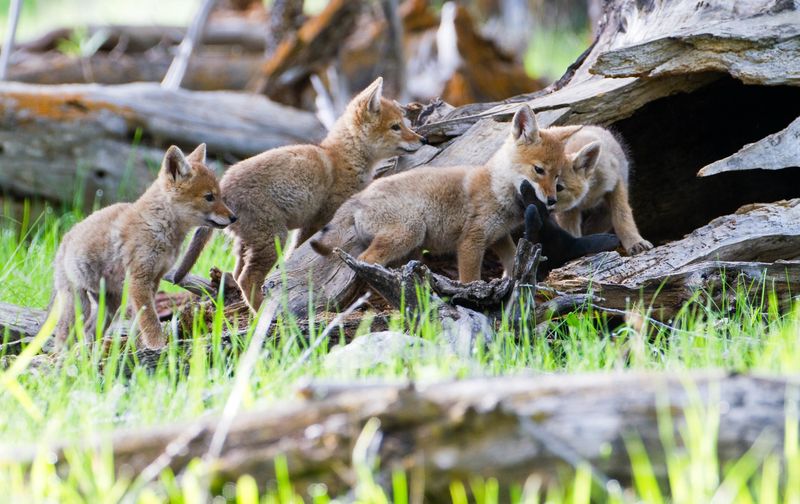
Spring is the part of the year most linked to coyote families. UF/IFAS says Florida pups are typically born from March through May.
Both parents help raise them, and the pups generally stay with the family group during their first year.
As of November 24, 2026, that typical birth window has passed. Calling today’s howls pup season would be a stretch.
Young coyotes born this spring may still live with their families, but the birth period itself is behind us.
Here is where people often mix up two separate ideas. Pups being born in spring does not mean every howl signals pups.
Coyotes vocalize through much of the year, so a call in any month can have causes unrelated to young.
Seasonal findings from other places add some context but not a Florida calendar. A University of California IPM page says coyotes vocalize most of the year but less during early pup-rearing.
Research cited elsewhere reports more howling around breeding and dispersal periods. Both are broad patterns from outside Florida.
You also cannot use the sound to date a litter. If you heard a chorus last April, it would still tell you little about what that group was doing.
The calendar gives helpful background, and the howl itself stays open to interpretation.
A chorus can make a few coyotes sound like many
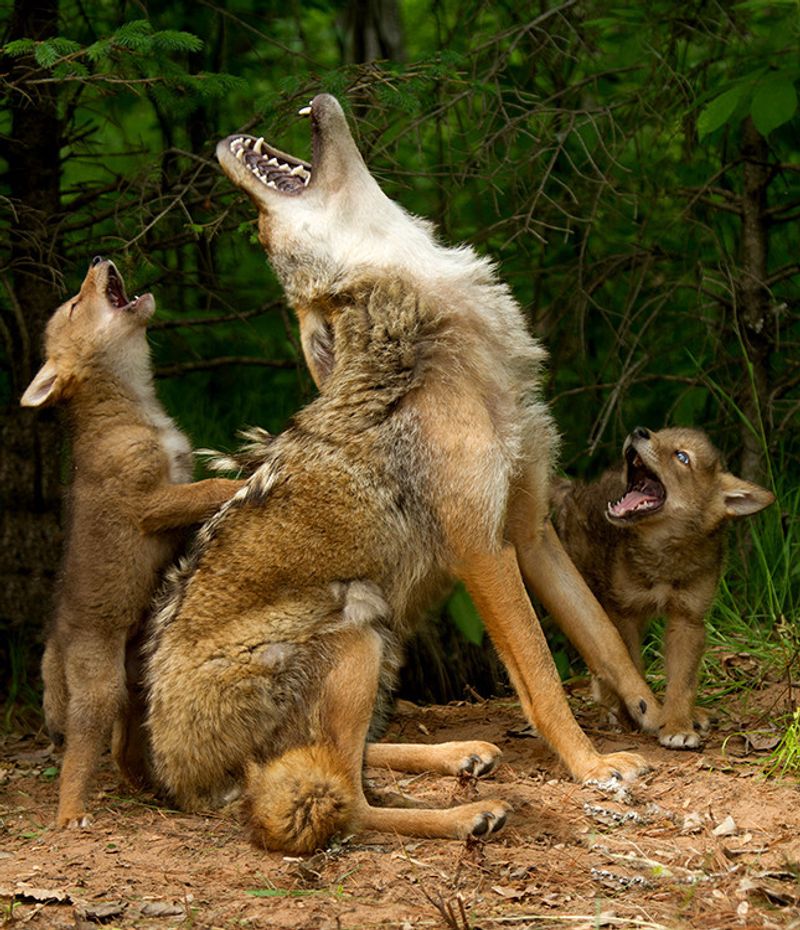
Ever heard a yipping chorus and pictured a dozen animals? Your ears may be fooling you.
In a study of 427 listeners in southern Texas, people heard recordings of one to four coyotes. The researchers found that participants overestimated the number by nearly twofold on average.
That was a listening study, not a head count of coyotes in the wild. It took place in Texas and does not give a Florida population estimate.
What it does show is how easily a few voices can sound like a crowd, especially at night when yips overlap and echo.
The practical lesson is to avoid counting by ear. Two or three coyotes can sound like far more, so a loud chorus does not mean a large group has moved in next door.
Group structure is another point of confusion. UF/IFAS says Florida coyotes do not typically form wolf-like packs, though family groups may sometimes hunt together.
A territorial pair with relatives is a very different picture from a wolf pack.
So a dramatic chorus tells you neither how many coyotes are out there nor how they are organized. It tells you coyotes are in the area and communicating, which is something you can already expect in Florida.
Keep pets close and give coyotes space
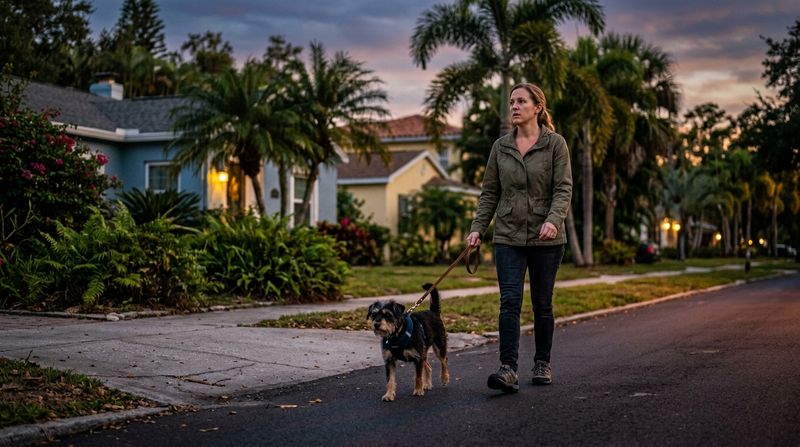
Howling is a good reminder to tighten up pet routines. FWC recommends keeping cats indoors and walking small dogs on a short leash, especially at night, dusk, and dawn.
Those are the times coyotes tend to be most active.
Next, take away the things that attract them. Secure outdoor pet food, garbage, and other food sources.
A bowl left on the patio or an unlatched trash can may bring a coyote closer than it would otherwise come.
Do not count on a fence alone. Coyotes can climb fences, so a fenced yard is not a guarantee of safety.
Staying near small pets when they are outside at night is a stronger layer of protection.
Distance matters for people too. Never approach, follow, or inspect a coyote or a suspected den.
FWC says a coyote may follow people or dogs that are unknowingly near a den, and parents may protect their young.
If you notice a coyote approaching people closely, chasing people, or acting aggressively, contact your FWC regional office. Report what you saw, where, and when.
Those details help wildlife officials decide what to do next.
Use the season as context, not a diagnosis
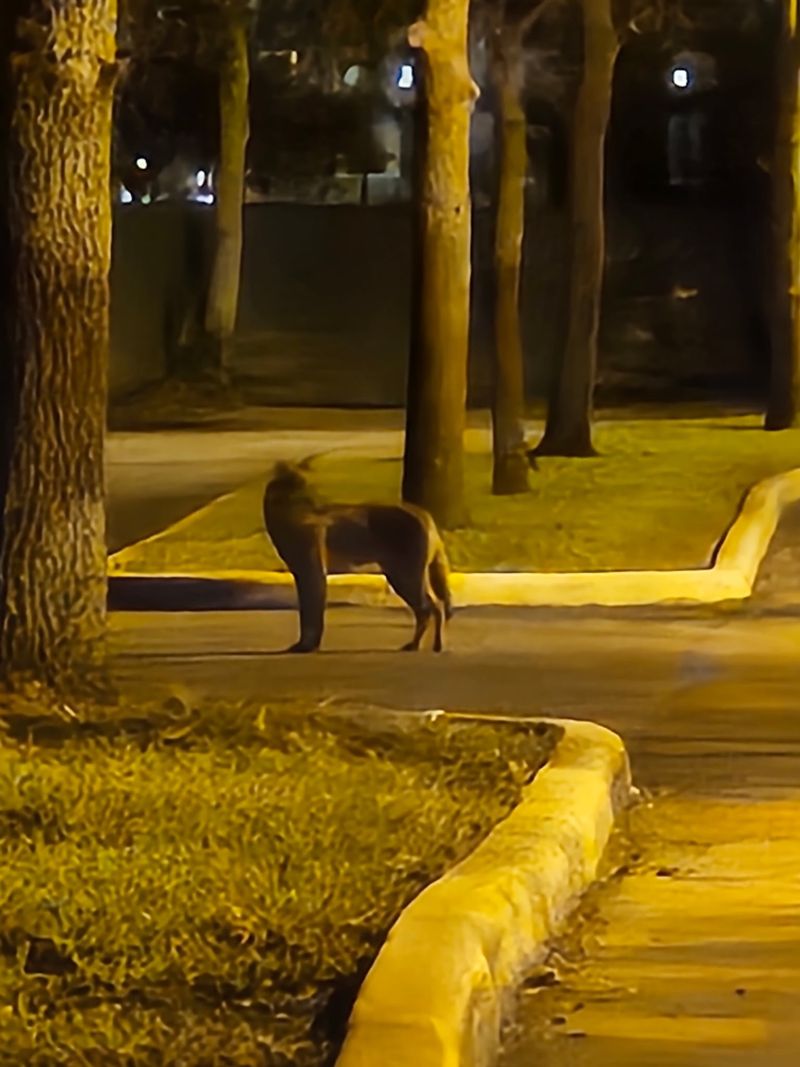
A nighttime howl in Florida may relate to territory or contact among coyotes. Spring, March through May, is the typical pup-birth period, but the sound itself cannot confirm pups.
As of November 24, 2026, that window has passed.
Skip the speculation and stick with calm habits from FWC’s guidance: protect pets, remove attractants, and keep your distance.
Next time the yips drift across the yard, you can listen like a neighbor who knows the story instead of a nervous guesser.
Share this story