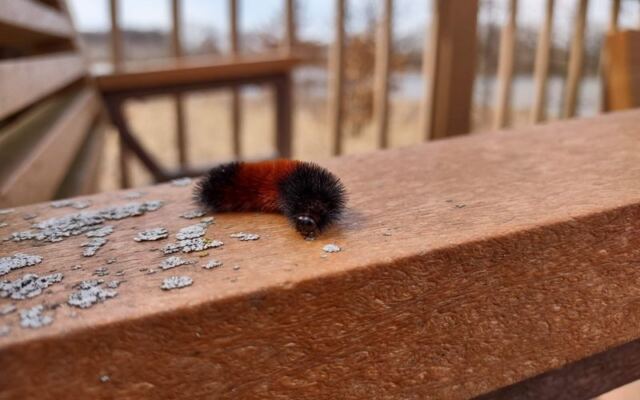
That fuzzy caterpillar inching across your Kentucky driveway in late fall is almost certainly looking for a cozy place to wait out the winter. It may tuck itself under leaves, bark, a board, or a rock nearby.
Folklore says its stripes predict the weather, but the real story is more interesting and a lot more useful. Here is what the little traveler is doing and how to help by doing very little.
What is that fuzzy traveler?
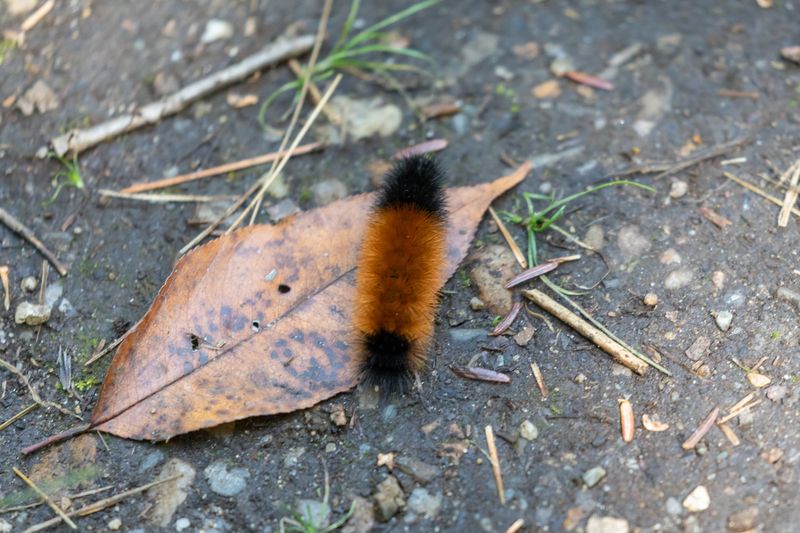
The classic banded woolly bear, black at both ends with a rusty brown band in the middle, is the caterpillar of the Isabella tiger moth, Pyrrharctia isabella. Kentucky gardeners see it more than almost any other fuzzy caterpillar, especially once the leaves start to fall.
University of Kentucky Extension points to this species when it explains why woolly bears seem to be crossing roads and driveways each autumn.
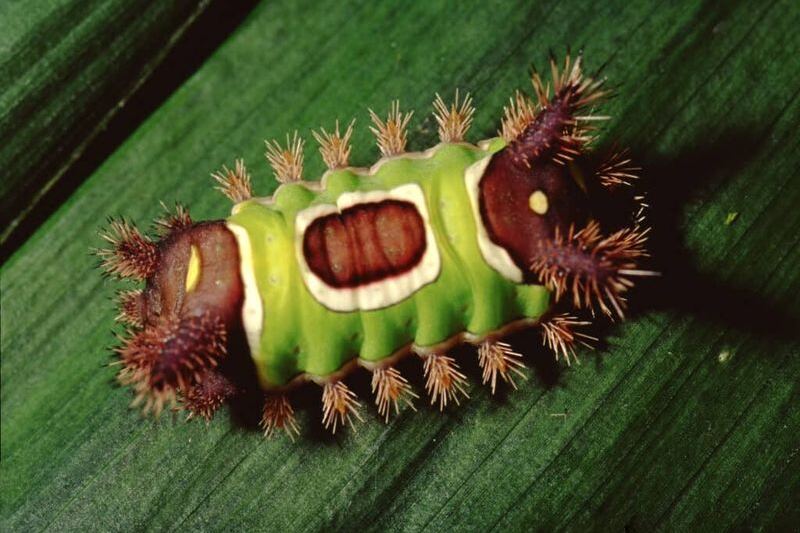
Here is a catch, though. The name “woolly bear” is a nickname, and people use it for several different hairy caterpillars.
Some are solid black, some are tan or orange, and some look a lot like the banded one at a quick glance.
That means color alone does not always settle the question. Texas A&M AgriLife notes that fuzzy black caterpillars can be hard to tell apart, so a confident identification takes more than a glance at one stripe.
If yours is about an inch or two long, covered in short, stiff bristles, and wearing a clear brown band between black ends, it is very likely the familiar Isabella tiger moth larva. If it looks different, it may be another species, and that is worth remembering before you decide to pick it up.
Either way, the best next step is simply to watch where it goes and keep your hands to yourself.
The adult moth is a plain, soft orange-yellow insect that most people never connect with the bristly caterpillar. That change comes next spring, long after the crossing you see today.
Why mature caterpillars wander in late fall
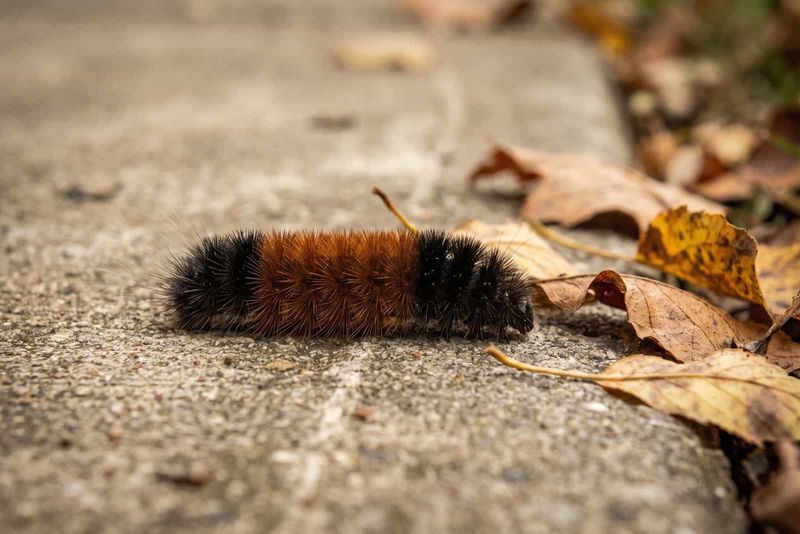
Cool weather sets the wandering in motion. The USA National Phenology Network describes a wandering phase for mature woolly bears before they overwinter, often around October or early November across much of the species’ range.
That is a general seasonal pattern, not a fixed date on the Kentucky calendar. A warm fall can stretch the season out, and a chilly one can bring the crawlers out sooner.
So why do you see them on pavement? Driveways and roads are open ground between the places the caterpillars have been feeding and the places they may want to settle.
They are moving, and hard surfaces are simply in the way.
Many people hear that the caterpillar is racing south to escape the cold. It is not.
It is a small insect looking for a protected spot, and it has no ability to plan a long trip. The direction it happens to be crawling does not mean anything about the weather ahead, a point the National Weather Service makes when it looks at woolly bear folklore.
Think of it more like a homeowner checking the attic and basement before a storm. The caterpillar is looking around for somewhere sheltered, and your driveway is just part of the route.
Where it may shelter for winter
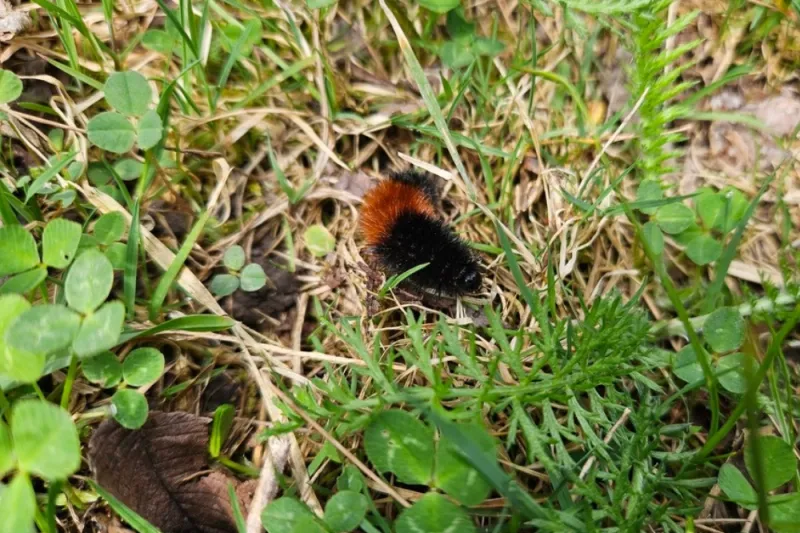
Leaf litter gets most of the attention, but it is only one option. Sources describe woolly bears tucking in under bark, boards, rocks, logs, and other protected places.
Purdue Extension offers a similar picture of caterpillars looking for a spot to wait out the cold.
Seeing one on your driveway cannot tell you where it will end up. It might choose the pile of leaves by the fence, a stack of firewood, a flat stone in the garden, or a spot you will never find.
Guessing a specific destination would be just that, a guess.
Once it settles in, the caterpillar overwinters in its larval form. As Kentucky Extension explains, it becomes inactive in cold weather, then moves again when conditions warm, and later it forms a pupa and becomes a moth.
You may have heard that woolly bears can freeze solid and thaw out fine. There is some truth to that.
A laboratory study by Layne and Blakeley looked at how freezing temperatures affect ice formation and long-term survival in the species. Those are controlled lab results, though, and they do not mean every caterpillar survives every freeze in a real Kentucky winter.
What this means for you is simple. A protected spot gives the caterpillar its best chance, and that is why leaving natural cover in place helps.
What its bands can—and cannot—tell you
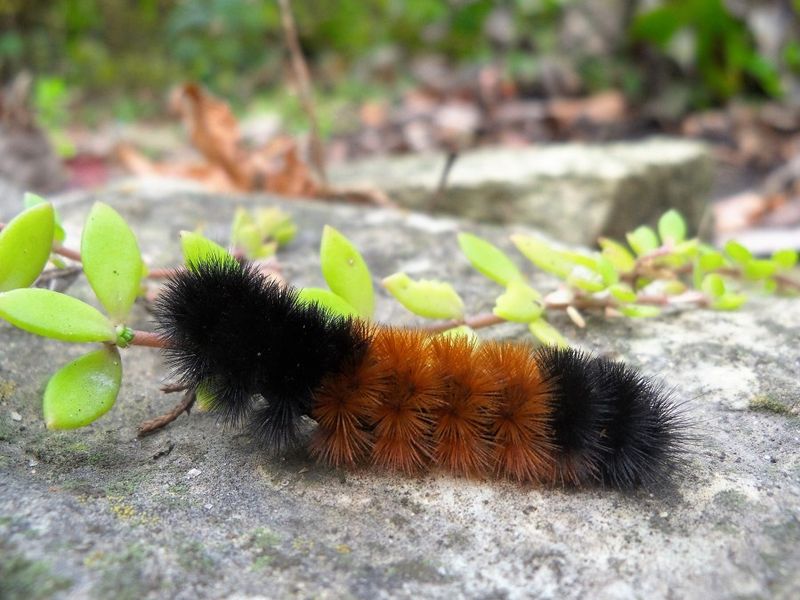
Old tradition says that a wide brown band means a mild winter and more black means a harsh one. It is a fun idea, and it has been part of autumn conversation for generations.
Enjoying the story is fine, but it is not a forecast you can plan around.
The reason is that the bands change as the caterpillar grows. The pattern shifts as it develops and molts, so band width reflects where an individual is in its life, along with natural variation from one caterpillar to the next.
University of Missouri Extension explains this when it asks whether the woolly bear can predict the weather.
The National Weather Service comes to the same conclusion. Banding is not a dependable guide to the coming season.
You can test this yourself. Compare a few woolly bears from the same yard on the same day, and you will likely find different band widths.
They cannot all be predicting different winters. University of Illinois Extension also takes a look at the truth about these caterpillars and the claims people make about them.
If you want a winter outlook, a real weather forecast is the better tool. The caterpillar is better appreciated as a neighbor with a fascinating life cycle than as a tiny meteorologist.
How to give a driveway caterpillar space
The kindest move is usually the simplest. If the caterpillar is already tucked into leaves, bark, or another covered spot, leave it exactly where it is.
Rake around it, or put off that cleanup patch until spring if you can.
If it is out in the open on your driveway, give it room to keep going. Park a little farther along, walk around it, and let it get to the edge on its own.
The USA National Phenology Network describes this wandering as normal behavior for the species in autumn.
Safety comes first for you, too. Never step into traffic, or take any other risk, to move a caterpillar off a road.
One small insect is not worth an accident.
As for touching one, the banded woolly bear is not considered a stinging caterpillar. Still, its bristles may irritate or hurt if pressed against skin, and Kentucky Extension cautions that the hairs can be painful if stepped on.
That is one more reason to watch your step on a busy driveway.
Because several hairy caterpillars share the name, caution matters even more. Texas A&M AgriLife notes that fuzzy black caterpillars can be hard to identify.
If you cannot avoid handling an unidentified one, wear gloves, move it gently to nearby cover, and wash your hands afterward.
Kids can be great observers here. Teach them to look closely and keep their hands back.
A crossing points toward shelter, not a forecast
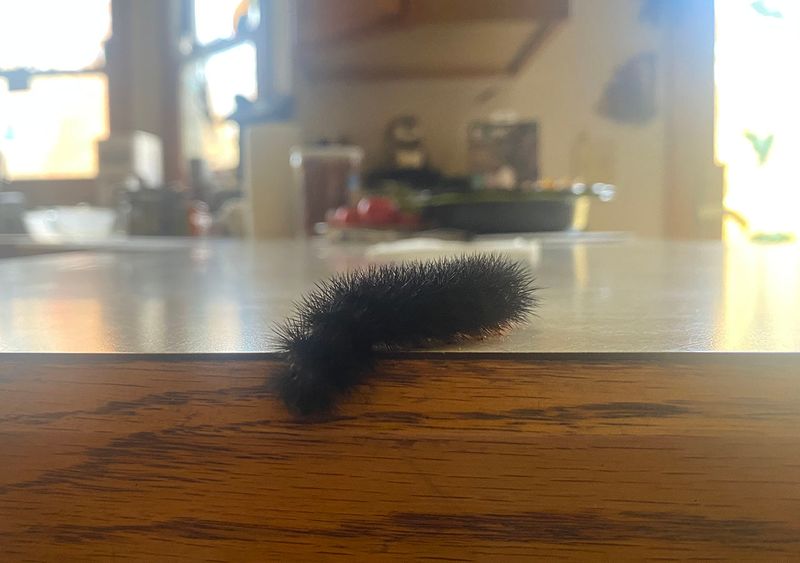
When you see that fuzzy commuter heading across the pavement, you are watching a caterpillar searching for a protected place to overwinter, as the USA National Phenology Network describes. Its route and its stripes do not give you a dependable preview of winter, which the National Weather Service makes clear.
Let it settle if it is sheltered, and step aside if it is not. Some of the best wildlife help comes from doing nothing at all.
Share this story