Get the latest garden guides in your inbox →
Gardening Latest
  • General Gardening
  • Lawn Care
  • Plant Care
  • Composting
  • Soil Health
  • Backyard
  • Garden Muse Magazine
  • General Gardening
  • Lawn Care
  • Plant Care
  • Composting
  • Soil Health
  • Backyard
  • Garden Muse Magazine
  • News
  • Gardening Calendar
  • Garden Structures
  • Vegetable Garden
  • Vertical Garden
  • Raised Beds
  • Hydroponics
  • General Equipment
  • Community Gardens
Garden Themes
  • Spiritual Garden
  • Hydroseeding
  • Seeding and Laying Sod
  • Artificial Grass
  • Lawn Care Equipment
  • Plants
  • Trees
  • Planting Tools
  • Composting Basics
  • Fertilizer
  • Alternative Growing Mediums
  • Front Yard
  • Backyard Activities
  • Landscaping
Gardening Latest

Explore by state

Which state is your garden in?

Currently viewing Iowa

All states

Northeast

  • Connecticut —
  • Delaware 28
  • Maine —
  • Maryland 15
  • Massachusetts 31
  • New Hampshire —
  • New Jersey 15
  • New York 24
  • Pennsylvania 24
  • Rhode Island —
  • Vermont —

Southeast

  • Alabama 14
  • Arkansas —
  • Florida 14
  • Georgia 15
  • Kentucky 28
  • Louisiana 13
  • Mississippi —
  • North Carolina 13
  • South Carolina 27
  • Tennessee 11
  • Virginia 14
  • West Virginia —

Midwest

  • Illinois 13
  • Indiana 16
  • Iowa 28
  • Kansas —
  • Michigan 15
  • Minnesota 13
  • Missouri 13
  • Nebraska —
  • North Dakota —
  • Ohio 15
  • South Dakota —
  • Wisconsin 29

Southwest

  • Arizona 14
  • Colorado —
  • Nevada —
  • New Mexico —
  • Oklahoma —
  • Texas 13
  • Utah —

West

  • Alaska —
  • California 14
  • Hawaii —
  • Idaho —
  • Montana —
  • Oregon —
  • Washington —
  • Wyoming —

No state matches that search.

Site menu

Gardening Latest
  • General Gardening
    • News
    • Gardening Calendar
    • Garden Structures
    • Vegetable Garden
    • Vertical Garden
    • Raised Beds
    • Hydroponics
    • General Equipment
    • Community Gardens
    Garden Themes
    • Spiritual Garden
  • Lawn Care
    • Hydroseeding
    • Seeding and Laying Sod
    • Artificial Grass
    • Lawn Care Equipment
  • Plant Care
    • Plants
    • Trees
    • Planting Tools
  • Composting
    • Composting Basics
  • Soil Health
    • Fertilizer
    • Alternative Growing Mediums
  • Backyard
    • Front Yard
    • Backyard Activities
    • Landscaping
  • Garden Muse Magazine

Explore

  • About GardeningLatest.com
  • Contact Us

Get the latest from the garden

New guides on lawn care, plants and backyard projects, sent when they go up.

Subscribe →

Follow

  • Facebook
  • X
  • Pinterest
  • YouTube
Iowa Gardening

Spotted a Big White Owl Perched on Your Iowa Fence Post? Here’s Why It Came South

A big white owl on an Iowa fence post is most likely a Snowy Owl that traveled south from the Arctic tundra…

LP

By Lyle Petersen

November 25, 2026 · 6 min read

Spotted a Big White Owl Perched on Your Iowa Fence Post? Here’s Why It Came South
Spotted a Big White Owl Perched on Your Iowa Fence Post? Here's Why It Came South

A big white owl on an Iowa fence post is most likely a Snowy Owl that traveled south from the Arctic tundra for the winter. Iowa’s open farm fields look a lot like the treeless land it hunts at home.

These visits are rare and sporadic, which makes every sighting special. Here is how to identify the bird, why it may be here, and how to watch it without causing trouble.

At a glance

Where
Iowa Gardening
Hardiness zone
5 −20 to −10°F
Read
6 minutes
Published
November 25, 2026

How to Recognize a Snowy Owl

How to Recognize a Snowy Owl
© nhm_wpy

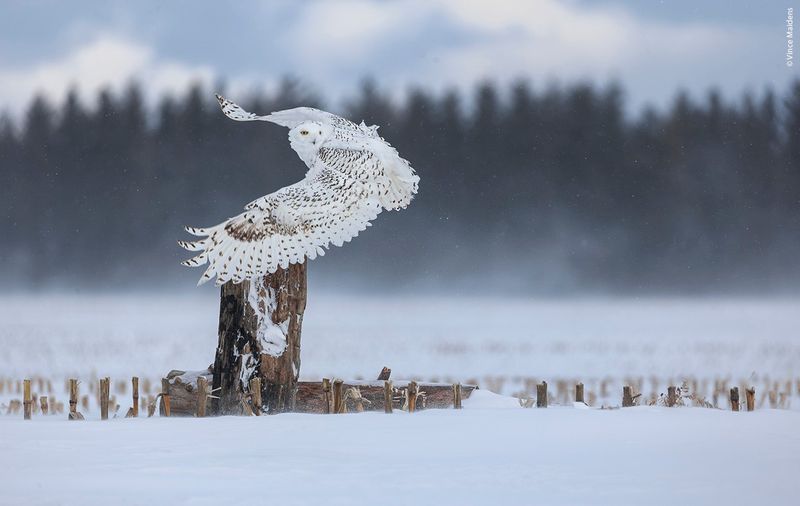
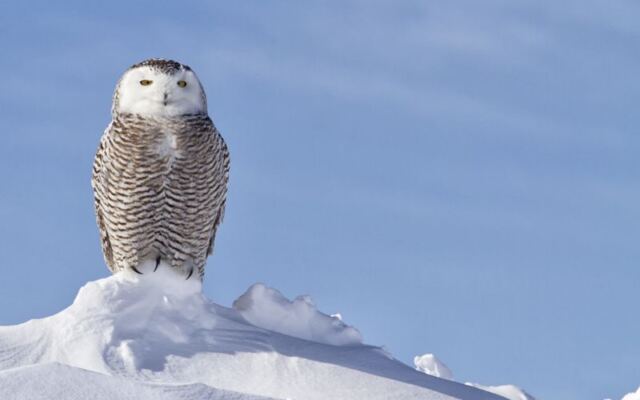
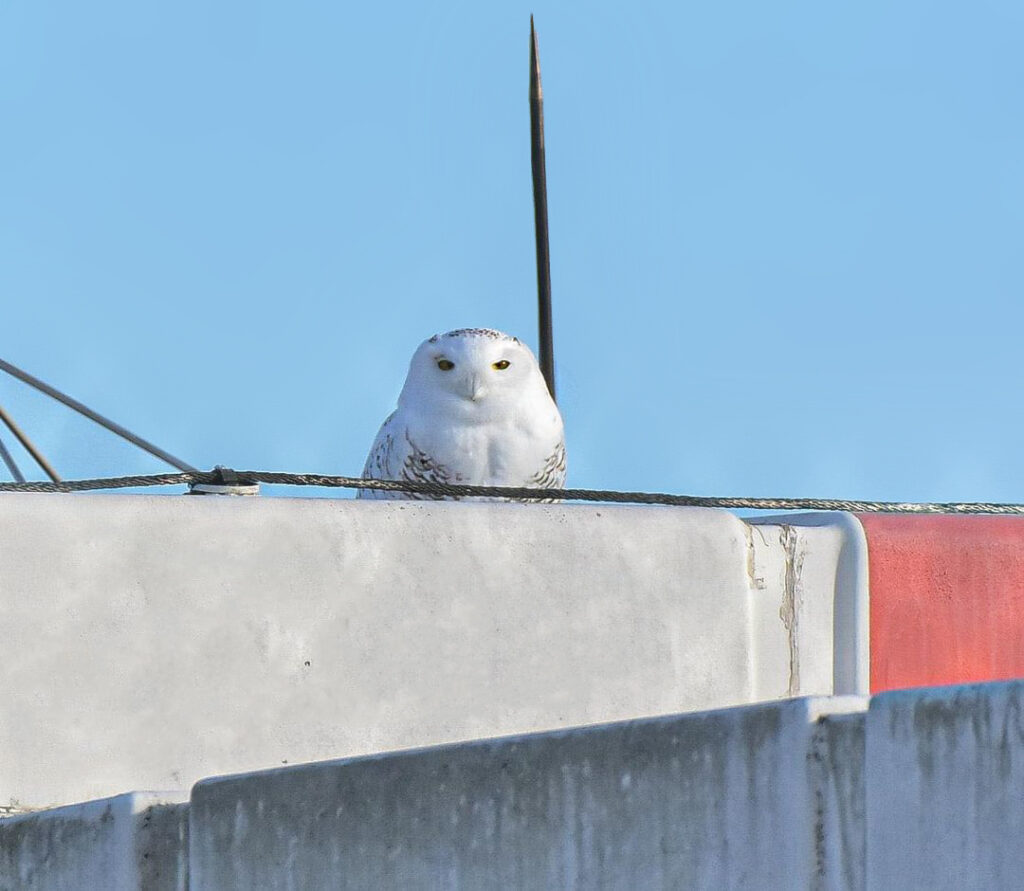
Picture a bird about as big as a house cat, with a thick body and a smooth, rounded head. A Snowy Owl is mostly snow-white, often with dark flecks or bars, and its eyes are a bright yellow.

Size, head shape, and eye color matter just as much as color.

White feathers alone are not enough to name the species. Iowa also has Barn Owls, and Iowa DNR owl information notes that they can look pale or whitish.

A Barn Owl has a heart-shaped face and brown eyes, which gives it a very different look from the round-headed, yellow-eyed Snowy.

Try this quick check from a safe distance with binoculars. Is the bird large and bulky?

Is the head round with no ear tufts? Are the eyes yellow?

If the answers are yes, you may be looking at a Snowy Owl, a species the DNR calls a sporadic winter visitor from the Arctic tundra.

That last detail is the key to the bigger question. This owl is not a local bird that happens to be pale.

It is a northern traveler, and the next sections explain why open Iowa country can draw one in.

Why Open Iowa Fields Suit a Snowy Owl
Why Open Iowa Fields Suit a Snowy Owl
© North Tama Telegraph

Flat, open ground is home to the Snowy Owl. On the Arctic tundra there are almost no trees, so the bird hunts across wide, treeless land.

An Iowa farm field in winter can feel surprisingly similar.

According to an Iowa DNR release on Snowy Owls, these owls use open areas such as agricultural fields and airports. Both offer long sightlines and room to spot movement on the ground.

Birders use the word irruption for a winter when unusually large numbers of Snowy Owls move south.

A cut cornfield or a wide runway edge can work well as a hunting ground.

Unlike many owls, Snowy Owls are active during the day. That is why you might see one in bright afternoon light rather than only at dusk.

They often pick a perch with a good view, such as a fence post, a utility pole, or a low rise in the field.

Once the owl settles on a post, it may stay there for a long time, watching for movement in the stubble. That patient pose is ordinary hunting behavior.

A bird sitting calmly on a fence post is not automatically lost, sick, or asking for help.

How Arctic Prey Can Lead to More Owls Moving South
How Arctic Prey Can Lead to More Owls Moving South
© Project SNOWstorm

Many people assume that owls head south because food ran out up north. The story is more interesting than that.

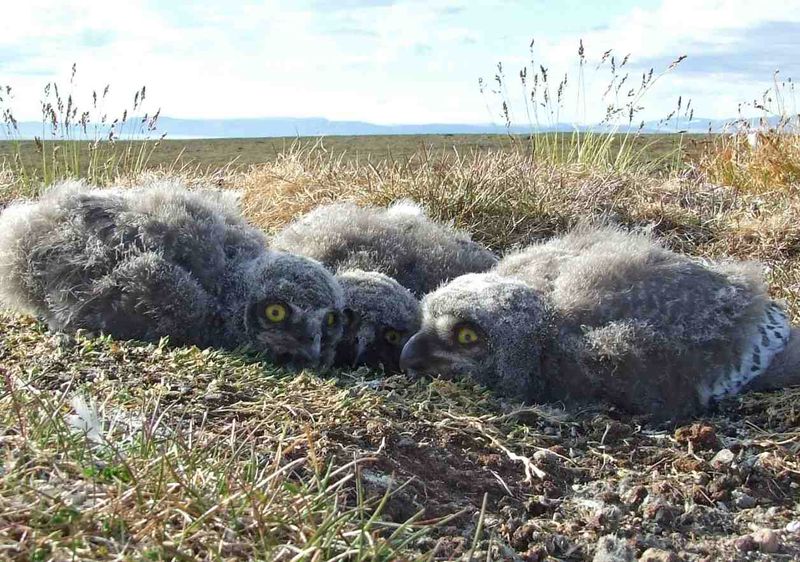
On the Arctic tundra, Snowy Owls rely heavily on lemmings, small rodents whose numbers rise and fall over the years.

When food is plentiful, owls can raise more chicks. The Iowa DNR release says young produced in food-rich Arctic summers may disperse south the following winter.

More young birds on the move means more chances that some will end up in places like Iowa.

A peer-reviewed study by Robillard and colleagues in Oecologia backs this up. The researchers found that more small mammals in the Arctic were linked with more Snowy Owls farther south the next winter.

In other words, a good year for prey tends to lead to a big year for owls, not a crash.

This is a pattern across the whole population. It does not tell you why one owl landed on one post in your county.

Some birds may be young, some may be older, and some may be thin or healthy, and from a roadside you cannot know which.

So the best way to think about it is this: abundant prey and strong breeding help explain why many owls move south, while the reason for any single bird stays unknown.

One Sighting Is Not an Irruption
One Sighting Is Not an Irruption
© nysdec

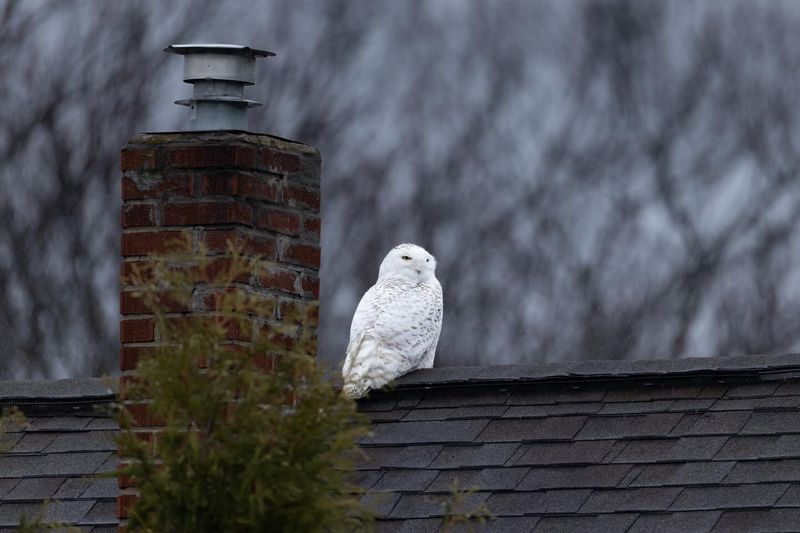
Birders use the word irruption for a winter when unusually large numbers of Snowy Owls move south. It describes a whole population, spread over many places.

A single owl on your fence post does not prove one is underway.

Iowa DNR calls the Snowy Owl a sporadic winter visitor. Some winters bring a few reports, and other winters bring none at all.

One sighting could be a stray bird in an otherwise quiet year.

Snowy Owls are also wanderers. The Canadian species assessment from Environment and Climate Change Canada says they do not generally follow the same migration routes each year.

Their movements shift with prey availability, so no two winters look exactly alike.

That means one owl cannot tell you about a big movement, where it hatched, or how it is feeling. If you want a bigger picture, compare your sighting with reports from other places over time.

For now, enjoy the single bird as exactly that.

Watch From a Distance
Watch From a Distance
© Scenic Hudson

Good owl watching starts with space. The U.S.

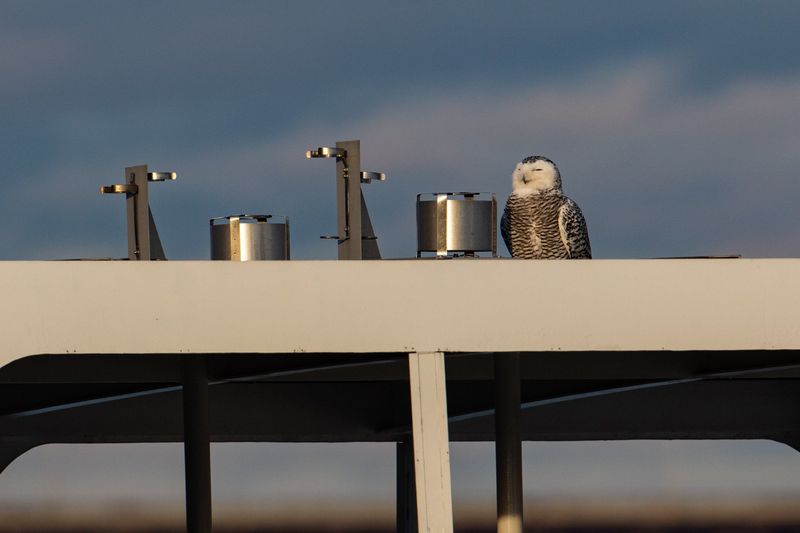
Fish and Wildlife Service suggests in its Snowy Owl viewing guidance that people give wildlife at least 100 yards. Think of that as a cautious starting point, not a promise that the owl will feel safe.

Binoculars or a spotting scope bring the bird close without you moving closer. A telephoto lens does the same for photos.

If it is lawful and safe, a parked vehicle can work as a blind, since birds often tolerate cars better than people on foot.

Watch the owl’s behavior. New Hampshire Audubon’s viewing ethics points out that no distance guarantees comfort.

If the owl stares at you, shifts around, or takes off, back away, even if you are farther than 100 yards.

A few things to skip: do not walk toward it, cross private land without permission, flush it, follow it, or surround it. Do not feed it or play recorded calls to get its attention.

Never stop in the middle of a road or block traffic for a better look.

Finally, think twice before posting a live location. A crowd can build quickly and stress the bird.

Sharing a photo later, without exact directions, keeps the moment kinder for the owl.

When to Seek Help for an Owl
When to Seek Help for an Owl
© National Audubon Society

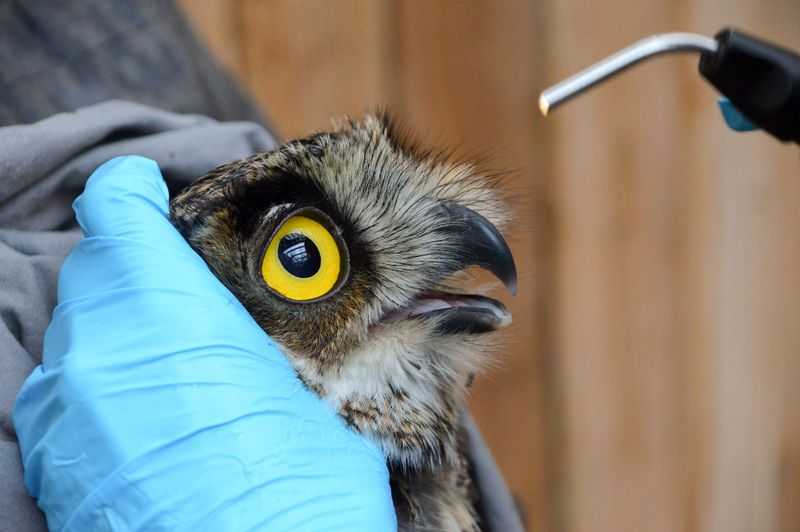
A Snowy Owl that sits still for hours is usually just hunting. The Iowa DNR notes that these owls commonly stay in one spot for long stretches while they watch for prey.

A long perch alone is no reason to step in.

Real warning signs look different. Think of a bird that cannot fly, holds a wing at an odd angle, or sits on the ground and cannot get up.

In those cases, do not assume it is fine.

Do not pick up or handle the bird, and keep pets and people back. Instead, contact a licensed wildlife rehabilitator for advice before doing anything else.

They can tell you whether the owl needs help and how to proceed safely.

Most of the time, the best thing you can offer is patience from far away. Give the owl room, and it may repay you with a winter afternoon you will remember.

Share this story
LP

Written by

Lyle Petersen

More from Lyle Petersen →

About Gardening Latest

Gardening Latest provides in-depth guides to maintaining and enhancing your garden and backyard. Learn how to make the most of the space you have and create a beautiful garden.

More about us →

Latest stories

  • Maryland GardeningMaryland Backyards May Shelter a Small Mammal With Toxic Saliva

    Maryland Backyards May Shelter a Small Mammal With Toxic Saliva

    5 min ago
  • Virginia GardeningHere’s Exactly When To Put The Mower Away For Good In Virginia This Year

    Here’s Exactly When To Put The Mower Away For Good In Virginia This Year

    17 min ago
  • New Jersey GardeningHere’s How New Jersey Gardeners Should Treat a Saddleback Caterpillar Sting the Moment It Happens

    Here’s How New Jersey Gardeners Should Treat a Saddleback Caterpillar Sting the Moment It Happens

    24 min ago
  • North Carolina GardeningCoyotes Are Howling Outside North Carolina Homes After Dark This Season, and There’s a Reason

    Coyotes Are Howling Outside North Carolina Homes After Dark This Season, and There’s a Reason

    30 min ago
  • Michigan GardeningRed Foxes Get Busier in Michigan Yards During Winter, and Here’s What They’re Actually Doing

    Red Foxes Get Busier in Michigan Yards During Winter, and Here’s What They’re Actually Doing

    35 min ago

Gardening by state

Stories for your state, and the hardiness zone most of it gardens in.

Keep exploring

Read next

All Iowa Gardening →
Iowa GardeningAfter a Soaking Iowa Rain, Those Fresh Ant Mounds Are Telling You Something About Your Soil
Iowa Gardening

After a Soaking Iowa Rain, Those Fresh Ant Mounds Are Telling You Something About Your Soil

2 hr ago
Iowa GardeningIowa Gardeners Keep Brushing Against Io Moth Caterpillars, and Here’s How to Calm That Sting Quickly
Iowa Gardening

Iowa Gardeners Keep Brushing Against Io Moth Caterpillars, and Here’s How to Calm That Sting Quickly

6 hr ago
Iowa GardeningLate at Night, Coyotes Howling Near Your Iowa Home Are Trying to Tell Each Other Something
Iowa Gardening

Late at Night, Coyotes Howling Near Your Iowa Home Are Trying to Tell Each Other Something

9 hr ago

More from Iowa Gardening

  • Seven Animals Quietly Spending the Winter Under Your Iowa Deck, and Which Ones You Should Evict

    Nov 23
  • Why an Opossum Shows Up Near Your Iowa Home in Winter, and What to Do

    Nov 22
Back to top

Leave a response Cancel

Your email address stays private. Required fields are marked with an asterisk.

Gardening Latest

In-depth guides to maintaining and enhancing your garden and backyard: how to make the most of the space you have, and how to make it beautiful.

  • Facebook
  • X
  • Pinterest
  • YouTube

We may earn a portion of sales from products or services that are purchased through our site as part of our affiliate partnerships with retailers.

Explore

  • About GardeningLatest.com
  • Contact Us
  • Terms and Conditions
  • Privacy
  • Editorial Note:
  • FTC Disclosure

Newsletter

New garden guides and seasonal tips, straight to your inbox.

We’ll email you a link to confirm. Unsubscribe any time.

Almost there! Check your inbox and tap the link to confirm.

© 2026 Gardening Latest. All rights reserved.

Back to top