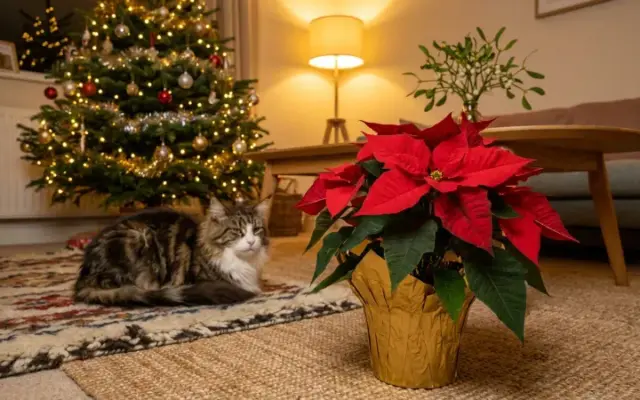
Poinsettias are listed as toxic to cats and dogs, but the plant is far less dangerous than its reputation suggests. Its sap can upset a pet’s mouth and stomach, yet serious problems are uncommon.
Still, it is not a harmless decoration, and every pet reacts a little differently. Here is what New York pet owners can sort out before the holiday decorating begins.
How toxic is a poinsettia in practice?
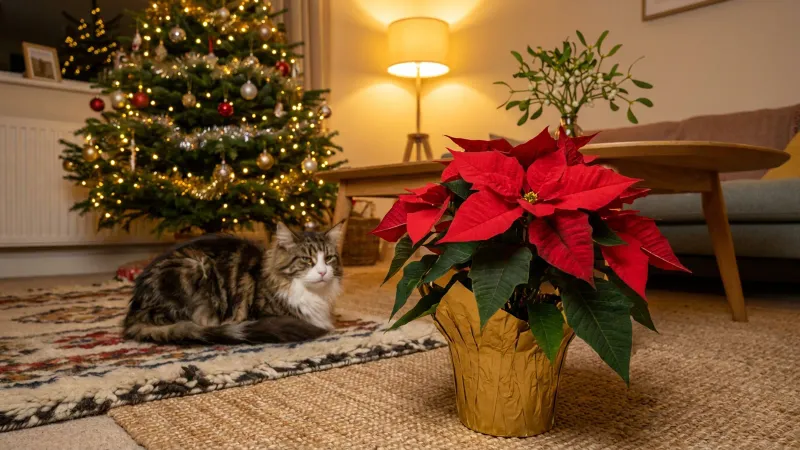
The ASPCA lists poinsettia as toxic to both cats and dogs. At the same time, its own plant page says the plant’s effects are generally overstated.
Both statements are true, and you need both to understand the real picture. You can read the details on the ASPCA poinsettia page.
A toxic label simply means a plant can cause unwanted effects if a pet eats it. It does not rank how bad those effects usually are.
Some plants on the same list can cause organ failure, while others mostly cause an upset stomach. Poinsettia sits at the milder end, because the problem comes from an irritant sap rather than a powerful poison.
Veterinary references agree with that view. The Merck Veterinary Manual describes serious effects from this plant as uncommon.
So the old claim that one nibble can kill a cat or dog is not backed up by the sources reviewed.
That does not make the plant a safe snack. Irritation is real, and it can leave a pet drooling, queasy, or miserable for a while.
Individual animals also differ, so nobody can promise that every chew will pass without symptoms. And no source here says severe reactions are impossible.
A good way to think about it: poinsettia is a plant worth keeping out of reach, not one worth panicking over. The rest of this article covers what the sap does, what is unknown about dose, and what to do if your pet gets into one.
What the milky sap can do
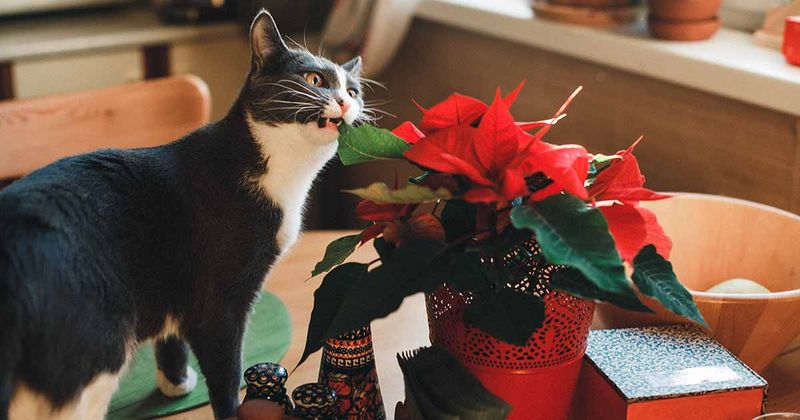
Break a poinsettia stem or leaf and a milky white sap oozes out. That sap is the part that irritates.
When a pet chews the plant, the sap can bother the lining of the mouth and the stomach.
According to the ASPCA, reported signs include mouth or stomach irritation, drooling, and vomiting. Some animals may also have diarrhea or eat less than usual.
These are possible effects, not guaranteed ones.
Plenty of pets that take a bite show little or nothing, while others react more strongly. A dog that gulps down a few leaves and a cat that licks one stem may have very different days.
Nobody can predict which way a particular animal will go.
The sap can also bother other parts of the body. Pet Poison Helpline notes that sap on skin can cause irritation, and getting it in the eyes may irritate them as well.
A pet that rubs its face on a freshly broken leaf might end up pawing at its eyes or mouth.
Watch for clues such as lip licking, pawing at the face, foamy drool, or a sudden loss of interest in dinner. Leaf fragments on the floor or a chewed stem are also giveaways.
If you see these signs, that is your cue to think about calling a professional, which the fourth section explains.
What the evidence says about a safe amount
Many owners want a simple rule, such as “two leaves is fine.” The sources reviewed do not give one. They do not establish a reliable safe threshold for cats or dogs, so counting leaves is not a trustworthy way to judge an exposure.
What the sources do say is that the response can vary. Pet Poison Helpline points out that the amount eaten, the size of the animal, and allergies can all matter.
A small cat and a large dog could react very differently to the same bite. A pet with allergies might react more strongly than you expect.
You may come across a 1978 paper titled Toxicology of poinsettia. It tested poinsettia in rats.
A rat study cannot tell you a safe dose for a cat or dog, and it should not be used to reassure anyone about a pet’s exposure.
So there is no number to memorize. A tiny nibble may do nothing, but you cannot count on that.
The better habit is to treat any chewing as a reason to pay attention.
If you are unsure how much was eaten, say so when you call for advice. A professional can weigh your pet’s size, the amount, and any symptoms far better than a general rule from the internet.
If your pet chews one, get advice
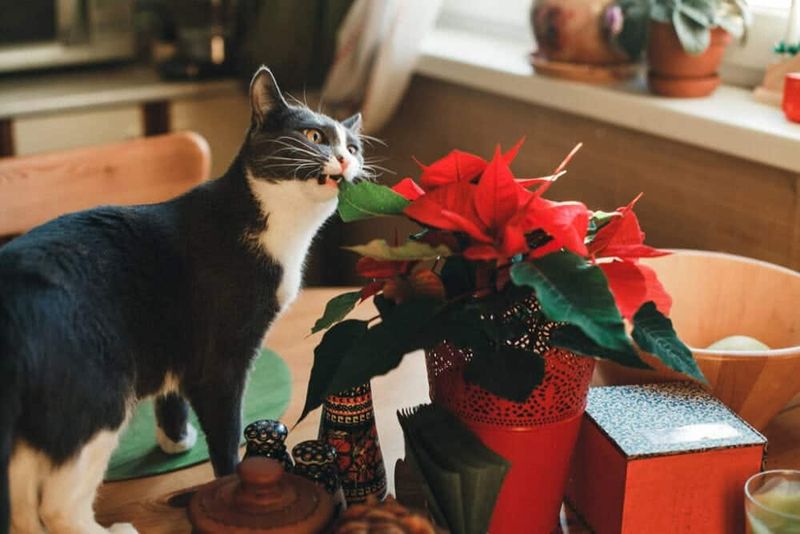
When you catch a pet chewing a poinsettia, stay calm and gather a few facts. Note what was eaten, such as leaves, stem, or soil, and roughly when it happened.
Take a quick look at your pet’s mouth area and watch for drooling, vomiting, or diarrhea.
Then reach out to a professional for advice that fits your pet. That could be your regular veterinarian, an emergency animal hospital, or an animal poison-control service.
The FDA’s pet emergency guidance lists these as appropriate contacts.
Two U.S. services are ASPCA Animal Poison Control at 888-426-4435 and Pet Poison Helpline at 855-764-7661. Fees may apply, so it helps to ask about costs when you call.
Keep the numbers saved in your phone before the holidays begin.
Contacting someone is especially wise if symptoms are severe or keep going. Repeated vomiting, a pet that seems very tired, or signs that do not fade are all reasons to get help promptly.
The ASPCA also recommends seeking advice after an exposure.
Skip home remedies unless a veterinarian or poison-control specialist tells you to try one. They can judge your pet’s situation, which no general article can do.
Having the plant tag or a photo of the plant handy can make that call quicker.
Keep poinsettias out of pets’ reach
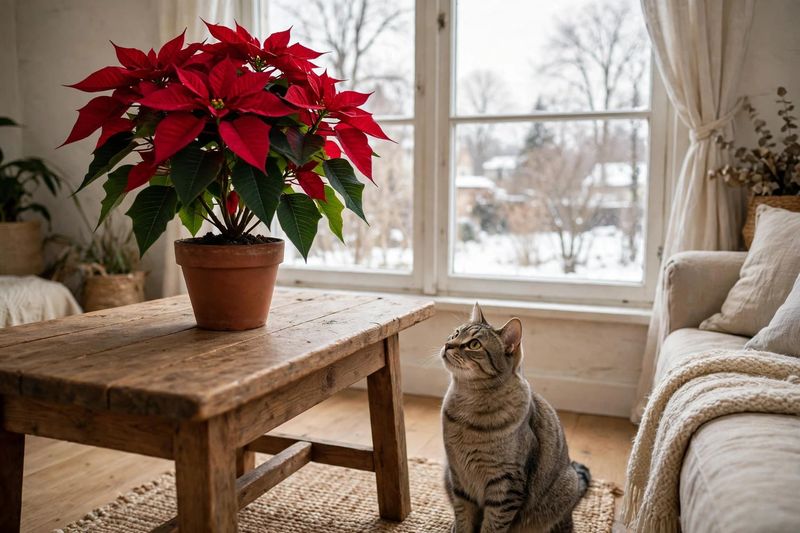
The simplest step is also the most effective: keep the plant where your pet cannot chew it. That prevents avoidable stomach upset and spares you a stressful phone call during a busy week.
The ASPCA advises owners to keep pets away from the plant.
This is sensible risk reduction, not a sign that an ordinary nibble is likely to be a disaster. Think of it like keeping a bowl of chocolate off the coffee table.
A little planning costs almost nothing.
Where the plant goes depends on your pet and your home. Cats climb, so a high shelf may not stop a determined jumper.
Dogs can knock over low pots, and puppies chew nearly everything. No single spot works for every household, so test your setup by watching how your pet behaves around it.
New York apartments are often small, which leaves fewer places to hide a plant. A room with a door you can close, or a spot your pet truly cannot reach, may work better than a windowsill.
This is about space and the holiday season, not any special risk for New York animals.
Sweep up fallen leaves right away, since a leaf on the floor is easy for a curious pet to grab. Some owners choose artificial plants for pet-heavy rooms.
Whatever you pick, check your pet’s access once in a while.
Other holiday plants can pose different risks
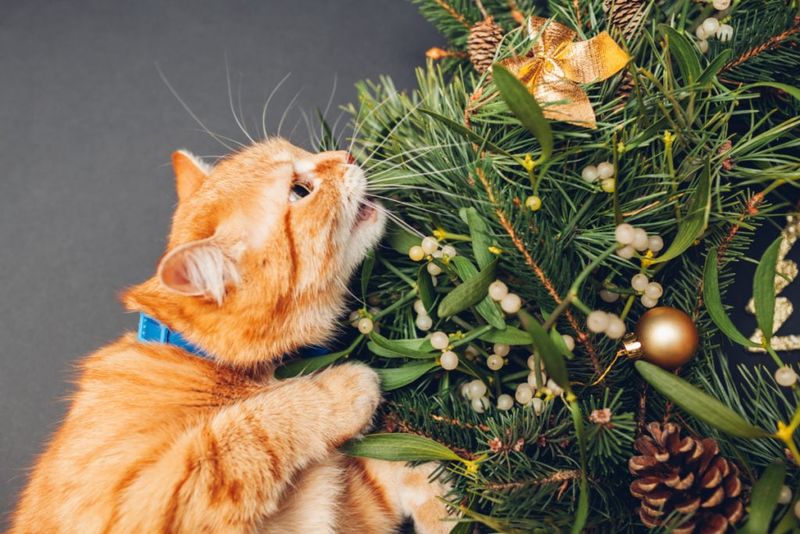
Not every seasonal plant behaves like a poinsettia. Holly, mistletoe, and bouquets all have their own profiles, and some are far more worrying.
Knowing exactly what is in your home matters more than treating all greenery alike.
Lilies are a clear example. Penn Vet warns that lilies can cause severe, potentially fatal kidney injury in cats.
That is a very different kind of danger from the sap irritation linked to poinsettia.
The lily warning is not evidence that poinsettias are comparably dangerous. It simply shows why identifying a plant matters.
Holiday bouquets sometimes include lilies without anyone thinking twice, so check the flowers in any arrangement a guest brings.
A practical habit is to keep plant tags and florist cards. If a pet chews something unfamiliar, you can tell a veterinarian or poison-control service the exact name.
A photo of the plant works too.
When you cannot name a plant, treat it with extra caution and call for advice. Guessing is the riskiest option.
A quick call costs far less than a wrong assumption.
A practical approach for holiday decorating
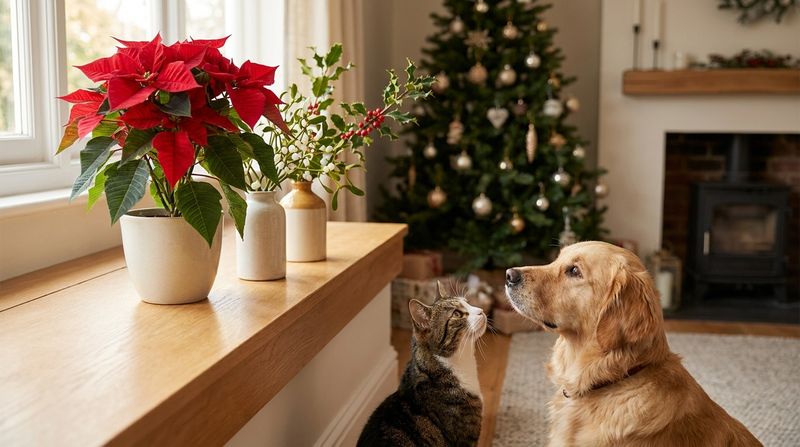
Poinsettias are not risk-free, but ASPCA guidance describes irritation and generally overstated effects rather than a highly dangerous plant. Keep it out of reach, and enjoy the color without worry.
If your pet chews it or seems unwell, follow the FDA’s advice and call a veterinarian or poison-control service. A little planning keeps the season calm.
Share this story