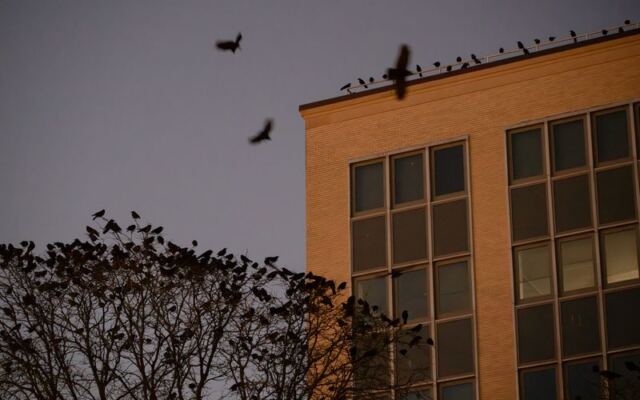
As the winter sun sinks, crows pour across New York skies in dark, noisy streams, and the reason is simple: they are heading to bed together. This shared sleeping behavior is called communal roosting, and it is most common in fall and winter.
Big roosts can draw thousands of birds, though sizes and locations vary a lot from town to town. Here is how it works, why a place might attract crows, and what neighbors can do about the mess and noise.
A winter crow roost is a shared sleeping site
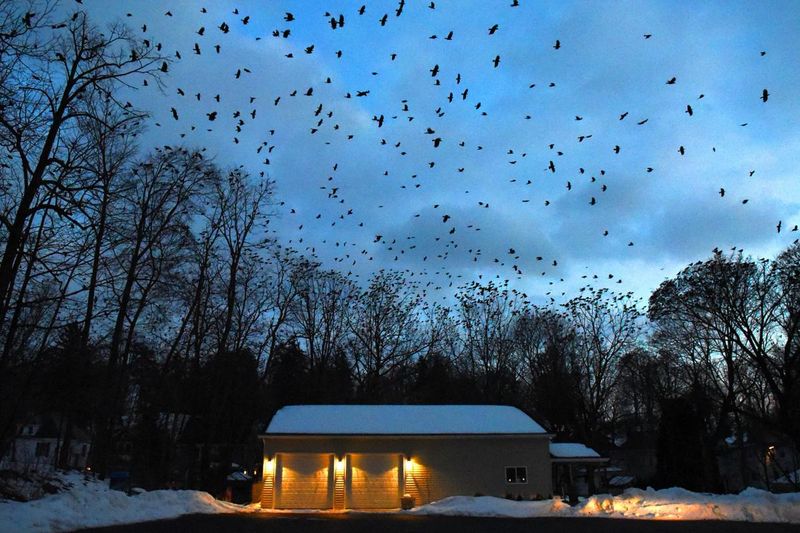
Those dark swirls overhead at sunset are consistent with communal night roosting. Crows sleep in big groups, usually in trees or on other perches, and the habit is strongest in fall and winter.
A roost is a temporary shared bedroom, not a nesting colony where birds raise young.
According to Cornell Lab of Ornithology’s crow FAQ, roosts are mainly a cold-season event, and numbers generally shrink as the breeding season gets closer. Once pairs turn their attention to territories and nests, the crowd tends to thin out and split up.
Nothing about this is new for New York. Cornell documents a winter roost near Auburn in 1911 and 1912, and an estimated 25,000 crows near Auburn in the winter of 1932 and 1933.
Western New York has also had thousands of winter roosting crows on record.
Those numbers show that big winter roosts are an old crow habit, not a strange omen. They also do not mean every town has one.
Many roosts hold far fewer birds, and plenty of towns never host a large one at all.
So if you see a long river of crows heading one direction at dusk, you are probably watching birds commute to a sleeping site. The spectacle can feel eerie, but it fits a familiar pattern that has played out across the state for more than a century.
Crows may gather before flying to the roost
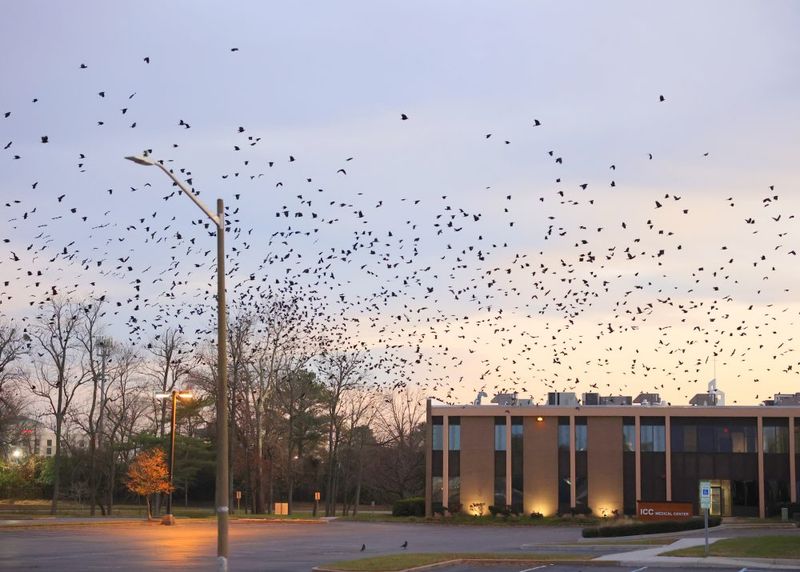
Late afternoon can bring a first act before the main show. Cornell describes crows collecting at a staging area an hour or two before dark, then moving together to the final overnight roost.
The birds you see cawing on wires, in a field, or on a rooftop may not be at their sleeping trees yet.
That difference helps you read what is happening. A staging area is a noisy waiting room, where crows come and go and the crowd keeps growing.
The roost is where they actually settle down for the night, often a bit farther along.
One clue is direction. If birds keep arriving from several directions and then leave in a long, purposeful stream, you are likely looking at a gathering spot rather than the bedroom.
Watching which way the lines of crows head can point toward the real roost.
A field report in The Kingbird recorded crows following flight lines toward a communal roost in Lancaster, Erie County, in late afternoon. That is one local example, not a map or timetable for your town.
Routes and timing can vary with the weather, the light, and the site itself. If you want to follow the birds, pick a spot with a wide view of the sky, arrive well before sunset, and watch for several evenings in a row.
Several conditions may make a site suitable
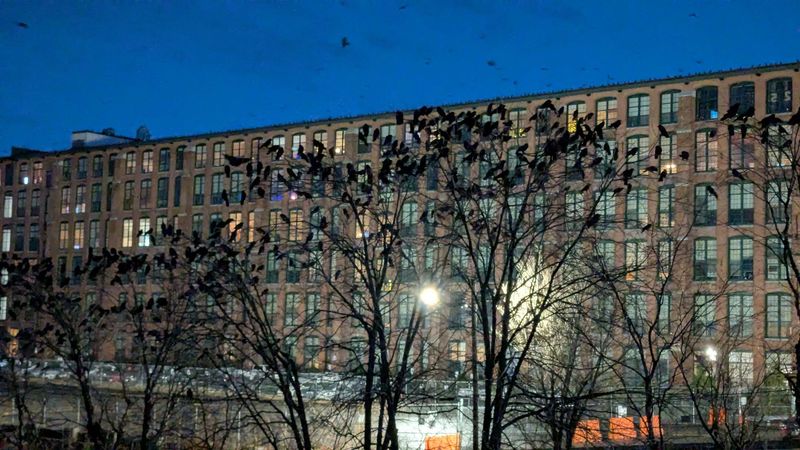
Why do crows pick one patch of trees over another? Researchers have not found a single universal reason for communal roosting or for choosing a particular urban site.
Several conditions may add up instead.
Food nearby could matter, since crows often forage in fields, landfills, and parking lots by day. Sturdy, dense perches may offer shelter from wind, and tall trees may give a clear view of approaching trouble.
Cornell’s crow FAQ presents explanations like these as possibilities, and notes that roosting behavior long predates modern cities.
Towns and cities add their own twists. Buildings and pavement can hold some warmth, streetlights may make it easier to spot danger, and fewer people or predators may bother the birds at night.
Each of these is a possible factor, not a proven cause, and a good roost may simply combine several.
Food information is one idea that has some support. A study in The Canadian Field-Naturalist found that more crows used a flight lane after a food patch was set up along it.
That hints that crows may pick up clues about food from one another’s traffic.
It is a narrow finding, though. It does not show that sharing food tips is the main reason crows sleep together, and it says nothing about why one town gets a roost while the next does not.
The honest answer is that the appeal of a site probably depends on a mix of local conditions.
Roost size and location can change
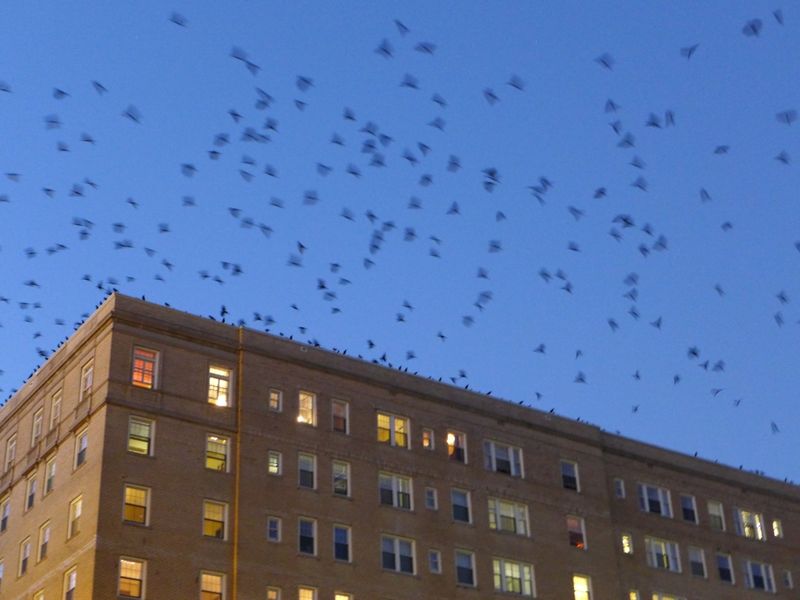
Thousands of crows are possible at a major roost, but that is not the norm everywhere. Penn State Extension reports roost sizes ranging from hundreds to tens or even hundreds of thousands of birds, and says most large northeastern roosts hold tens of thousands.
Many local roosts are smaller, and counts can differ from one evening to the next.
Roosts also tend to grow as winter goes on. Crows may switch locations when the weather changes, so a tree line that was packed in January could sit quiet a month later while a new spot fills up.
A neighbor’s roost may behave very differently from the one you can see from your window.
Spring usually brings a decline. As the breeding season nears, Cornell notes that roost numbers generally drop, and a New York field report found a steep fall in one roost’s traffic during March.
That is one observed roost, not a calendar that every site follows.
The crowd itself is mixed. Both resident crows and migrants can be present in winter across much of the Northeast, and Cornell describes American Crows as partially migratory, with some birds staying put and others traveling.
So a winter roost is not made up only of visitors.
If you track a roost near you, treat your own notes as the best guide. Jot down the date, the time the birds arrive, and a rough count, and you will see how your local flock behaves.
Address neighborhood problems together
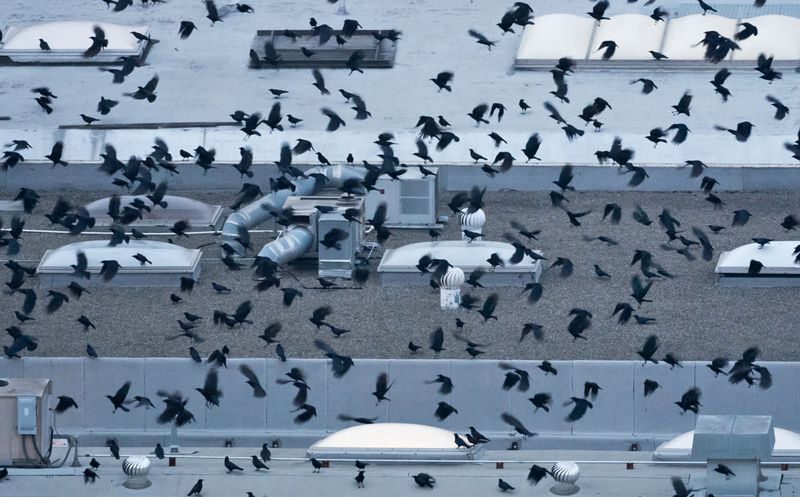
Spectacle aside, a roost can be a real nuisance. Hundreds of birds make plenty of noise at dusk and dawn, and their droppings can pile up on sidewalks, cars, and porches.
Those complaints are fair, and they are usually the reason people start asking what can be done.
The best advice is to work as a community. Penn State Extension’s guidance says isolated attempts to scare crows away tend to simply move them down the street.
Efforts generally relocate the birds rather than eliminate them, and they may need to be repeated.
Coordination matters because effective dispersal takes planning, trained personnel, and steady effort over time. Rules also apply, and they differ by location, so local regulations need attention before anyone acts.
That is why do-it-yourself harassment is a poor plan.
Cutting down trees is not a fix either. The same guidance finds no sign that removing trees works as a crow-control method, and a displaced roost can show up in a place that is even less convenient.
A practical first step is to contact your town or village office, a local wildlife professional, or your neighborhood association and see whether others are affected. A shared plan, set with the people who know the local rules, will do more than any one household can.
Meanwhile, a tarp over a car or a quick rinse of a walkway can ease the daily mess.
Handle droppings carefully and report groups of dead birds
A roost is messy, but it is not proof of an immediate health threat. Still, basic hygiene is smart.
Avoid touching droppings with bare hands, use gloves or a tool to pick them up, and wash your hands afterward.
New York State Department of Health guidance on avian influenza notes that there have been no known human bird-flu cases from casual contact with wild-bird droppings. That is reassuring, and it is also a good reason to keep the routine simple and calm.
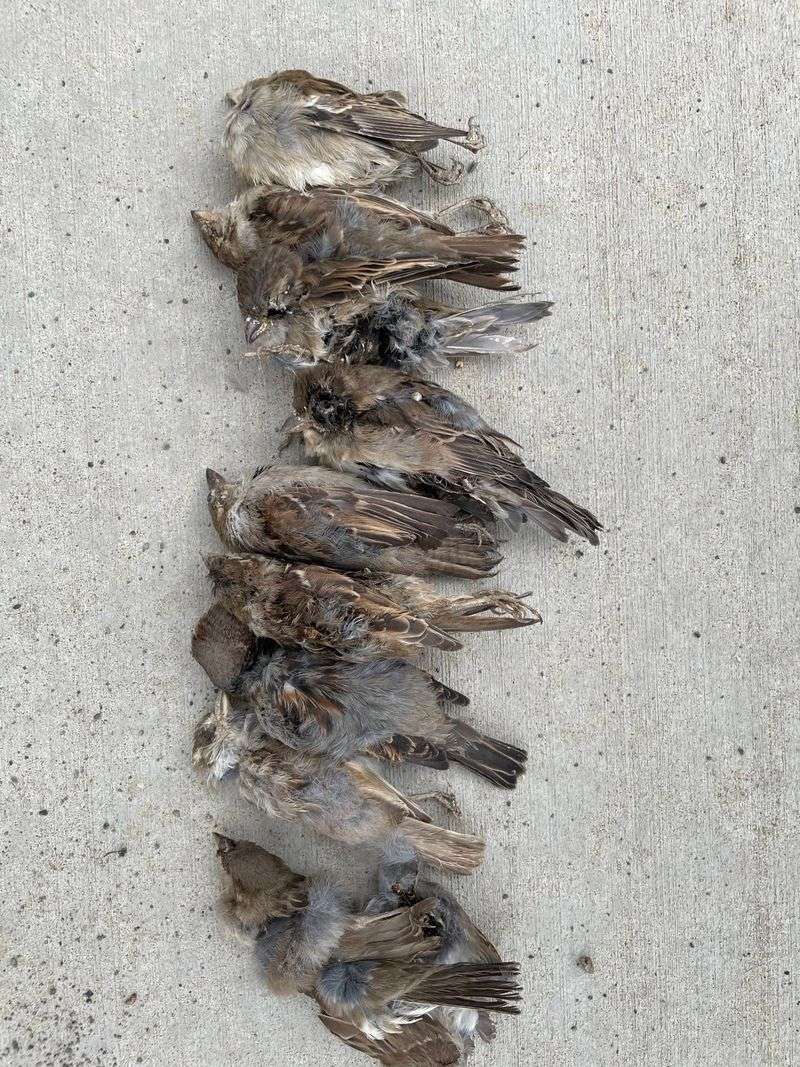
Dead birds call for a different kind of attention. If you find a group of dead wild birds, keep children and pets away and report it to NYSDEC, which decides whether testing is warranted.
The state’s wildlife health page explains how it tracks animal diseases.
A single dead bird does not need to be reported. Birds die of many ordinary causes, such as window strikes, cars, and cold, so one lone crow is not a cause for alarm.
When the sky fills at dusk, you are watching a familiar crow habit, even if the size, route, and chosen trees differ from town to town. Next time the dark ribbon passes over, look up and let it carry you a little while.
Share this story