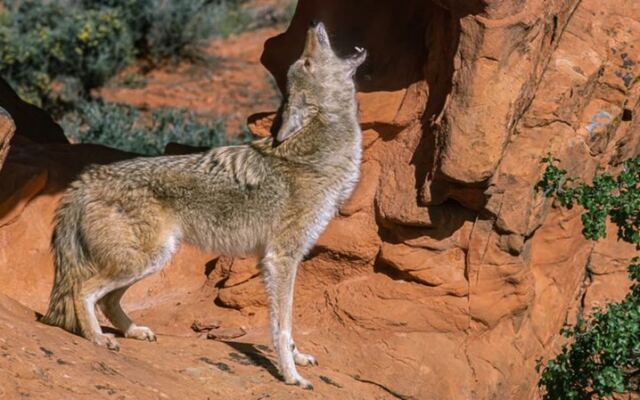
Coyotes are howling after dark across North Carolina, and the reason is simple: they are talking to each other. Those yips and wails can sound eerie from a bedroom window, but they are mostly family communication and a way of marking territory.
Late fall is also a time when young coyotes may be moving around to find places of their own. Knowing what the sounds do and do not mean can help you feel calmer and keep your yard and pets safer.
Coyotes are established across North Carolina
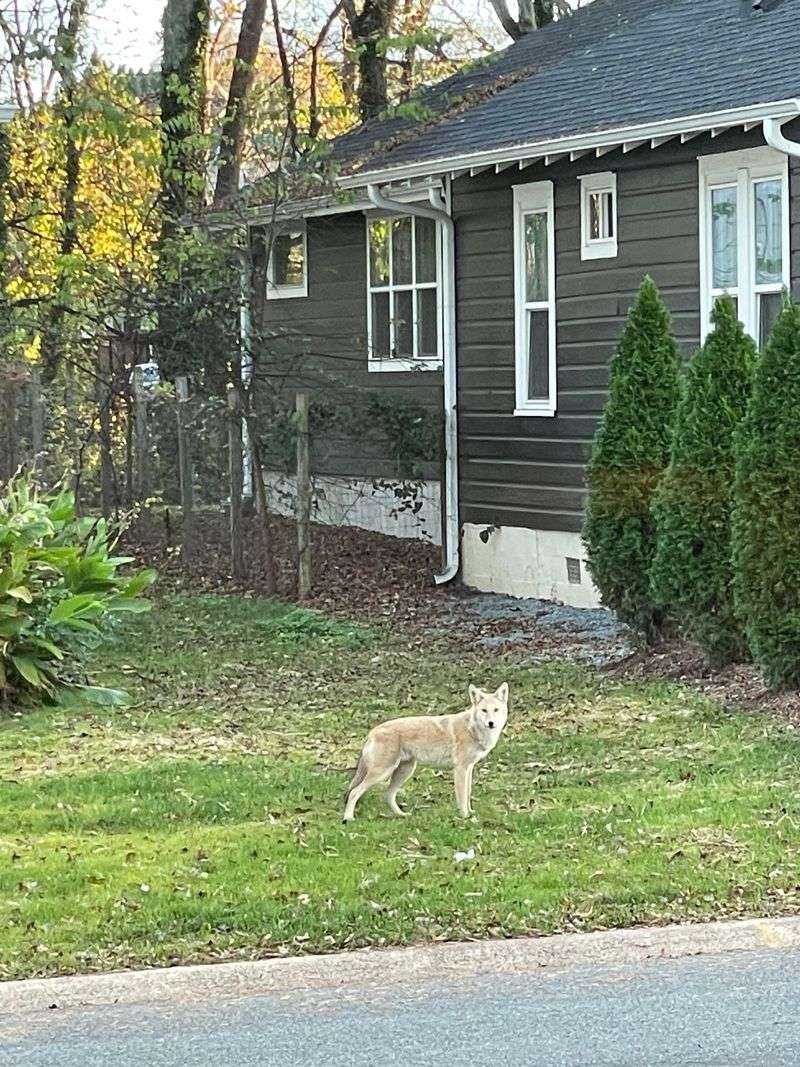
If you have heard howling near your house, you are not imagining a new arrival. Coyotes are established in all 100 North Carolina counties, according to a coexistence handout from the state wildlife agency.
They live in farmland, forests, small towns, and cities alike.
Being found statewide is not the same as being everywhere in equal numbers. Some counties have more coyotes than others, and many people live their whole lives without ever seeing one.
Coyotes are secretive and mostly active at night, so hearing one is far more common than spotting one.
The picture gets a little more detailed when you look at a 2014 to 2024 hunter-observation survey. That survey recorded coyotes in 99 counties.
The agency notes that its other distribution measures still point to coyotes being present statewide, so the two findings fit together. Hunters simply did not log one in a single county during those years.
The practical point is that coyotes living nearby is normal in North Carolina. The same agency says a coyote’s mere presence is not cause for alarm.
A howl in the dark tells you coyotes are somewhere in the area. It does not tell you that one is headed toward your door or that anyone in your household is in immediate danger.
What coyote howls communicate
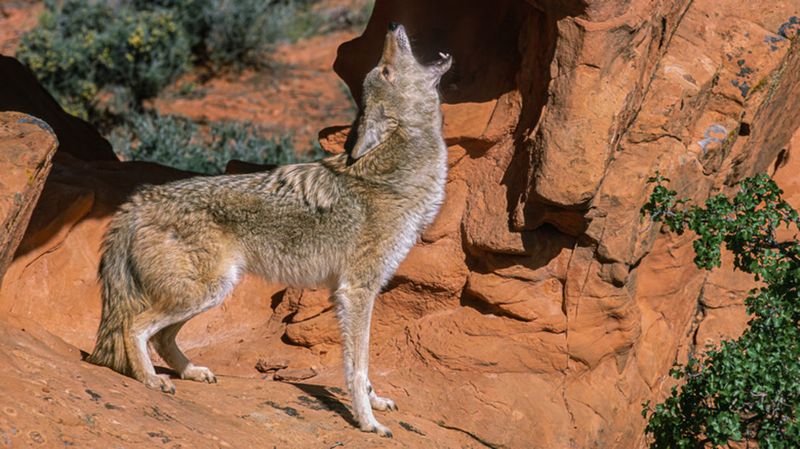
Howling is how coyotes keep in touch when they cannot see each other. Penn State wildlife experts explain that calls help family members locate one another and signal that a territory is occupied.
Think of it as a roll call across the dark.
The state wildlife agency adds that calls can also help distract a threat away from a den. Research on coyote vocal behavior, including a USDA National Wildlife Research Center publication, describes communication jobs such as maintaining territory and spacing between groups.
Notice the phrase several possible functions. A single howl does not come with a dependable translation.
You cannot listen from your porch and decide that one yip means greeting and another means warning.
That also means a howl does not point to a target or an activity. It does not show that coyotes are chasing a neighbor’s dog, celebrating a kill, or singling out your home.
Those stories are fun to imagine at midnight, but the sound itself gives no such details.
What you can safely take from it is simpler. Somewhere nearby, coyotes are exchanging information with each other, and you happen to be within earshot.
Treat the sound as background, much like owls or barking foxes, and focus your attention on what you can control around the house.
Late fall brings dispersal, while breeding comes later
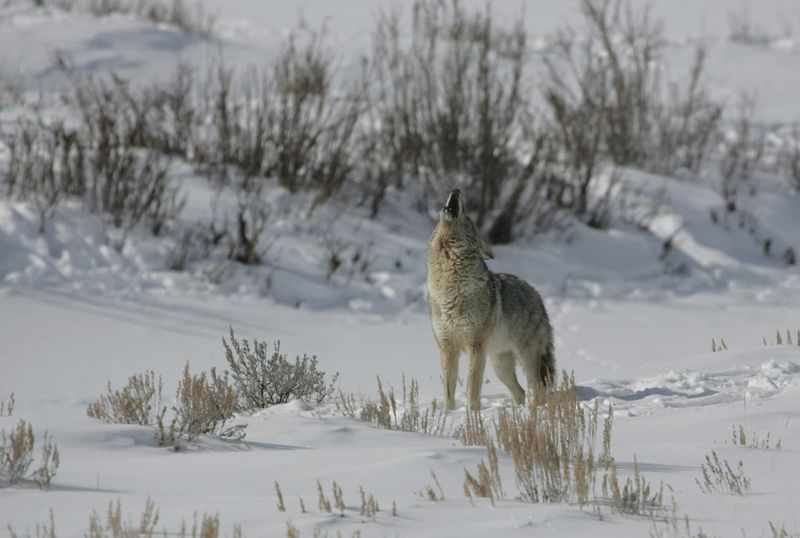
Timing matters when you ask why the howling seems louder right now. According to NC State’s veterinary college, young coyotes may disperse in November and December, leaving the area where they were raised to find territory of their own.
During that stretch, territorial howling may be heard more often.
Breeding comes later. North Carolina sources place it mainly in winter, with one state profile and a second agency wildlife profile giving slightly different windows, generally January through March or February through March.
Pups then arrive in spring.
So a howl in late November is not proof that mating has begun. A young coyote looking for room to settle and an established pair guarding their area can both be calling, and neither has to be courting.
Seasonality also does not give every call the same meaning. Coyotes howl for several reasons all year, and the season only nudges how often you may hear them.
If you want a useful clue, think of the calendar as context rather than a decoder.
The takeaway is calm and practical. Dispersing youngsters may pass through yards and edges of neighborhoods this time of year, which is one more reason to keep food sources locked away and pets supervised.
A chorus can fool the ear
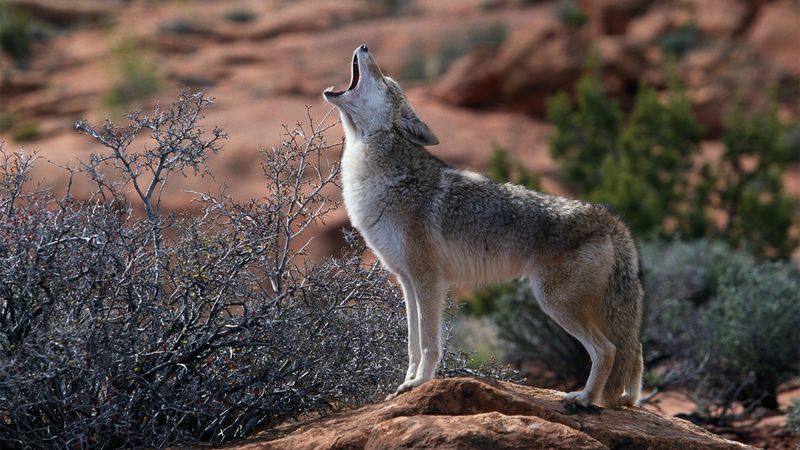
Ever heard a burst of yips and thought a whole army had moved in next door? Your ears may be exaggerating.
Coyotes can overlap their voices and bounce sounds around trees and buildings, so even a small group can seem much bigger.
Researchers tested this in a study called Do You Hear What I Hear. Listeners who heard recordings overestimated the number of coyotes by nearly twofold on average.
The state wildlife profile gives a similar warning, saying that a pair may sound like a much larger group.
That means a chorus cannot reliably tell you how many coyotes are out there. It also cannot tell you whether the population in your neighborhood is growing.
Louder or longer howling in one season is not a head count.
As for who is singing, coyotes usually live in family groups. Penn State’s explanation describes these as adults and their offspring, which is quite different from the large, wolf-like packs people often picture.
Next time you hear a wall of sound, picture a few animals rather than a crowd. It is a small family making a big noise, and the sound alone cannot say more than that.
A howl alone does not put people in immediate danger
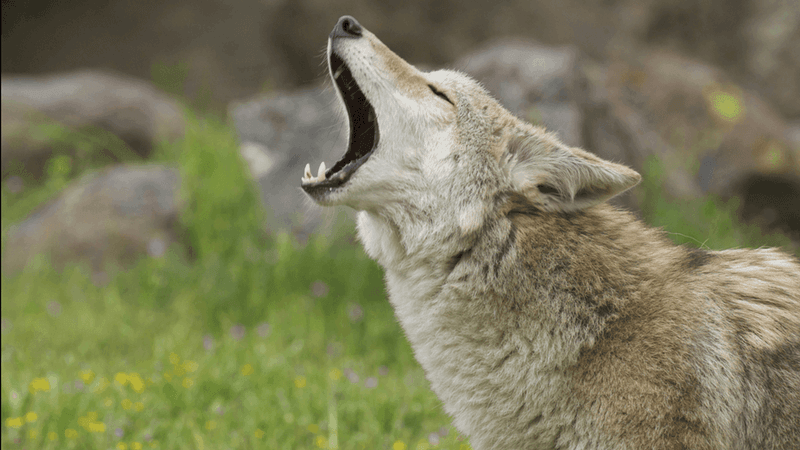
Here is the direct answer for anyone lying awake: a howl by itself does not show that a coyote is approaching, targeting your house, or about to attack. It shows that coyotes are communicating somewhere within hearing distance, and that can mean a quarter mile or more.
The state wildlife agency says in its coexistence guidance that coyote attacks on people, including children, are extremely rare. It also says that seeing a coyote is not by itself a reason for alarm.
Wildlife officials describe coyotes as rarely interested in people.
Pets are a different story, and it is fair to say so plainly. Small dogs left outside alone and outdoor cats can face real risk, and NC Wildlife notes that pets can draw a coyote’s attention.
That does not mean every coyote is likely to go after a pet. It means that an unattended small animal in a yard near wooded edges is the kind of situation worth planning around.
A useful way to think about it is to separate sound from situation. The howl is only a sound.
A coyote seen in your yard near an open food bowl, or near a cat that roams at night, is a situation you can actually fix.
Remove easy food and protect pets

Coyotes are opportunists, so the most effective step is to make your yard boring. NC Wildlife recommends removing the things that draw them in.
Easy meals can also make coyotes less wary of people over time, which is the habit you want to avoid.
Start with garbage. Keep it in a sturdy container with a secure lid, and put it out the morning of pickup rather than the night before.
Bring pet food indoors or pick it up promptly after meals.
Next, look at what the ground offers. Fallen fruit under trees and spilled birdseed under feeders attract rodents, and rodents attract coyotes.
Rake or sweep these regularly. Never feed a coyote, on purpose or by accident.
Pets need their own plan. Do not leave them unattended outside, even in a fenced yard.
Keep dogs leashed in areas where coyotes are active, and the agency suggests a leash no longer than six feet. Keep cats indoors or closely supervised.
Fencing helps, but only if it works at ground level. Coyotes can dig, so choose fencing that blocks entry along the ground, and use secure pens for animals that must spend time outside.
No measure removes all risk. Layering several of them, such as clean yards, short leashes, and supervised outdoor time, lowers the odds of a close encounter considerably.
When a coyote comes close, respond without approaching
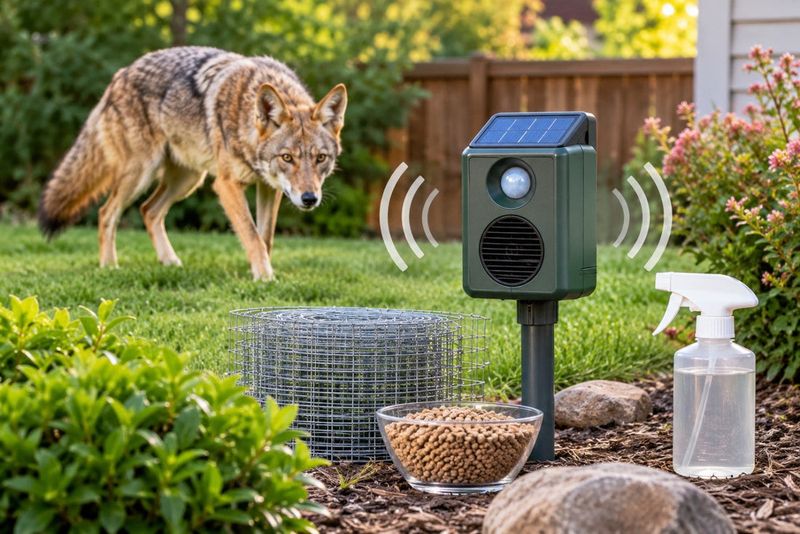
Most of the time a coyote will move off on its own. If one wanders near you or lingers, the state wildlife agency suggests making noise or tossing a small object toward it to discourage it from staying.
Clapping, shouting, or banging pots can do the job.
Keep your distance while you do this. Do not approach, try to pet, or feed a coyote.
Those habits reduce its natural caution and make future encounters more likely for you and your neighbors.
There is one exception. In pup-rearing season, a coyote defending a den may not respond to hazing.
If it seems intent on guarding a specific spot, such as a brushy corner or a space under a shed, do not stand your ground. Leave the area calmly and give it room.
The coexistence guidance reminds us that coyotes are rarely a danger to people, so the aim is simply to keep things uneventful.
Back to those howls in the night: they do not establish a coyote count, an activity, or a threat. Lock up attractants, keep an eye on pets, and let the music carry on.
A howl is just the neighborhood’s wild residents checking in with one another.
Share this story