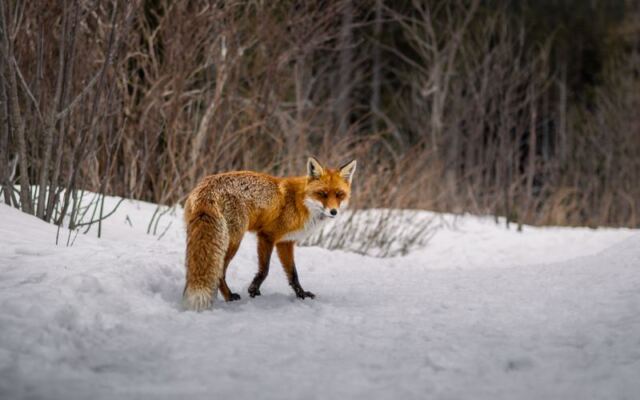
Red foxes stay active all winter in Michigan, and a fox crossing your yard may be hunting, hiding food, covering ground, or heading out for mating season. Snow makes their tracks and movements easy to spot, so many people notice them more.
Knowing what a fox might be doing helps you stay calm and respond the right way. Here is what is known, what is only a good guess, and what to do about it.
What a winter fox may be doing in your yard
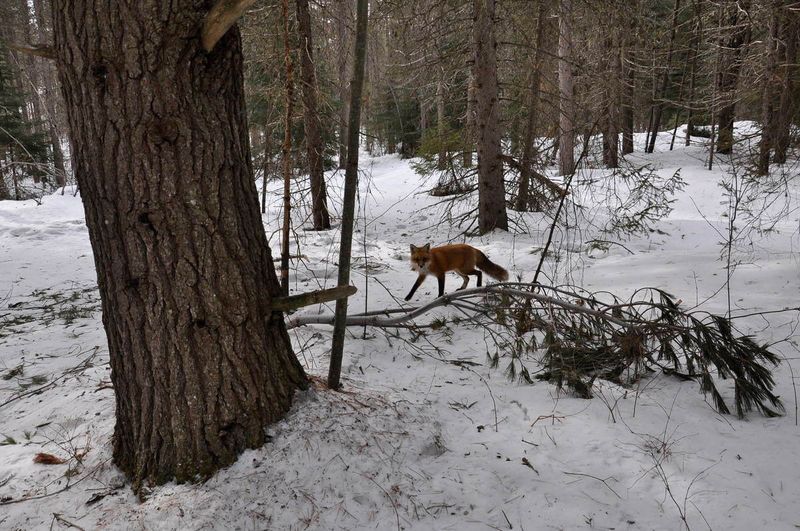
Red foxes do not hibernate. A Connecticut wildlife fact sheet notes that they stay active year-round, so a fox in January is behaving normally, not a sign that something is wrong.
Several things may bring a fox through a yard in winter. It might be searching for food, tucking food away to eat later, traveling a larger area than usual, or moving around during late-winter mating season.
Each of these is a possibility, not proof of why one particular fox showed up.
It also helps to know what is not established. The sources reviewed do not show that Michigan foxes visit yards more often in winter, and they do not show that more foxes are moving into neighborhoods.
Researchers have not measured a statewide jump in winter yard visits.
So why might it feel like there are more foxes? Bare branches, snow cover, and long nights can change what you see from a window.
Your yard’s food sources, shelter, and nearby wild areas also shape which animals pass through. A fox’s trail in fresh snow can reveal visits you would have missed in summer.
Details from University of Wisconsin-Madison Extension add helpful context about urban foxes. Those observations come from Wisconsin, not Michigan, so they point to what is possible rather than what is counted here.
A single sighting cannot tell you the reason for the visit.
Think of the next sections as a field guide to the likely options. You can match what you see, such as tracks, timing, and behavior, to the most reasonable explanation without jumping to conclusions.
Food searches and caches can bring foxes through yards
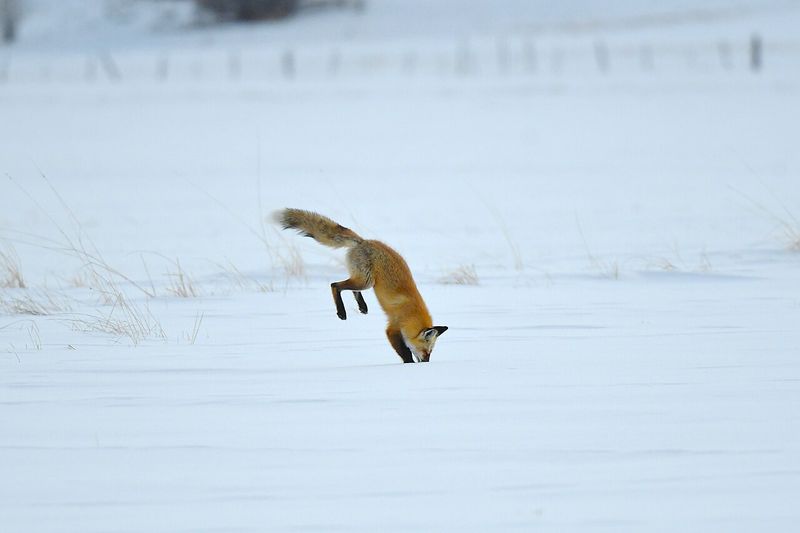
Picture a fox pausing at the edge of a lawn, ears tilted toward the snow. It may be listening for a vole.
Red foxes are opportunistic omnivores, and Michigan DNR notes that they eat rodents, rabbits, and other small mammals, and they may also scavenge carrion.
That diet explains why open lawns, brush piles, garden edges, and field borders can be useful hunting ground. A fox working along a fence line could be checking for mice rather than interested in your home at all.
Caching is a separate behavior. According to UW-Madison Extension, urban foxes may cache food more often when food is less available.
Caching means hiding extra food, often by burying it, so the fox can return to it later.
If you spot a fox digging a small hole and covering it with its nose, that may be what you are seeing. Small disturbed patches in snow or soil can be signs, though many animals dig for different reasons.
Searching for food and storing food are two different activities, and neither one explains every visit. A fox could cross your yard because it is following a route, checking a scent, or heading somewhere else entirely.
Hunger is not a safe assumption for any one animal.
The practical takeaway is that a yard with small prey, cover, or easy scraps can look like a good stop. You cannot read a fox’s mind, but you can notice what your property offers and what the animal is doing while it is there.
Why a fox may travel farther in winter
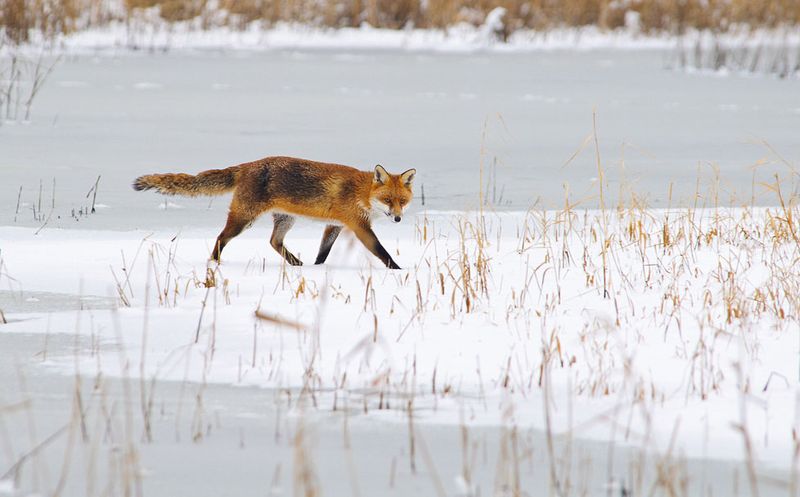
Foxes may simply cover more ground in winter. UW-Madison Extension says urban foxes may travel farther in winter.
The source does not tie that longer travel to any single cause, so it is best to leave the reason open.
Timing of the breeding season may also play a part. Michigan DNR places mating in late winter, with pups born in spring.
Adults looking for partners could be on the move during those weeks, so a late-winter fox in your yard may be passing through on a longer trip.
A research team tracked red foxes with GPS collars in a study in rural southern Germany. They saw exploratory movements in winter and spring and suggested that searching for mates and breeding could help explain them.
That is useful background, but it has limits. The foxes were in rural southern Germany, not Michigan, and the study did not look at yards.
It cannot tell us how often Michigan foxes cross residential lots.
The same goes for the Wisconsin observations. Both sources show what is plausible for red foxes in winter, not a measured pattern for your street.
If a fox crosses your property at the same time each evening, it may simply be on a regular route. A fox that appears once and never returns is probably just on its way somewhere else.
A fox out in daylight is not automatically a problem

Seeing a fox at noon can feel strange, but it is not a red flag on its own. Urban foxes are largely nocturnal, yet UW-Madison Extension says daytime sightings are not uncommon.
Michigan DNR also considers them normal.
Boldness is another thing people worry about. According to Michigan DNR, a bold fox is not necessarily aggressive.
A fox that does not run the instant it sees you may just be used to the area.
Neither daylight activity nor a calm attitude shows that an animal is sick. One sighting cannot diagnose rabies, and guessing from a quick look is unreliable.
Many healthy foxes are seen in daylight, especially when they are hunting or traveling.
What matters more is the pattern of behavior over time. Watch from a distance and note whether the fox seems alert and moves normally, or whether it is acting in ways that put people or pets at real risk.
Genuinely aggressive behavior is different, and the final section covers how to respond and who to call. For an ordinary daytime visit, the best move is to give the fox space and let it go on its way.
Make your yard less rewarding for foxes

Start with the food you control. Michigan DNR recommends reducing access to human-provided food, which includes pet food, bird food, and compost.
Each of these can draw foxes, and the animals they hunt, into a yard.
Feed pets indoors, or pick up bowls as soon as they finish eating. Store pet food and birdseed in sealed containers, and sweep up seed that spills below feeders.
Spilled seed can attract mice and voles, which in turn may attract a fox.
Keep compost in a closed bin rather than an open pile, and avoid putting meat, bones, or greasy scraps in it. Use garbage cans with tight lids and set them out on collection morning instead of the night before.
Never feed foxes on purpose, even if one looks hungry or charming. DNR says feeding can habituate foxes to people.
The goal is to help them keep their natural wariness, which keeps both people and foxes safer.
These steps lower the appeal of your yard, but they will not stop every visit. A fox may still pass through while hunting or traveling.
Fewer easy meals simply make it less likely that your property becomes a regular stop.
Walk your yard once with a fresh eye. Look for anything edible that is left out overnight, and fix the easiest problems first.
Protect small animals and respond safely
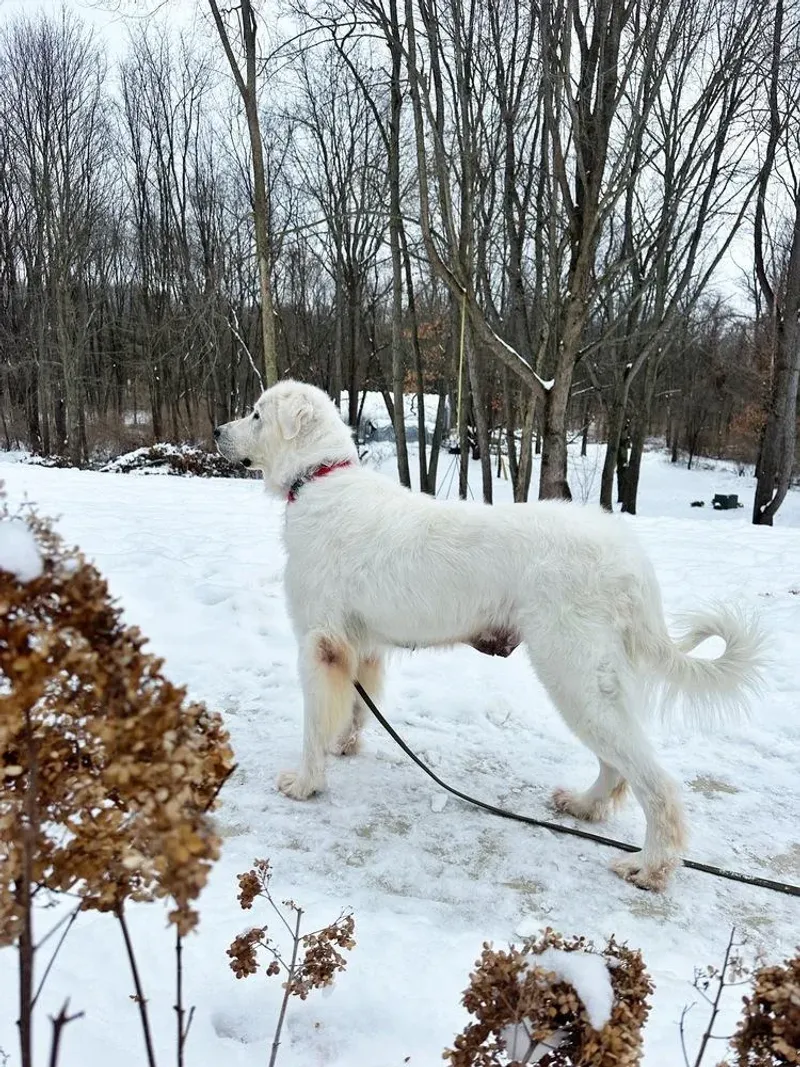
Most fox visits end quietly, but small animals deserve some planning. Michigan DNR advises supervising small pets outdoors, especially around dawn and dusk, and keeping them leashed or inside secure fencing.
Poultry and small livestock should stay in predator-resistant enclosures.
None of this means every fox is a danger. It simply removes the chance of a bad encounter, whatever the reason the fox is nearby.
If a fox approaches you, make yourself look large and make noise. Raise your arms, speak loudly, or clap.
Do not run, approach it, or try to handle or capture it. If you see aggressive behavior, report it to the DNR RAP Line at 800-292-7800.
Injured or abandoned foxes and pups need the right help. Only licensed wildlife rehabilitators may possess them in Michigan, so call a local authority or a licensed rehabilitator before anyone touches the animal.
If someone is bitten or scratched, wash the wound well with soap and water. Then contact a health professional or public health authority promptly so they can assess rabies risk, as described in CDC guidance.
Rabies does occur in Michigan wildlife, including foxes. Still, the state health department reports that about 90 percent of roughly 60 animal cases each year are in bats.
A fox is usually just a neighbor passing through, and a little distance keeps it that way.
Share this story