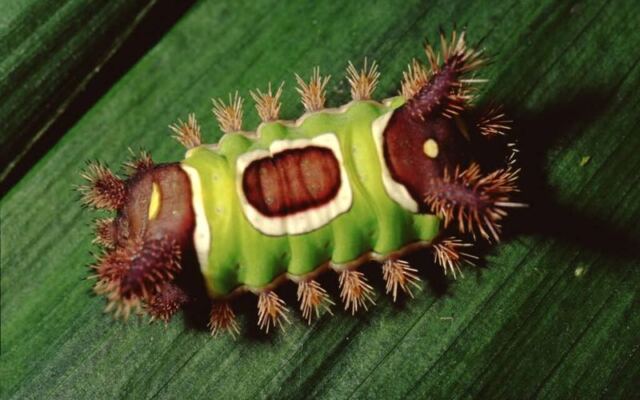
Press sticky tape gently onto the skin, lift it away, repeat with fresh tape, wash with soap and water, and use wrapped ice for pain. That is the quick plan after touching a saddleback caterpillar.
Knowing the steps before you reach into a shrub or pull weeds can save you a lot of burning and worry. Here is how to handle the sting, and when to get help fast.
Saddleback spines cause the sting
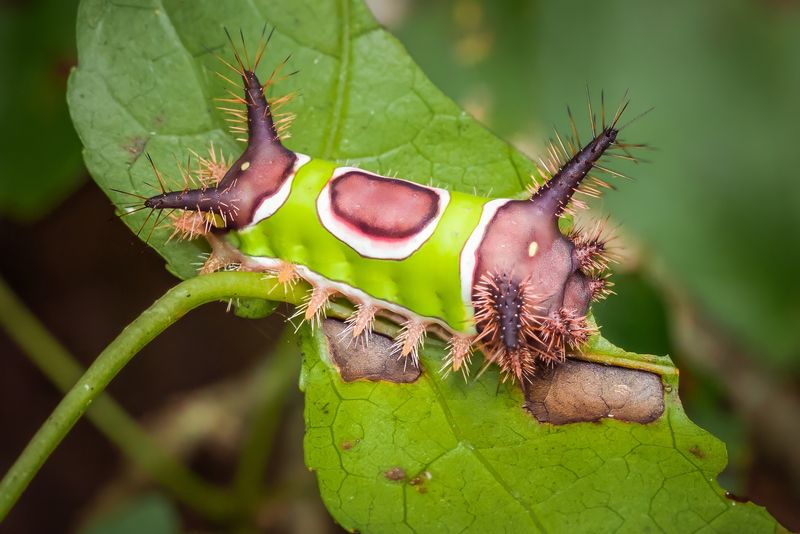
Saddleback caterpillars do not bite, and they do not have a stinger like a wasp. The trouble starts when their hollow spines touch your skin.
According to University of Maryland Extension, those spines can cause a burning sting, and they may break off and stay in the skin.
Reactions vary from person to person. Some people feel burning pain, redness, swelling, or itching, and some get blisters.
Many people will not have every one of those symptoms, and mild cases often settle down over time.
A caterpillar in your garden is not automatically a saddleback. Many caterpillars are harmless, and pain or a rash alone cannot tell you which species touched you.
University of Kentucky entomologists note that stinging caterpillars come in several forms, so identification can be tricky.
Because of that, treat any suspected sting with the same careful first aid. Do not pick up the caterpillar to check what it is.
The next section walks through the steps in order, starting with moving the caterpillar away without using your hands.
Move the caterpillar and use tape on the skin
Start by getting the caterpillar away from you. Use a stick, a spoon, or another tool to flick it off your skin or clothing.
Never brush it away with a bare hand, since that can push more spines into your fingers.
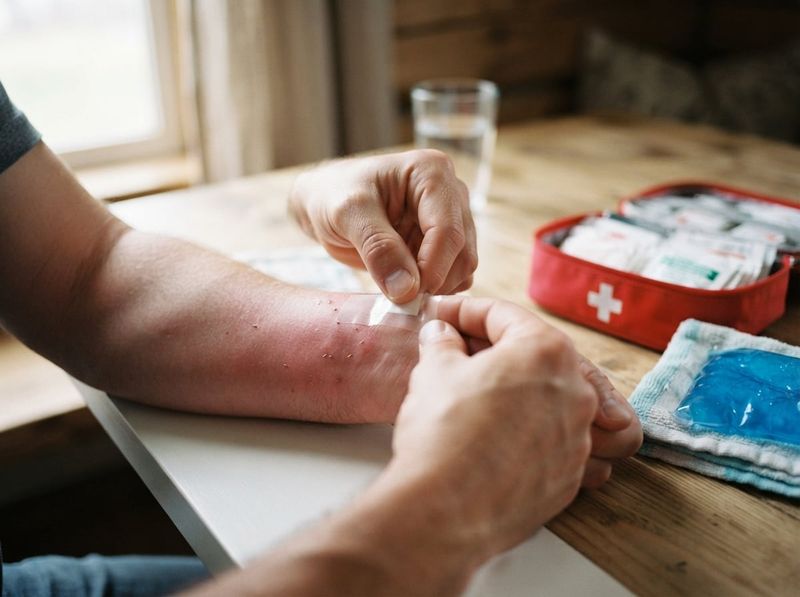
Next, take sticky tape and press it gently onto the affected skin. Lift it away, then use a fresh piece and repeat.
Poison Control recommends this tape method to help pull out spines left behind.
Keep your touch light. Do not rub, scrape, or scratch the area, because rough handling can break spines and push them deeper.
Tape may help lift many spines, but it will not necessarily remove every one.
Once you have used several pieces of tape, wash the area well with soap and water. The Georgia Poison Center also lists tape and washing as steps for caterpillar stings.
If pain keeps building or you cannot tell whether spines remain, ask a pharmacist, your doctor, or poison control for advice rather than digging at the skin.
Use wrapped ice to ease pain

After the skin is clean, cold can take the edge off the pain. Wrap ice or an ice pack in a clean cloth and hold it on the area, or use a cool compress.
The Georgia Poison Center specifically recommends ice for saddleback stings.
Follow the timing from MedlinePlus: ice on for 10 minutes, then off for 10 minutes. If the person has problems with blood flow, cut back the time the ice stays on the skin.
Think of ice as comfort care only. It does not pull out spines, and it does not neutralize venom, so it cannot replace tape and washing.
You may hear about baking soda paste. Poison Control mentions it for itching, but University of Kentucky says home remedies are not reliably effective.
Treat it as an optional extra at most, never a cure and never a stand-in for medical advice.
Know when to get emergency help
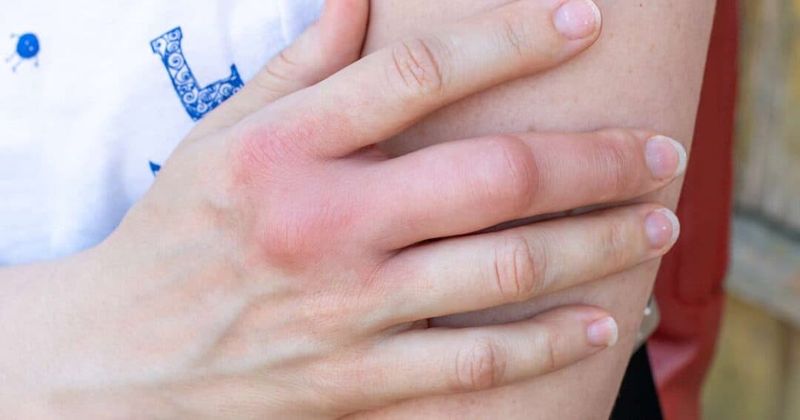
Most saddleback stings stay local. That means pain, redness, or swelling right where the spines touched you.
Those signs are unpleasant, but they are different from a body-wide allergic reaction.
Call 911 if you or someone else has trouble breathing or swallowing, swelling of the throat or tongue, fainting, or other serious symptoms. MedlinePlus describes these as warning signs of anaphylaxis, which needs emergency care right away.
Nausea or a headache can happen after caterpillar contact. On their own, those symptoms do not prove a severe allergic reaction, according to MedlinePlus.
Still, watch the person closely and call for help if breathing, swallowing, or alertness changes.
For questions that are not emergencies, such as whether a rash looks normal, call U.S. Poison Control at 1-800-222-1222.
The Poison Control caterpillar page offers more background on exposures.
Keep 911 for emergencies, and use the poison line for advice about milder exposures.
Get care for eye or breathing exposure
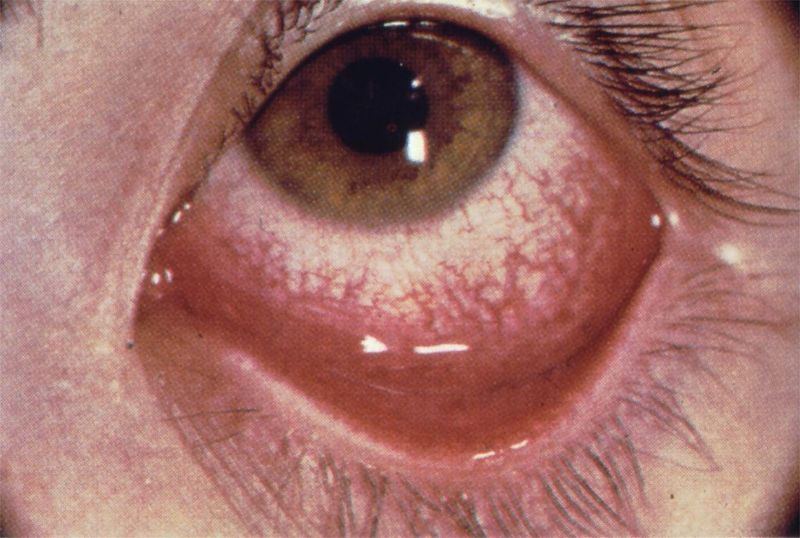
Spines and hairs can reach places other than your arms and hands. A gardener who rubs a sweaty face or shakes out a leafy branch may get them in the eyes or breathe them in.
These cases call for different steps than a skin sting.
If hairs or spines get in an eye, flush it with plenty of water right away. Then get medical help, since tiny spines in the eye should be checked by a professional.
MedlinePlus gives this advice for caterpillar exposures.
The same source says to seek medical care after inhaling caterpillar hairs. Do not wait to see whether a cough or throat irritation fades on its own.
Keep your hands away from your face until you have washed up, and let a clinician decide what comes next for the eye or lungs.
Take care while weeding in late summer

Reports from New Jersey are limited but real. A Rutgers Master Gardener report noted saddleback sightings in Morris County home gardens, appearing in mid-to-late summer.
It advised wearing gloves and long sleeves when weeding.
Neighboring regions offer clues about where to look. A University of Maryland Extension report described saddlebacks on shrubs and on herbaceous plants, including perennials, in late summer.
Those are reports, not a promise. Saddlebacks are not on every shrub, perennial, or leaf, and nothing here shows they linger through fall in New Jersey yards.
A sensible plan is to stay alert during late-summer chores rather than expect them everywhere.
Wear gloves and long sleeves, and look before you reach into dense foliage. If you spot an unfamiliar caterpillar, leave it alone.
Do not pick it up to identify it, because Poison Control notes that many caterpillars are harmless but some can cause painful reactions, and you cannot tell by touch.
A stick and a little patience do more for your hands than any cure afterward.
Share this story