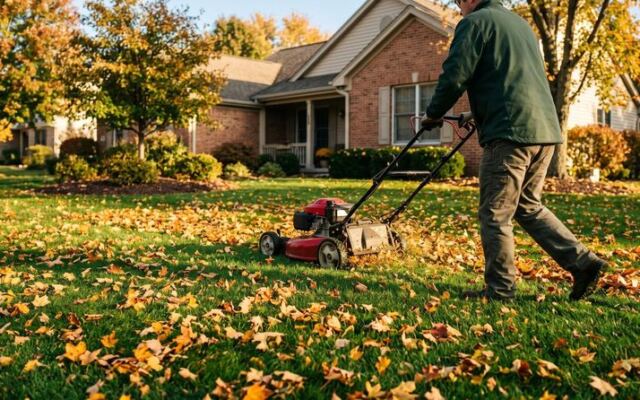
Here is the plain answer: put the mower away when your grass stops growing and goes dormant, not on a set date. Virginia lawn guidance gives no single final-mow day and no soil-temperature number for it.
Your grass type and how fast it is still growing tell you far more. Read on to learn how to check your own lawn before winter.
Virginia guidance gives no soil-temperature mowing trigger
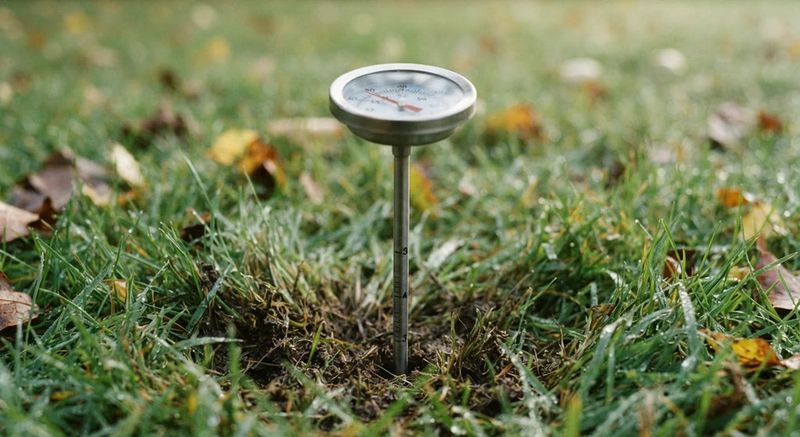
The reviewed Virginia Extension mowing guidance supplies no soil-temperature threshold for the final mow. It also does not set one date that fits every Virginia lawn.
If you hoped for a magic number or a calendar day, the guidance simply does not offer one.
Soil temperature does matter for some lawn jobs, so it is not irrelevant. The finding here is narrow: the sources reviewed do not tie soil temperature to the last cut.
Virginia Cooperative Extension’s maintenance calendar for cool-season turfgrasses mentions a 50°F threshold, but that applies to treating actively growing cool-season weeds, not to mowing.
Other states show the same pattern. Minnesota Extension uses about 50°F soil temperature in its spring lawn care advice for overseeding, which is a different task entirely.
A number that works for seeding or weed control does not turn into a stop-mowing signal.
So what should you use instead? Virginia’s fall lawn care guidance points to mowing at the grass’s recommended height and taking off no more than one-third of the blade at a time.
The practical question each week is simple: has the lawn grown enough to need a cut? If yes, mow.
If it has stopped growing, you are likely done.
Virginia lawns follow different seasonal rhythms
Virginia sits in the transition zone, where both cool-season and warm-season grasses are grown. That is a big reason no single statewide instruction works.
Your neighbor’s lawn may follow a completely different calendar than yours.
According to Virginia Tech’s guide to selecting turfgrass for Virginia, cool-season grasses such as tall fescue do best in spring and fall. Warm-season grasses such as bermudagrass and zoysiagrass grow mainly from mid-spring through mid-fall and go dormant after repeated frosts.
Location and site conditions matter too. Virginia is not one uniform climate, and shade, soil, and local weather all change how a lawn behaves.
A sunny lawn in the south may keep growing differently from a shaded one in the mountains.
Before you apply any seasonal or height advice, find out what you are growing. Look at old seed bags, ask the company that installed the lawn, or check your Extension office for help with identification.
A tan lawn in November might be a healthy dormant zoysiagrass, or it might be a struggling fescue, and the right response differs.
Use active growth to decide whether another cut is due
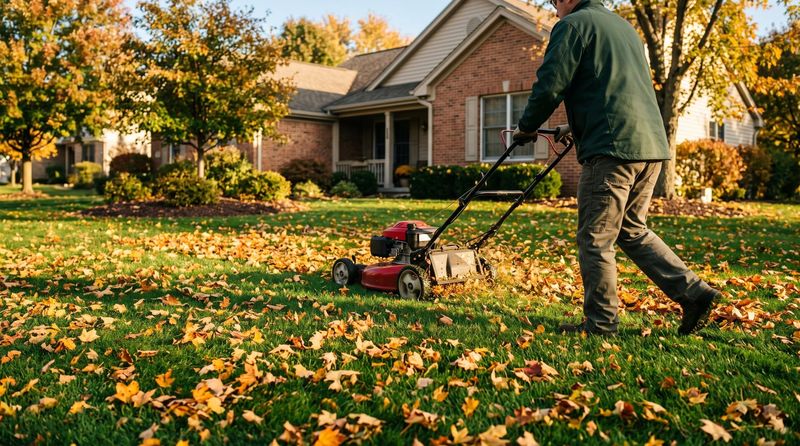
Forget the calendar for a moment and look at the grass. If the lawn is actively growing, keep mowing as needed.
That rule comes from growth, not from a temperature reading or a date.
A University of Minnesota Extension guide on mowing practices for healthy lawns gives the same growth-based advice. Its timing of generally around the end of October is Minnesota-specific, so it is not a Virginia recommendation.
Virginia winters and falls run milder in many places.
Here is a simple check. Measure your grass a few days after the last mow.
If it has climbed enough that a cut would remove a meaningful part of the blade, without breaking the one-third limit described in Virginia’s fall lawn care guidance, another mow is reasonable.
If the grass looks about the same height as it did last week, it is probably slowing down. Leaves piling up are not a reason to mow, and neither is a neighbor’s mower running.
Let the grass itself make the call.
Keep the cut suited to the grass
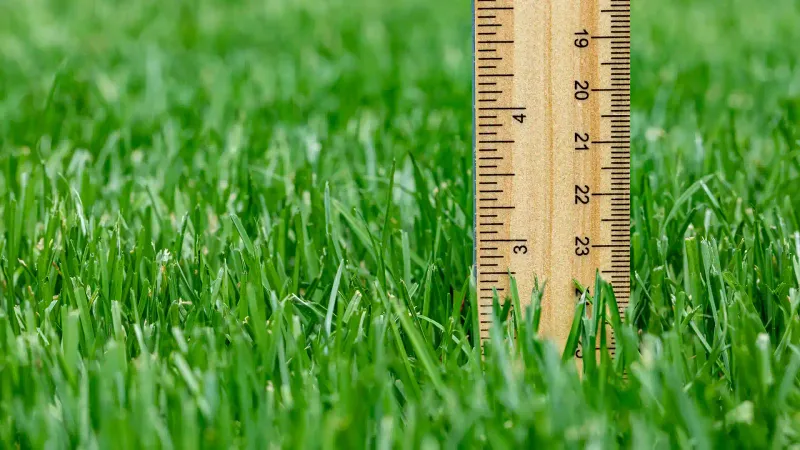
Once you know your grass type, set the mower to match it. For tall fescue, Virginia Tech’s Master Gardener handbook chapter on lawns gives about 3 to 4 inches as the recommended mowing height.
That range is tall fescue guidance, not a rule for every Virginia lawn.
Whatever the height, remove no more than one-third of the blade in a single cut. Virginia’s fall lawn care publication backs this up.
If the grass got ahead of you, cut it in stages over a few days.
Avoid cutting very short for winter. A scalped lawn is stressed, and short cuts do not make the grass safer in cold weather.
Advice about the final cut varies by region. University of Maryland Extension says that, for its listed turf types, the last mow before dormancy can be about half an inch higher.
Illinois Extension says the final cut can be slightly shorter, while warning against scalping and overly tall grass.
Those are regional views, and they point in different directions. No single higher or lower final-cut adjustment is a Virginia requirement, so stick with your grass’s normal height.
Dormancy—not the first frost—ends routine mowing
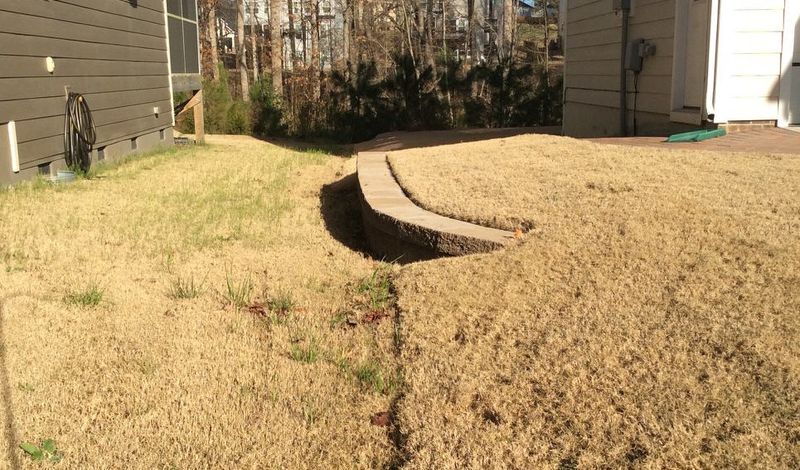
A light frost on a November morning does not mean the season is over. Cool-season grasses can keep growing in mild weather, so a tall fescue lawn may still need a cut after the first frost.
The first frost is not a universal stop sign.
Warm-season grasses behave differently. Virginia Tech’s turfgrass selection guide explains that bermudagrass and zoysiagrass go dormant after repeated frost events.
Once they turn tan and stop growing, there is nothing left to trim.
That brings us to the key point: when turf is dormant and not growing, a routine cut is unnecessary. University of Maryland Extension gives this advice in its lawn maintenance calendar, and it fits Virginia’s warm-season pattern as well.
A practical clue is the grass blade itself. If the lawn is brown and brittle after several hard frosts, and measuring shows no height gain, the mower can rest.
If a mild stretch returns and green fescue shoots up, check again before you store the machine.
Make the decision from your lawn’s condition

Here is the short process. First, identify your grass.
Second, check whether it is still growing enough to need a cut. Third, mow only when the lawn is dry.
When you do mow, use the grass’s appropriate height and follow the one-third rule from Virginia’s fall lawn care guidance. Skip wet grass, as Maryland Extension advises.
If you are unsure of your turf type, Virginia Tech’s turfgrass guide can help you sort it out.
Once the lawn is dormant, do not force a routine cut. The mower is done when the grass is.
Share this story