Get the latest garden guides in your inbox →
Gardening Latest
  • General Gardening
  • Lawn Care
  • Plant Care
  • Composting
  • Soil Health
  • Backyard
  • Garden Muse Magazine
  • General Gardening
  • Lawn Care
  • Plant Care
  • Composting
  • Soil Health
  • Backyard
  • Garden Muse Magazine
  • News
  • Gardening Calendar
  • Garden Structures
  • Vegetable Garden
  • Vertical Garden
  • Raised Beds
  • Hydroponics
  • General Equipment
  • Community Gardens
Garden Themes
  • Spiritual Garden
  • Hydroseeding
  • Seeding and Laying Sod
  • Artificial Grass
  • Lawn Care Equipment
  • Plants
  • Trees
  • Planting Tools
  • Composting Basics
  • Fertilizer
  • Alternative Growing Mediums
  • Front Yard
  • Backyard Activities
  • Landscaping
Gardening Latest

Explore by state

Which state is your garden in?

Currently viewing Florida

All states

Northeast

  • Connecticut —
  • Delaware 29
  • Maine —
  • Maryland 15
  • Massachusetts 31
  • New Hampshire —
  • New Jersey 15
  • New York 24
  • Pennsylvania 24
  • Rhode Island —
  • Vermont —

Southeast

  • Alabama 14
  • Arkansas —
  • Florida 15
  • Georgia 15
  • Kentucky 29
  • Louisiana 13
  • Mississippi —
  • North Carolina 13
  • South Carolina 28
  • Tennessee 11
  • Virginia 14
  • West Virginia —

Midwest

  • Illinois 13
  • Indiana 16
  • Iowa 28
  • Kansas —
  • Michigan 15
  • Minnesota 13
  • Missouri 13
  • Nebraska —
  • North Dakota —
  • Ohio 15
  • South Dakota —
  • Wisconsin 29

Southwest

  • Arizona 14
  • Colorado —
  • Nevada —
  • New Mexico —
  • Oklahoma —
  • Texas 13
  • Utah —

West

  • Alaska —
  • California 14
  • Hawaii —
  • Idaho —
  • Montana —
  • Oregon —
  • Washington —
  • Wyoming —

No state matches that search.

Site menu

Gardening Latest
  • General Gardening
    • News
    • Gardening Calendar
    • Garden Structures
    • Vegetable Garden
    • Vertical Garden
    • Raised Beds
    • Hydroponics
    • General Equipment
    • Community Gardens
    Garden Themes
    • Spiritual Garden
  • Lawn Care
    • Hydroseeding
    • Seeding and Laying Sod
    • Artificial Grass
    • Lawn Care Equipment
  • Plant Care
    • Plants
    • Trees
    • Planting Tools
  • Composting
    • Composting Basics
  • Soil Health
    • Fertilizer
    • Alternative Growing Mediums
  • Backyard
    • Front Yard
    • Backyard Activities
    • Landscaping
  • Garden Muse Magazine

Explore

  • About GardeningLatest.com
  • Contact Us

Get the latest from the garden

New guides on lawn care, plants and backyard projects, sent when they go up.

Subscribe →

Follow

  • Facebook
  • X
  • Pinterest
  • YouTube
Florida Gardening

Coral Snakes And Pygmy Rattlers Live In Florida Yards, So Here’s How To Recognize Each Venomous Creature

Florida backyards hide more than lizards and frogs, and two of the sneakiest residents are the eastern coral snake…

MV

By Marisol Vega

November 25, 2026 · 4 min read

Coral Snakes And Pygmy Rattlers Live In Florida Yards, So Here’s How To Recognize Each Venomous Creature
Coral Snakes And Pygmy Rattlers Live In Florida Yards, So Here's How To Recognize Each Venomous Creature

Florida backyards hide more than lizards and frogs, and two of the sneakiest residents are the eastern coral snake and the pygmy rattlesnake. Both are small, both are venomous, and both can turn up in flower beds, leaf piles, or near the back porch.

Knowing what they look like can keep your family and pets safe without making you afraid to step outside. Here is how to spot each one and what to do if you meet them.

At a glance

Where
Florida Gardening
Hardiness zone
9 20 to 30°F
Read
4 minutes
Published
November 25, 2026

1. The Eastern Coral Snake’s Bright Bands

The Eastern Coral Snake's Bright Bands
© The News-Press

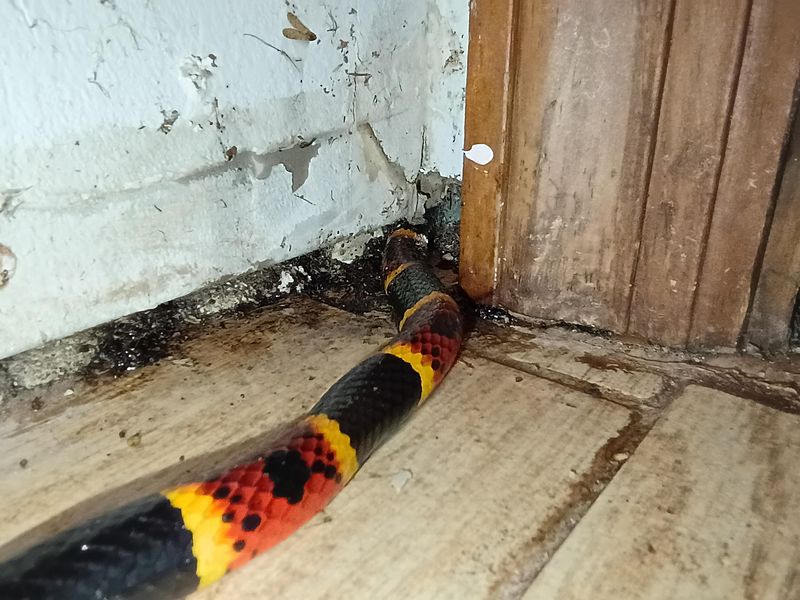
Red touches yellow, kills a fellow. Generations of Floridians grew up chanting that rhyme, and it still works for the eastern coral snake found in the United States.

Wide red bands sit right next to thin yellow bands, with black bands in between.

Look at the head, too. A coral snake has a blunt black snout followed by a wide yellow band, almost like it is wearing a little helmet.

Its body is slim and glossy, usually two feet long or less.

One caution here: the rhyme only applies to snakes in North America. In Central and South America, coral snake patterns vary, so the trick falls apart there.

2. Coral Snake Look-Alikes
Coral Snake Look-Alikes
© Reddit

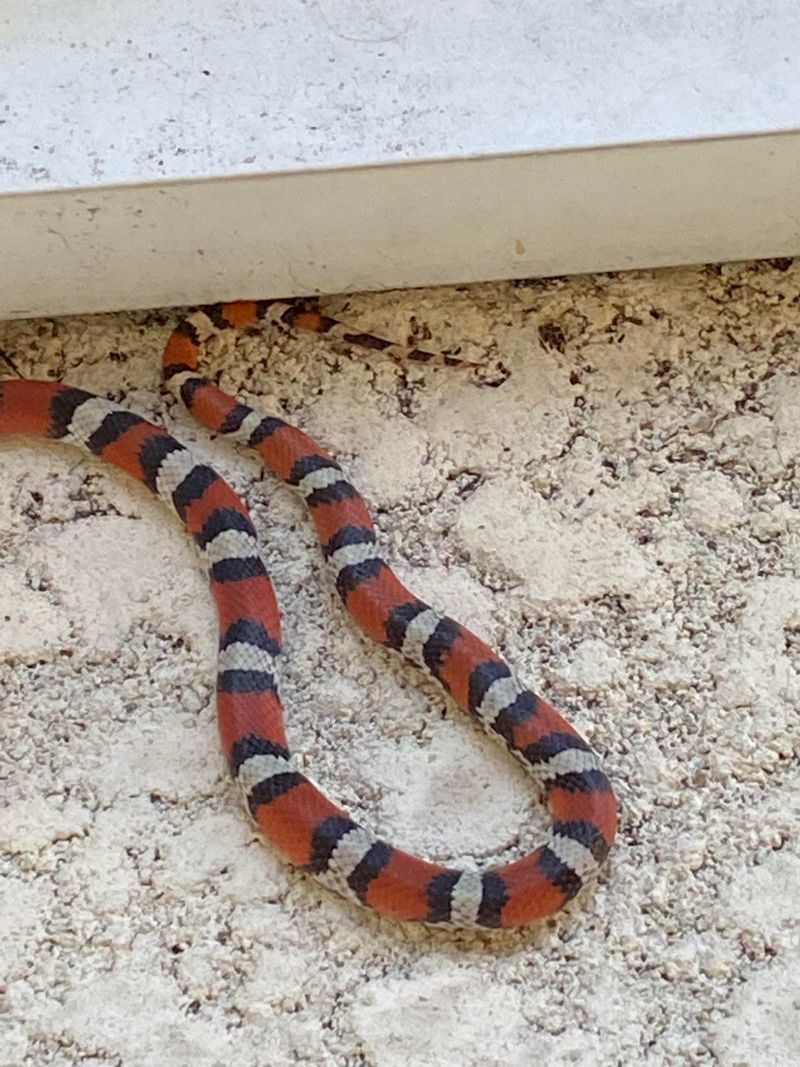
Picture this: you spot a striped snake under the hedges and your heart jumps. Before panicking, check the colors again, because Florida has harmless mimics that borrow the coral snake’s style.

The scarlet kingsnake and scarlet snake both wear red, black, and yellow (or white) bands. On these copycats, red touches black instead of yellow.

Some young snakes have barely any rattle at all, and older ones may lose segments.

Scarlet kingsnakes also have a red snout, while the real coral snake’s nose is black.

Fun fact: scientists think the mimics gain protection because predators avoid anything that looks like a coral snake. It is a clever survival bluff.

Still, if you cannot see the pattern clearly, keep your distance and let it slither on.

3. Coral Snake Habits and Hiding Spots
Coral Snake Habits and Hiding Spots

Shy is the best word for a coral snake. It spends most of its life tucked under leaf litter, mulch, logs, or loose soil, hunting other small snakes and lizards.

Many bites happen when people reach into garden beds with bare hands or pick up the snake thinking it is a toy-sized harmless critter. Coral snakes have small fangs and tend to hold on and chew rather than strike fast.

Wear gloves when gardening, and rake leaves before reaching in. Their venom affects the nervous system, and symptoms may be delayed for hours, so any bite needs a trip to the emergency room right away, even if you feel fine.

4. The Pygmy Rattlesnake’s Gray Disguise
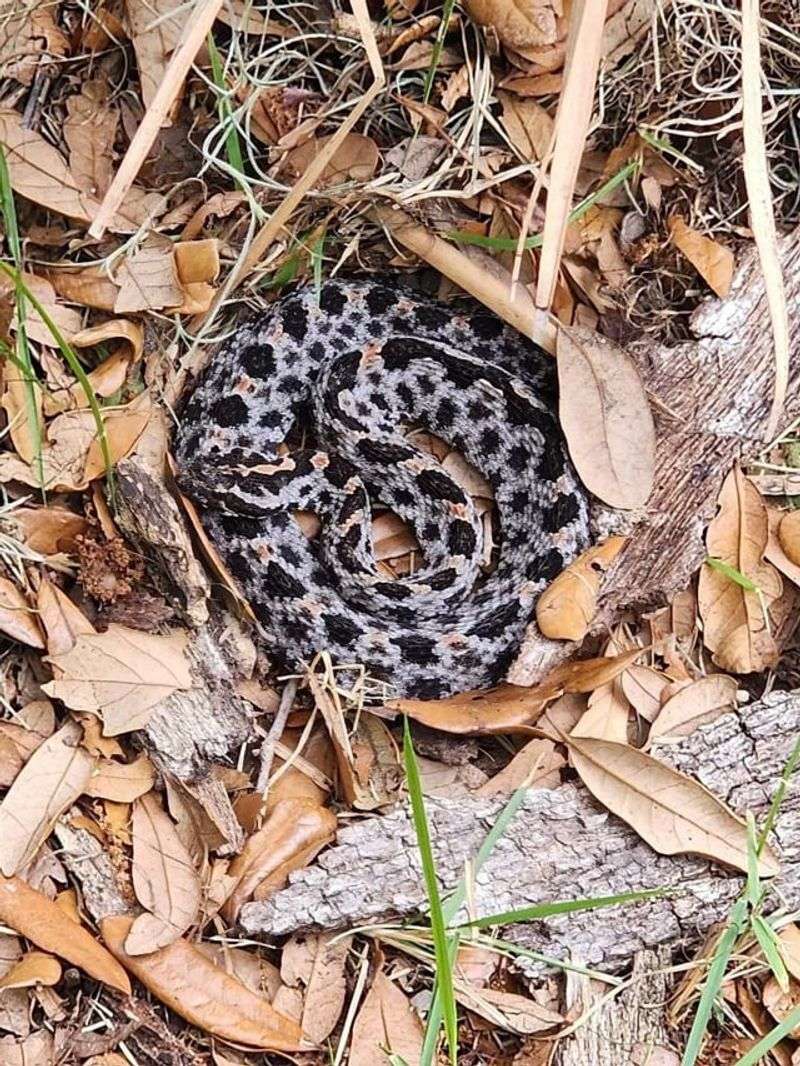
The Pygmy Rattlesnake's Gray Disguise

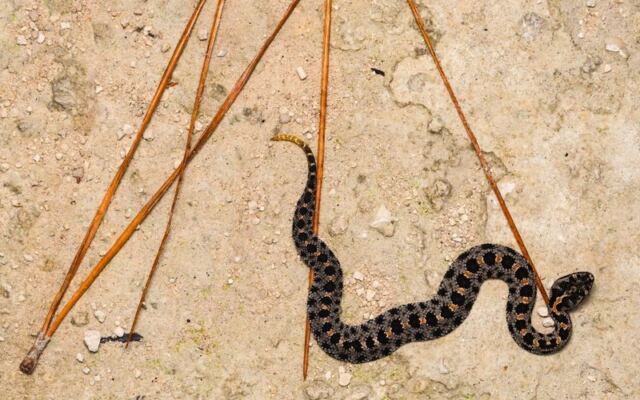
Unlike the flashy coral snake, the dusky pygmy rattlesnake prefers camouflage. Its gray or grayish-brown body is covered in dark, roundish blotches, and many have a rusty orange or reddish stripe running down the middle of the back.

Adults usually measure just 12 to 24 inches. They often rest in a tight coil that can look like a pile of dead leaves or a dropped garden hose nozzle.

Check the head shape. Pygmies have a triangular head wider than the neck, and up close you may notice vertical pupils and heat-sensing pits between the eyes and nostrils.

5. The Tiny Rattle You Might Not Hear
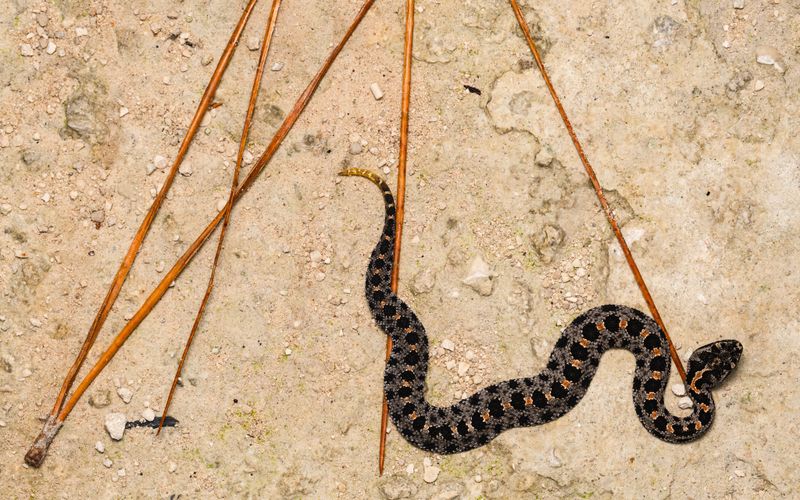
The Tiny Rattle You Might Not Hear
© parksmarilla

Ever heard a rattle that sounds like a buzzing bug? That might be a pygmy rattler.

Its rattle is so small that the warning sound resembles an insect in the grass, and you often cannot hear it beyond a few feet.

Some young snakes have barely any rattle at all, and older ones may lose segments. So no sound does not mean no snake.

That is why paying attention with your eyes matters more than listening. Watch where you step along walkways, near pool decks, and around potted plants, especially in warm weather.

6. Where Pygmy Rattlers Show Up
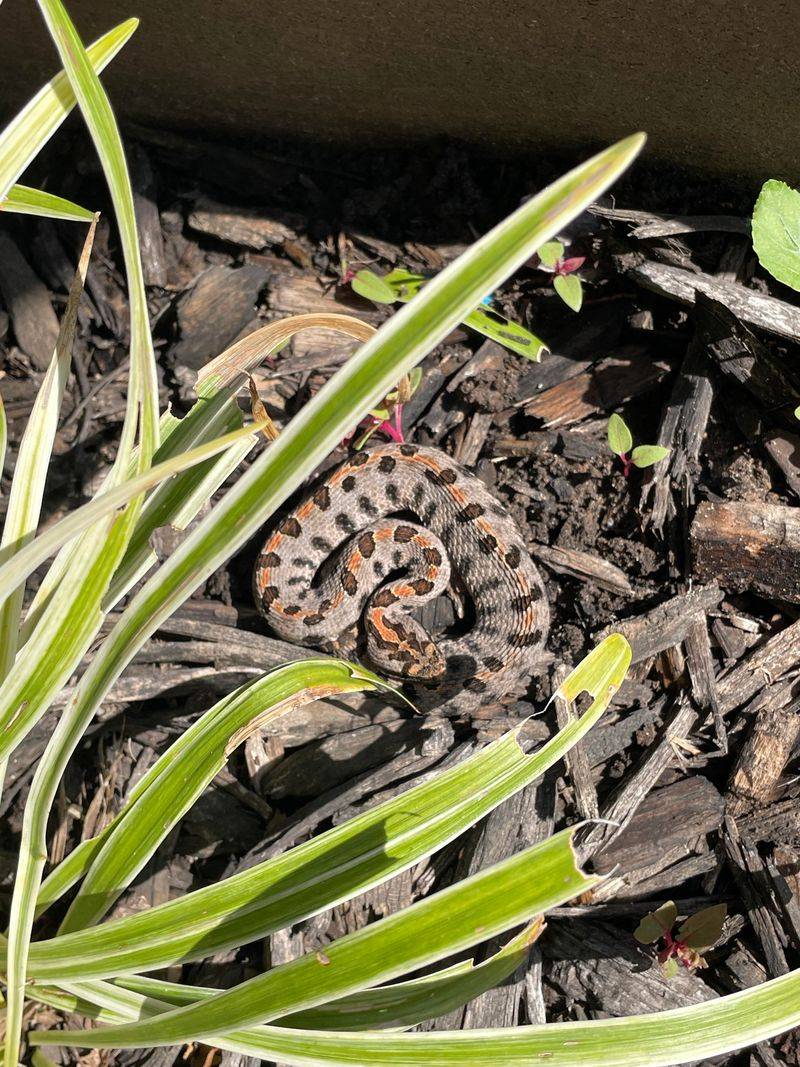
Where Pygmy Rattlers Show Up
© Reddit

Pygmy rattlers are found in all 67 Florida counties, which makes them one of the most common venomous snakes in the state. They like spots near water, pine flatwoods, and yards bordering wetlands or ponds.

Around homes, look for them near woodpiles, under shrubs, along fence lines, and in thick ground cover. They are drawn to places with plenty of frogs, lizards, and mice to eat.

A bite is very painful and causes swelling, though it is rarely deadly to healthy adults. Pets are at higher risk, so leash dogs in brushy areas and call a vet quickly if one gets bitten.

7. Staying Safe Around Both Snakes

Staying Safe Around Both Snakes
© Hurlburt Field – Air Force

Good news first: neither snake wants trouble with you. Most bites happen when people try to touch, catch, or kill a snake.

Keep your yard less snake-friendly by trimming bushes, moving woodpiles away from the house, and cleaning up clutter. Wear closed shoes outside, use a flashlight at night, and wear gloves for yard work.

If someone is bitten, stay calm, keep the bitten area still, remove rings or tight items, and call 911. Skip ice, cutting, or sucking out venom.

Snap a photo from a safe distance if you can, since it helps doctors choose treatment.

Share this story

MV

Written by

Marisol Vega

More from Marisol Vega →

About Gardening Latest

Gardening Latest provides in-depth guides to maintaining and enhancing your garden and backyard. Learn how to make the most of the space you have and create a beautiful garden.

More about us →

Latest stories

  • Delaware GardeningJust Found A Yellow Jacket Nest By Your Delaware Home? Here’s How To Handle It Safely

    Just Found A Yellow Jacket Nest By Your Delaware Home? Here’s How To Handle It Safely

    3 min ago
  • South Carolina GardeningThere’s a Reason Opossums Show Up Near South Carolina Homes in Winter, and Here’s What You Should Do

    There’s a Reason Opossums Show Up Near South Carolina Homes in Winter, and Here’s What You Should Do

    11 min ago
  • Kentucky GardeningSpot a Woolly Bear Caterpillar Crossing Your Kentucky Driveway? Here’s Where It’s Headed for Winter

    Spot a Woolly Bear Caterpillar Crossing Your Kentucky Driveway? Here’s Where It’s Headed for Winter

    17 min ago
  • Maryland GardeningMaryland Backyards May Shelter a Small Mammal With Toxic Saliva

    Maryland Backyards May Shelter a Small Mammal With Toxic Saliva

    30 min ago
  • Iowa GardeningSpotted a Big White Owl Perched on Your Iowa Fence Post? Here’s Why It Came South

    Spotted a Big White Owl Perched on Your Iowa Fence Post? Here’s Why It Came South

    36 min ago

Gardening by state

Stories for your state, and the hardiness zone most of it gardens in.

Keep exploring

Read next

All Florida Gardening →
Florida GardeningCoyotes Howling Near Your Florida Home at Night Are Sending a Seasonal Signal
Florida Gardening

Coyotes Howling Near Your Florida Home at Night Are Sending a Seasonal Signal

2 hr ago
Florida GardeningFlorida, Your Body Changes In These Ways When You Eat Celery Every Day
Florida Gardening

Florida, Your Body Changes In These Ways When You Eat Celery Every Day

6 hr ago
Florida GardeningYour Neighbor’s Tree Crashes Into Your Florida Yard, So Who Actually Pays for the Damage
Florida Gardening

Your Neighbor’s Tree Crashes Into Your Florida Yard, So Who Actually Pays for the Damage

9 hr ago

More from Florida Gardening

  • 7 Venomous Critters That Creep Toward Florida Porches Once the Nights Turn Cool

    Nov 23
  • The Mulch Mistake That Pulls Termites Right Up Against Your Florida Foundation

    Nov 22
Back to top

Leave a response Cancel

Your email address stays private. Required fields are marked with an asterisk.

Gardening Latest

In-depth guides to maintaining and enhancing your garden and backyard: how to make the most of the space you have, and how to make it beautiful.

  • Facebook
  • X
  • Pinterest
  • YouTube

We may earn a portion of sales from products or services that are purchased through our site as part of our affiliate partnerships with retailers.

Explore

  • About GardeningLatest.com
  • Contact Us
  • Terms and Conditions
  • Privacy
  • Editorial Note:
  • FTC Disclosure

Newsletter

New garden guides and seasonal tips, straight to your inbox.

We’ll email you a link to confirm. Unsubscribe any time.

Almost there! Check your inbox and tap the link to confirm.

© 2026 Gardening Latest. All rights reserved.

Back to top