Get the latest garden guides in your inbox →
Gardening Latest
  • General Gardening
  • Lawn Care
  • Plant Care
  • Composting
  • Soil Health
  • Backyard
  • Garden Muse Magazine
  • General Gardening
  • Lawn Care
  • Plant Care
  • Composting
  • Soil Health
  • Backyard
  • Garden Muse Magazine
  • News
  • Gardening Calendar
  • Garden Structures
  • Vegetable Garden
  • Vertical Garden
  • Raised Beds
  • Hydroponics
  • General Equipment
  • Community Gardens
Garden Themes
  • Spiritual Garden
  • Hydroseeding
  • Seeding and Laying Sod
  • Artificial Grass
  • Lawn Care Equipment
  • Plants
  • Trees
  • Planting Tools
  • Composting Basics
  • Fertilizer
  • Alternative Growing Mediums
  • Front Yard
  • Backyard Activities
  • Landscaping
Gardening Latest

Explore by state

Which state is your garden in?

All states

Northeast

  • Connecticut —
  • Delaware 16
  • Maine —
  • Maryland 3
  • Massachusetts 18
  • New Hampshire —
  • New Jersey 3
  • New York 12
  • Pennsylvania 12
  • Rhode Island —
  • Vermont —

Southeast

  • Alabama 3
  • Arkansas —
  • Florida 3
  • Georgia 3
  • Kentucky 16
  • Louisiana 2
  • Mississippi —
  • North Carolina 1
  • South Carolina 15
  • Tennessee —
  • Virginia 2
  • West Virginia —

Midwest

  • Illinois 2
  • Indiana 4
  • Iowa 15
  • Kansas —
  • Michigan 3
  • Minnesota 2
  • Missouri 2
  • Nebraska —
  • North Dakota —
  • Ohio 3
  • South Dakota —
  • Wisconsin 17

Southwest

  • Arizona 3
  • Colorado —
  • Nevada —
  • New Mexico —
  • Oklahoma —
  • Texas 2
  • Utah —

West

  • Alaska —
  • California 3
  • Hawaii —
  • Idaho —
  • Montana —
  • Oregon —
  • Washington —
  • Wyoming —

No state matches that search.

Site menu

Gardening Latest
  • General Gardening
    • News
    • Gardening Calendar
    • Garden Structures
    • Vegetable Garden
    • Vertical Garden
    • Raised Beds
    • Hydroponics
    • General Equipment
    • Community Gardens
    Garden Themes
    • Spiritual Garden
  • Lawn Care
    • Hydroseeding
    • Seeding and Laying Sod
    • Artificial Grass
    • Lawn Care Equipment
  • Plant Care
    • Plants
    • Trees
    • Planting Tools
  • Composting
    • Composting Basics
  • Soil Health
    • Fertilizer
    • Alternative Growing Mediums
  • Backyard
    • Front Yard
    • Backyard Activities
    • Landscaping
  • Garden Muse Magazine

Explore

  • About GardeningLatest.com
  • Contact Us

Get the latest from the garden

New guides on lawn care, plants and backyard projects, sent when they go up.

Subscribe →

Follow

  • Facebook
  • X
  • Pinterest
  • YouTube
Latest News

Can You Compost Corn Cobs? | How to Compost Corn Waste

Corn cobs, being an organic material will compost. Indeed they contain many nutrients that are beneficial to your soil…

By Keith Hardy

April 10, 2023 · 5 min read

Can You Compost Corn Cobs? | How to Compost Corn Waste

Corn cobs, being an organic material will compost. Indeed they contain many nutrients that are beneficial to your soil. There are though a few factors to take into consideration that will impact largely on the length of time that the decomposition process will take.

Table of Contents
  • Can you compost corn cobs?
    • Can Cooked Corn Cobs be Composted?
  • How long does it take corn cobs to decompose?
    • Cold composting corn cobs
    • Hot composting corn cobs
    • Carbon to Nitrogen Ratio of Corn Cobs and Stalks
    • Burying corn cobs
    • Using a composting bin for corn cobs
  • Summary
  • Notes

At a glance

Filed under
Latest News
Read
5 minutes
Published
April 10, 2023

Can you compost corn cobs?

Corn cobs are often thrown away because they don’t look attractive or seem too useful it is often asked if you can compost them instead?

Corn cobs are stalks from the corn plant. They are usually discarded after harvest, but some farmers sell them at markets. If you want to get rid of these waste materials, you can compost them.

You can compost corn cobs by mixing them with other organic materials such as leaves, grass clippings, shredded paper, and manure. The mixture should be turned regularly until it decomposes completely.

Corncob composting has become a trendy way to recycle food waste into organic fertilizer. Is it really worth it?

Corncobs are a great source of nitrogen, potassium, phosphorus, calcium, magnesium, iron, zinc, copper, manganese, and boron. They also contain fiber, protein, vitamins, and minerals.[1]

You can compost them at home or get your local community garden to accept them. If you don’t want to take the time to collect them from your kitchen, you can buy pre-composted corncobs from stores such as Whole Foods Market.

Can Cooked Corn Cobs be Composted?

It doesn’t matter whether the corn cob is raw or cooked both will decompose but you will find that corn cobs that have been cooked will decompose slightly faster. This is because the cooking process helps break down some of the carbon elements and lignin coating to soften the cob making it easier for the microbes to attack it.

How long does it take corn cobs to decompose?
Can you compost corn cobs?

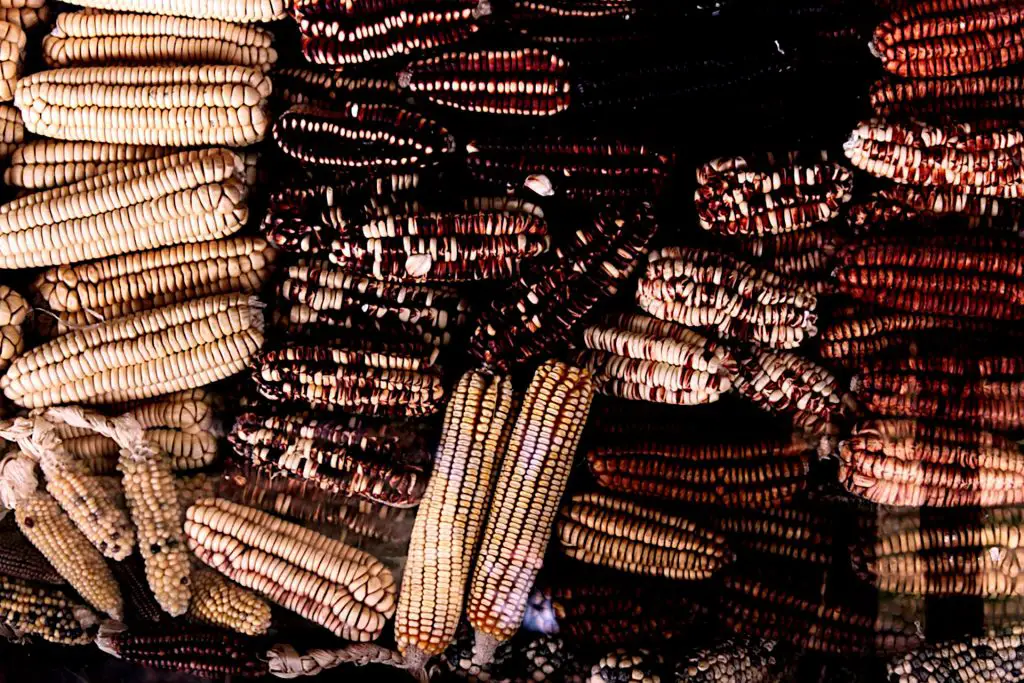
While corn cobs are decomposable, they can take a long long time to break down, even in a compost pile.
This is because they contain a waxy coating, called lignin, which protects the kernel while growing but lignin also makes it difficult for microorganisms to digest meaning that the decomposition process will be longer.

The second factor that influences their decomposition time is their carbon to nitrogen ratio (see chart below). Corn cobs have a ratio of 80:1 (C/N) which means they are carbon-rich and classed as brown materials.

Brown materials take much longer to break down than green materials because of the lower nitrogen levels. Corn cobs if left naturally will decompose in about  4-6 months, similar to other brown materials such as leaves.

As will all organic materials how you compost your corn cobs also has a bearing on the length of time decomposition takes as different processes produce finished compost in different lengths of time.

Cold composting corn cobs

If you are using a regular cold composting process corn cobs will decompose, in around three months, depending on a couple of factors. Firstly, how nitrogen-rich your pile is, for cold composting, this should be between 30-35:1 (C/N). Secondly, on how often you turn the pile to aerate it, again, with cold composting usually every 10-14 days.

When constructing your compost pile you should add your corn cobs in with the other brown material layers. It is helpful if you cut up the cobs as this aids the decomposition process. The corn kernels themselves are helpful to the composting process because they contain little pockets of air which, when reacting with the nitrogen in the pile, can initially help with decomposition.

Hot composting corn cobs

 If you are a proficient composter or have more time to tend your composting pile then you can speed up the decomposition process by using the hot composting technique. This will require to have a higher nitrogen content in the composting pile and much more regular aerating to get oxygen into the mix.

Generally speaking your compost piles  carbon to nitrogen ratio should be 25:1 (C/N) or just under and you should turn your pile every two to three days monitoring the temperature to ensure it is around 130 F

In terms of preparation instead of layering green and brown materials, you should chop all the materials, including your corn cobs, into small pieces and mix them together. 

Carbon to Nitrogen Ratio of Corn Cobs and Stalks

MaterialC/N Ratio
Corn Cobs80:1
Corn Stalks75:1

Burying corn cobs

There are some people that choose to bury corn cobs. While the cobs will eventually decompose it could take between 3-5 years for this to happen because of a lack of oxygen.

Using a composting bin for corn cobs

You can compost corn cobs in a compost bin too. First, remove the husks and silks from the cob. Then cut off the ends of the cob and soak it in water overnight. Next, place the soaked cob into a large container filled with soil. Cover the container with a lid and let it sit for two weeks. After that time, turn the pile over and add some fresh soil. Repeat this process every week until the cobs are fully decomposed.

Do corn husks break down in compost?

Although husks and stalks of corn can be composted, they do not break down easily, with corn stalks taking between 180-360 days to decompose in a compost pile.

As such they should not be composted in piles with other materials. Instead, husks, stalks, and cobs can be composted separately in a bin, with other high-nitrogen materials, such as grass clippings, weeds, or kitchen wastes.

If you have access to a shredder, you can shred the stalks and husks, and compost them with other high nitrogen materials.

Summary

Can you compost corn cobs? The answer is a definitive yes. They are an organic material full of beneficial nutrients that will help the health and quality of your soil.

They are excellent as a brown material for bulking out your composting pile. The key thing to consider is the length of time that corn cobs, corn stalks, and corn leaves take to decompose.

The most efficient way to compost them will depend on your time and experience but the result should be healthy nutrient-rich finished compost.

Notes

[1] Aildson Pereira Duarte: Reference Values of Grain Nutrient Content and Removal for Corn

Tagged
  • what you can compost

Share this story

Written by

Keith Hardy

More from Keith Hardy →

Keith has been involved in the gardening and landscaping industry fro the past 21 years. From a jobbing gardener to running his own landscaping services. He is now dedicated to bringing you the latest in gardening news.

About Gardening Latest

Gardening Latest provides in-depth guides to maintaining and enhancing your garden and backyard. Learn how to make the most of the space you have and create a beautiful garden.

More about us →

Latest stories

  • Wisconsin GardeningWhy Is a Red Fox Crossing Your Wisconsin Yard This Winter? Some Possible Explanations

    Why Is a Red Fox Crossing Your Wisconsin Yard This Winter? Some Possible Explanations

    1 hr ago
  • Iowa GardeningWhy Pulling Creeping Charlie Once Rarely Brings Lasting Control in Iowa Lawns

    Why Pulling Creeping Charlie Once Rarely Brings Lasting Control in Iowa Lawns

    1 hr ago
  • Massachusetts GardeningMassachusetts Law Says This About Cutting Your Neighbor’s Overhanging Tree Branches Before Winter Storms Hit

    Massachusetts Law Says This About Cutting Your Neighbor’s Overhanging Tree Branches Before Winter Storms Hit

    2 hr ago
  • Delaware GardeningCan Your Delaware Neighbor’s Tree Branches Legally Hang Over Your Yard? Here’s What the Law Actually Says

    Can Your Delaware Neighbor’s Tree Branches Legally Hang Over Your Yard? Here’s What the Law Actually Says

    2 hr ago
  • Kentucky GardeningCan You Legally Cut Your Neighbor’s Tree Branches Hanging Over Your Kentucky Fence? Here’s the Answer

    Can You Legally Cut Your Neighbor’s Tree Branches Hanging Over Your Kentucky Fence? Here’s the Answer

    3 hr ago

Gardening by state

Stories for your state, and the hardiness zone most of it gardens in.

Keep exploring

Read next

All Latest News →
General GardeningWinter is Coming But Your Garden Still Needs You – November Gardening Tasks
General Gardening

Winter is Coming But Your Garden Still Needs You – November Gardening Tasks

Jul 28
CompostingWorm Castings vs Compost the Key Differences
Composting

Worm Castings vs Compost the Key Differences

Sep 14
CompostingCompost vs Fertilizer – What Are the Differences
Composting

Compost vs Fertilizer – What Are the Differences

Sep 14

More from Latest News

  • Should You Rake Dead Grass From Your Lawn?

    Oct 31, 2023
  • How to Clean Artificial Turf: Frequency Matters

    Jun 28, 2024
Back to top
Gardening Latest

In-depth guides to maintaining and enhancing your garden and backyard: how to make the most of the space you have, and how to make it beautiful.

  • Facebook
  • X
  • Pinterest
  • YouTube

We may earn a portion of sales from products or services that are purchased through our site as part of our affiliate partnerships with retailers.

Explore

  • About GardeningLatest.com
  • Contact Us
  • Terms and Conditions
  • Privacy
  • Editorial Note:
  • FTC Disclosure

Newsletter

New garden guides and seasonal tips, straight to your inbox.

We’ll email you a link to confirm. Unsubscribe any time.

Almost there! Check your inbox and tap the link to confirm.

© 2026 Gardening Latest. All rights reserved.

Back to top

Last Updated on April 10, 2023