
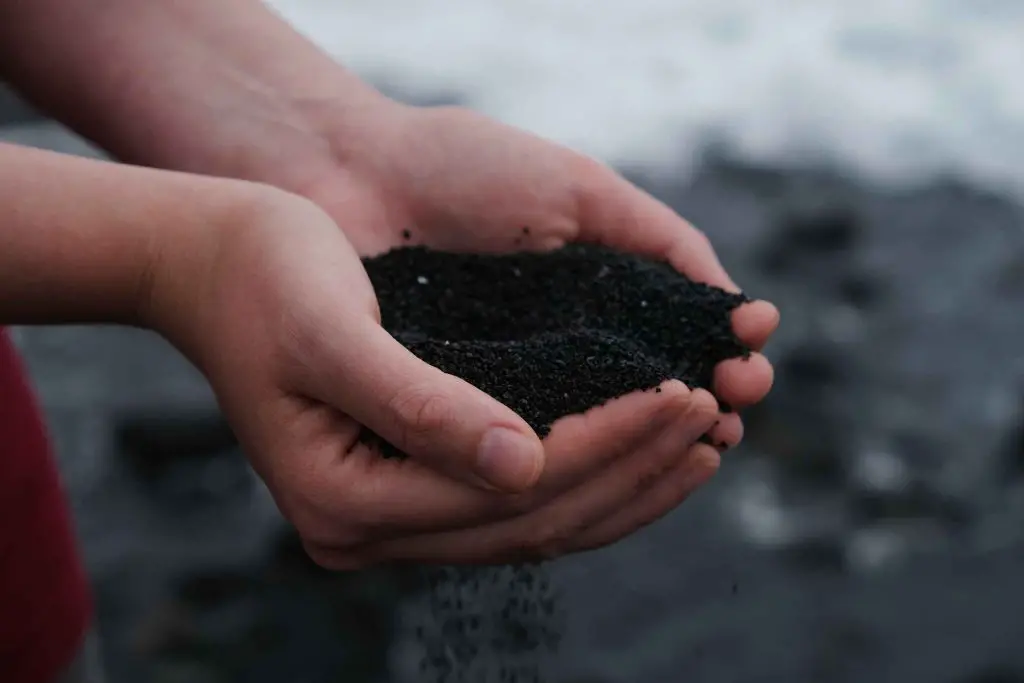
Your compost not heating up is usually down to one or two factors that, not being right, “throws off” the decomposition process. This is because composting is a science, and when the science is ignored, the results can be less than satisfactory.
Download FREE Composing Guide
This FREE 29-page guide helps you turn kitchen scraps and garden waste into valuable compost. The comprehensive guide explains hot, cold and worm composting, as well as looks a no-turn (passive) composting methords with clear technical diagrams, detailed instructions and practical solutions for common composting problems.
How hot should a compost pile get?
If your compost pile is breaking down the organic material within it, as it should, then your pile will heat up. How hot it gets depends on several factors including the process you are following but it needs to be hot enough to kill pathogens, weed seeds, and insect larvae, and inactivate soil-borne plant diseases and hot enough for the decomposition process to take place.
Taking climate into consideration
If you live in an area where the temperature barely rises above freezing in winter and barely falls below freezing in summer, it will take a little longer for your compost pile to heat up. The composting process depends on heat generated by biological activity.
This means that if you have a cold climate, you may need to wait a few months before the pile gets hot enough to start decomposing or look to insulate the compost pile. In warmer climates, the composting process starts much sooner.
Reasons why your composting pile isn’t heating up
Assuming that the problem isn’t related to cold or freezing climatic conditions there are several possible reasons, either individually or in combination, that can prevent your compost pile from heating up.
Nitrogen deficiency:
Composting is a chemical reaction and the amount of nitrogen plays an important role. If you have got your ratios wrong and you have too much carbon in the pile it will struggle to heat up.
Solution: Add more nitrogen-rich materials such as grass clippings or add a compost activator to the pile to help kick start the process.
The compost pile is too wet:
Moisture is an important agitator in the composting process but if your pile is too wet then this can extinguish the process altogether until it dries out.
Solution: The compost pile should have the feel of a wrung-out sponge i.e it should be slightly damp rather than wet. If your pile is too wet you can re-balance it by adding more dry materials such as sawdust wood chips or cardboard. However, be careful to also maintain the carbon to nitrogen ratio.
Lack of oxygen:
The chemical reaction taking place in your composting pile feeds off oxygen as an agitator. If your pile is starved of oxygen then this can slow down the chemical reaction which, in turn, reduces the heat.
Solution: Depending on your chosen composting process you can increase oxygen by aerating the pile (turning) more regularly.
If you have an enclosed compost pile or bin you can set up your composting space with PVC pipes drilled with holes running through the pile in various directions. Ensure the ends of the pipes extend outside the pile and oxygen will be drawn through the pipes into the center of the pile.
How to make and maintain your compost pile’s heat
As mentioned composting is science. It doesn’t mean that you need a science degree to master it but understanding the stages of composting will help a lot in allowing you to compost more efficiently.
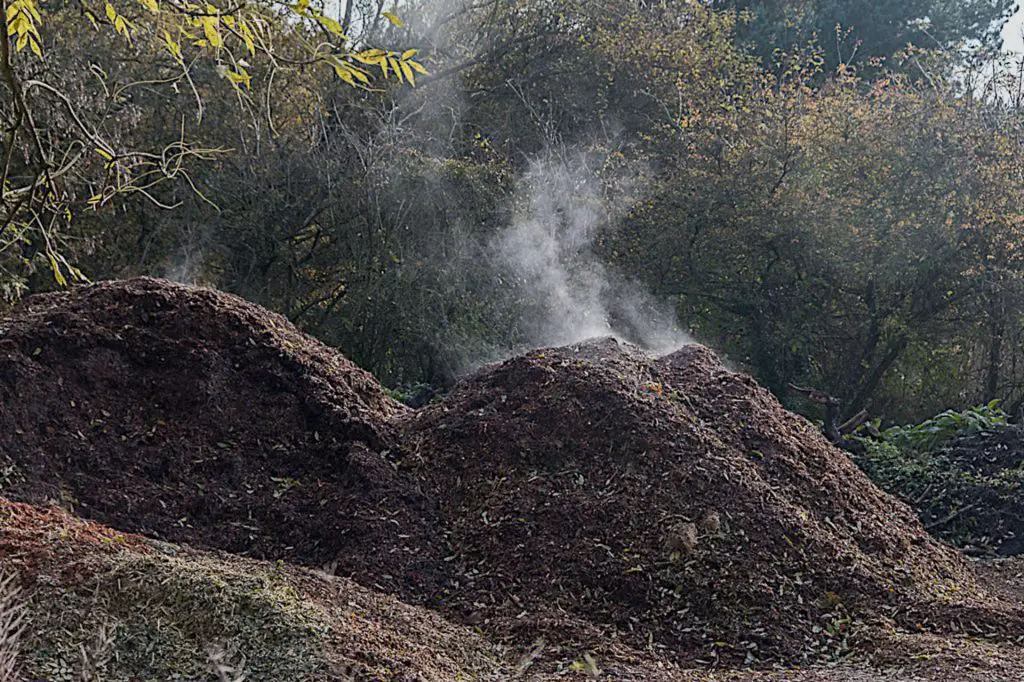
Composting is essentially a chemical reaction that takes place between carbon and nitrogen present in the compost pile, together with the oxygen and moisture as agitators. The reaction caused generates heat enabling the microbes present to attack the composting material turning it into finished compost.
The hotter the pile the faster the composting process is taking place. So, if your compost pile is not heating up sufficiently the reaction is being slowed down and the process will take much longer.
Carbon to Nitrogen Ratios
As with all chemical experiments the ratio between the key elements, the carbon and nitrogen, is important to the efficiency of the process.
There are several approaches to composting but the two most common are cold composting and hot composting. When using the cold composting process you need a ratio of between 30-35:1 (C/N) and with the hot composting process, your pile ratio should be 25:1 or slightly lower.[1]
How long does it take compost to heat up?
If you are cold composting, within 3 days, the compost should reach temperatures between 50°F to 80°F. However, it may take several weeks to fully heat up. A good rule of thumb is that the pile needs to be about 40 °F hotter than the outside air temperature. So, if the outside air temperature is 20 °F, the compost pile would need to be 60 °F.
If you are hot composting your composting pile should heat up in around 48 hours or even sooner. The point of hot composting is to speed up the decomposition process to a matter of weeks rather than months. To achieve this the temperature in the pile needs to reach between 130°F to 150°F and this should be maintained for at least ten to fourteen days.
Turning your compost pile to increase heat
As mentioned oxygen is a key agitator in the chemical reaction that causes decomposition. The more you turn your compost pile the more oxygen gets into the pile and the hotter the pile should get.
Turning your compost pile is the most efficient way to aerate it. By aerating the pile you will allow more oxygen to reach the bacteria and microorganisms, which are doing the job of breaking down the organic matter.
Generally, you should turn the pile over at least once per week. It is not advisable to use any type of heavy equipment near the compost pile as they could damage the pile. It is best to use a shovel or fork instead.
How often should I turn my compost?
How often you turn your compost pile will depend on the composting process that you are following.
If you are cold composting you should turn the compost pile every 1 – 4 weeks. Compost piles should be turned frequently during the first year. After that, you can reduce the frequency to once every month or two.
If you are hot composting you need to be turning on a much more frequent basis. You should when hot composting turn your pile a least every two to three days or even every day if you have the time. The more you turn it the more oxygen is pushed through the hotter the pile and the faster the decomposition process.
Tips to ensure your compost pile heats up
Material size
Whether you are hot composting or cold composting cutting up to shredding the material you are going to compost will help the process as the more surface area for the microbes to attack the fast the decomposition.
Insulation
Heat loss from your pile could be a problem, particularly as nights get colder. Covering your pile with a tarpaulin will help the pile to retain heat and also prevent too much rain from getting to the pile.
Compost activators
One way to quickly generate heat and kick-start the decomposition process. You can do this by adding a compost activator which you can buy or make yourself. The activator will add nitrogen to the pile, but be careful not to add too much as this in itself can cause other problems.
Summary
Your compost not heating up comes down to checking a few factors. Is the carbon to nitrogen ratio of the pile correct, is the pile too wet and is there enough oxygen getting to the center of the pile?
These are all quickly rectifiable so it shouldn’t be too long before your compost pile is warming up nicely and producing the high-quality black gold (finished fertilizer) that you want that will help your plants thrive.
Commonly Asked Questions
How long does it take to turn a compost pile into usable fertilizer?
It takes anywhere from 3 weeks to 2 years depending upon how well prepared the ingredients are and which composting process you are following.
How do I know if my compost is ready?
If the compost has been properly mixed, the pile should look like moist earth with no visible signs of rotting vegetation. The pile should also smell somewhat sweet. If the pile looks bad, smells bad, or if the pile seems to be drying out, it probably isn’t finished yet. Wait until the pile is completely cool before using it.
Will adding humus help heat up your compost pile?
Humus an excellent material to add to your pile, but if your pile is already at capacity, the humus will simply become part of the pile. It will not generate heat. And the more you add, the less likely it is that heat will be generated, because there’s less air in the pile. My advice: Break up your pile now, add some more browns and greens, and give your pile a vigorous mixing. Let it heat up a little more. Then, when it has cooled down, add some of the humus you purchased.
How do I know if my compost has reached its peak?
You can tell if your compost has reached its peak by looking for signs of fermentation. When compost begins to ferment, it smells like vinegar and becomes slimy. Fermentation also causes the compost to become acidic. Acidic compost kills most beneficial organisms and makes it unsafe to apply directly to plants. To avoid this problem, mix your finished compost with some neutralizing agent such as peat moss or vermiculite.
Notes:
[1] NRCS: Managing for Better Compost
Share this story