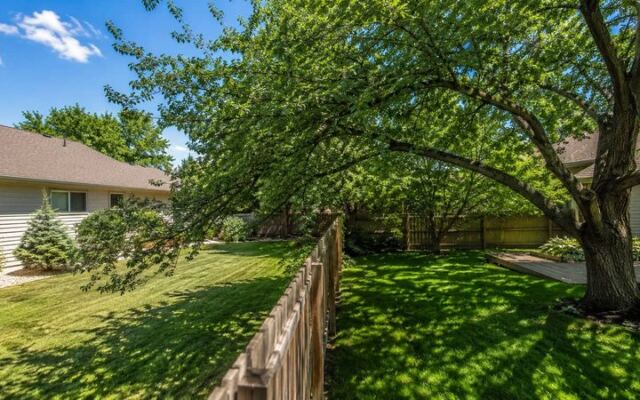
A big maple next door can throw shade, drop leaves, and push branches right over your fence. Many Wisconsin homeowners wonder if they can just grab a saw and fix it.
The answer is yes in a narrow set of cases, but the limits matter a lot. Knowing them can save you from an expensive fight with a neighbor.
Wisconsin generally lets you trim branches that cross onto your property
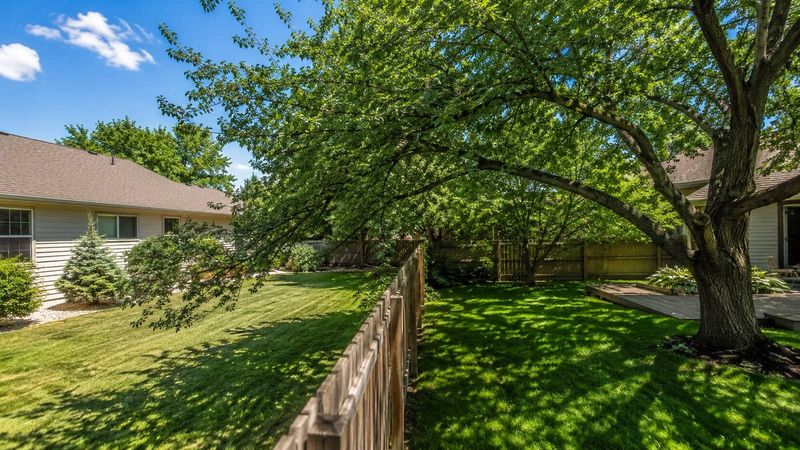
Picture a branch from next door hanging over your patio. In Wisconsin, the general answer is that you may trim it back to the property line.
You usually do not have to give the neighbor notice first.
That answer comes from common law, which means rules built up through court decisions rather than a single statute passed by the legislature. A Wisconsin REALTORS Association legal hotline summary describes the Court of Appeals decision in Aman v.
Aushwitz. Keep in mind that this is a magazine-style case summary, not the full court opinion, so it works best as a starting point rather than the last word.
A presentation by a Wisconsin Department of Natural Resources attorney, hosted by the City of Neenah, describes the same self-help idea. It says the adjoining owner may trim at his or her own expense.
Here is where people get tripped up. Self-help does not mean unrestricted cutting.
The right covers the part of the branch that hangs over your land, and it comes with limits.
Those limits involve where the boundary really sits, who pays, and how much harm you do to the tree. The next sections take each one in turn.
Until you have checked all three, the saw should stay in the garage.
The property line—not necessarily the fence—sets the cutting limit
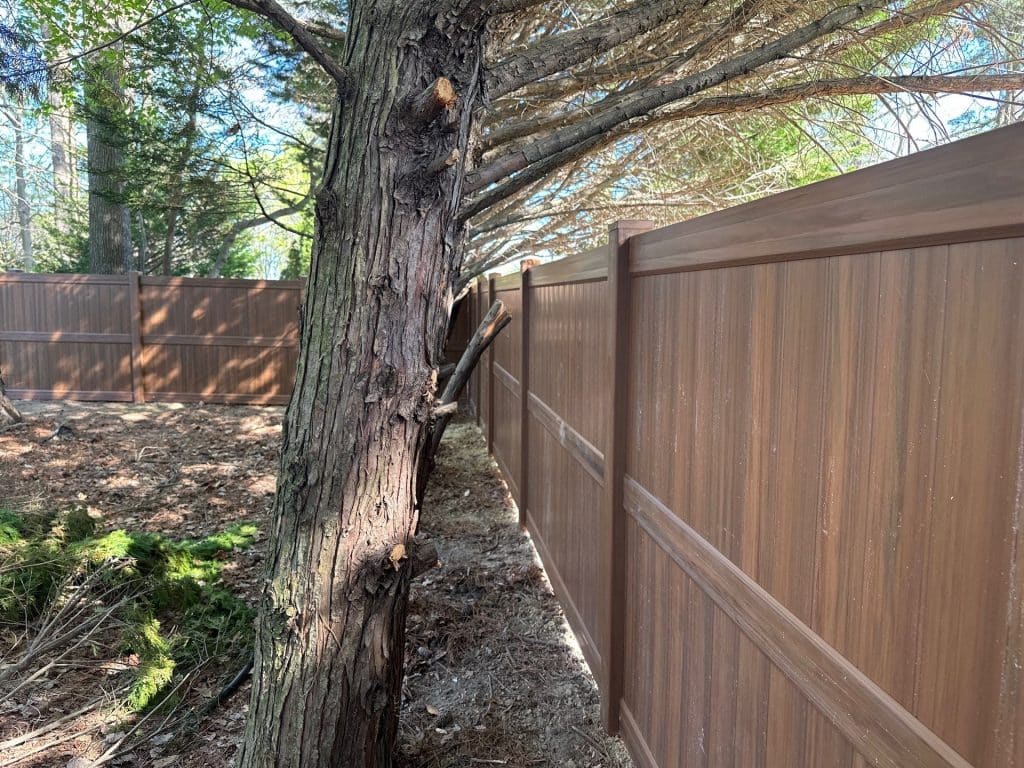
Fences wander. Over the years, owners build them a little inside or outside the true boundary, and nobody notices until a dispute starts.
The legal line is what counts, and a fence may or may not sit on it.
The DNR attorney presentation hosted by Neenah warns against relying on uncertain boundary locations. A Wisconsin appellate decision it discusses also noted that a fence line did not definitively settle the boundary in a quiet-title action.
So before you cut, find out where the line actually runs. Your deed, a plat map, or a recent survey are the usual places to start.
If the location is unclear, a licensed surveyor can mark it.
Once you know the line, treat it as a hard stop. The trimming right does not let you step onto the neighbor’s land to reach a branch.
It also does not allow cuts beyond the boundary, even if a limb looks like it could use a bit more shaping.
A practical tip is to mark the line with string or stakes from the ground, then look up to see where the branches cross it. Take photos before and after.
A simple record can help if the neighbor later questions what you did.
The person who trims generally pays for the work
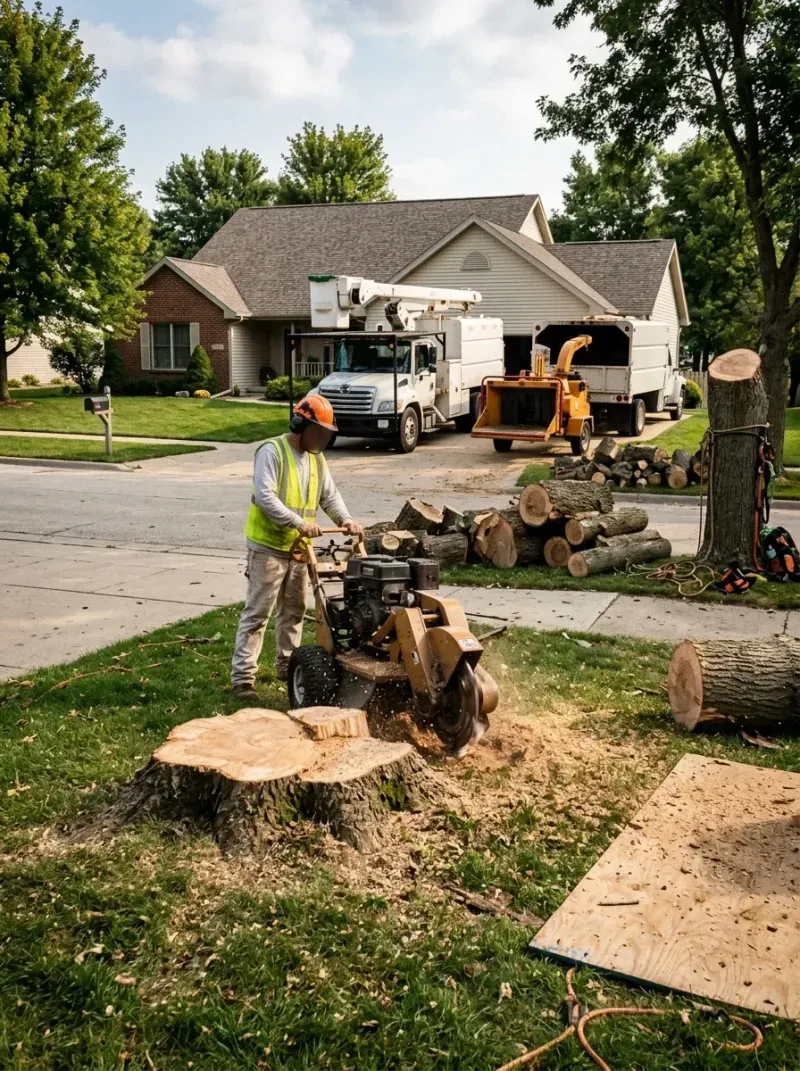
Money questions come up fast. Under the self-help rule described in the sources, the cost falls on whoever arranges the trimming.
If you decide to cut the branches back, plan to cover the bill yourself.
The DNR attorney presentation frames the right as trimming at your own expense. Nothing in the sources supports sending the tree owner an invoice or demanding a 50-50 split.
A neighbor might agree to share costs, and a written note of that deal is smart, but it is not something the law hands you automatically.
Notice works differently. The general self-help rule does not require you to warn the neighbor first.
Even so, the City of Racine recommends talking with the neighbor and trimming responsibly.
Think of the chat as good manners and good strategy, not a legal checkbox. A neighbor who hears your plan is less likely to be surprised or angry.
Sometimes they will even offer to handle the work or help pay.
If you hire a tree service, tell the crew exactly where the line is. Ask them to cut only what overhangs your side.
Boundary trees, vines, and state highway vegetation are different cases
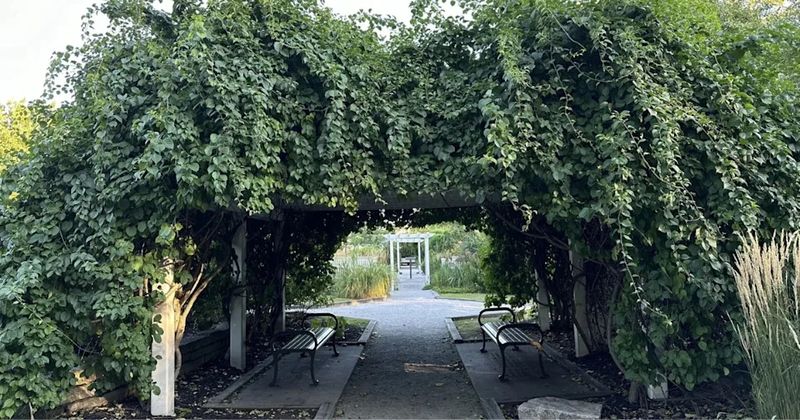
The overhang rule fits a tree rooted on one side whose branches reach across. A tree whose trunk stands on the boundary is a different story.
In a 1996 case, Montgomery v. Mahler, the Court of Appeals affirmed a finding that neighbors had an ownership interest in a tree growing on their boundary.
Because of that shared interest, do not treat the overhang rule as permission to remove or heavily alter a boundary tree on your own. Talk with the neighbor, and consider legal advice before acting.
Vines are less settled. The DNR attorney presentation mentions other plant life, but the materials reviewed do not lay out a detailed Wisconsin rule for every vine.
That includes vines clinging to fences or buildings, so do not assume the answer is simple.
Roadsides are another special case. Wisconsin DOT says unauthorized cutting or injury to vegetation along state trunk highway rights-of-way is prohibited and requires a permit.
That statement covers state trunk highways only. Rules for other publicly owned vegetation or rights-of-way depend on the responsible agency and local rules, so check with your city, village, county, or town.
A right to trim is not a license to damage or kill the tree
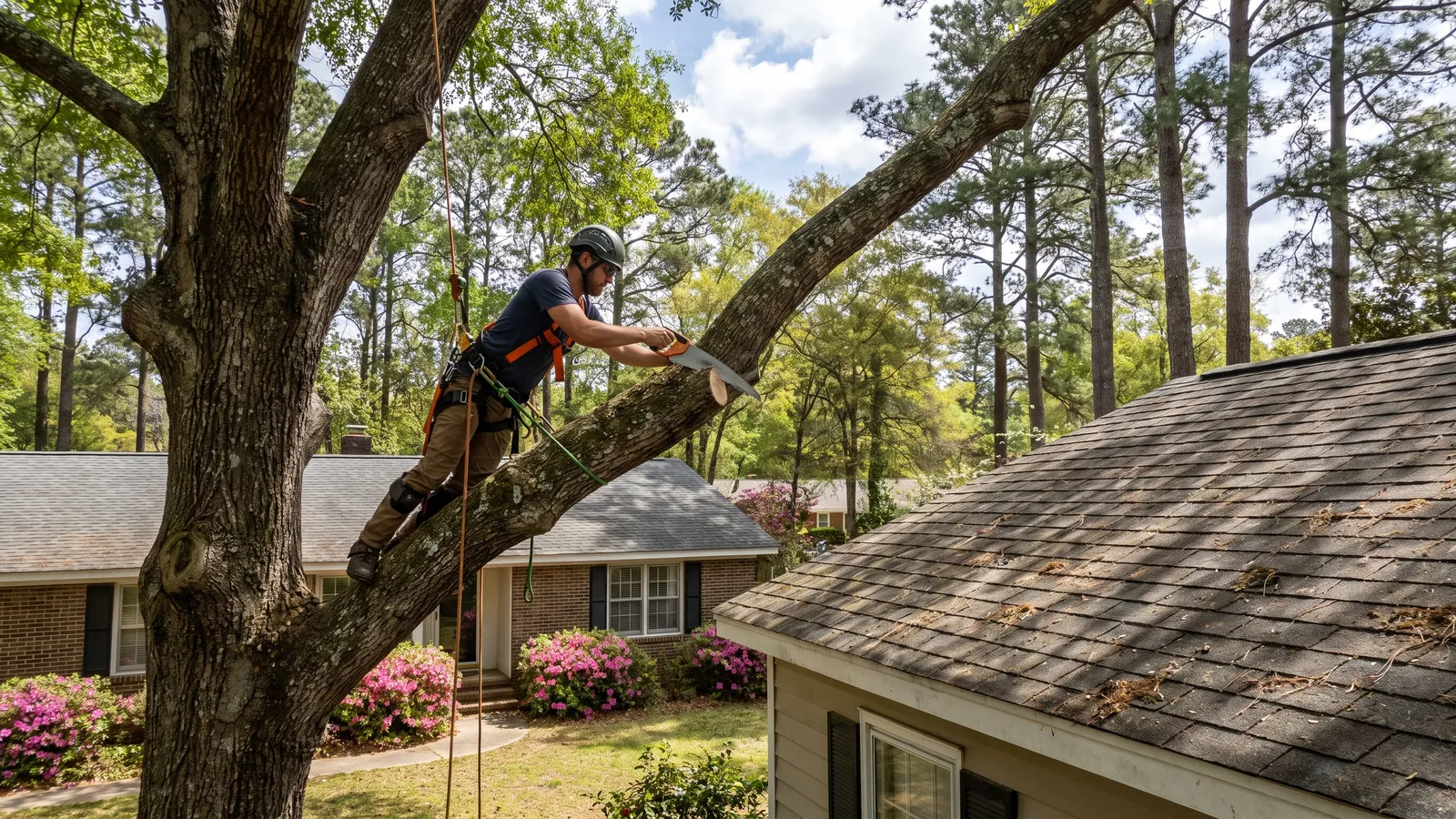
Having the right to trim does not mean you can cut however you like. The DNR attorney presentation says encroachment rights must be exercised reasonably, with regard to the owner’s interests.
The City of Racine likewise advises avoiding work that harms the tree’s overall health.
Severe injury, or killing the tree, carries legal risk. That does not mean automatic liability.
The sources give no exact pruning threshold, so there is no magic percentage that keeps you safe.
Do not expect multiplied damages for ordinary trimming, either. Wisconsin’s forest-product statutes cover specific unauthorized harvesting situations, and the DNR presentation cautions that enhanced damages may not fit a boundary-tree dispute.
Still, a badly butchered tree can lead to a claim, so restraint pays.
Technique matters, especially with big limbs. UW-Madison Extension explains proper pruning cuts and says to preserve the branch collar.
Large limbs need staged cuts so the bark does not tear down the trunk.
If a limb is heavy, high, or leaning, pause. A certified arborist can assess it and cut it safely, and that is cheaper than a lawsuit or an injury.
Power lines and oak wilt call for extra caution
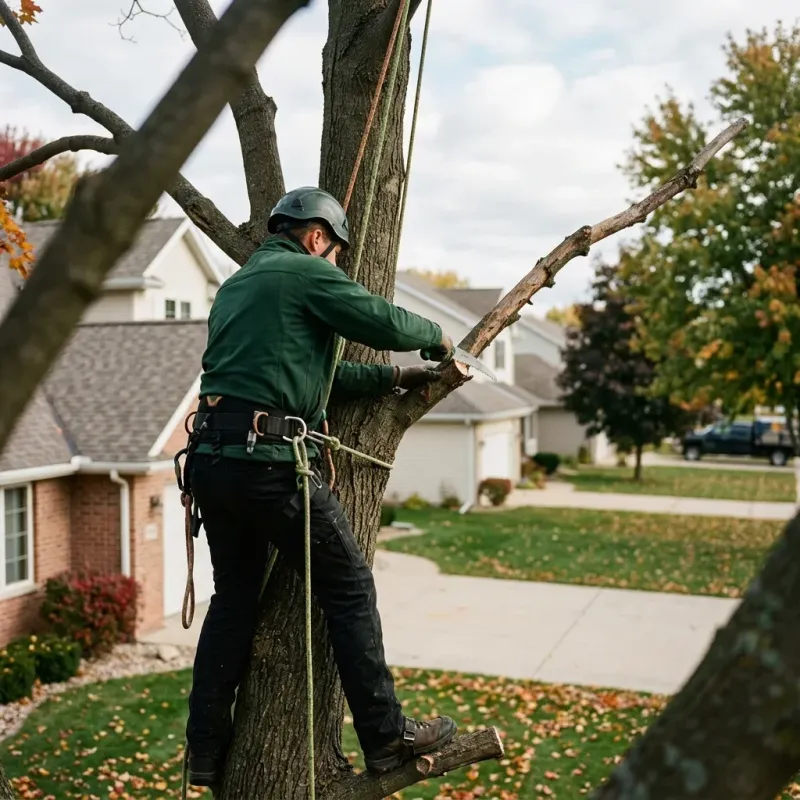
Some jobs are not for homeowners, whatever the property line says. Wisconsin Public Service says only its certified line-clearance arborists should work within 10 feet of power lines.
If a branch is near a line, call the utility that serves your address.
Do not apply ordinary pruning advice near wires. Contact with a line can be deadly, even with a wooden or fiberglass ladder.
Oak trees bring a disease concern. The Wisconsin DNR identifies April through July as the greatest residential risk period for oak wilt spreading.
If you cut an oak during that window, it advises sealing the wound right away.
The DNR also says to check for local oak-wilt ordinances. Some municipalities have their own rules, so a quick call to city hall is worthwhile before you cut.
These are safety and disease cautions. They do not change the basic property-line rule, but they can change when and how you do the work, or whether you do it at all.
Check the boundary and risks before you cut
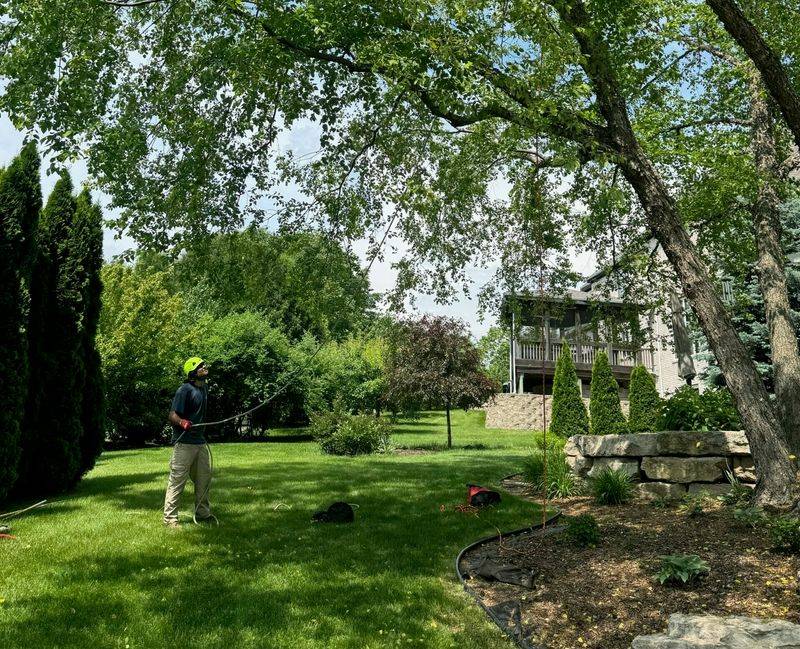
Start with the actual property line, then ask whether the tree is a boundary tree, a vine problem, or roadside vegetation. Budget to pay for the work yourself, as the self-help rule describes.
Chat with your neighbor, as Racine suggests. Call an arborist or the utility if the job could hurt the tree or you.
The general rule is narrow: trim only what hangs over your side. A little patience beats a big dispute.
Share this story