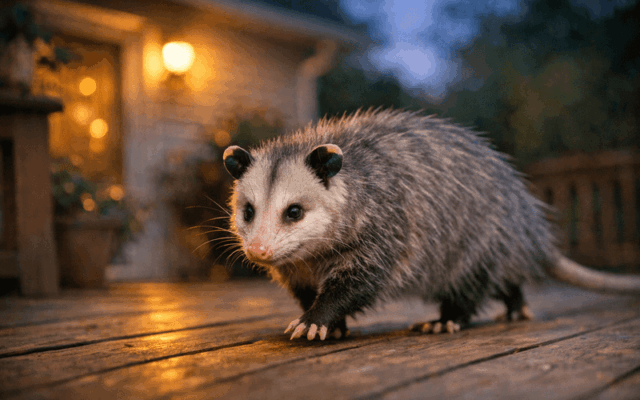
A shape shuffles across your porch under the cold porch light, and it has a long pink tail. Virginia opossums stay active in winter, so a late-night sighting is possible in Kentucky.
Knowing when to leave one alone and when to act can protect your home, your pets, and your horses. Here is how to tell the difference.
A winter sighting does not mean opossums visit every porch each year
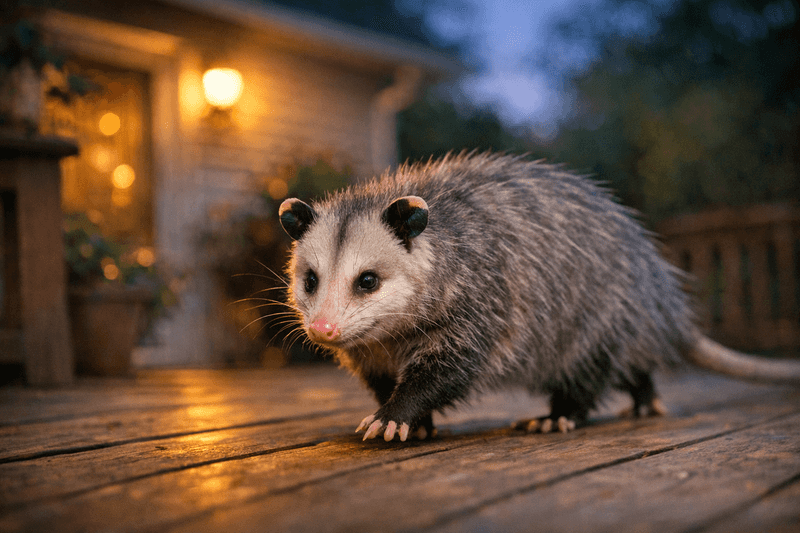
Seeing an opossum near your house on a cold night is possible, but it is not a yearly event for every home. Plenty of Kentucky households never see one, and nobody can say that winter itself pulls opossums onto porches.
Here is what we do know. Virginia opossums are native to Kentucky, and University of Kentucky Extension notes that they do not hibernate.
Their metabolism slows down in cold weather, but they can still wander out to look for food. That explains why one might turn up in January.
It does not explain why one picked your porch.
Opossums are nocturnal scavengers, so most sightings happen after dark. Food and shelter near homes can draw them in, according to the University of California IPM Program.
Spilled pet food, open garbage, and a dry gap under a deck all fit that description. A visit may have more to do with what your yard offers than with the thermometer.
Before you decide what to do, notice what the animal is doing. An opossum ambling across the lawn and leaving is just passing through.
One that slips under the porch, returns night after night, or heads for a barn feed room is using your property in a way that deserves a plan. The next sections cover each case.
A varied diet does not make an opossum dependable pest control
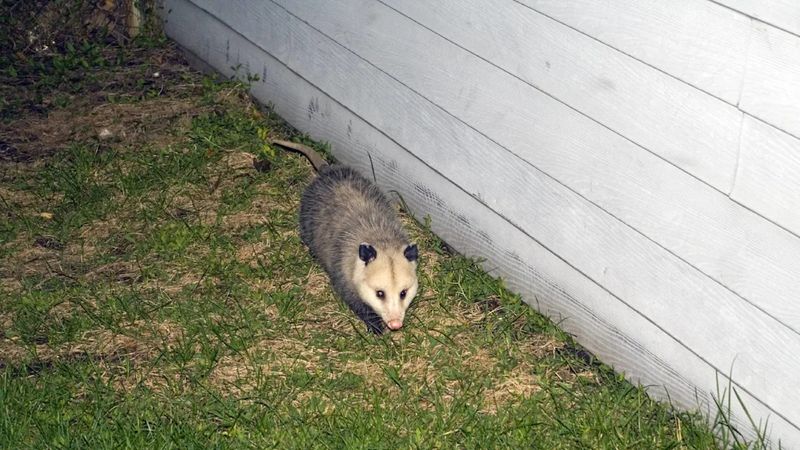
Opossums eat almost anything they find. They are nocturnal, opportunistic omnivores, and their menu includes insects, small mammals, fruit, plants, and carrion.
The UC IPM Program also notes they will take garbage and pet food when it is available.
That variety means an opossum may eat a beetle or a cricket now and then. It does not mean one will keep your yard free of pests.
Nothing in the research shows reliable pest control around homes.
Then there is the famous tick claim. A 2009 controlled study found that 83 to 96 percent of larval blacklegged ticks placed on several host animals, opossums included, did not feed successfully.
The authors guessed that many had been eaten during grooming. But that was an experiment with captive animals and one tick species, so it does not show fewer ticks around real homes.
A later look at real animals pointed the other way. A 2021 study checked the stomach contents of 32 wild opossums in central Illinois and found no ticks or tick parts.
The researchers also reviewed 23 diet studies, and none reported ticks. That sample came from one region, so it cannot prove an opossum would never swallow a tick.
Still, it casts real doubt on the claim that one animal eats thousands.
The University of Illinois Extension has also revisited the question. The practical takeaway is simple: do not welcome opossums into your yard in hopes of fewer ticks.
Use proven tick precautions instead.
Give a passing outdoor opossum space
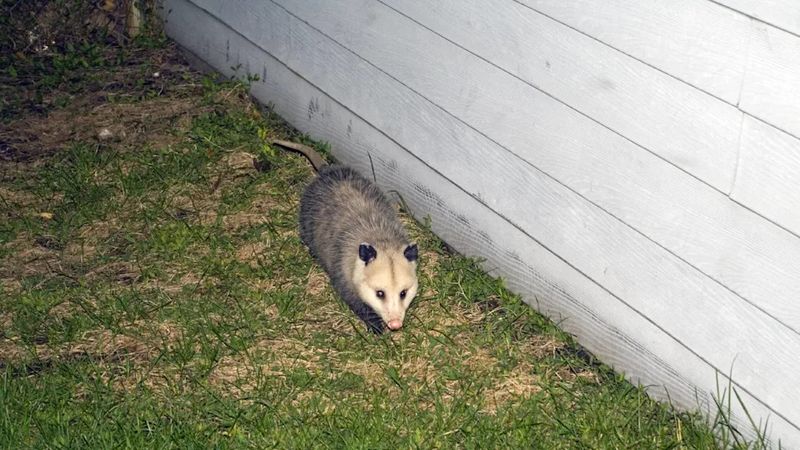
When an opossum is simply crossing your yard, the kindest and safest choice is usually to step back and let it go. It does not need to be chased, cornered, or picked up.
Most will keep moving on their own.
Skip the food and keep your distance. CDC guidance advises against feeding wildlife and says to keep pets from interacting with it.
Bring dogs and cats inside, and call children away from the animal.
If you do touch something an opossum has been near, such as its droppings, wash your hands well afterward. If one bites or scratches someone, wash the wound and talk to a medical professional, including about rabies risk.
CDC has specific steps for bites and scratches.
Opossums are often called rabies-proof, but that is not quite right. They appear resistant, and rabies seems uncommon in them.
Even so, a CDC journal report documented a naturally infected opossum in Brazil and noted that reports in North America are scarce.
Opossums also open their mouths and hiss when frightened, which looks alarming. You cannot judge an animal’s health from how it looks or acts, so the plan stays the same: give it room and let it leave.
Remove food and other attractants from the yard
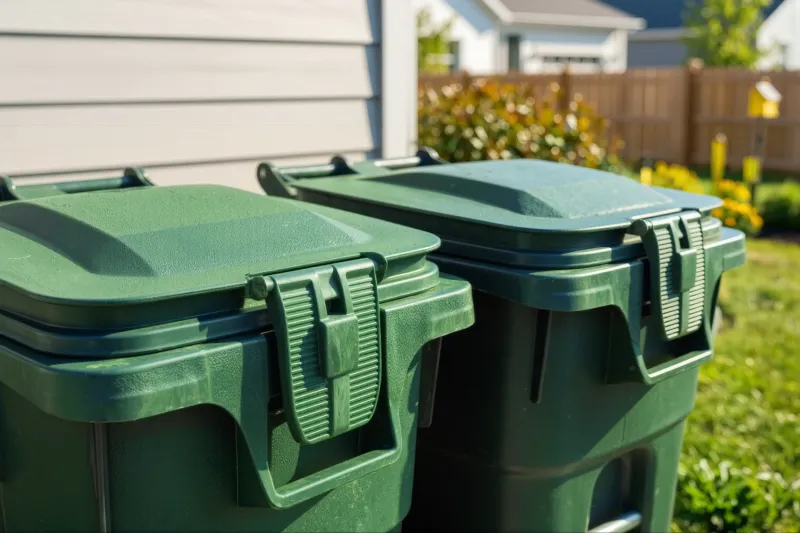
Most unwanted wildlife visits start with an easy meal. Take the meal away and your yard becomes less interesting.
A few small habits do most of the work.
Feed dogs and cats indoors, or pick up bowls before dark. Opossums readily eat pet food left outside, as Washington Department of Fish and Wildlife points out.
Use garbage cans with tight lids, and set them out the morning of pickup rather than the night before.
Clean up food waste too. Fallen fruit, spilled birdseed, and compost scraps all work as an invitation.
Remove carcasses promptly, since opossums scavenge them.
Never leave food out to keep an opossum around. CDC recommends not feeding wildlife, and a fed animal may linger, return, or start looking for a den close by.
Be realistic about results. A clean yard lowers the odds of a visit, but it cannot promise that no wild animal will ever cross your property.
If one does pass through, the earlier advice still applies: give it space and let it move on.
Check for animals before closing an opening under a porch
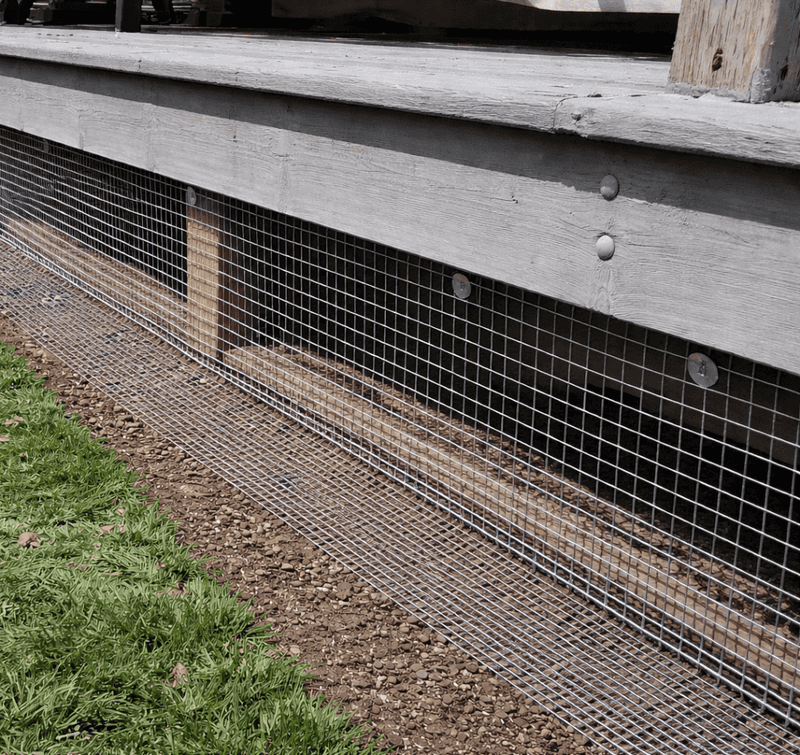
An opossum that has moved under your porch or deck is a different situation from one passing through. A den under a structure can mean smells, damage, and repeat visits.
Still, closing the hole in a hurry can trap an animal inside, and that is the one mistake to avoid.
Start by confirming the space is empty. The Wisconsin Humane Society suggests checking for signs of activity before you block anything.
Look for fresh tracks, droppings, or disturbed dirt at the opening, and watch over several evenings.
Winter makes this trickier. Animals can stay inactive in cold weather, so a quiet night or two does not prove the space is vacant.
An opossum may simply be resting inside.
Young are the biggest concern. A one-way door lets an animal leave but not return, and it must not be used unless you are sure there are no babies inside.
Otherwise the young can be left behind without their mother.
Once you are certain the animal is gone, close the opening with a durable barrier such as hardware cloth, buried or anchored securely at the base. If you cannot tell whether anyone is home, call a qualified humane wildlife professional rather than guessing.
Protect horse feed and forage from opossum access
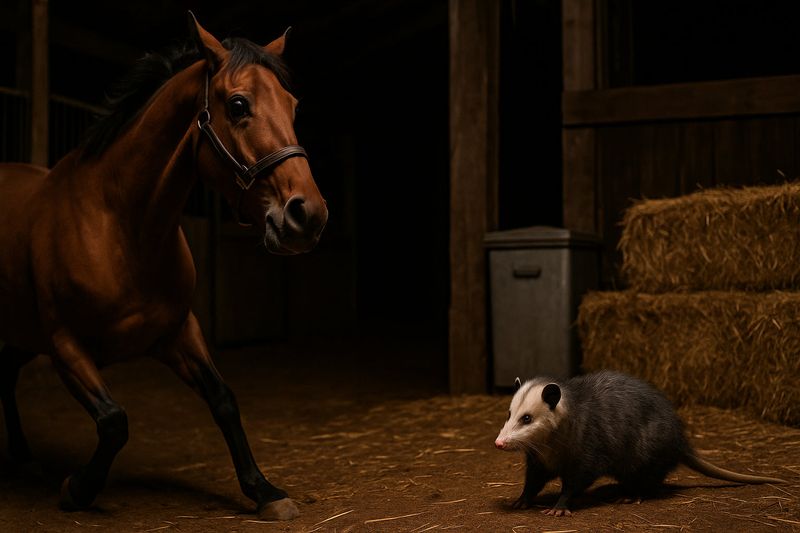
Horse owners have one more reason to keep opossums out of certain places. University of Kentucky Extension warns that opossum feces can contaminate feed or forage with the parasite that causes equine protozoal myeloencephalitis, or EPM, a serious neurologic disease in horses.
That makes feed storage the priority. Keep grain in closed containers, and keep hay and feed rooms shut so nothing can wander in at night.
Check for gaps, and sweep up spilled feed rather than leaving it on the floor.
Extension also recommends discouraging opossums around horse facilities. Remove trash and carcasses, since both can draw scavengers.
Here the earlier advice changes: a passing animal in the pasture is one thing, but an opossum with access to feed or forage is a risk worth acting on.
If an opossum is damaging property or you are unsure what you are allowed to do, ask first. Kentucky Fish and Wildlife lists licensed fur trappers and wildlife-control operators who can help.
Do not assume that trapping or relocating an animal is legal. Wildlife rules are state-specific, so check with the agency or a licensed professional before you act.
Choose a response based on where the opossum is
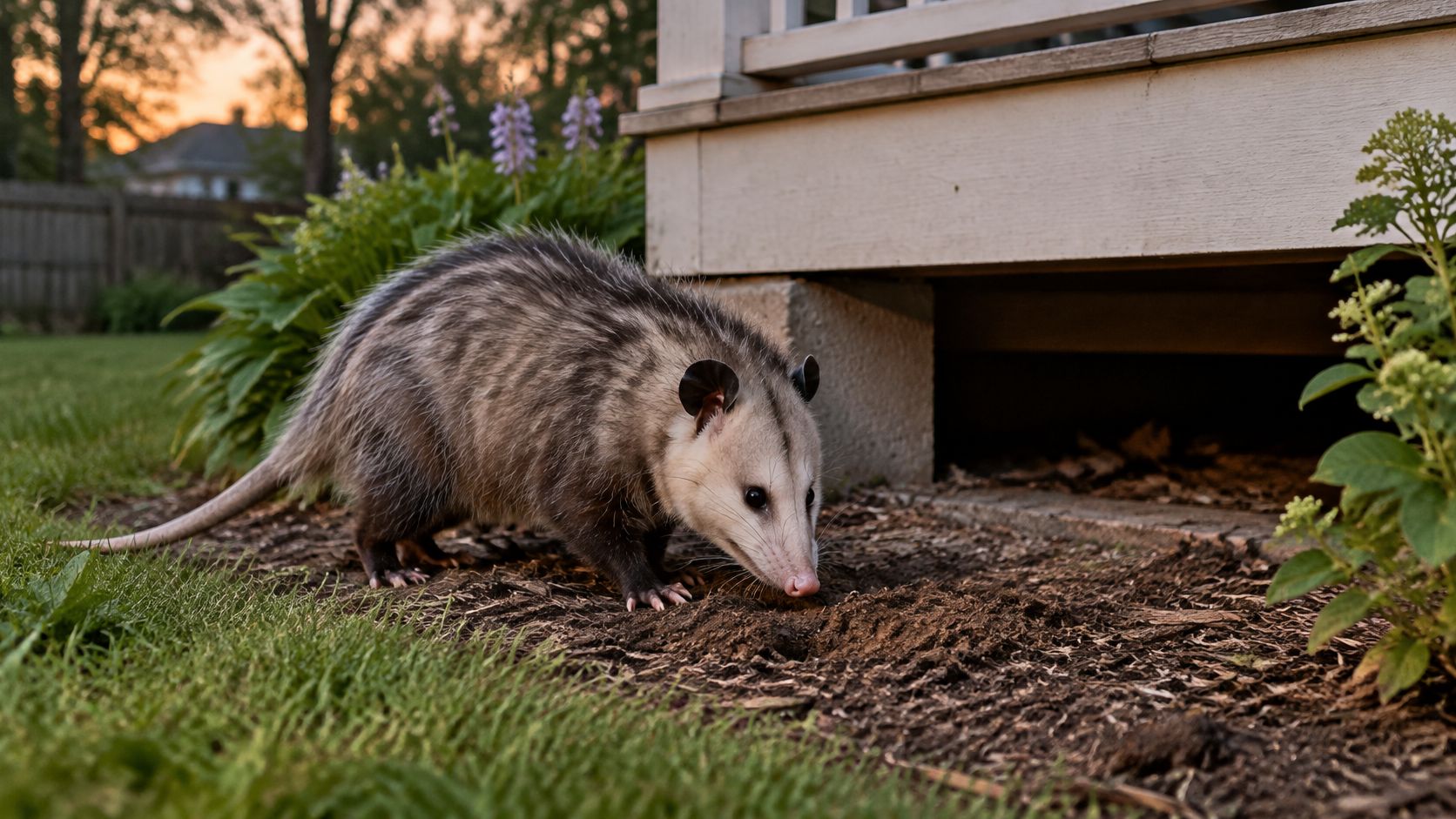
Location is the whole decision. An opossum crossing the yard can be left alone, with no feeding and no handling.
One under the porch or near horse feed needs a plan.
Start with attractants, as CDC guidance suggests. Before closing any opening, confirm it is empty, following the Wisconsin Humane Society advice.
Around horses, protect feed as Extension recommends, and call a professional when unsure.
An opossum is a neighbor on a night shift, and it only needs a clear path out of your way.
Share this story