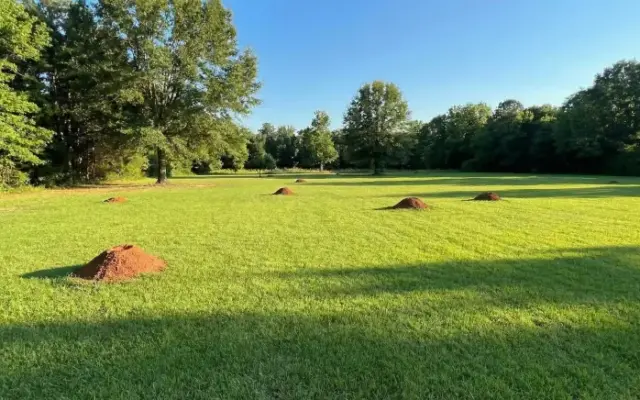
After a heavy rain, fire ant mounds can seem to pop up overnight, and what you are seeing is often ants rebuilding or moving brood closer to the surface. The mounds are only part of the nest, because most of it lies in tunnels below the ground.
Knowing what rain does to a colony can help you decide whether you need to do anything at all. A little patience and a good look at the ants can save you time, money, and a few painful stings.
What rain changes in a fire-ant nest
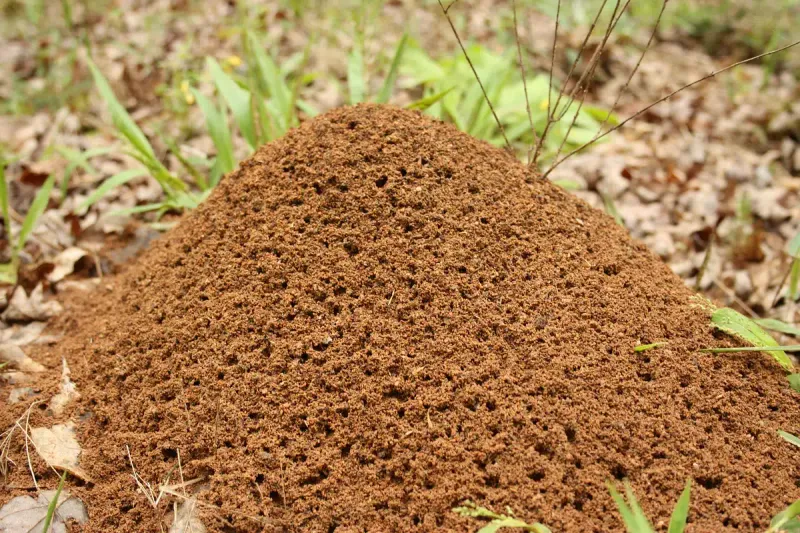
Rain can make mounds much easier to spot without proving that the ants have multiplied. Mississippi State Extension notes that mounds can appear almost overnight after heavy or prolonged rain.
Wet soil is easy for workers to move, and a fresh mound of loose soil stands out against green grass.
Two things may be going on. Colonies that were already there but hard to notice may become obvious as workers bring soil and brood upward.
Rain can also flatten or damage a mound, and workers then rebuild it with the added moisture, as University of Tennessee Extension has pointed out.
Either way, the change is mostly about what you can see. Texas A&M AgriLife Extension cautions that rain can make ants more noticeable without making them more abundant.
That means a yard full of mounds after a storm is not a reliable count of colonies. Some may have been quietly present for weeks, and some may be the same mounds you walked past before, now rebuilt or enlarged.
Treat the sighting as a sign of activity, not as proof of a brand-new infestation.
A practical first step is simply to note where the mounds are and look again in a few days. If the same spots stay busy, you have useful information for deciding what comes next.
How workers respond below ground
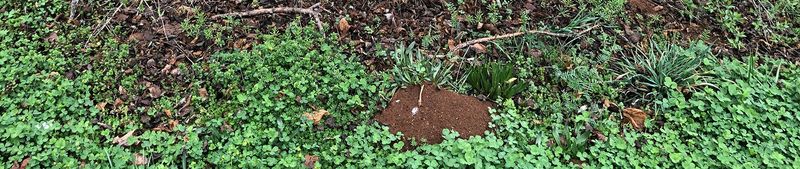
Picture an iceberg made of soil. The mound is the part above ground, but the nest also includes underground galleries where workers tend eggs, larvae, and pupae, known together as brood.
Workers move brood to spots that suit it. According to Mississippi State Extension, brood may sit in the above-ground nest during cool, wet periods and deeper underground in hot, dry ones.
Mound height and visibility shift with weather and temperature for the same reason.
Heavy or prolonged rain can flood the brood-rearing galleries. Workers may then carry brood upward or rebuild near the surface, which is part of why mounds can look taller or fresher, as described in this Extension newsletter.
Not every colony will react the same way. Soil type, slope, how wet the ground gets, and the size of the colony all play a part, so one yard can show very different results from one patch to the next.
Because the tunnels run beneath the mound, ants do not simply march in and out of a hole at the top. Their traffic runs along hidden passages, and the rain-soaked soil that workers pile up is just the visible result of their repair work.
Swarms and flooding are different responses
Rain can set off a few separate ant behaviors, and they are easy to mix up. Reproductive swarming is when winged ants take flight to start new colonies.
Mississippi State Extension says swarms are especially common one to two days after rain that follows a dry spell.
That is a different event from workers hauling brood upward or patching a damaged mound. Swarm timing also does not tell you that a mound in front of you is new.
A mound that looks fresh could be an old colony repairing itself.
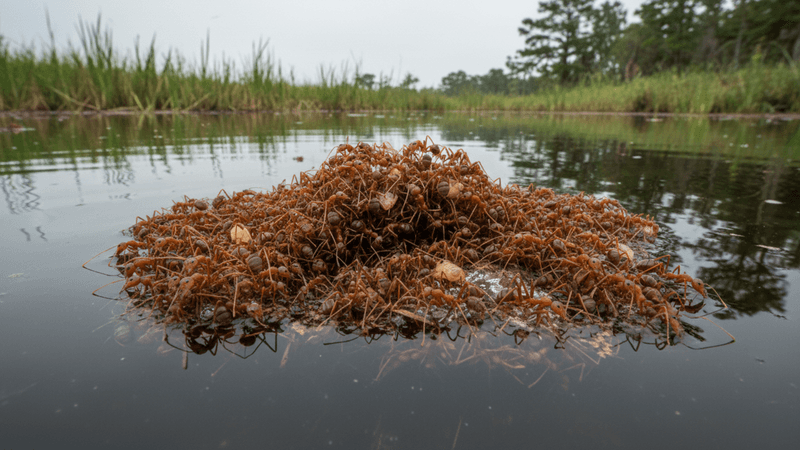
Rafting is another separate behavior. When floodwater covers a colony, the ants can link their bodies into a floating mass that carries the queen and brood until they reach dry ground, as Mississippi State Extension describes in its fire ant facts.
Rafting is a way to survive real flooding. It is not a sign that ordinary rain created a newly visible mound in your yard.
If you see a floating clump of ants after a serious flood, keep your distance and let it be, since the ants will sting if touched.
Check the ant before treating
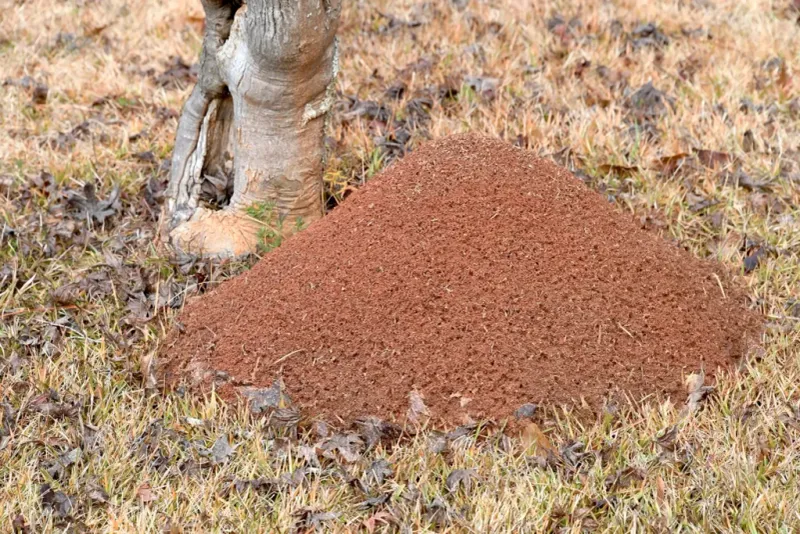
Before buying any product, make sure you know what you are dealing with. According to Fire Ants in Tennessee, imported fire ant mounds in undisturbed sites are often dome-shaped and lack a central opening.
Ants come and go through tunnels under the ground instead.
Still, shape alone cannot confirm the species. Look-alike ants build mounds too, and some of them are native ants that do little harm.
Not every mound you see after rain belongs to an imported fire ant.
Clues can help, but they are not proof. Notice whether the ants swarm out quickly when the mound is disturbed and whether they sting.
Please do this from a safe distance, and avoid poking or stepping on the mound to test it.
If you are unsure, call your county Extension office before choosing a treatment. Staff can help with identification and tell you what makes sense for your type of site.
A correct answer can keep you from spending money on a product that is not needed or is aimed at the wrong ant.
Apply bait under the right conditions
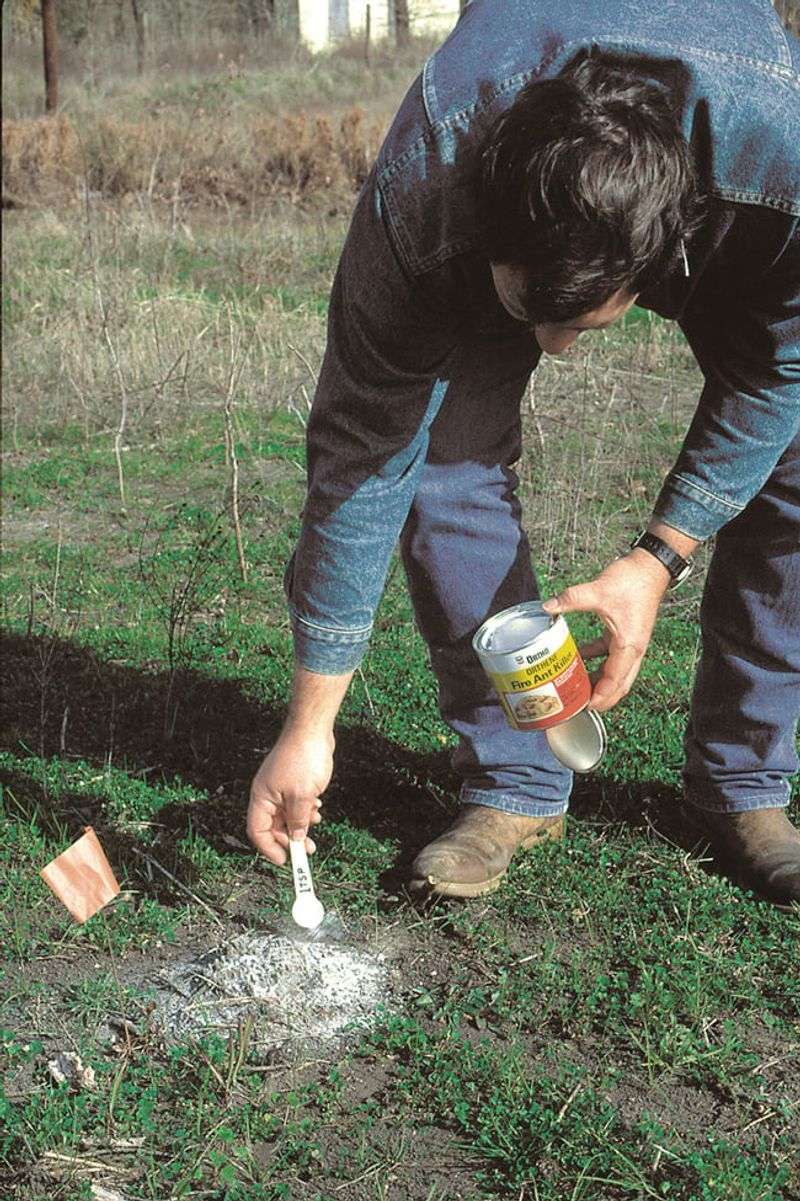
Once you have confirmed fire ants and decided treatment is warranted, timing matters. Tennessee Extension advises using fresh bait when ants are actively foraging and applying it to dry ground and grass.
Old bait loses its appeal, and wet bait does not work well.
A small test can save effort. Place a little bait near a mound and watch whether ants pick it up and carry it off.
If they ignore it, try again another time instead of spreading the whole product.
Avoid applying bait when rain is expected. Labels can be more specific than general advice, and each product has its own rules.
The cited Amdro label says not to apply if rain is likely within 24 hours.
That 24-hour window is a rule for that product only, not a universal interval for every bait. Another product may say something different, so read the label on whatever you buy.
Follow the label on where the product can be used, how much to apply, and what precautions to take. The label is the legal instruction, and it should guide the decision more than a rule of thumb from a neighbor.
Choose a measured response and protect people

Whether to act depends on how many ants are present and whether they cause a problem. Tennessee Extension notes that control often takes repeated treatments, and that no treatment may be right when ants are absent, few, or not bothering anyone.
A mound in a far corner of the yard is a different case from one beside a play area.
Do not disturb or stand on a mound. The EPA label for the Amdro product specifically says not to disturb the mound when using its individual-mound treatment.
Skip the do-it-yourself chemicals. Texas A&M Extension warns that gasoline, diesel, chlorine, and ammonia can be dangerous, may contaminate soil or groundwater, and can push colonies to relocate instead of controlling them.
Boiling water is not a safe shortcut either. The same guide reports it eliminates colonies only about 60 percent of the time, can kill plants it touches, and can scald people.
Stings need attention too. Fire ant stings can cause a severe allergic reaction, so MedlinePlus advises getting immediate emergency medical help for trouble breathing or throat swelling after a sting.
Call for help right away if either happens.
A mound is easy to see after rain, but the smart move is usually to look closely before reaching for anything.
Share this story