If you found a yellowjacket nest near your Tennessee home, the best move is to keep away from it and decide whether anyone has to pass close by. A nest that stays out of the way can often be left alone.
A nest by a door, a path, or a play area, or one hidden where you cannot reach it, calls for a professional. Here is how to tell the difference and stay safe.
A nest near the house is not automatically a reason to spray
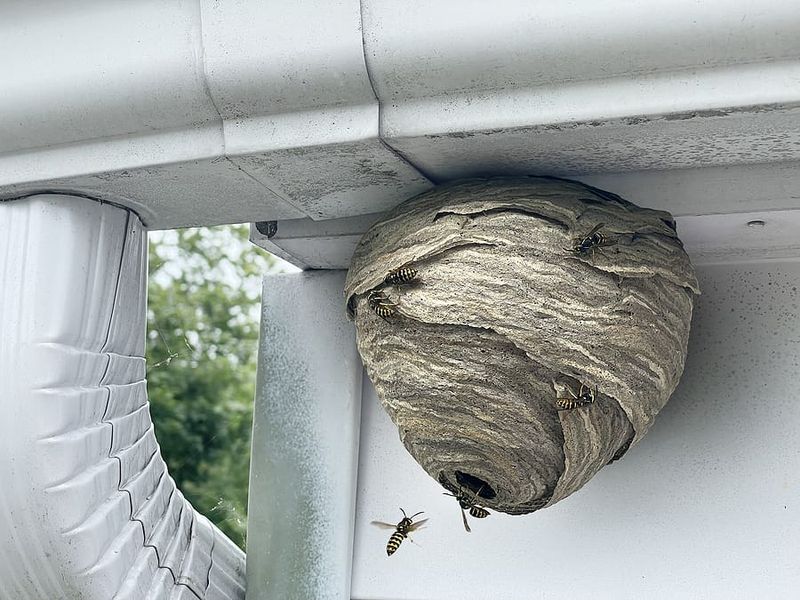
Start with one question: could a person or pet bump into this nest during a normal day? Distance from the house matters less than whether anyone walks, mows, or plays close to it.
A nest at the back edge of a lot that nobody visits is a very different situation from one beside the garage.
According to University of Tennessee Extension, avoidance is often the best approach. If you can reliably steer people and pets clear, leaving the nest undisturbed is a sensible choice.
Tennessee yellowjacket colonies are annual. The workers, males, and old queen die, and newly mated queens overwinter elsewhere.
Abandoned nests are not reused. Even so, a cool snap does not prove that a particular nest is empty or safe, so keep your distance until you are sure no one needs to go near it.
Other regional guidance, such as Virginia Tech Extension, also puts the focus on nests that pose a direct risk. The goal is a calm decision, not a rush to spray.
Where yellowjackets may nest
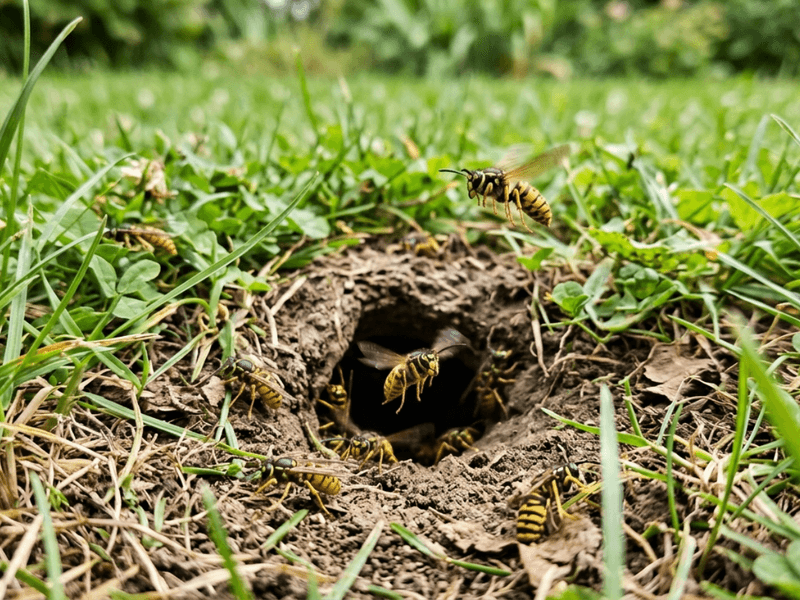
Many people never see the nest at all. In Tennessee, most yellow-and-black yellowjackets in the genus Vespula usually nest underground, according to UT Extension.
A small hole in the lawn with wasps flying in and out is a common clue.
They also use spots beneath rocks or landscape timbers, and cavities in walls, attics, crawlspaces, or behind siding. Virginia Tech Extension describes similar hidden sites.
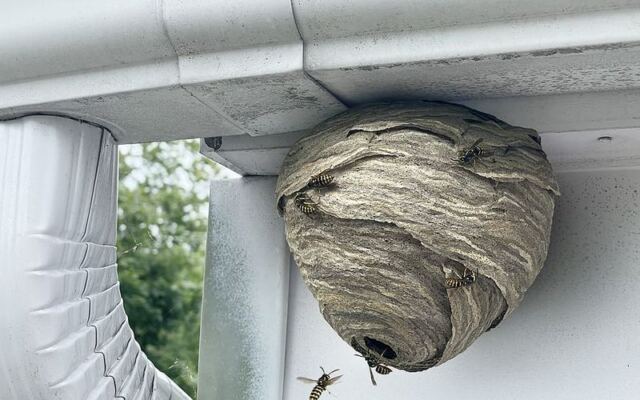
Some related yellowjackets build aerial nests that hang in the open. A striped wasp or a visible paper nest is not always a yellowjacket nest, so looks alone may not confirm what you have.
Do not dig, pull back siding, open a wall, or poke at a hole to investigate. Watch from a safe distance, note where the wasps travel, and let a professional identify the pest if you need an answer.
Is the nest somewhere people cannot avoid?
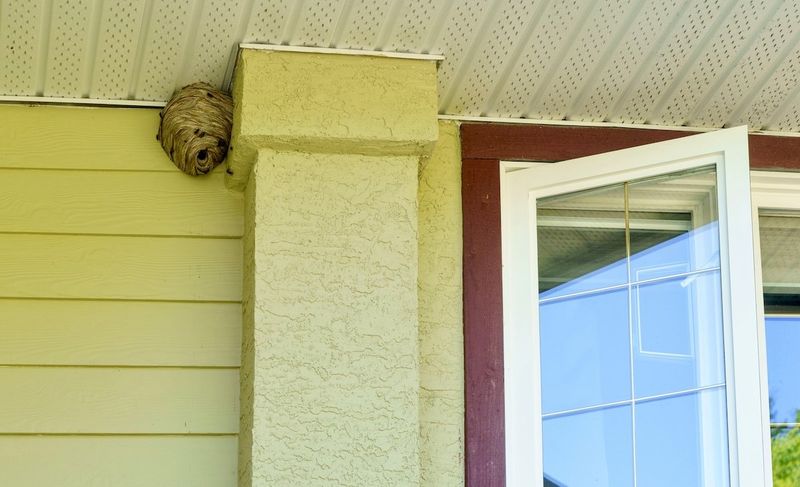
Picture your family’s usual routes. A nest far from them can be avoided.
One beside a doorway, walkway, play area, or the spot where you carry the trash is hard to avoid, because ordinary activity could set off the colony’s defense.
You can judge this from a distance. Notice where wasps fly in and out, and whether that spot is near steps, a gate, a swing set, or a lawn you mow.
Never walk close to check.
A concealed or hard-to-reach nest also deserves caution. UT Extension recommends professional help when a nest is difficult to access.
If the nest creates a safety conflict, keep people and pets away from the area and call a pest-management professional. Virginia Tech Extension notes that nest defense can lead to multiple stings.
A simple barrier or a closed door for a day or two can help until help arrives.
Food cleanup reduces visitors, not the nest

Yellowjackets away from their nest are usually less defensive, but they can become a nuisance at cookouts, especially later in summer. Cutting down what draws them can make your yard more pleasant.
Cover food and drinks, and wipe up spills and leftovers quickly. Use trash cans with tight-fitting lids, and pick up fallen fruit from the yard.
These steps follow UT Extension advice.
Keep in mind that cleanup only reduces foraging. It does not remove a nest, so a colony beside your back door will still be there.
Standard mosquito repellents also do not deter yellowjacket foraging, so do not count on them for protection.
Traps may catch some wasps, but UT Extension describes their benefit as marginal. If used, they belong at the perimeter of the area you want to protect, and they are no substitute for dealing with a nest that creates a direct safety conflict.
DIY nest treatment can provoke a defensive attack
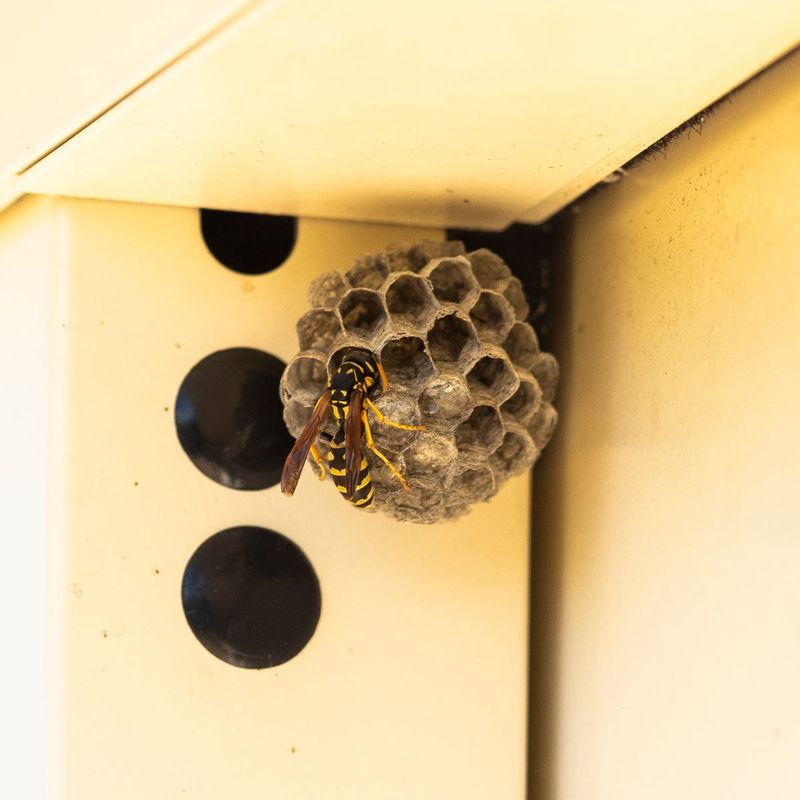
Disturb a nest and the workers may defend it as a group. That is how one mistake becomes many stings.
UT Extension warns that nests are highly defensive.
Do not probe a nest, mow over it, dig it out, or spray around it. Do not plug an entrance in a wall either, since wasps may chew another exit into your home, as Virginia Tech Extension cautions.
Gasoline, fire, smoke, bleach, and a garden hose are all poor ideas. They are dangerous, can lead to multiple stings, and are not recommended as removal methods.
For a difficult, concealed, or high-risk nest, the safer path is a trained professional. Extension guides contain treatment details, but they are not a casual recipe, and this article does not offer one.
Choose a Tennessee pest professional with the right credentials
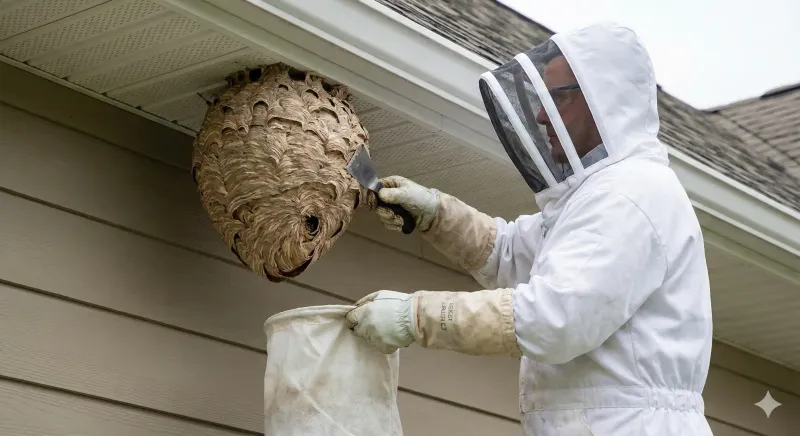
Professional help is the safer course when the nest is near a busy spot, hidden in a wall or underground, or when you are unsure what kind of wasp it is. A trained technician can identify the pest and treat the nest itself, which is preferred over spraying the whole yard.
In Tennessee, a business offering custom pesticide applications must hold a pest-control charter. You can check a company’s status through the Tennessee Department of Agriculture before you hire anyone.
Ask what they will treat and when. UT Extension guidance times treatment for when wasps are less active and in the nest.
Any pesticide should be used only if its label allows the specific pest and site, and it must be used as directed. The EPA says labels are legally enforceable, so improvising is not an option.
After a sting, recognize emergency symptoms
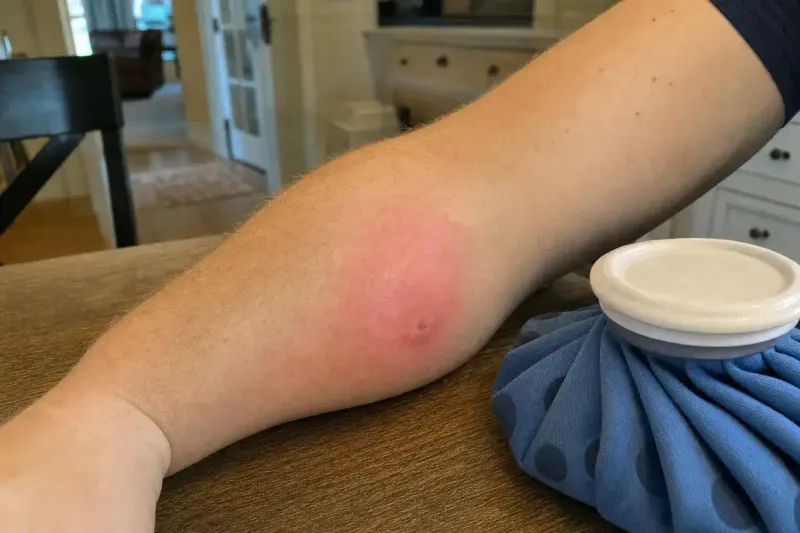
Most stings cause pain, redness, and mild swelling at the spot. Those are routine, though they are still unpleasant.
Emergencies look different.
Seek emergency care for trouble breathing or swallowing, dizziness, or swelling away from the sting site. A sting inside the mouth or throat also needs urgent medical attention, because swelling there can affect breathing.
The American College of Allergy, Asthma and Immunology advises people with prescribed epinephrine to use it at the first signs of anaphylaxis and then call 911.
Nest defense can bring several stings at once, so move away quickly and help others do the same. Get everyone indoors, and watch anyone who was stung for these warning signs.
Use exposure, not proximity, to decide what to do
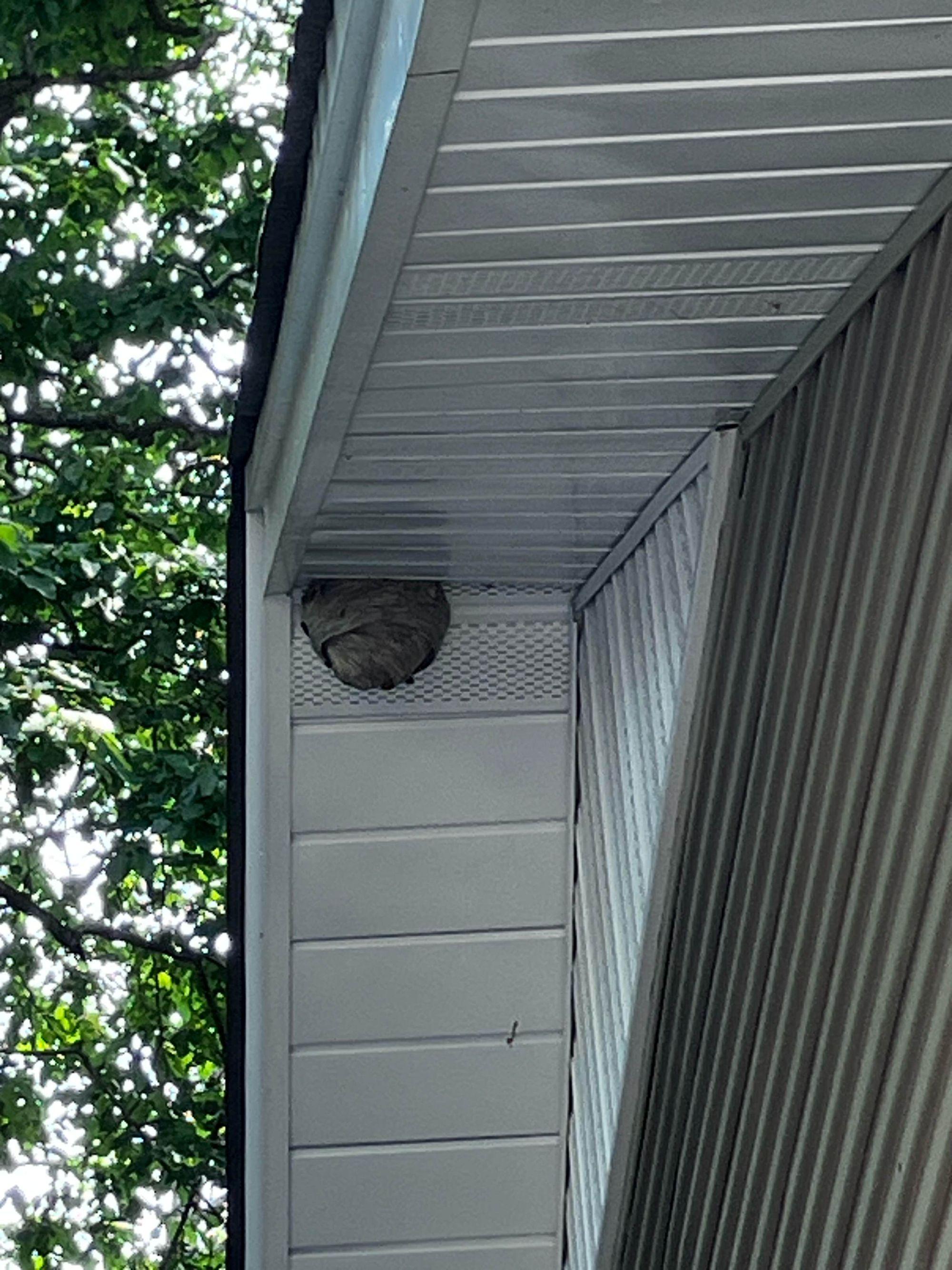
Leave an avoidable nest undisturbed. If it sits in a high-use or hard-to-reach spot, keep people and pets away and call a qualified professional.
As UT Extension guidance suggests, where people walk matters more than how close the nest is. A nest only becomes a problem when your routine runs into it.
Share this story