Get the latest garden guides in your inbox →
Gardening Latest
  • General Gardening
  • Lawn Care
  • Plant Care
  • Composting
  • Soil Health
  • Backyard
  • Garden Muse Magazine
  • General Gardening
  • Lawn Care
  • Plant Care
  • Composting
  • Soil Health
  • Backyard
  • Garden Muse Magazine
  • News
  • Gardening Calendar
  • Garden Structures
  • Vegetable Garden
  • Vertical Garden
  • Raised Beds
  • Hydroponics
  • General Equipment
  • Community Gardens
Garden Themes
  • Spiritual Garden
  • Hydroseeding
  • Seeding and Laying Sod
  • Artificial Grass
  • Lawn Care Equipment
  • Plants
  • Trees
  • Planting Tools
  • Composting Basics
  • Fertilizer
  • Alternative Growing Mediums
  • Front Yard
  • Backyard Activities
  • Landscaping
Gardening Latest

Explore by state

Which state is your garden in?

Currently viewing Arizona

All states

Northeast

  • Connecticut —
  • Delaware 33
  • Maine —
  • Maryland 19
  • Massachusetts 35
  • New Hampshire —
  • New Jersey 19
  • New York 28
  • Pennsylvania 28
  • Rhode Island —
  • Vermont —

Southeast

  • Alabama 19
  • Arkansas —
  • Florida 19
  • Georgia 19
  • Kentucky 33
  • Louisiana 18
  • Mississippi —
  • North Carolina 17
  • South Carolina 32
  • Tennessee 16
  • Virginia 18
  • West Virginia —

Midwest

  • Illinois 18
  • Indiana 20
  • Iowa 32
  • Kansas —
  • Michigan 19
  • Minnesota 18
  • Missouri 18
  • Nebraska —
  • North Dakota —
  • Ohio 19
  • South Dakota —
  • Wisconsin 34

Southwest

  • Arizona 19
  • Colorado —
  • Nevada —
  • New Mexico —
  • Oklahoma —
  • Texas 18
  • Utah —

West

  • Alaska —
  • California 19
  • Hawaii —
  • Idaho —
  • Montana —
  • Oregon —
  • Washington —
  • Wyoming —

No state matches that search.

Site menu

Gardening Latest
  • General Gardening
    • News
    • Gardening Calendar
    • Garden Structures
    • Vegetable Garden
    • Vertical Garden
    • Raised Beds
    • Hydroponics
    • General Equipment
    • Community Gardens
    Garden Themes
    • Spiritual Garden
  • Lawn Care
    • Hydroseeding
    • Seeding and Laying Sod
    • Artificial Grass
    • Lawn Care Equipment
  • Plant Care
    • Plants
    • Trees
    • Planting Tools
  • Composting
    • Composting Basics
  • Soil Health
    • Fertilizer
    • Alternative Growing Mediums
  • Backyard
    • Front Yard
    • Backyard Activities
    • Landscaping
  • Garden Muse Magazine

Explore

  • About GardeningLatest.com
  • Contact Us

Get the latest from the garden

New guides on lawn care, plants and backyard projects, sent when they go up.

Subscribe →

Follow

  • Facebook
  • X
  • Pinterest
  • YouTube
Arizona Gardening

What Your Neighborhood Black Widow Is Doing Inside Garage Corners as Arizona Nights Cool

A black widow in a garage corner usually spends the day tucked out of sight and waits in her tangled web…

EM

By Elena Marquez

November 25, 2026 · 6 min read

What Your Neighborhood Black Widow Is Doing Inside Garage Corners as Arizona Nights Cool

A black widow in a garage corner usually spends the day tucked out of sight and waits in her tangled web for prey after dark. That messy web is a clue worth noticing, but it is not the whole story.

Other spiders build similar webs, and some webs are empty. Here is how to read the clues, get a safer look, and keep your garage in good shape.

At a glance

Where
Arizona Gardening
Hardiness zone
9 20 to 30°F
Read
6 minutes
Published
November 25, 2026

A messy web is a clue, not a verdict

A messy web is a clue, not a verdict
© Brandley Pest Control

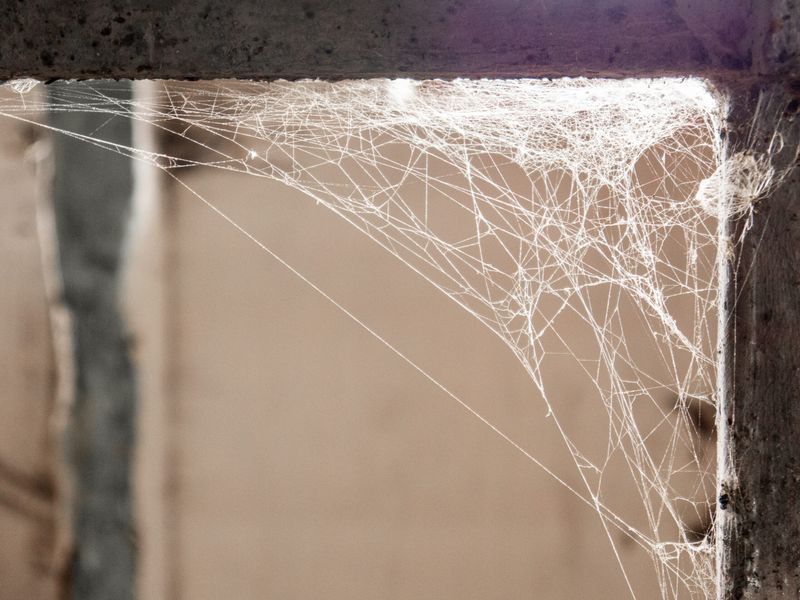
A black widow’s web often looks irregular and tangled, more like a messy snarl than a neat wheel. University of Arizona Extension guidance describes widow webs this way, and the spider may hide in a retreat connected to the web.

At night she comes out to wait for prey.

Still, a tangled web is only a clue. Other cobweb-weaving spiders, including common house spiders and false widows, build webs that look very similar.

A web in your garage tells you that some spider lives or lived there, but not which one.

Webs can also be old. UC IPM notes that a dusty web indoors is likely no longer in use.

That fact says nothing about which spider made it, so an abandoned web proves very little.

Think of the web as a reason to look more carefully, not a reason to worry. A messy web does not mean danger, and it does not confirm a widow.

For more background on how these spiders behave, UC IPM’s widow spider page is a handy reference.

With that in mind, the next question is why a garage might attract a spider in the first place. The answer has to do with the kind of shelter these spiders like.

Why a garage corner can suit a widow
Why a garage corner can suit a widow
© Creative Solutions Pest Defense

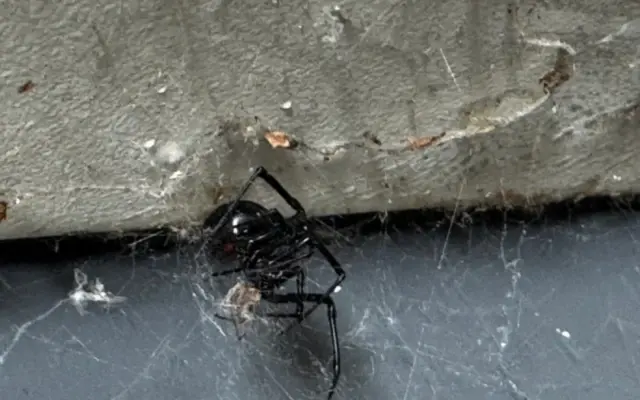
Garages offer what widows tend to look for: dark, sheltered spots that people rarely disturb. A quiet gap behind boxes or along a wall is plausible habitat.

That is different from proof that a widow recently moved in, since many garage corners are simply cobwebby and empty.

Do not stick a hand into a web or a dark gap, and do not move seldom-touched items bare-handed.

Arizona guidance describes medically significant spiders, including black widows, as active year-round. That does not mean cooler nights push widows into garages or into one particular corner.

Nothing in that guidance says so.

The year-round finding is also statewide advice. Arizona has desert lowlands, mountain towns, and everything between, so activity can differ by place and temperature.

A widow in Yuma and one in Flagstaff may not behave the same way on the same night.

The University of Arizona’s School and Home IPM newsletter points readers toward routine checks of places where spiders can hide. Widows can also persist outdoors under debris, so a garage is just one of several possible spots, and UC IPM’s widow page lists others.

So a dark corner is a place worth watching, not a place to panic about. The best next step is to look from a distance and see what is actually living there.

What can a safe photo tell you?
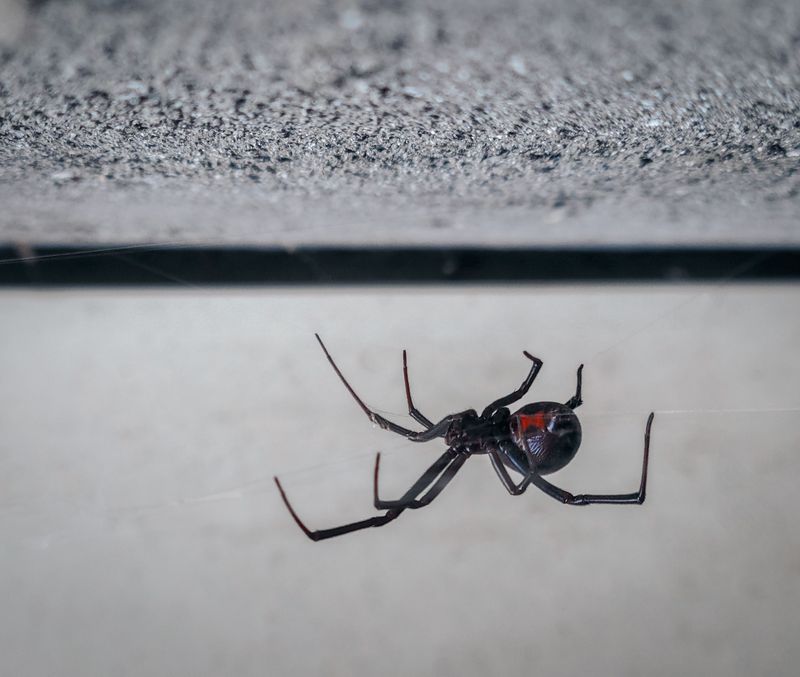
What can a safe photo tell you?
© Interstate Pest Management

A zoomed photo taken from a safe distance is one of the best tools you have. You do not need to touch the spider, poke the web, or lean in close.

Use your phone’s zoom, stay back, and aim for the body and, if you can see it, the underside.

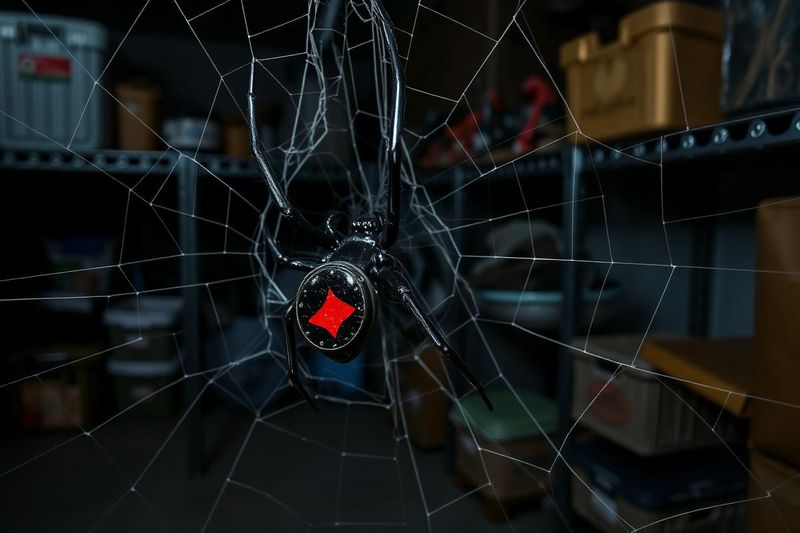
An adult female western black widow is typically shiny black with a red or orange hourglass-like marking on the underside of her abdomen. Arizona Extension describes this feature.

The marking can vary in shape and color, so it is a useful clue rather than a perfect test.

Males and juveniles can look quite different. Colorado State Extension notes that they may have lighter bodies or colorful markings.

A young spider without a bold red mark could still be a widow.

That is why a poor view proves little. A picture of the spider’s back, a blurry shot, or a photo where the underside is hidden cannot rule a widow out.

Try again from a different angle only if you can do it without getting close.

A clear photo of the spider beats a web-only guess every time. If you cannot get a good look, treat the spider as unidentified and keep your distance.

Check the corner without reaching into it
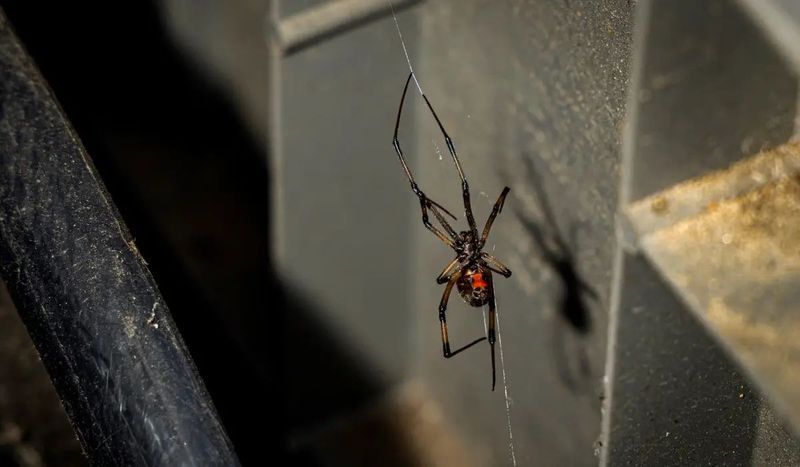
Check the corner without reaching into it
© Rigo Pest Prevention

Looking is safe; reaching is not. Do not stick a hand into a web or a dark gap, and do not move seldom-touched items bare-handed.

University of Arizona Extension cautions people to take care when moving objects in garages, sheds, and other quiet places.

When you do clear clutter, wear sturdy gloves. A flashlight helps you check behind and beneath items before you lift them.

Work slowly and keep your face and arms back from the spot.

A few habits help over the long run. The University of Arizona School and Home IPM newsletter recommends regularly checking or shaking out stored clothing and footwear.

That includes work boots and gardening shoes kept in the garage.

Housekeeping advice from UC IPM adds more. Store boxes off the floor and away from walls where possible, and sweep or vacuum webs and spiders from storage areas.

Think of these steps as prevention, not a guarantee that no spider will ever settle in. Insecticides do not provide a guaranteed or lasting solution either, so sprays should not replace tidying.

Fewer hiding places and regular checks do more over time.

If you suspect a bite, get guidance
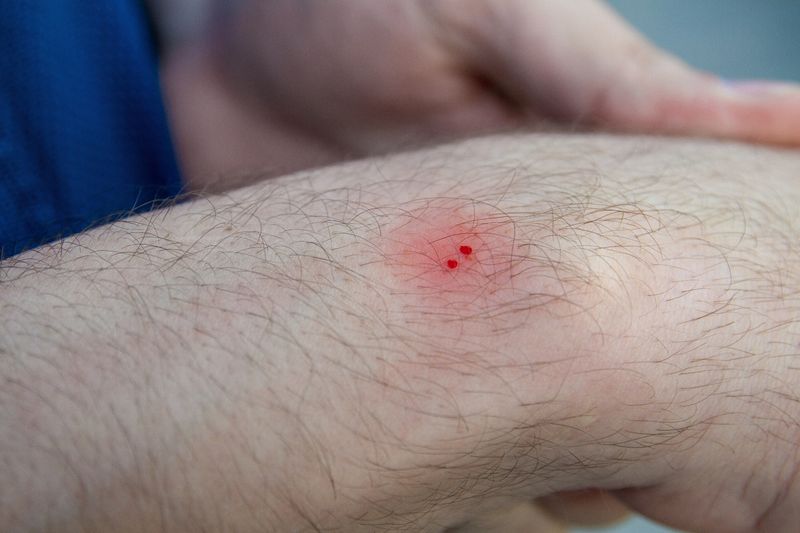
If you suspect a bite, get guidance
© HGIC@clemson.edu – Clemson University

Most garage spider encounters end with nothing more than a quick look. A bite is not inevitable, and not every bite causes severe illness.

Still, it helps to know the plan ahead of time.

If you think a black widow bit you or someone in your home, wash the site and apply a cool compress. Then call the Arizona Poison and Drug Information Center at 1-800-222-1222 for guidance.

The center’s arthropod page lays out these steps.

The poison center can talk you through what to do next and whether you need to be seen. The same page notes that treatment at a medical facility may be needed for young children or for severe symptoms.

Mention a child’s age or any worrying symptoms when you call.

If you saw the spider, a photo can help, but only if you can take one safely. Do not try to catch it or hunt for it in the web.

The phone call matters more than the identification.

Keep the number saved in your phone or posted near the garage door. Having it ready takes the guesswork out of a stressful moment.

Let the spider, not the web, settle the question
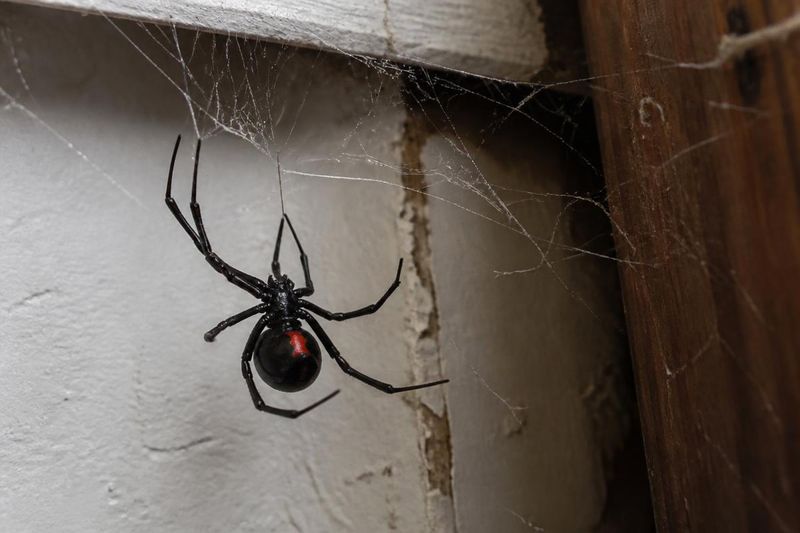
Let the spider, not the web, settle the question
© Pest Control Phoenix

Next time you spot a tangled web in the garage, treat it as a reason to look, not as an answer. Stay back, use your phone’s zoom, and try to get a clear view of the spider itself.

Colorado State Extension describes what to look for.

Keep your hands out of the corner and out of stored items, and rely on gloves and tidy storage as UC IPM suggests. A web can hint, but only the spider can answer.

Share this story

EM

Written by

Elena Marquez

More from Elena Marquez →

About Gardening Latest

Gardening Latest provides in-depth guides to maintaining and enhancing your garden and backyard. Learn how to make the most of the space you have and create a beautiful garden.

More about us →

Latest stories

  • California GardeningIf a Gray Fox Keeps Trotting Through Your California Yard This Winter, Here’s What It’s After

    If a Gray Fox Keeps Trotting Through Your California Yard This Winter, Here’s What It’s After

    6 hr ago
  • Arizona GardeningWhen a Gray Fox Trots Through Your Arizona Yard This Winter, It’s on a Mission

    When a Gray Fox Trots Through Your Arizona Yard This Winter, It’s on a Mission

    7 hr ago
  • Texas GardeningNeighbor Vines Crossing Into Your Texas Yard: Texas Tree-Branch Guidance Is Clear, but the Answer for Vines Is Less Settled

    Neighbor Vines Crossing Into Your Texas Yard: Texas Tree-Branch Guidance Is Clear, but the Answer for Vines Is Less Settled

    7 hr ago
  • Wisconsin GardeningWisconsin Neighbors Fight Over Snow Piled on Their Property, and Here’s What the Law Actually Says

    Wisconsin Neighbors Fight Over Snow Piled on Their Property, and Here’s What the Law Actually Says

    7 hr ago
  • Missouri GardeningYellow Jackets Nesting Near Your Missouri Home? This Is What You Should Do First

    Yellow Jackets Nesting Near Your Missouri Home? This Is What You Should Do First

    7 hr ago

Gardening by state

Stories for your state, and the hardiness zone most of it gardens in.

Keep exploring

Read next

All Arizona Gardening →
Arizona GardeningWhen a Gray Fox Trots Through Your Arizona Yard This Winter, It’s on a Mission
Arizona Gardening

When a Gray Fox Trots Through Your Arizona Yard This Winter, It’s on a Mission

7 hr ago
Arizona GardeningStung While Pruning Your Arizona Mesquite? Here’s How to Treat a Buck Moth Caterpillar Sting Fast
Arizona Gardening

Stung While Pruning Your Arizona Mesquite? Here’s How to Treat a Buck Moth Caterpillar Sting Fast

9 hr ago
Arizona GardeningArizonans Who Eat Celery Every Day Start Noticing These Changes In Their Bodies
Arizona Gardening

Arizonans Who Eat Celery Every Day Start Noticing These Changes In Their Bodies

13 hr ago

More from Arizona Gardening

  • A Roadrunner Visiting Your Arizona Yard Is Telling You Something About the Land Nearby

    Nov 24
  • 8 Venomous Creatures Arizona Homeowners Keep Finding Even After the Heat Is Gone

    Nov 24
Back to top

Leave a response Cancel

Your email address stays private. Required fields are marked with an asterisk.

Gardening Latest

In-depth guides to maintaining and enhancing your garden and backyard: how to make the most of the space you have, and how to make it beautiful.

  • Facebook
  • X
  • Pinterest
  • YouTube

We may earn a portion of sales from products or services that are purchased through our site as part of our affiliate partnerships with retailers.

Explore

  • About GardeningLatest.com
  • Contact Us
  • Terms and Conditions
  • Privacy
  • Editorial Note:
  • FTC Disclosure

Newsletter

New garden guides and seasonal tips, straight to your inbox.

We’ll email you a link to confirm. Unsubscribe any time.

Almost there! Check your inbox and tap the link to confirm.

© 2026 Gardening Latest. All rights reserved.

Back to top