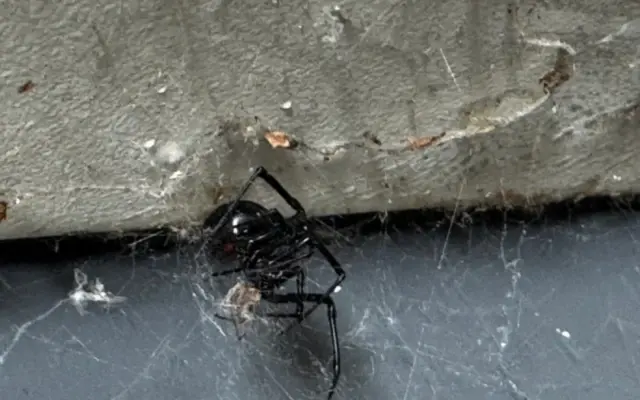
A black widow in a garage corner usually spends the day tucked out of sight and waits in her tangled web for prey after dark. That messy web is a clue worth noticing, but it is not the whole story.
Other spiders build similar webs, and some webs are empty. Here is how to read the clues, get a safer look, and keep your garage in good shape.
A messy web is a clue, not a verdict
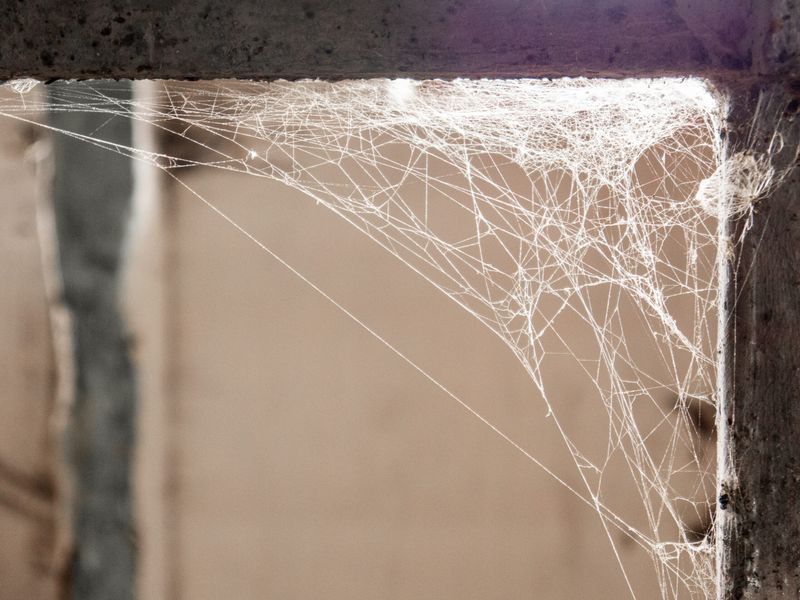
A black widow’s web often looks irregular and tangled, more like a messy snarl than a neat wheel. University of Arizona Extension guidance describes widow webs this way, and the spider may hide in a retreat connected to the web.
At night she comes out to wait for prey.
Still, a tangled web is only a clue. Other cobweb-weaving spiders, including common house spiders and false widows, build webs that look very similar.
A web in your garage tells you that some spider lives or lived there, but not which one.
Webs can also be old. UC IPM notes that a dusty web indoors is likely no longer in use.
That fact says nothing about which spider made it, so an abandoned web proves very little.
Think of the web as a reason to look more carefully, not a reason to worry. A messy web does not mean danger, and it does not confirm a widow.
For more background on how these spiders behave, UC IPM’s widow spider page is a handy reference.
With that in mind, the next question is why a garage might attract a spider in the first place. The answer has to do with the kind of shelter these spiders like.
Why a garage corner can suit a widow
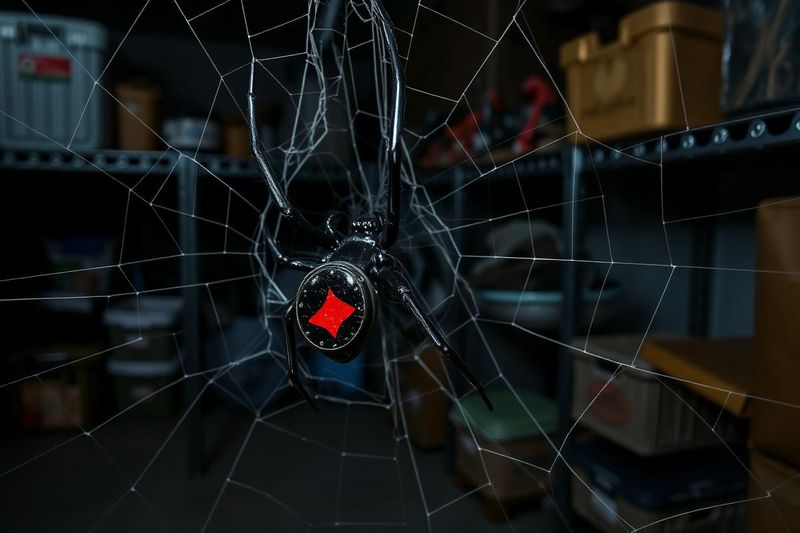
Garages offer what widows tend to look for: dark, sheltered spots that people rarely disturb. A quiet gap behind boxes or along a wall is plausible habitat.
That is different from proof that a widow recently moved in, since many garage corners are simply cobwebby and empty.
Arizona guidance describes medically significant spiders, including black widows, as active year-round. That does not mean cooler nights push widows into garages or into one particular corner.
Nothing in that guidance says so.
The year-round finding is also statewide advice. Arizona has desert lowlands, mountain towns, and everything between, so activity can differ by place and temperature.
A widow in Yuma and one in Flagstaff may not behave the same way on the same night.
The University of Arizona’s School and Home IPM newsletter points readers toward routine checks of places where spiders can hide. Widows can also persist outdoors under debris, so a garage is just one of several possible spots, and UC IPM’s widow page lists others.
So a dark corner is a place worth watching, not a place to panic about. The best next step is to look from a distance and see what is actually living there.
What can a safe photo tell you?
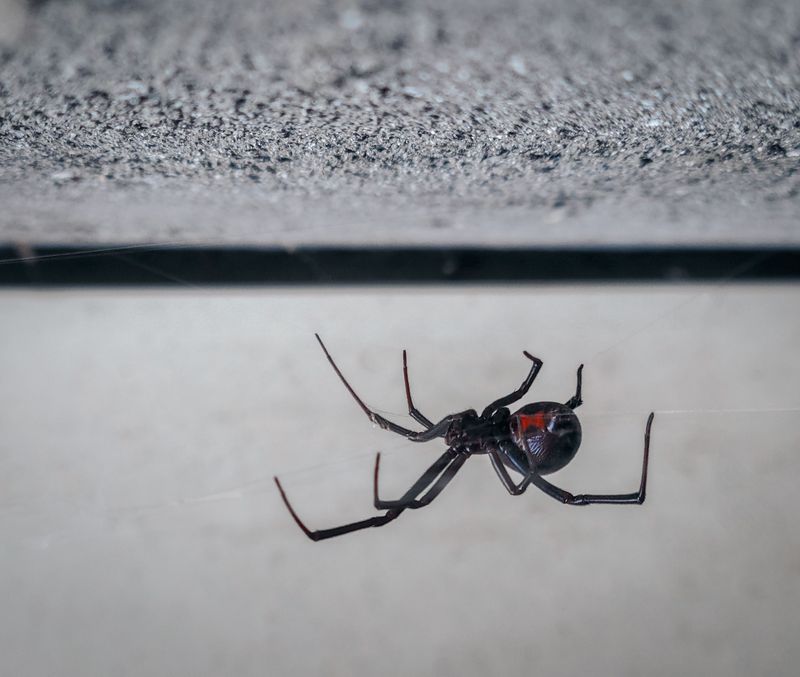
A zoomed photo taken from a safe distance is one of the best tools you have. You do not need to touch the spider, poke the web, or lean in close.
Use your phone’s zoom, stay back, and aim for the body and, if you can see it, the underside.
An adult female western black widow is typically shiny black with a red or orange hourglass-like marking on the underside of her abdomen. Arizona Extension describes this feature.
The marking can vary in shape and color, so it is a useful clue rather than a perfect test.
Males and juveniles can look quite different. Colorado State Extension notes that they may have lighter bodies or colorful markings.
A young spider without a bold red mark could still be a widow.
That is why a poor view proves little. A picture of the spider’s back, a blurry shot, or a photo where the underside is hidden cannot rule a widow out.
Try again from a different angle only if you can do it without getting close.
A clear photo of the spider beats a web-only guess every time. If you cannot get a good look, treat the spider as unidentified and keep your distance.
Check the corner without reaching into it
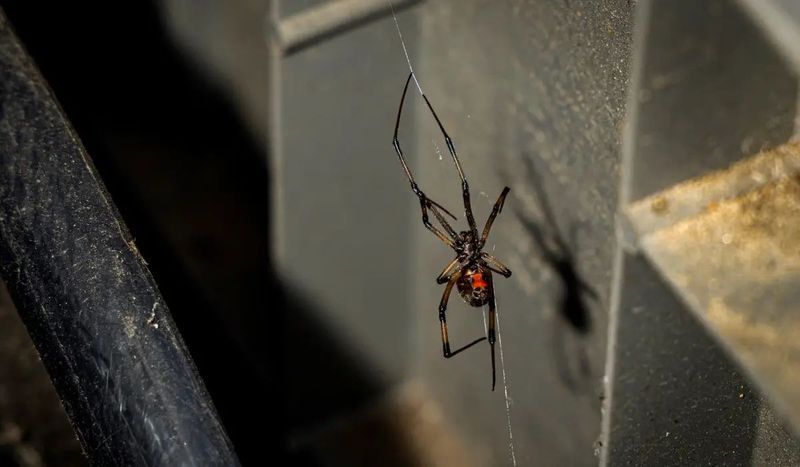
Looking is safe; reaching is not. Do not stick a hand into a web or a dark gap, and do not move seldom-touched items bare-handed.
University of Arizona Extension cautions people to take care when moving objects in garages, sheds, and other quiet places.
When you do clear clutter, wear sturdy gloves. A flashlight helps you check behind and beneath items before you lift them.
Work slowly and keep your face and arms back from the spot.
A few habits help over the long run. The University of Arizona School and Home IPM newsletter recommends regularly checking or shaking out stored clothing and footwear.
That includes work boots and gardening shoes kept in the garage.
Housekeeping advice from UC IPM adds more. Store boxes off the floor and away from walls where possible, and sweep or vacuum webs and spiders from storage areas.
Think of these steps as prevention, not a guarantee that no spider will ever settle in. Insecticides do not provide a guaranteed or lasting solution either, so sprays should not replace tidying.
Fewer hiding places and regular checks do more over time.
If you suspect a bite, get guidance
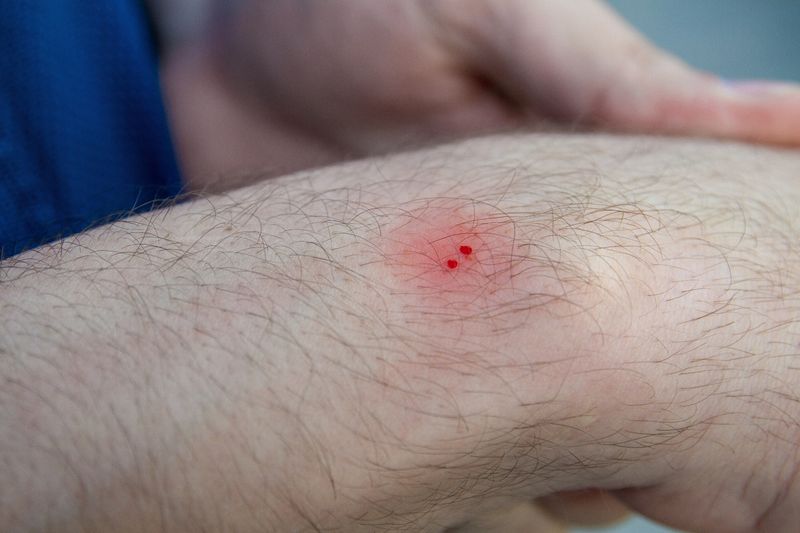
Most garage spider encounters end with nothing more than a quick look. A bite is not inevitable, and not every bite causes severe illness.
Still, it helps to know the plan ahead of time.
If you think a black widow bit you or someone in your home, wash the site and apply a cool compress. Then call the Arizona Poison and Drug Information Center at 1-800-222-1222 for guidance.
The center’s arthropod page lays out these steps.
The poison center can talk you through what to do next and whether you need to be seen. The same page notes that treatment at a medical facility may be needed for young children or for severe symptoms.
Mention a child’s age or any worrying symptoms when you call.
If you saw the spider, a photo can help, but only if you can take one safely. Do not try to catch it or hunt for it in the web.
The phone call matters more than the identification.
Keep the number saved in your phone or posted near the garage door. Having it ready takes the guesswork out of a stressful moment.
Let the spider, not the web, settle the question
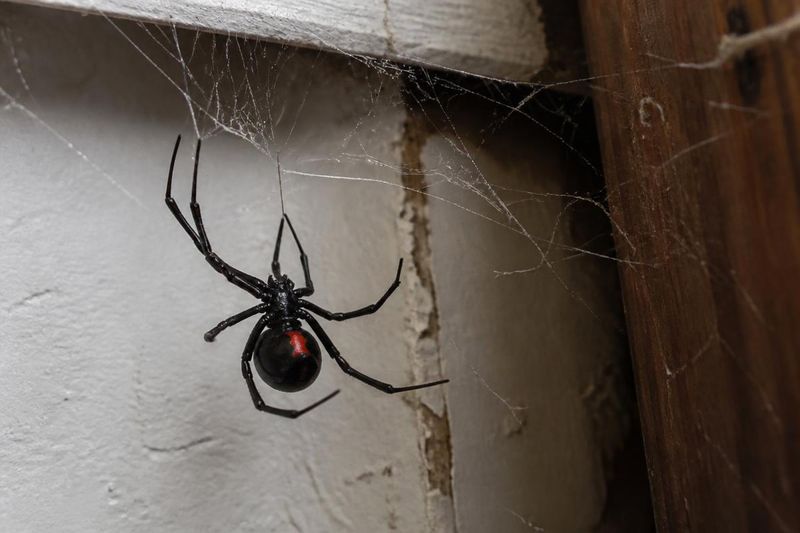
Next time you spot a tangled web in the garage, treat it as a reason to look, not as an answer. Stay back, use your phone’s zoom, and try to get a clear view of the spider itself.
Colorado State Extension describes what to look for.
Keep your hands out of the corner and out of stored items, and rely on gloves and tidy storage as UC IPM suggests. A web can hint, but only the spider can answer.
Share this story