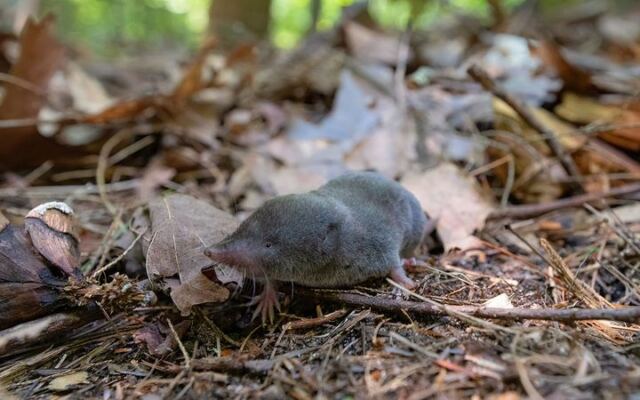
The northern short-tailed shrew is a tiny mammal with toxic saliva, which makes it venomous in a way most people never expect. It lives across Indiana, often out of sight under leaves, grass, and soil.
Its venom works through a bite, and it is used mostly on small prey like worms and insects. Knowing what this animal looks like and how to act around it helps you stay calm and safe.
Where northern short-tailed shrews live in Indiana
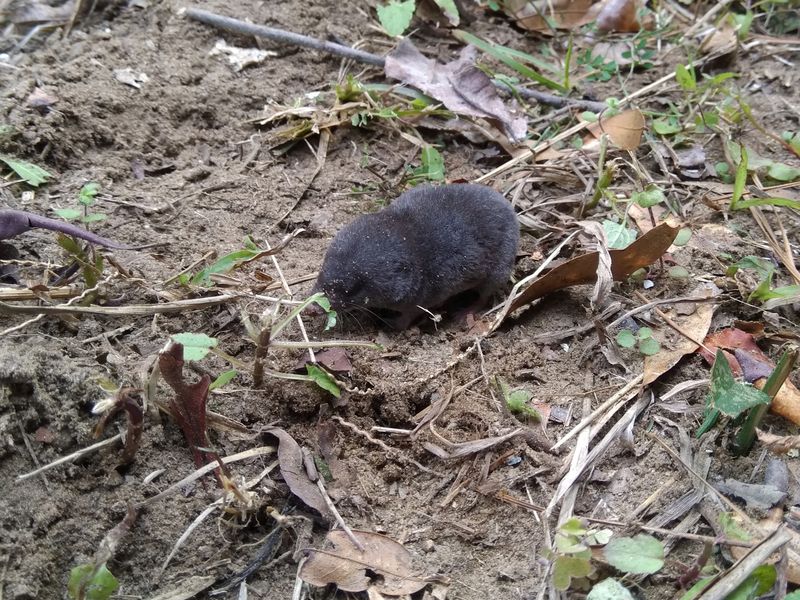
Purdue Extension describes the northern short-tailed shrew as common throughout Indiana. That means it turns up in every part of the state, from the north to the Ohio River counties.
The same Purdue account names the kinds of places it uses. Grasslands, old fields, and forests all make the list, and the common thread is ground that stays fairly moist.
Thick leaf litter, grass cover, and loose soil give a shrew room to move and hunt.
Gardens are a different story. The sources do not say how often shrews turn up in gardens or in any one backyard, so there is no basis for calling a garden a hotspot.
A garden with damp soil, mulch, and plenty of small creatures could be suitable habitat, but that is a possibility, not a documented fact.
So what does statewide presence mean for you? Shrews live in Indiana in large numbers, but that does not promise you will see one.
These animals spend most of their time hidden in tunnels and under cover, and a person can live beside one for years without noticing.
If you want to guess where shrews might be near your home, look at the habitat rather than the lawn itself. Woodland edges, weedy field borders, and damp, overgrown corners fit the description better than a freshly mowed yard.
Treat that as a hint about habitat, not a prediction.
How to recognize a northern short-tailed shrew
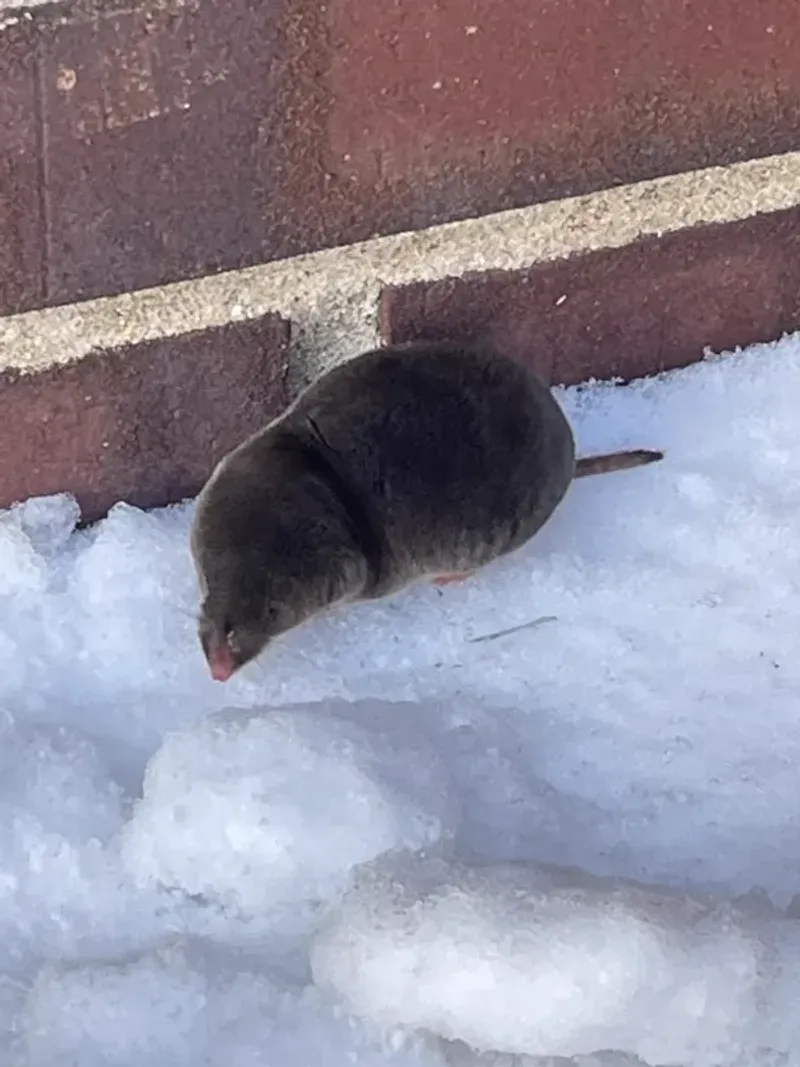
Picture something about the size of a mouse, but built differently. Purdue lists the adult body at roughly 10.8 to 14 centimeters long, with a weight of about 11 to 26 grams.
That is only a few paper clips heavier than a pencil eraser pile, so it is a very small animal.
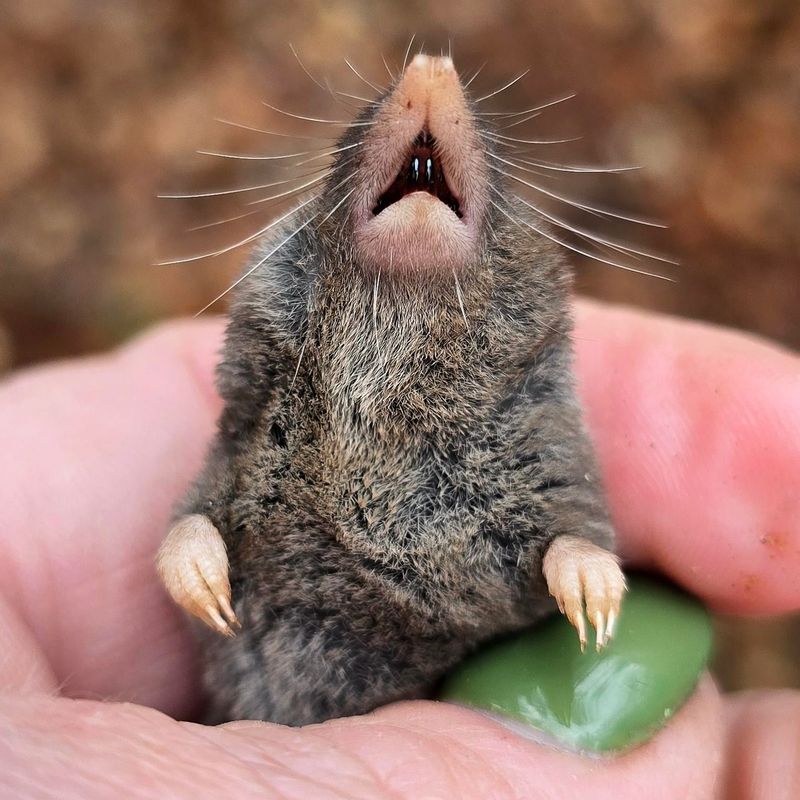
The face gives it away. A shrew has a long, pointed snout, tiny eyes, and a short tail.
A mouse, by comparison, has larger eyes and a longer tail, and its snout looks blunter.
Shrews are mainly nocturnal, so most activity happens after dark. They can still be active by day, which means a daytime sighting is not automatically a sign that something is wrong.
Seeing one scurry across a path at noon is unusual but not alarming.
Here is the part that matters most for identification: you do not need to get close. A quick look from several feet away, or a photo taken with a phone zoom, is plenty to compare the snout, eyes, and tail.
Handling a wild animal to check these features is never a good idea, and CDC guidance on wildlife recommends keeping your distance.
If the animal is out of reach or hiding, let it go. A blurry glimpse is fine, and no one needs a perfect identification to enjoy knowing a small neighbor is nearby.
How a shrew delivers toxic saliva
Venom is not only a snake thing. Researchers studying this species isolated a protein called blarina toxin from the shrew’s salivary glands, as described in a PNAS paper by Kita and colleagues.
The toxin is part of its saliva.
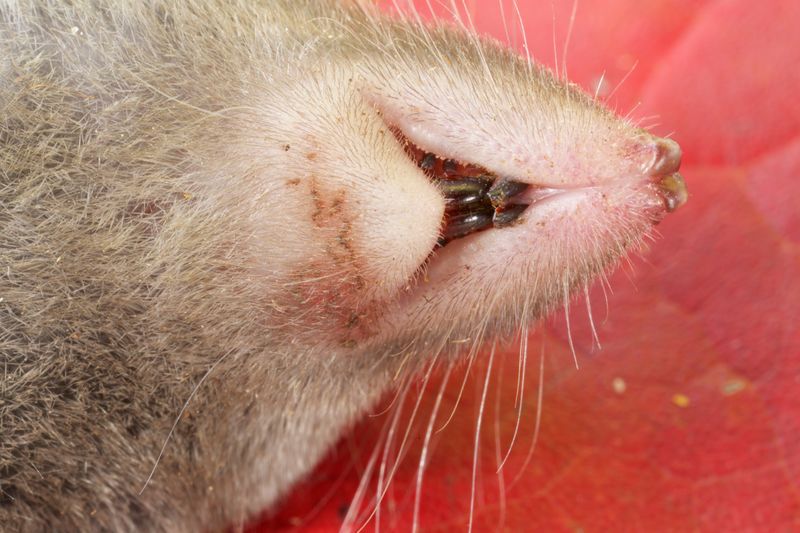
The saliva gets into prey through a bite. When the shrew bites, the toxic saliva can enter the wound and affect the animal it is holding.
That is a different setup from a rattlesnake. A snake has hollow fangs connected to venom glands, almost like a built-in syringe.
The shrew has nothing like that.
A scientific review of venom in shrew relatives describes the process as saliva entering bite wounds. It adds that any slight grooves on the teeth are unlikely to work as a dedicated venom-injection system.
In plain terms, the shrew bites, and the saliva does the rest.
This is why scientists can call the animal venomous and still say it is very different from a snake. The word describes what the saliva does, not a special set of fangs.
For a gardener, the useful takeaway is simple: the bite is the part that matters, so the way to avoid trouble is to avoid contact.
What researchers know about the toxin’s effects
Most of what we know comes from experiments on mice. In the research that characterized blarina toxin, mice given the toxin showed abnormal breathing, then paralysis and convulsions, and then died.
Those results come from the PNAS toxin study, and they describe what happened in lab mice, not in people.
Human information is much thinner. The same paper mentions accounts of people bitten by these shrews, and the symptoms were local, including burning and swelling.
These are reports cited in the scientific literature, not a large medical study.
Purdue gives a short summary too. Its Extension publication says the toxin causes swelling and irritation in humans and is not fatal.
Think of that as a helpful overview rather than a detailed medical record.
Put together, the picture has a clear edge. The strong, dramatic effects were seen in mice.
The human accounts are limited, and they describe local reactions.
What the sources do not give us is a reliable range of how people react. Some people may have a mild reaction and others may have more discomfort, and nobody can say for sure.
That is why a bite deserves care instead of a shrug, and also why there is no reason for panic.
What shrews eat—and what that says about gardens
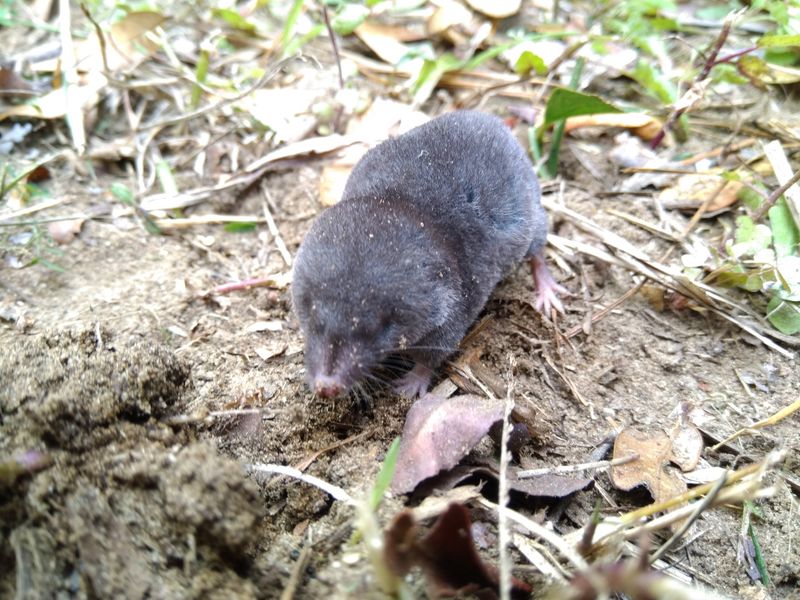
Shrews eat a lot of small, soft-bodied creatures. According to Purdue, the documented diet includes earthworms, insects, centipedes, millipedes, spiders, and slugs.
Now and then, a shrew also eats small vertebrates.
That list reads like a tour of the soil and leaf litter. Every item on it lives close to the ground, often in damp, sheltered places.
It matches the moist habitats where shrews are found, from field edges to forest floors.
The venomous saliva fits neatly into this picture. Many of these prey animals are slow or soft, and a shrew that can subdue them with a bite does not have to fight long.
Small vertebrates are the unusual part of the menu, which is why they show up as an occasional item.
It is tempting to read this list as a verdict on gardens. Is the shrew a helper because it eats slugs, or a problem because it eats earthworms?
The sources do not say either. They describe what the animal eats, not what that does to any particular garden, and they do not point to a need for control.
The practical lesson is a modest one. If you notice a shrew, you are looking at a small predator doing what small predators do.
Leave it to its hunting, and let the soil life carry on.
What to do if you encounter or are bitten by one
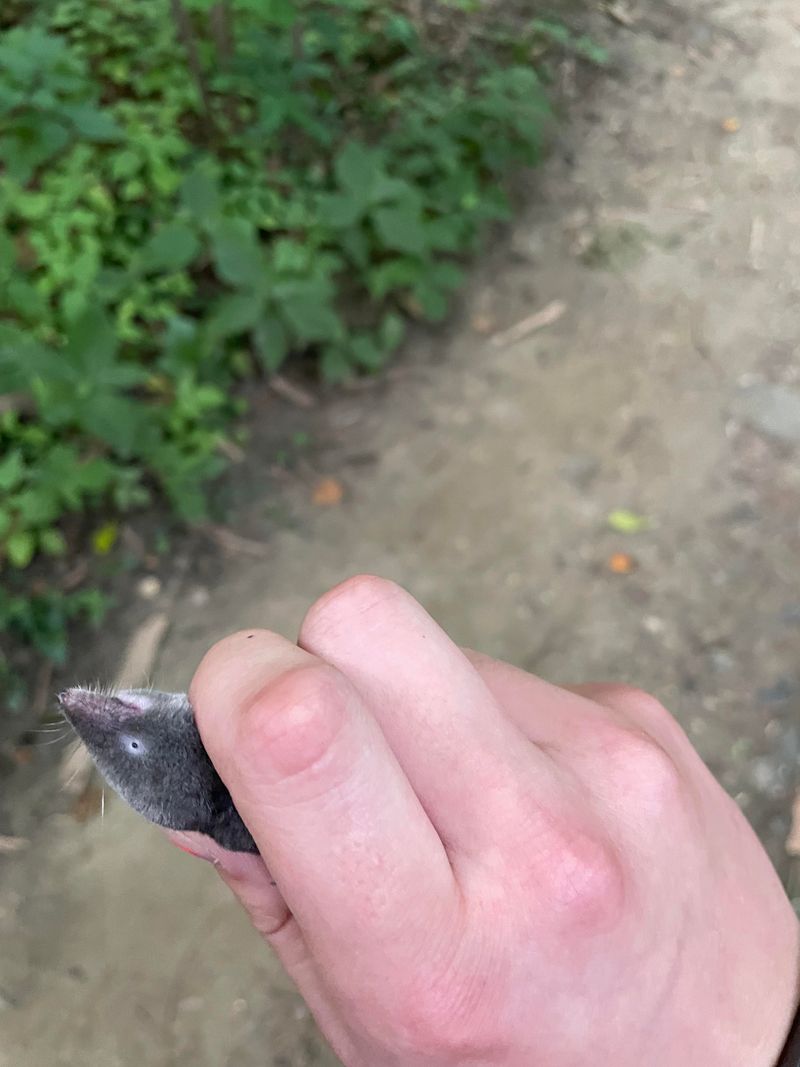
Start with distance. If you spot a shrew, stay back and let it move along.
Do not pick it up, corner it, or poke at it, since a bite is the one way this animal can affect a person. CDC guidance on wildlife also advises keeping your distance from wild animals.
If you are bitten anyway, wash the wound right away with soap and water. Give it a good, thorough cleaning rather than a quick rinse.
Then keep an eye on how it looks and feels over the next few days.
Get medical attention if the wound looks concerning or if you develop symptoms. Swelling, burning, or anything that seems to be getting worse are good reasons to call.
Because it was a wild animal bite, it is also sensible to talk with a healthcare provider about whether you need a rabies assessment. That is a standard step after wildlife bites, not a sign that shrews are known to carry rabies.
A few habits keep encounters rare. Wear gloves when moving boards, stones, or brush piles, and look before you reach.
Keep pets from chasing small animals when you can.
Two things are worth remembering. Shrews are statewide residents, but the sources do not say how often they turn up in gardens.
And the lab results in mice do not tell us what happens to people.
Small animals can have surprising powers, and the best response is usually a respectful look from a distance.
Share this story