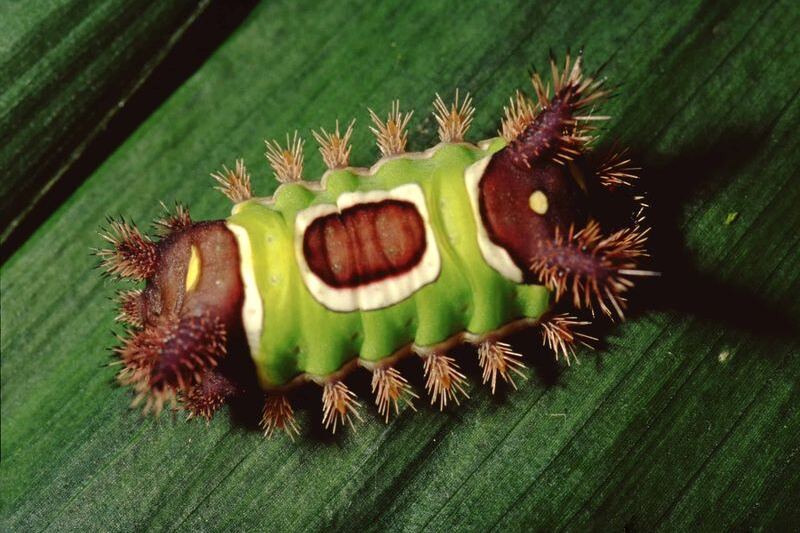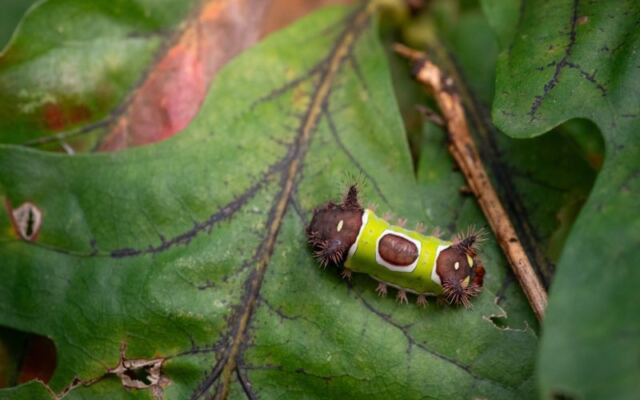
If you grab a saddleback caterpillar by mistake, lift the spines out with tape, wash the skin, and use a wrapped ice pack for comfort. Saddleback caterpillars occur in Indiana, and their spines can hurt when they break off in skin.
Knowing the order of steps helps you act fast without panic. Here is what to do, what to watch for, and when to get help.
Start by lifting the spines with tape
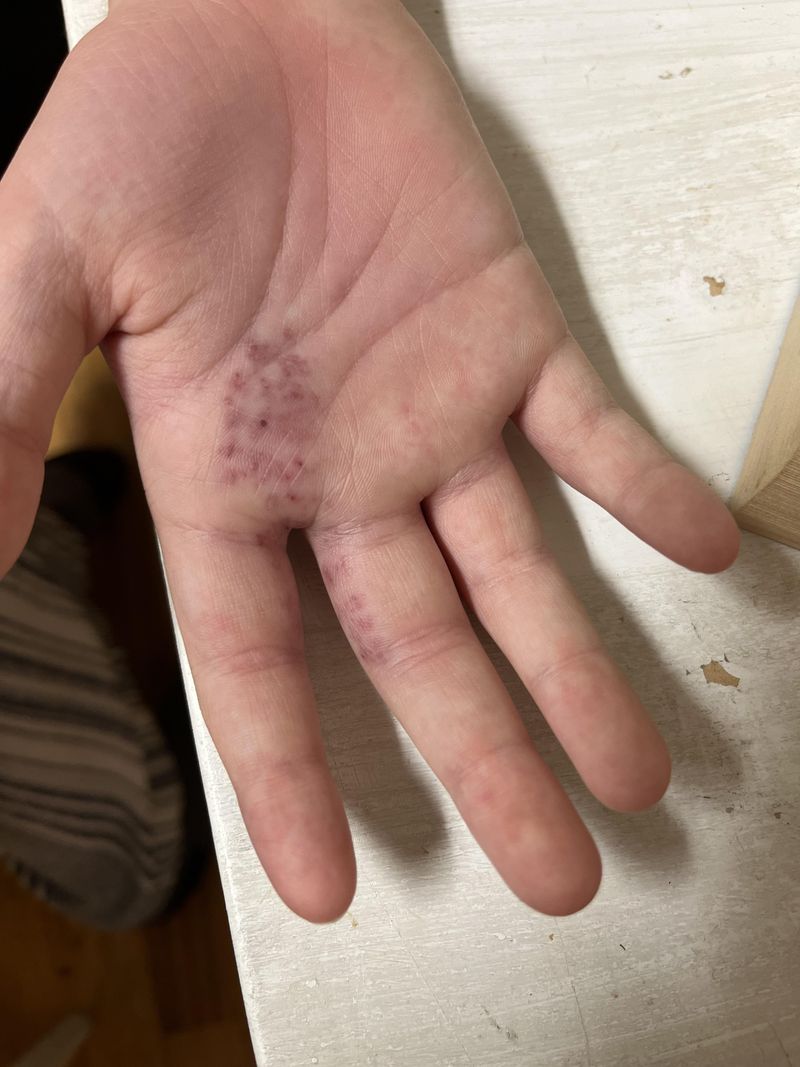
Brushed against a spiny caterpillar while pruning? Act on the skin first.
If the caterpillar is still on you, flick it off with a stick or a tool, never a bare hand. Touching it again can drive more spines into your skin.
Next, press a piece of adhesive tape gently onto the affected area, then lift it away. Do not rub or scrub.
Rubbing can push the tiny spines deeper and make the area more irritated.
Repeat with a fresh piece of tape each time, since used tape loses its stickiness and may put spines right back. Keep going until the tape comes away clean.
Any tape that sticks and peels easily, such as packing tape, works for this job.
Once the tape is done, wash the skin gently with soap and water. This step clears away leftover irritants from the surface.
Rinse and pat the area dry with a clean cloth.
This order comes from Poison Control guidance on caterpillar stings. It is practical advice from poison experts, not a result from a head-to-head clinical trial showing tape beats every other method.
Think of it as a sensible first move, with comfort care coming after the spines are lifted.
Gloves and long sleeves help during fall cleanup, but if contact happens anyway, this simple routine takes only a few minutes.
Recognize a saddleback without touching it
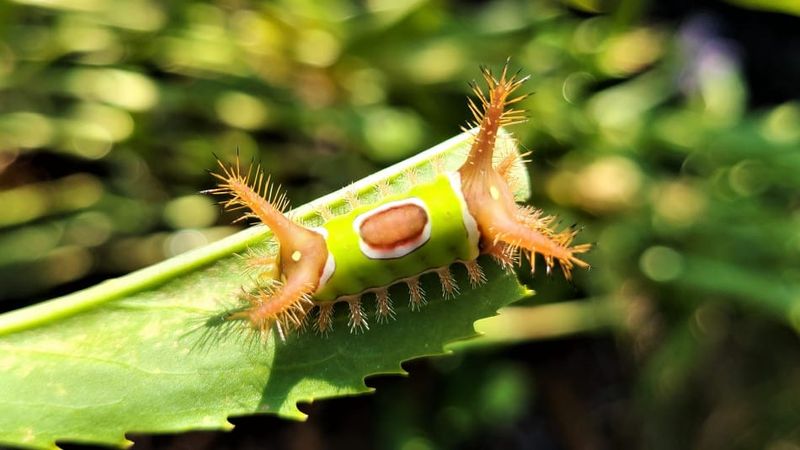
A saddleback caterpillar is easy to spot once you know the clues, and you can check them from a safe distance. Look for a bright green middle with a brown, saddle-like patch in the center.
Prominent spine-bearing projections stick out from both ends and along the sides.
According to UF/IFAS Extension, its range includes Indiana. It feeds on a variety of plants, including trees and shrubs, so it can turn up on leaves while you tidy up around the yard.
Treat these features as identification clues only. Never pick up a caterpillar to confirm what it is.
Most caterpillars are harmless, but an uncertain spiny or hairy one deserves the same caution.
If you want a closer look, snap a photo with your phone and zoom in later. A stick or garden tool can move one off a branch you need to cut, and gloves add a layer of protection when you work around dense shrubs.
Appearance alone is not a reason to reach for it. Bright color and fuzz can fool people in both directions, so the safest habit is simply to leave all unknown caterpillars alone.
Know what symptoms can follow contact

The saddleback does not sting like a bee. Its hollow spines can break off in skin and deliver irritants or venom, as described by UF/IFAS Extension.
That is why spine removal matters before anything else.
Local symptoms are the main concern. Per Poison Control, you may notice pain, burning, redness, itching, swelling, welts, or blisters near the contact spot.
Some people also develop a headache or nausea. These are possible extra symptoms, not a sure outcome.
Reactions vary from person to person. Some stings stay mild, while others hurt more or linger longer, so it helps to note how the area looks right after contact and again an hour later.
Changes in color, size, or pain level are useful to track.
Severe allergic reactions are described as rare, so there is no reason to assume the worst. Still, certain signs call for urgent help, and those are laid out in the medical help section below.
For now, keep the area clean, avoid scratching, and keep an eye on how it changes.
Use wrapped ice for comfort

Ice comes after the tape and washing, not before. A cold pack can ease discomfort, but it does not remove spines.
If spines are still in the skin, go back to the tape first.
Wrap the ice pack in a cloth and never place ice directly on skin. MedlinePlus suggests 10 minutes on and 10 minutes off.
A thin kitchen towel or a clean T-shirt works well.
Short breaks protect your skin from cold injury, so set a timer if the area is very sore. Stop if the skin feels numb or looks pale.
Poison Control also lists ordinary oral pain relievers as an option. They are not required, and you can follow the package directions or ask a pharmacist if you are unsure.
Poison Control describes one saddleback case where ice and several other treatments did not help until tape lifted the remaining hairs. That example shows why ice is comfort care only.
Baking-soda paste is not essential or proven, so there is no need to hunt for it. Tape, gentle washing, and a wrapped ice pack cover the basics.
Know when to get medical help
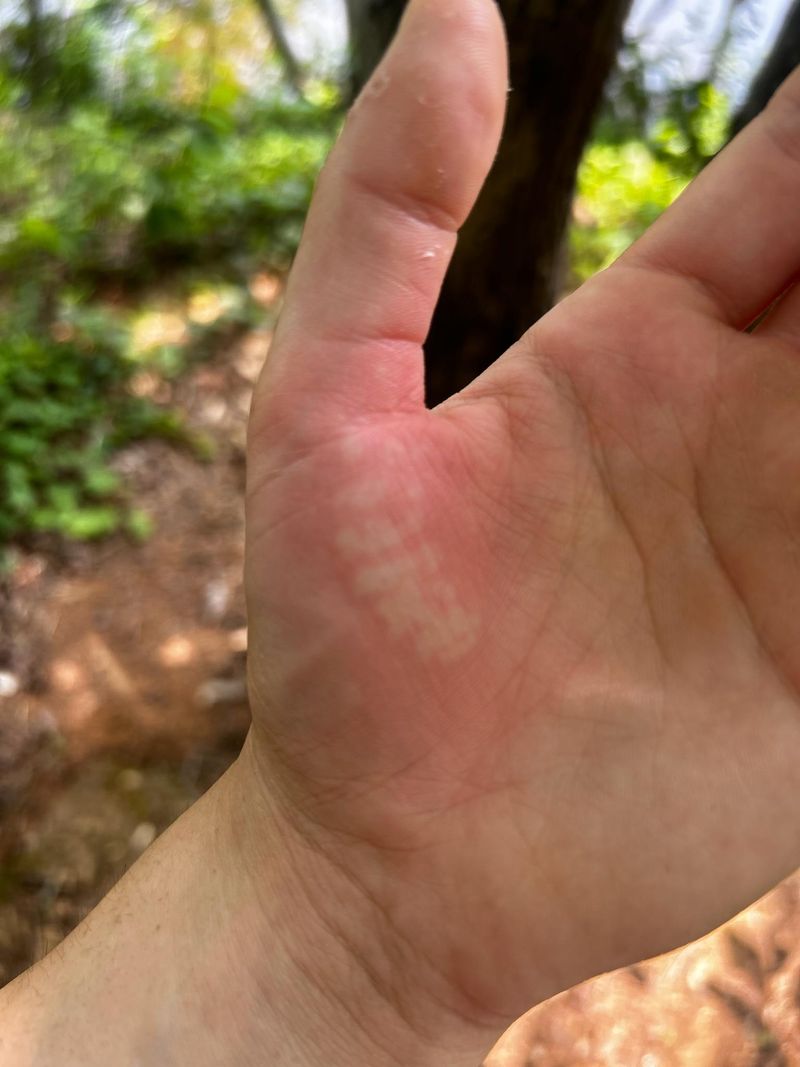
Most of the time, first aid at home is enough, but a few signs mean you should act right away. Call 911 for difficulty breathing, fainting, or swelling of the lips, face, or tongue.
Do not wait to see whether these improve.
Other situations call for medical advice rather than an emergency call. According to Poison Control, contact a clinician or urgent care for a blistered area, a suspected localized allergic reaction, or eye irritation that does not go away.
If a caterpillar or its hairs get in an eye, rinse with lukewarm water and seek poison-center or medical guidance. Avoid rubbing the eye while you do this.
If you inhale caterpillar hairs, get medical care. This can happen if hairs are stirred up in the air, so keep that in mind when you clear brush.
For advice anywhere in the U.S., call Poison Help at 1-800-222-1222. The line is a good choice when you are unsure whether symptoms need a visit.
Serious reactions are not the typical result of a sting. The aim here is simply to know where the line is, so you can handle a mild sting calmly and respond fast if something changes.
What the sources say about saddlebacks in Indiana
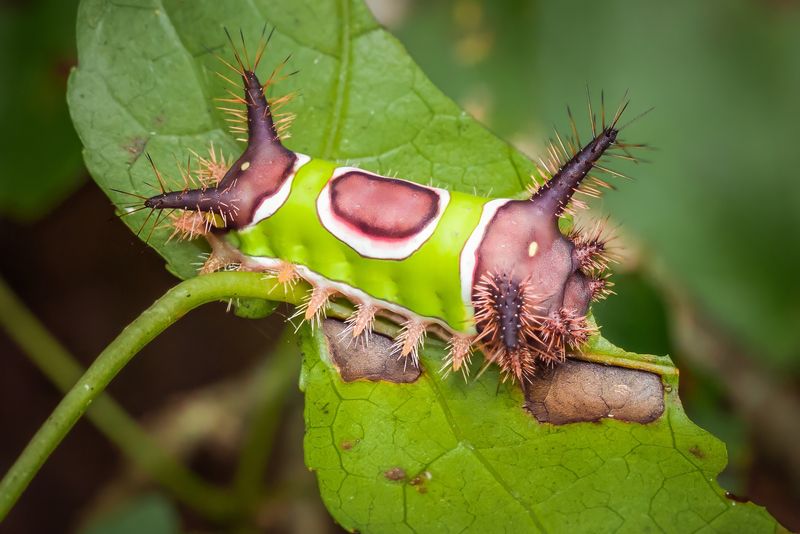
Sources document saddleback caterpillars in Indiana. UF/IFAS Extension places Indiana within the species’ range.
What the sources do not tell us is how often Indiana gardeners run into them, or how often that happens in fall.
On timing, Virginia Cooperative Extension reports saddlebacks on shade trees and ornamental shrubs in late summer. That is information from outside Indiana, so it is a rough guide rather than a local calendar.
A U.S. Forest Service guide reports caterpillars from June to October near Washington, D.C.
A New York life-cycle account notes maturity in September or October. Neither is an Indiana record.
The Virginia extension source also says saddlebacks rarely occur in numbers high enough to be plant pests. That speaks to damage to plants, not to how often people get stung.
So the fair takeaway is modest. They live here, late summer is when other states report them on shrubs, and careful habits are enough: look before you grab, and use tools and gloves.
A little attention goes a long way when the leaves you are clearing might have a spiny passenger.
Share this story