Wisconsin squirrels do bury nuts in lawns each fall, and they find many of them again by remembering where they put them and by using smell and sight. Research has even discussed squirrels caching thousands of nuts, though no one has counted a typical Wisconsin squirrel’s total.
That means the small holes you spot in winter might tell a story about a hidden pantry, or they might not. Here is what the science says about how squirrels find buried food and what to do about your lawn.
Wisconsin’s squirrels don’t all cache the same way
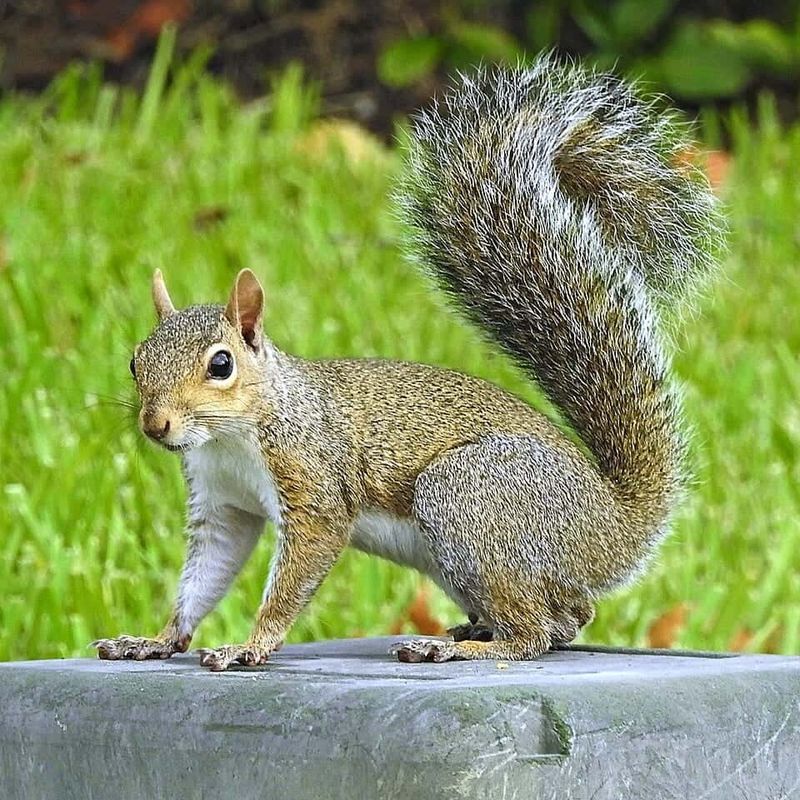
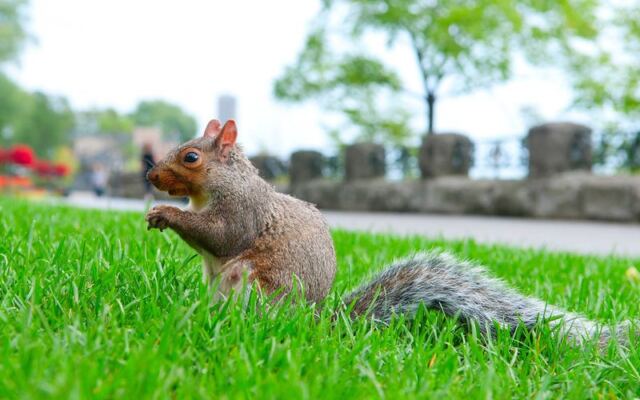
Wisconsin is home to three kinds of tree squirrels: the eastern gray squirrel, the fox squirrel, and the red squirrel. The Wisconsin DNR notes that gray squirrels are the ones most people see in yards and parks, with fox and red squirrels also living in the state.
Gray and fox squirrels are the classic scatter-cachers. They tuck individual acorns, walnuts, and other seeds into many separate spots, often pushing them into soil or turf and patting the ground back into place.
That habit is why lawns, with their soft ground and open space, can become storage sites.
Red squirrels play a different game. They are more closely tied to pine forests, and tree squirrel biology resources point out that squirrel species can differ in how they store food.
So a red squirrel in a spruce stand is not necessarily burying anything in your front yard.
This matters because the story of buried acorns and winter retrieval is mostly a gray and fox squirrel story. If you live near mature oaks and see those two species, caching is a reasonable thing to suspect.
If your yard is next to a conifer woodlot, a different squirrel may be doing something else entirely.
A cache is a scattered pantry, not one buried stash
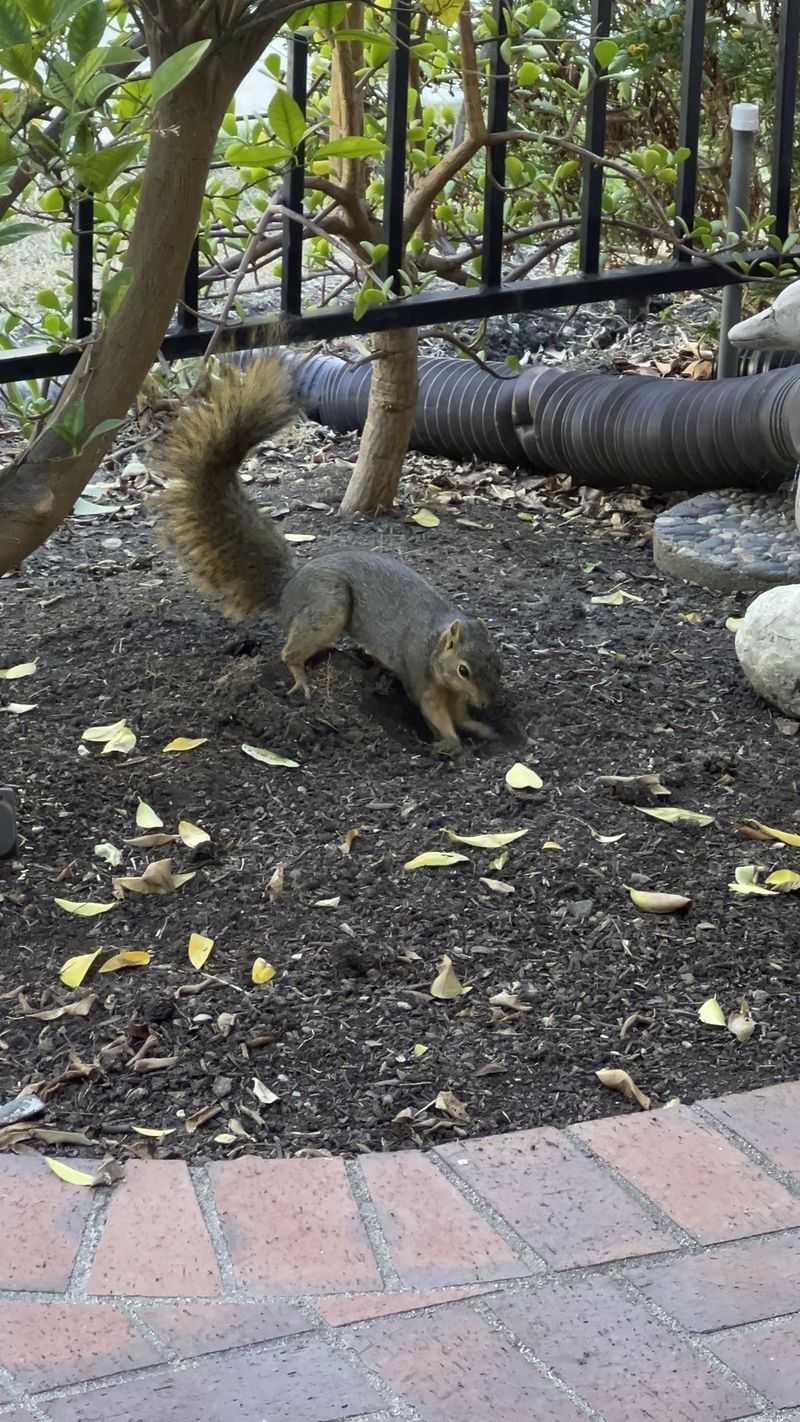
Picture a squirrel in October with a mouthful of food and a lot of lawn to choose from. Instead of piling everything in one hole, gray and fox squirrels bury single nuts and seeds in many different places.
This approach is called scatter-hoarding, and it spreads the risk so that one thief cannot clean out the whole pantry.
The Wisconsin DNR’s winter feature describes how squirrels stash food in fall and return to some of it later. Squirrels may dig up some caches during winter, but they do not necessarily empty every one.
What about the big numbers? A study of gray squirrel memory discusses the possibility that squirrels in the wild cache thousands of nuts.
That is a broad possibility raised in research. The experiment itself did not measure how many items a typical squirrel buries in a year, and it certainly did not count Wisconsin backyards.
Also, not everything in the pantry is an acorn. Squirrels cache walnuts, hickory nuts, and other seeds, depending on what trees grow nearby.
So the headline image of a squirrel with a lawn full of acorns is a fun simplification, but the real picture is a lot of different foods, in a lot of different places, with plenty of unknowns.
How do squirrels remember where they buried a nut?
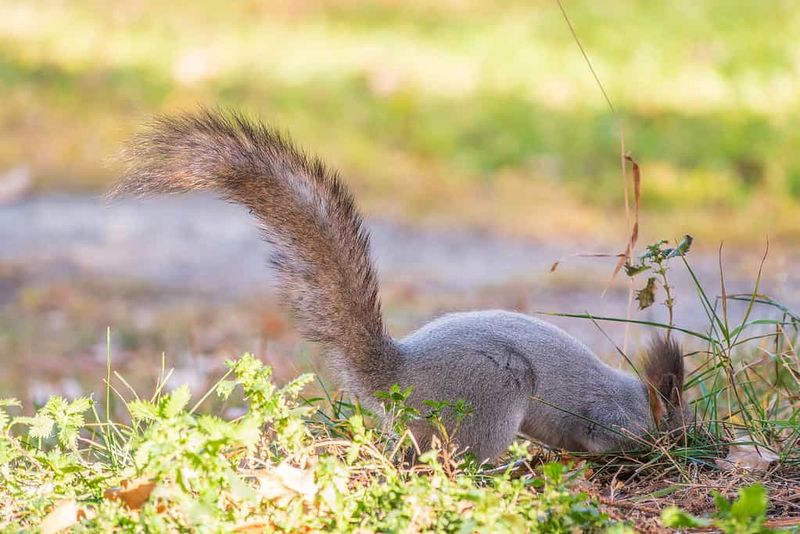
Researchers wanted to know whether squirrels truly remember where they put things or just stumble onto nuts by luck. In a gray squirrel experiment published in 1991, squirrels were allowed to cache nuts and were later tested at cache sites.
The result was telling. Squirrels retrieved more nuts from places where they had cached them themselves than from sites made by other squirrels.
That held even when another squirrel’s cache was closer to them. If squirrels were simply heading for the nearest buried nut, the pattern would look very different.
This supports the idea that gray squirrels remember cache locations. It is a bit like returning to your own keys on a particular hook rather than checking every hook in the house.
Still, memory is not perfect. The squirrels also found some caches made by other squirrels, which suggests they can pick up other clues along the way.
So the fair takeaway is that memory is a major tool, not the only one and not a flawless one. A squirrel with a good mental map still might miss a spot, and a lawn hole in January does not prove that this map was used.
Smell helps, but it isn’t the whole map
If you read the Wisconsin DNR’s description, you will see that gray squirrels rely on smell to retrieve winter food. That is true as far as it goes, since odor clearly plays a role.
It just does not mean smell is the only thing guiding them.
In the memory experiment mentioned earlier, squirrels sometimes located caches made by other squirrels. That pattern fits with odor being one cue they can use.
A separate test of cues, reported by McQuade and colleagues in 1986, found that gray squirrels relied more on location and visual cues than on odor under its test conditions.
Put those findings side by side and they do not conflict. Squirrels seem to combine memory of where a nut went, what the surroundings look like, and scent when it is available.
Which cue matters most can shift with the situation, the ground, and the squirrel.
No study here shows that one cue wins in every yard or every snowy week. So when someone says squirrels sniff out nuts through the snow, the safer version is that smell is one helpful piece in a larger toolkit.
Snow can hide a cache without making retrieval effortless
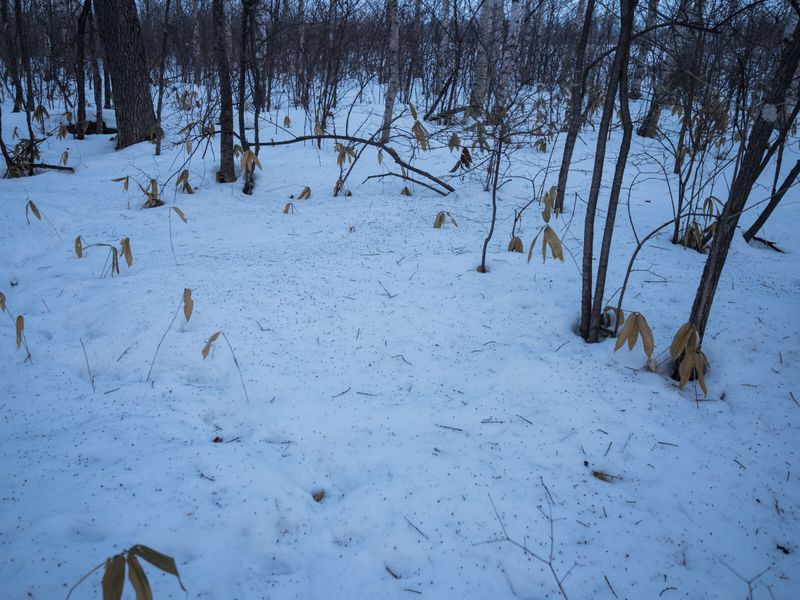
Snow is a real hurdle. The gray squirrel memory study notes that snow can cover caches, and it argues that remembering locations could be especially useful when surface clues are buried.
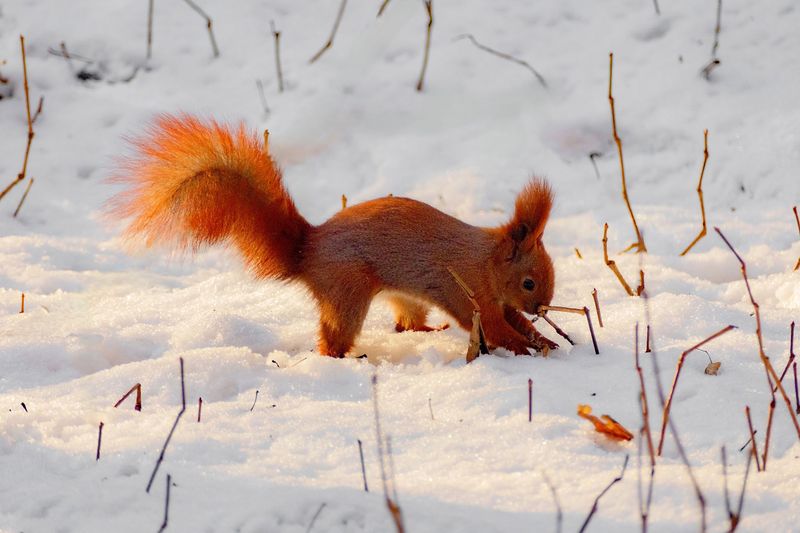
There is one striking documented case. A camera trap in Hokkaido, Japan, recorded a Eurasian red squirrel retrieving a walnut from beneath 21 cm of snow after 23 days, described by Ito and Sashika.
Keep the scope in mind. That was a single observation of a different species in a different country.
It is not a measurement of typical Wisconsin squirrel behavior, and it does not show that squirrels can reach food under any amount of snow.
Retrieval is never guaranteed. Caches can be stolen by other animals, and some are simply never recovered.
A park study of Eurasian red squirrels in Warsaw found that nuts vanished from caches quickly, though the researchers could not always say whether the cacher or a thief took them. It also found that frozen ground limited access.
So winter retrieval is something squirrels manage some of the time, with effort and plenty of misses.
What do winter holes in the lawn tell you?
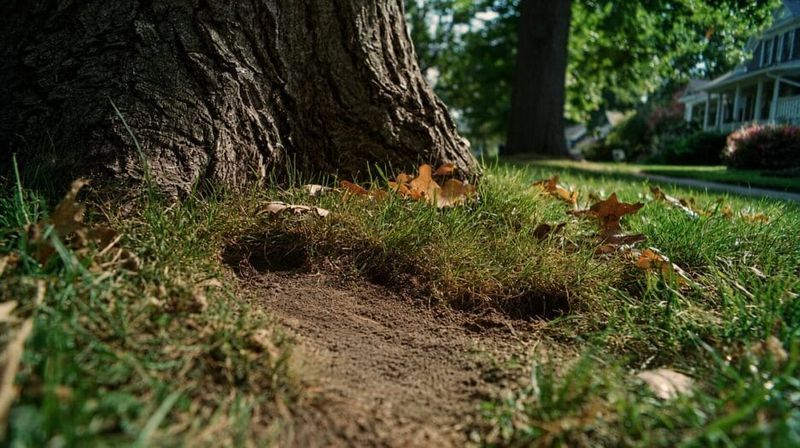
Spot a small, tidy hole in the lawn and it is tempting to blame a squirrel. That is sometimes right.
University of Maryland Extension describes squirrels and chipmunks making small depressions about two inches across and a few inches deep, often without a distinct pile of soil, as they store or retrieve food.
But size and shape are clues, not proof. A hole that matches that description could fit a squirrel or chipmunk, yet it cannot tell you which animal made it or whether it was a cache being filled, emptied, or neither.
Other animals leave marks too. The Wisconsin Humane Society notes that birds may cache food or probe for insects, and the Maryland guidance adds that skunks and raccoons dig divots while hunting grubs and worms.
Those digger holes often look different, more ragged, wider, or torn up in patches. Still, you may need more than one clue.
Try noticing the time of day, how many holes there are, whether the turf is flipped or just poked, and what animals visit. A hole with nothing else around it is a puzzle piece, not a verdict.
Identify the visitor before repairing minor damage
Before you reach for a rake, figure out who your digger might be. Wisconsin Humane Society guidance on wildlife in yards is a good starting place, and the clues from the last section can help.
Look at hole size, spacing, and whether there are signs of grub hunting.
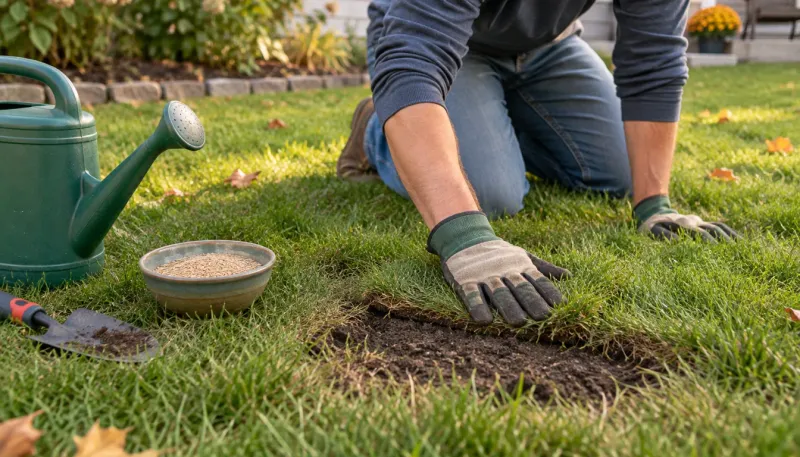
If the damage is minor, a simple fix usually does the job. Fill small holes with soil, press the turf back in place, and overseed bare spots once the ground thaws and grass can grow.
A few little divots rarely harm a healthy lawn.
Resist the urge to treat every hole as a squirrel problem. If the culprit is a grub-hunting skunk or raccoon, patching alone will not change why they came, so knowing the animal shapes what you do next.
As for the squirrels themselves, keep your distance. Do not feed them or try to handle them.
USDA APHIS advises against feeding wildlife because food crowds animals together, which can increase disease spread, and animals used to people can become aggressive.
A quiet yard with a few patched spots is a small price for living near clever neighbors who plan their winters better than most of us.
Share this story