Get the latest garden guides in your inbox →
Gardening Latest
  • General Gardening
  • Lawn Care
  • Plant Care
  • Composting
  • Soil Health
  • Backyard
  • Garden Muse Magazine
  • General Gardening
  • Lawn Care
  • Plant Care
  • Composting
  • Soil Health
  • Backyard
  • Garden Muse Magazine
  • News
  • Gardening Calendar
  • Garden Structures
  • Vegetable Garden
  • Vertical Garden
  • Raised Beds
  • Hydroponics
  • General Equipment
  • Community Gardens
Garden Themes
  • Spiritual Garden
  • Hydroseeding
  • Seeding and Laying Sod
  • Artificial Grass
  • Lawn Care Equipment
  • Plants
  • Trees
  • Planting Tools
  • Composting Basics
  • Fertilizer
  • Alternative Growing Mediums
  • Front Yard
  • Backyard Activities
  • Landscaping
Gardening Latest

Explore by state

Which state is your garden in?

Currently viewing Minnesota

All states

Northeast

  • Connecticut —
  • Delaware 35
  • Maine —
  • Maryland 21
  • Massachusetts 37
  • New Hampshire —
  • New Jersey 21
  • New York 30
  • Pennsylvania 30
  • Rhode Island —
  • Vermont —

Southeast

  • Alabama 21
  • Arkansas —
  • Florida 21
  • Georgia 21
  • Kentucky 35
  • Louisiana 20
  • Mississippi —
  • North Carolina 19
  • South Carolina 34
  • Tennessee 18
  • Virginia 20
  • West Virginia —

Midwest

  • Illinois 20
  • Indiana 22
  • Iowa 34
  • Kansas —
  • Michigan 21
  • Minnesota 20
  • Missouri 19
  • Nebraska —
  • North Dakota —
  • Ohio 21
  • South Dakota —
  • Wisconsin 35

Southwest

  • Arizona 20
  • Colorado —
  • Nevada —
  • New Mexico —
  • Oklahoma —
  • Texas 19
  • Utah —

West

  • Alaska —
  • California 20
  • Hawaii —
  • Idaho —
  • Montana —
  • Oregon —
  • Washington —
  • Wyoming —

No state matches that search.

Site menu

Gardening Latest
  • General Gardening
    • News
    • Gardening Calendar
    • Garden Structures
    • Vegetable Garden
    • Vertical Garden
    • Raised Beds
    • Hydroponics
    • General Equipment
    • Community Gardens
    Garden Themes
    • Spiritual Garden
  • Lawn Care
    • Hydroseeding
    • Seeding and Laying Sod
    • Artificial Grass
    • Lawn Care Equipment
  • Plant Care
    • Plants
    • Trees
    • Planting Tools
  • Composting
    • Composting Basics
  • Soil Health
    • Fertilizer
    • Alternative Growing Mediums
  • Backyard
    • Front Yard
    • Backyard Activities
    • Landscaping
  • Garden Muse Magazine

Explore

  • About GardeningLatest.com
  • Contact Us

Get the latest from the garden

New guides on lawn care, plants and backyard projects, sent when they go up.

Subscribe →

Follow

  • Facebook
  • X
  • Pinterest
  • YouTube
Minnesota Gardening

Minnesota Gardeners Stung by a Fuzzy Hickory Tussock Caterpillar Should Do These Things Right Away

If a fuzzy hickory tussock caterpillar brushed your skin, stop, do not rub, and gently clear away any hairs.

IO

By Ingrid Olson

November 26, 2026 · 6 min read

Minnesota Gardeners Stung by a Fuzzy Hickory Tussock Caterpillar Should Do These Things Right Away

If a fuzzy hickory tussock caterpillar brushed your skin, stop, do not rub, and gently clear away any hairs. Then wash the skin and watch for itching, swelling, or other changes.

Most contact leads to a local itchy rash, but a few situations need a doctor or even 911. Here is how to tell the difference and what to do first.

At a glance

Where
Minnesota Gardening
Hardiness zone
5 −20 to −10°F
Read
6 minutes
Published
November 26, 2026

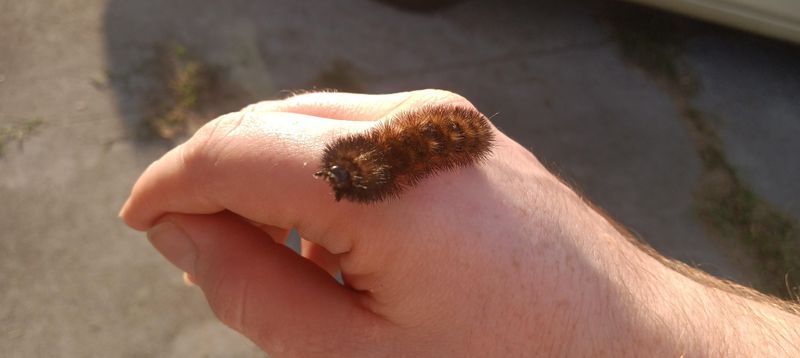
Do Not Rub; Lift Away Any Hairs

Do Not Rub; Lift Away Any Hairs
© Reddit

Right after contact, keep your hands off the spot. Rubbing can push tiny hairs deeper into the skin and spread them to your face or other parts of your arm.

Pull your hand back, and do not scratch, even if the itch starts quickly.

Next, look at the skin in good light. If the hairs seem to be resting on the surface, gently wash them away with soap and water.

A slow rinse works better than scrubbing, because friction is exactly what you want to avoid.

If the hairs look stuck in the skin, Penn State Extension recommends pressing sticky tape over the area and lifting it away. Masking tape, packing tape, or medical tape all work.

Use a fresh piece for each pass so you are not pressing hairs back onto the skin.

Any hairs that remain can be picked out with fine tweezers. Go slowly and take out one hair at a time.

A magnifying glass or a bright window can help you see them.

Once the hairs are off, wash the area again. This second wash clears away anything the tape or tweezers missed.

Also wash your hands and any tools you used.

You do not need to handle the caterpillar to figure out what it was. If you want to identify it, take a photo from a safe distance.

Gloves and clothing that brushed the caterpillar can also carry hairs, so shake them out away from your face and wash them separately.

Wash the Skin, Then Treat the Itch if Needed
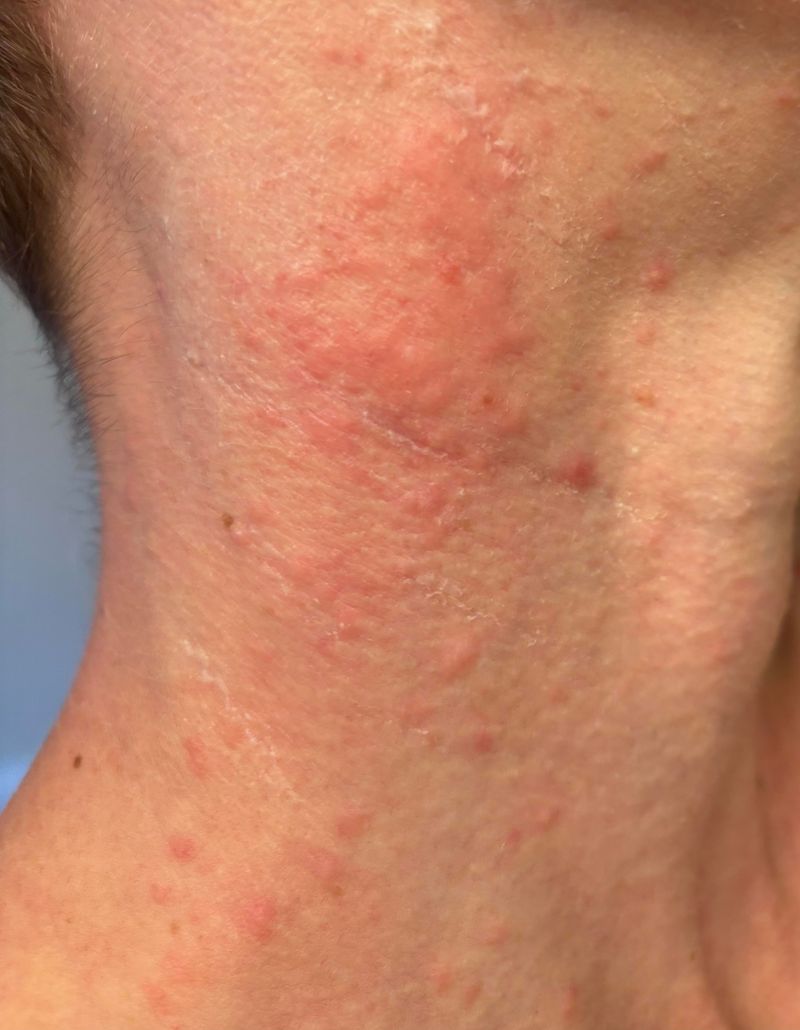
Wash the Skin, Then Treat the Itch if Needed

With the visible hairs gone, wash the whole area with mild soap and plenty of running water. Use your fingertips or a soft cloth and pat the skin dry instead of rubbing it.

Rinse longer than you think you need to, since tiny hairs are easy to miss.

Hairs that get into the eye, mouth, or airway are another, and washing your arm will not solve them.

Wash your hands afterward, and wash any clothing that touched the caterpillar. Keep your fingers away from your eyes and mouth until you have done this.

Many people feel only a mild prickle or itch after this. If that is you, a cool damp cloth may be enough to take the edge off.

You do not have to take medicine after every exposure.

If the itching or swelling gets bothersome, Penn State says antihistamines or topical steroids may be needed. Those are options for relief, not required steps.

A pharmacist can help you choose a product and tell you whether it is safe with your other medicines, and a doctor can advise for children or anyone with health conditions.

This section covers ordinary skin symptoms only. If hairs reached an eye, were swallowed, or were breathed in, jump ahead to the next sections.

The same goes for any trouble breathing or swelling of the face.

A Local Itchy Rash Is the Usual Reaction
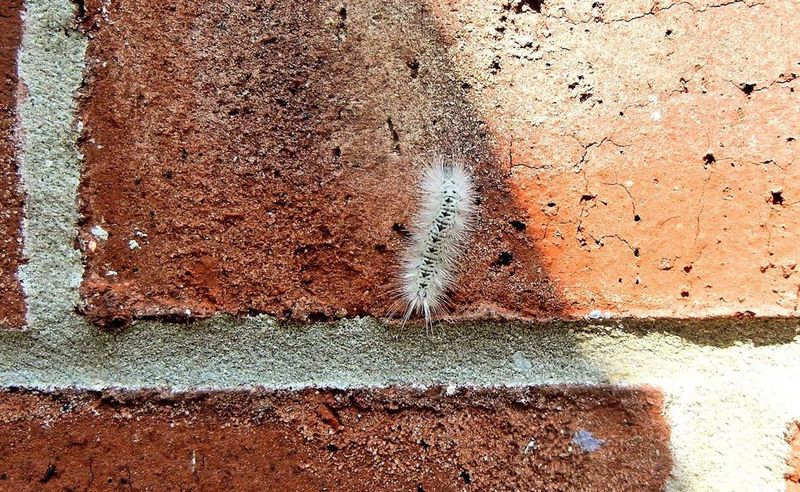
A Local Itchy Rash Is the Usual Reaction
© Farm and Dairy

Plenty of gardeners say they were stung, but that word can be misleading. The usual hickory tussock reaction is irritation, itching, or a rash where the hairs touched the skin.

That is different from the injection of a bee sting, and the sources do not describe it that way.

According to Penn State Extension, most cases need minimal care and often clear up on their own within about 48 hours. Penn State also reports no systemic allergic reactions linked to this species.

Still, an allergic reaction may be possible, so stay alert for warning signs.

There is a published case of anaphylaxis, but it involved the spotted tussock moth, not the hickory tussock. It is a reason for caution, not proof that hickory tussocks cause the same thing.

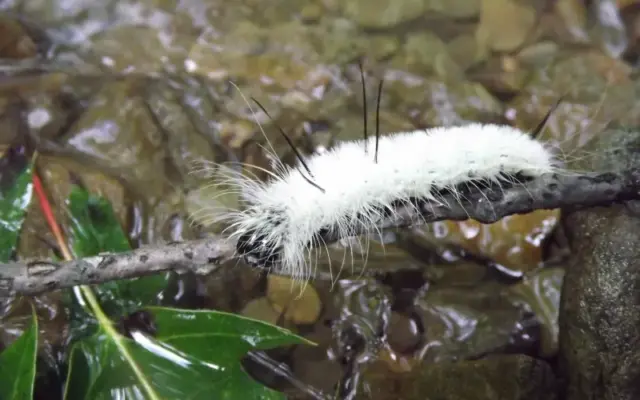
Identification matters too. Penn State describes the hickory tussock as a fuzzy, white-and-black caterpillar.

Minnesota has other tussock species, such as the white-marked tussock moth covered on University of Minnesota Extension.

So do not assume every fuzzy caterpillar you meet is a hickory tussock. Other species can affect skin differently.

A photo taken from a safe distance can help you or a doctor sort it out.

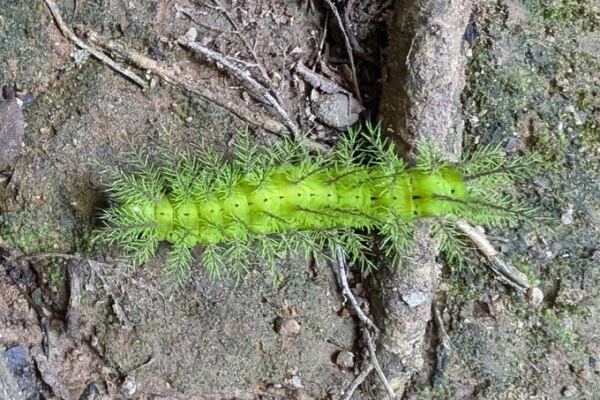
Eye, Mouth, or Airway Exposure Needs Medical Advice
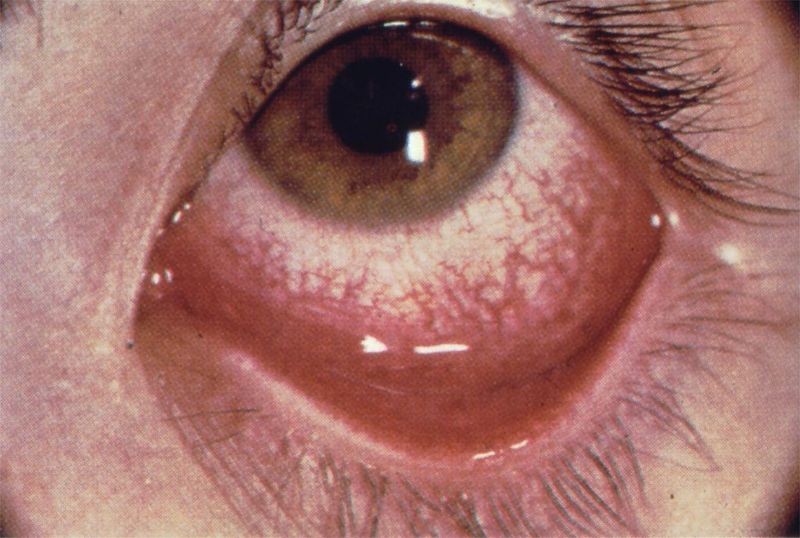
Eye, Mouth, or Airway Exposure Needs Medical Advice
© The oak processionary

Skin contact is one thing. Hairs that get into the eye, mouth, or airway are another, and washing your arm will not solve them.

These cases call for medical advice.

If hairs may be in an eye, rinse it with plenty of clean water right away. MedlinePlus advises rinsing the eye and then getting medical help.

Do not rub the eye, since that can drive the hairs in further. Pain, redness, tearing, or blurry vision is a good reason to be seen quickly.

If hairs were swallowed, get medical help. This can happen when a child puts a hand or a caterpillar in the mouth, or when hairs from your fingers reach your lips.

Penn State Extension also lists swallowed hairs as a reason to seek medical care, so call a doctor or Poison Control instead of waiting to see what happens.

If hairs may have been inhaled, MedlinePlus advises medical care too. Coughing, throat irritation, or a tight chest after being near caterpillars is a signal to get checked.

Skin washing, tape, and tweezers are for skin only. For the eyes, mouth, or airway, rinsing and professional advice come first.

When unsure, make the call.

Breathing Trouble or Facial Swelling Is an Emergency

Breathing Trouble or Facial Swelling Is an Emergency
© Elsevier

A local itchy patch is manageable at home. Some symptoms are not, and they need emergency help immediately.

Call 911 for difficulty breathing, fainting, or swelling of the lips, face, or tongue.

These signs point away from a simple rash and toward a possible severe allergic reaction. Do not wait to see if they improve, and do not drive yourself if you feel faint.

Have someone stay with you until help arrives.

Compare that with the usual picture: itching, redness, or small bumps where the hairs touched the skin. That pattern stays in one spot and does not affect your breathing or your face.

If it spreads or you feel unwell in other ways, get medical advice.

For questions that are not emergencies, Poison Control offers exposure-specific advice at 1-800-222-1222 in the United States. The call is free and answered by experts, and it is a good choice when you are unsure how worried to be.

Poison Control does not replace emergency services. If any of the 911 symptoms appear, call 911 first, and call Poison Control afterward if needed.

Avoid Another Contact

Avoid Another Contact
© regina josé galindo

The simplest fix is to keep your hands off fuzzy caterpillars, even when you think you know the species. Looks can fool you, and different species affect people differently.

If one lands on you, Poison Control recommends removing it without bare hands, such as with a stick or gloved tool.

If contact happens anyway, remember the order: do not rub, lift hairs with tape or tweezers, and wash. Get medical help for hairs in the eye, swallowed or inhaled hairs, or any of the 911 warning signs.

A caterpillar looks soft, but it is better admired from a few feet away.

Share this story

IO

Written by

Ingrid Olson

More from Ingrid Olson →

About Gardening Latest

Gardening Latest provides in-depth guides to maintaining and enhancing your garden and backyard. Learn how to make the most of the space you have and create a beautiful garden.

More about us →

Latest stories

  • Tennessee GardeningSaddleback Caterpillars Hide Under Tennessee Maple Leaves, and Their Sting Calls for These Quick First Steps

    Saddleback Caterpillars Hide Under Tennessee Maple Leaves, and Their Sting Calls for These Quick First Steps

    Just now
  • Alabama GardeningFire Ant Mounds Popping Up Across Your Alabama Yard After a Rain Are Telling You Something

    Fire Ant Mounds Popping Up Across Your Alabama Yard After a Rain Are Telling You Something

    6 min ago
  • Illinois GardeningIllinois Ants Rebuild Overnight After a Downpour, and Their Fresh Mounds Mark Your Lawn’s Weak Spots

    Illinois Ants Rebuild Overnight After a Downpour, and Their Fresh Mounds Mark Your Lawn’s Weak Spots

    18 min ago
  • Louisiana GardeningThat Giant Flower Stalk on Your Louisiana Onions Is Telling You Something, and Here’s Whether to Cut It Off

    That Giant Flower Stalk on Your Louisiana Onions Is Telling You Something, and Here’s Whether to Cut It Off

    24 min ago
  • Delaware GardeningThat Green Caterpillar With a Brown Saddle Stings Hard in Delaware Gardens, and Here’s What to Do First

    That Green Caterpillar With a Brown Saddle Stings Hard in Delaware Gardens, and Here’s What to Do First

    30 min ago

Gardening by state

Stories for your state, and the hardiness zone most of it gardens in.

Keep exploring

Read next

All Minnesota Gardening →
Minnesota GardeningHere’s What a Red Fox Is Up To When It Crosses Your Minnesota Yard in Winter
Minnesota Gardening

Here’s What a Red Fox Is Up To When It Crosses Your Minnesota Yard in Winter

3 hr ago
Minnesota GardeningThat Burning Welt From an Io Moth Caterpillar in Your Minnesota Garden Needs These First Steps
Minnesota Gardening

That Burning Welt From an Io Moth Caterpillar in Your Minnesota Garden Needs These First Steps

18 hr ago
Minnesota GardeningBefore You Dig Into Your Minnesota Garden, Learn To Recognize The Venomous Creatures Living There
Minnesota Gardening

Before You Dig Into Your Minnesota Garden, Learn To Recognize The Venomous Creatures Living There

20 hr ago

More from Minnesota Gardening

  • The Venomous Rattlesnake Minnesota Still Protects Even Though Almost Nobody Has Seen One in Years

    Nov 24
  • That Woolly Bear You Spotted on Your Minnesota Driveway Freezes Solid All Winter and Then Crawls Away in Spring

    Nov 24
Back to top

Leave a response Cancel

Your email address stays private. Required fields are marked with an asterisk.

Gardening Latest

In-depth guides to maintaining and enhancing your garden and backyard: how to make the most of the space you have, and how to make it beautiful.

  • Facebook
  • X
  • Pinterest
  • YouTube

We may earn a portion of sales from products or services that are purchased through our site as part of our affiliate partnerships with retailers.

Explore

  • About GardeningLatest.com
  • Contact Us
  • Terms and Conditions
  • Privacy
  • Editorial Note:
  • FTC Disclosure

Newsletter

New garden guides and seasonal tips, straight to your inbox.

We’ll email you a link to confirm. Unsubscribe any time.

Almost there! Check your inbox and tap the link to confirm.

© 2026 Gardening Latest. All rights reserved.

Back to top