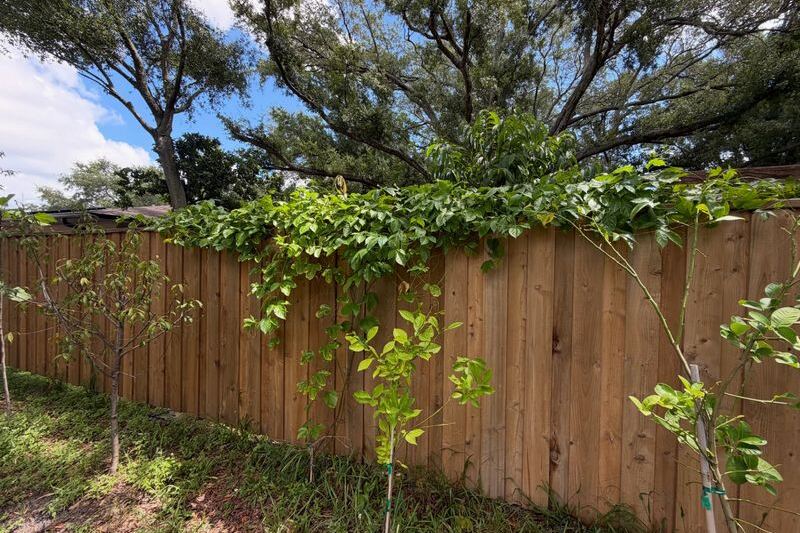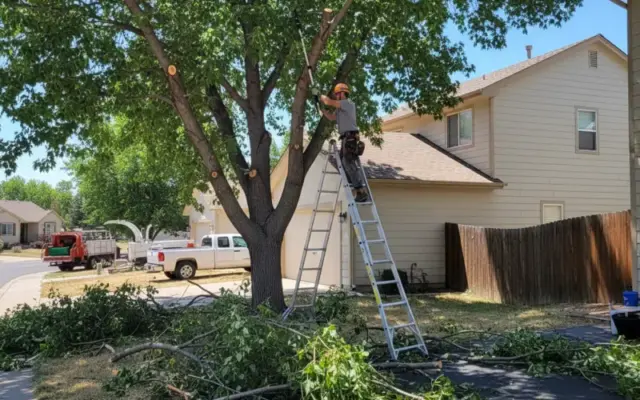
If a neighbor’s tree hangs branches over your yard, Texas homeowners can generally trim them back to the property line without asking first. That works when the tree is rooted wholly on the neighbor’s land and you cut only what crosses over your side.
A few limits can turn a quick trim into an expensive mistake. Knowing them before you pick up the saw can save you money and a lot of tension next door.
When Texas homeowners can trim overhanging branches

Here is the practical rule. Texas has no statute that directly covers this situation, according to the Texas State Law Library, but the common law gives a homeowner the right to cut back branches that reach onto their land.
This guidance applies to a tree rooted wholly on the neighbor’s property.
The right has clear edges. You may remove only the part that extends over your side of the line.
You may not step onto the neighbor’s land to cut, trim past the boundary, or damage or kill the tree, and improper trimming may lead to a damages claim.
Being allowed to trim is not the same as being able to make someone else do it. The State Bar-reviewed Texas Law Help disaster manual says a homeowner generally cannot compel a neighbor to trim healthy branches that hang over the line.
Do not count on the neighbor paying for or performing the work either.
So the choice is yours. You can trim the overhang yourself, hire someone to do it, or leave it alone.
A friendly conversation first costs nothing, even though the law does not require it.
This is general guidance, not a promise for every property or every pruning job. Facts like the tree’s location and local rules can change the answer.
A tree rooted on the property line is different
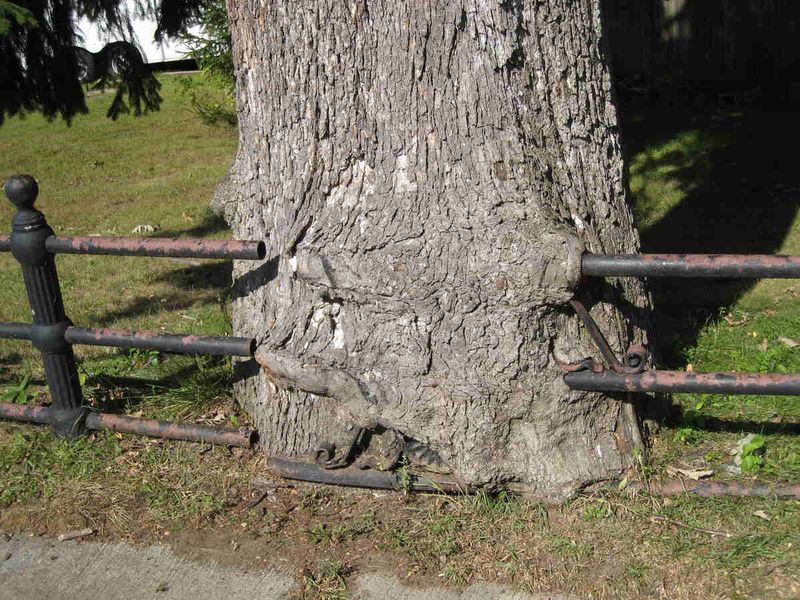
Everything above assumes the trunk stands entirely on your neighbor’s side. If the trunk sits on the boundary, you are in a different situation.
Do not assume you can cut your half or remove the tree.
A 2023 Texas appeals decision shows why. In Lisle v.
DO-MO Joint Venture, the Fifth Court of Appeals dealt with liability after boundary trees and other border vegetation were removed without the adjoining owner’s consent. The court affirmed liability findings in the circumstances before it.
That result belongs to that case. It is not a rule that fits every boundary tree in Texas, and the facts of your property may differ.
What it does show is that a shared tree can be treated as jointly protected, so a unilateral cut carries real risk.
A practical clue helps here. Look at where the trunk meets the soil.
If it appears to straddle a fence, a marker, or a surveyed line, treat it as a shared-tree question rather than an overhang question.
In that case, talk with your neighbor and consider asking a real estate attorney before any cutting. A short consultation costs far less than a dispute.
Verify the property line before cutting
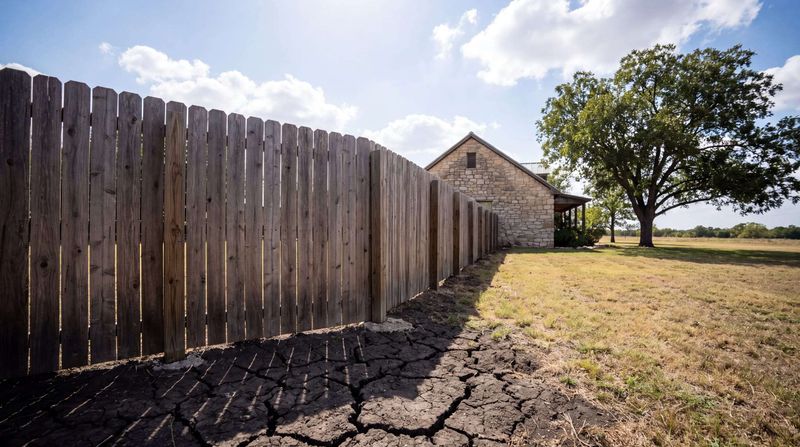
Before any cut, find out exactly where your land ends. Fences, trunks, and visible landmarks often sit a little off the true line, so they make poor guides.
A cut that seems to be on your side may actually land on theirs.
Texas courts have taken this seriously. A Texas A&M Real Estate Research Center analysis summarizes Burris v.
Krooss, a case about trees cut from the wrong property. It reports the court’s ruling that a landowner who intends to cut trees owes the adjoining owner a duty to ascertain the boundary with diligence and care.
That is a limited point, but a useful one. If you are the one holding the saw, the job of knowing where the line sits is yours.
Start with your deed, plat, and any existing survey from your closing paperwork. If those leave doubt, a licensed surveyor can mark the line.
Photos of the branches and the marked boundary before you start can also help if questions come up later.
Protect the tree when you prune
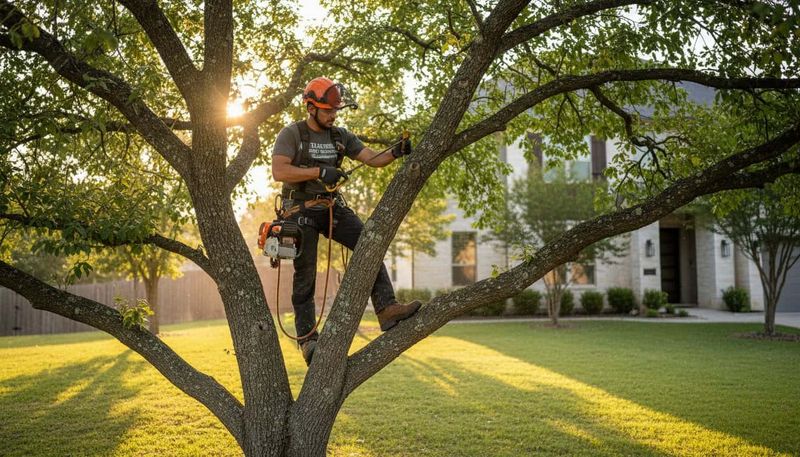
Staying on your side of the line does not excuse harming the tree. The Texas State Law Library notes that damaging or killing it may lead to a damages claim.
The right is to cut the encroaching part, not to hurt your neighbor’s tree.
For the how-to, Texas A&M Forest Service pruning guidance advises cutting just outside the branch collar, the slightly swollen ring where a branch meets its parent limb, without damaging it. It also suggests generally removing no more than 25% of the crown at once, and less for mature trees.
Those are tree-care recommendations. They are not a legal permission threshold, and not a statewide legal limit.
Following them does not guarantee a safe or lawful cut.
A few diagnostic clues can keep you out of trouble. If removing the overhang would leave a lopsided tree or strip most of its foliage, stop and rethink.
If a cut would need to go deep into the trunk or the line sits far out along a heavy limb, a certified arborist can advise on how to cut without causing harm.
Check local rules and consider long-standing overhangs
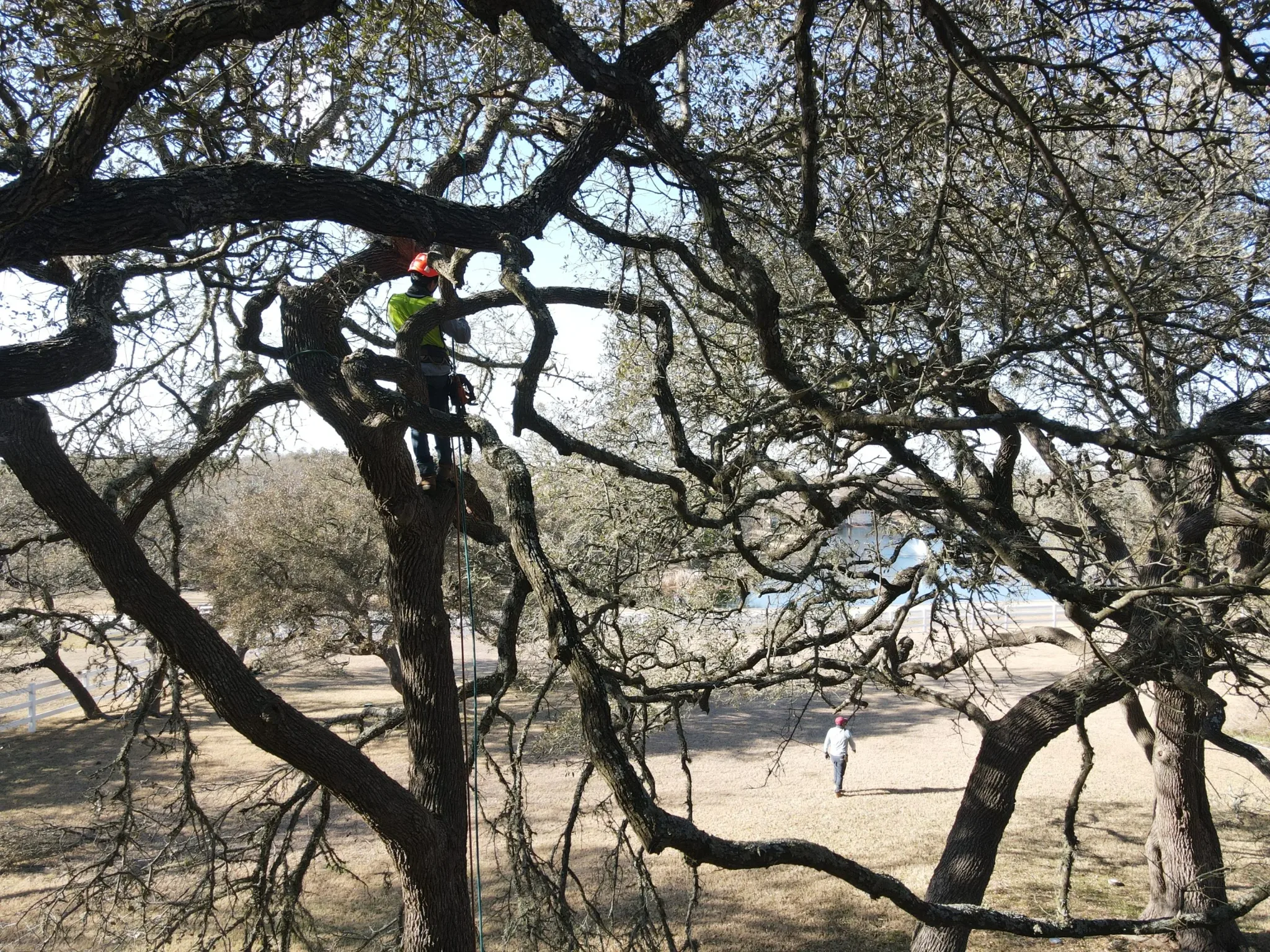
State-level common law is only part of the picture. The Texas State Law Library warns that local ordinances and HOA or POA covenants may regulate tree maintenance, and rules vary by location.
Check the ones that apply to you before any significant pruning.
Austin offers one example. Austin Development Services requires a review application to prune 25% or more of the canopy of a regulated tree.
That is a local rule for regulated trees, not a statewide requirement, so your city may be stricter, looser, or silent.
Another wrinkle involves overhangs that have been in place for many years. The TRERC analysis described Ortiz v.
Spann, where an easement claim involving overhanging limbs was sent back for trial. It reported that no later appellate cases had resolved the easement question when the analysis was published.
Courts may have addressed it since then, so do not assume the answer either way. If the branches have hung there for decades, check for current decisions or ask an attorney before cutting.
Get help with dangerous trees and difficult cuts
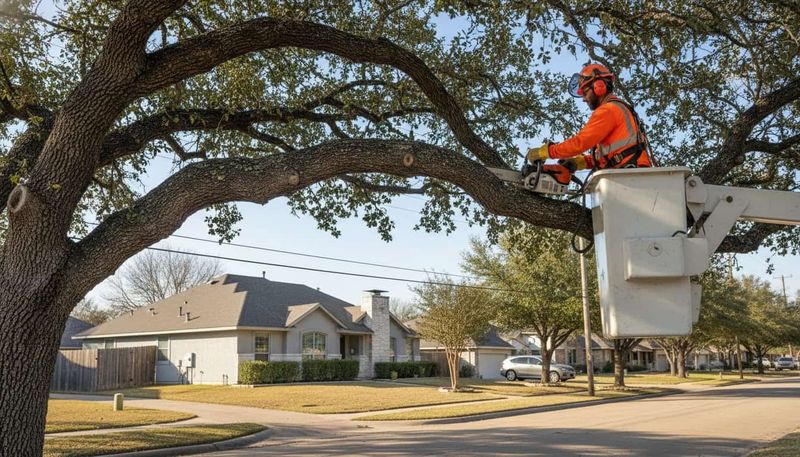
Trimming a few healthy twigs is one thing. A dead, diseased, or leaning tree is another.
The Texas Law Help manual says local officials may be able to address a dead, diseased, or dangerous tree, so contact them. There is no promise they can force your neighbor to act, but reporting it creates a record and may start a review.
Power lines raise the stakes. Texas Department of Insurance power-line guidance says to assume lines are energized and keep at least 10 feet away, and farther from higher-voltage lines.
Call the utility instead of working near them yourself.
Some jobs are simply too hard to do safely on your own. The TDI tree-service safety page recommends a qualified arborist or line-clearance tree trimmer for complex or power-line-adjacent work.
High limbs, heavy branches, and unstable trees belong in that category.
When you hire help, ask about credentials and insurance, and tell the crew exactly where the property line is.
Use a careful checklist before you trim
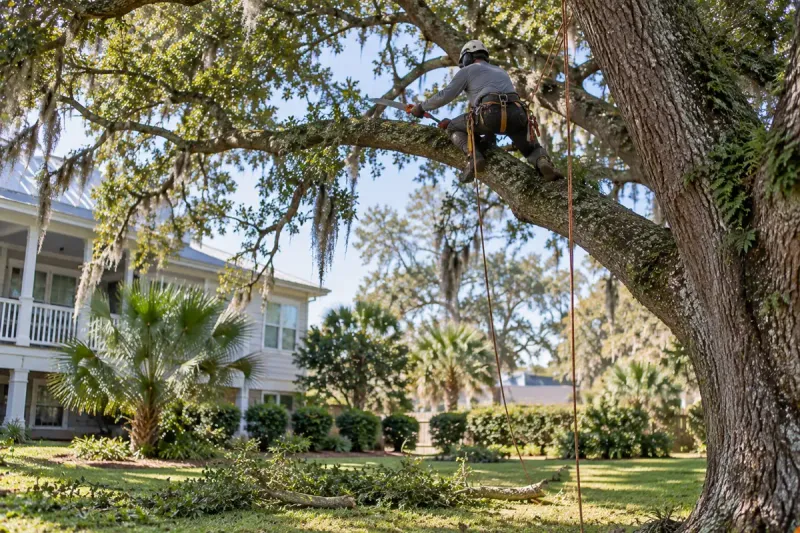
Keep it simple and go in order. First, confirm the tree is rooted wholly on your neighbor’s land and that the branches extend over yours.
Next, verify the boundary, check city and HOA rules, and plan cuts that avoid harming the tree.
If the work is high, heavy, or near wires, hand it to a qualified pro, as the TDI tree-service safety page advises. The Texas State Law Library is a good place to start for the broader legal picture.
The best cut is the one nobody argues about afterward.
Share this story