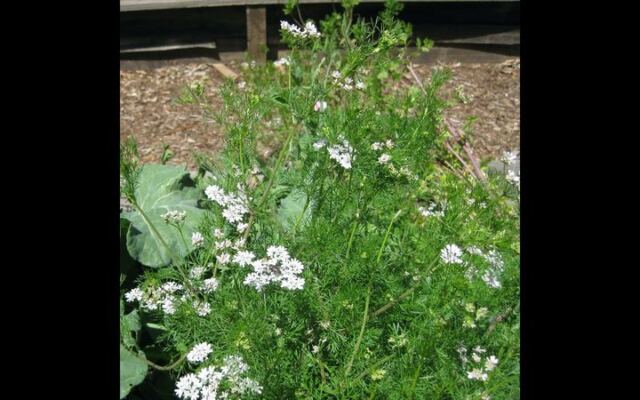
That tall, feathery stalk rising from your cilantro means the plant is bolting. It is shifting from making leaves to making flowers and seed.
You still have good choices, and the plant is not a lost cause. Here is how to decide what to do with the cilantro you have now.
What the stalk tells you
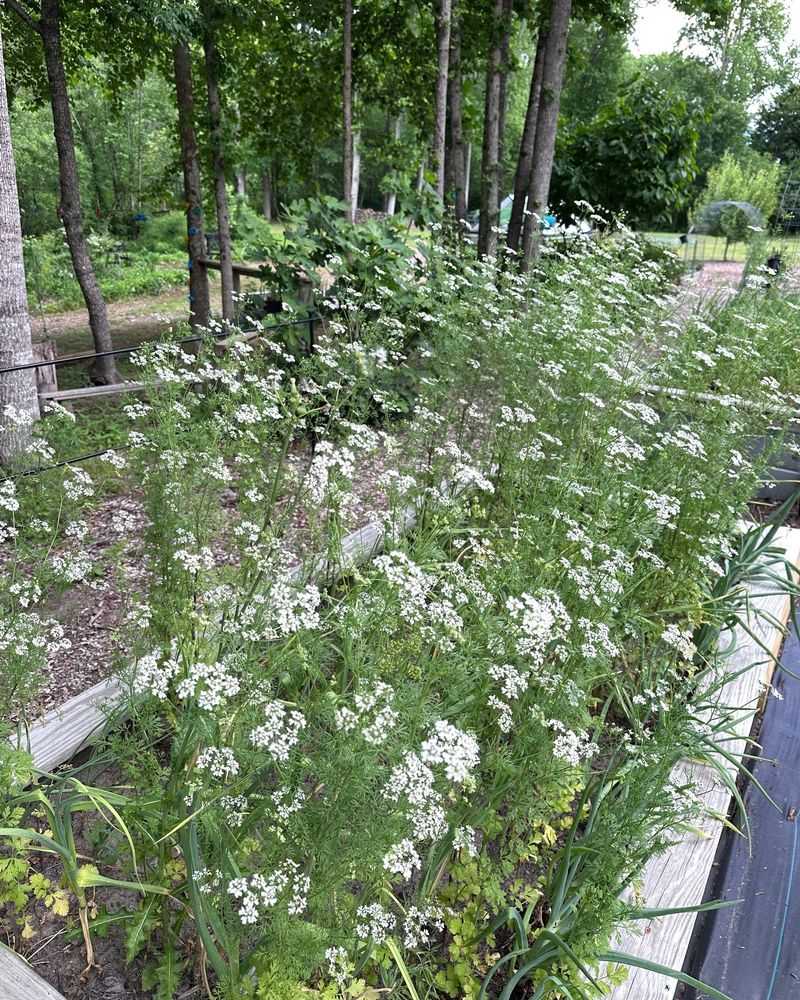
Cilantro that sends up a tall, lacy stalk has shifted from putting energy into broad leaves toward flowering and seed production. That change is called bolting, and it is a normal part of the plant’s life cycle.
It does not mean you did something wrong.
Heat is a big trigger in Texas. Texas A&M AgriLife guidance says cilantro starts to bolt when temperatures climb above about 85°F.
Think of that as a useful Texas rule of thumb, not an exact switch that works the same for every variety or every yard.
Temperature is also not the whole story. Oregon State Extension explains that both temperature and day length influence flowering and seed set.
That is why cilantro can bolt in a mild spell when days get long, and why some plants hold out a little longer in cooler spots.
A bolting plant is not ruined. It may still give you usable leaves, and its flowers can turn into coriander seed.
So the real question is what you want from this plant: more leaves for a while, or flowers and seed. The next sections walk through both paths.
If you still want leaves
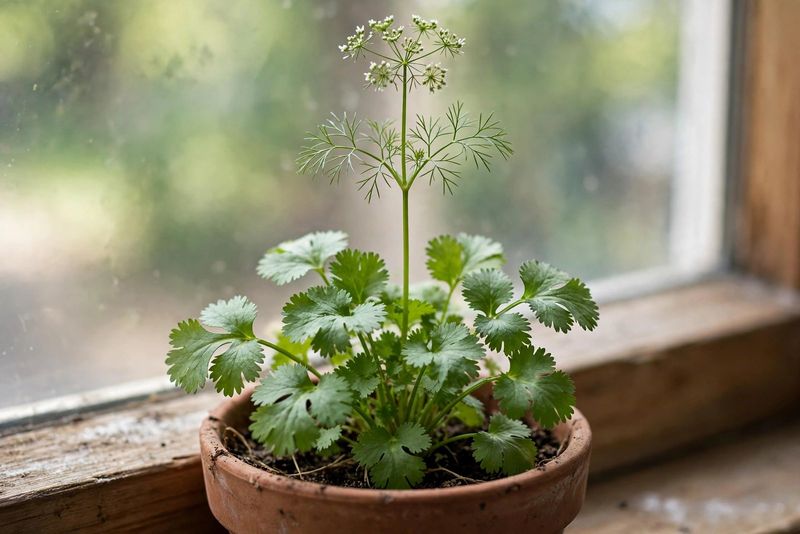
Maybe leaves are still your priority. In that case, University of Maryland Extension suggests pinching off flower stems and continuing to harvest, which can extend the harvest.
It is worth a try, especially while flower stems are young and short.
Keep the expectations realistic, though. Pinching may buy you some extra leaf harvest, but it is not a dependable reset.
Once a tall stalk has formed, cutting it off is not a proven way to bring back steady, leafy growth.
Flowering is part of how cilantro lives, and as Oregon State Extension notes, heat and day length keep pushing the plant that way. The plant may simply send up another stem.
If you try it, check the plant every few days and snip new flower stems as they appear. Keep cutting leaves as you go.
If the plant keeps pushing flowers anyway, you have not failed. Enjoy what you get, and consider letting the plant finish its cycle.
Either result is fine. The point is to try a low-cost step while knowing it may only give you a short reprieve.
Let flowers become coriander
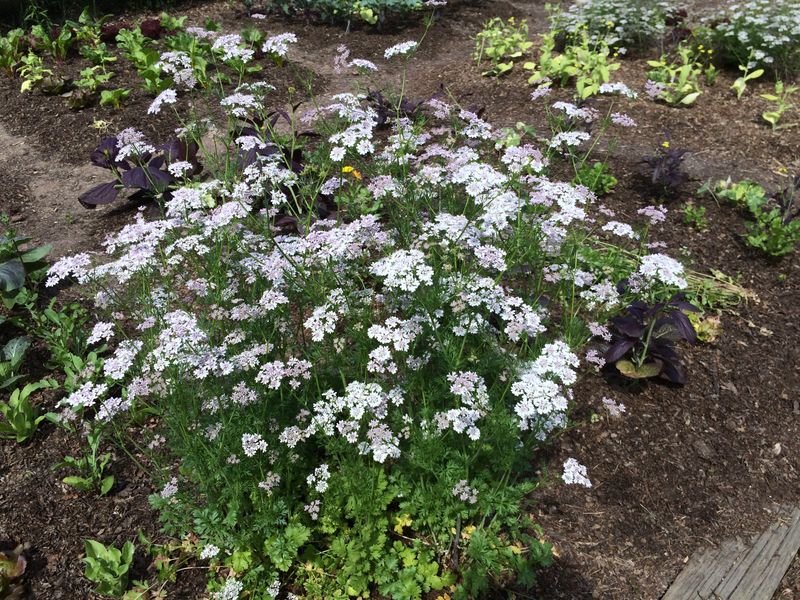
Leaving the stalk has its own rewards. Cilantro flowers can attract beneficial insects, according to University of Wisconsin-Madison Extension, so a few flowering plants can help the rest of your garden.
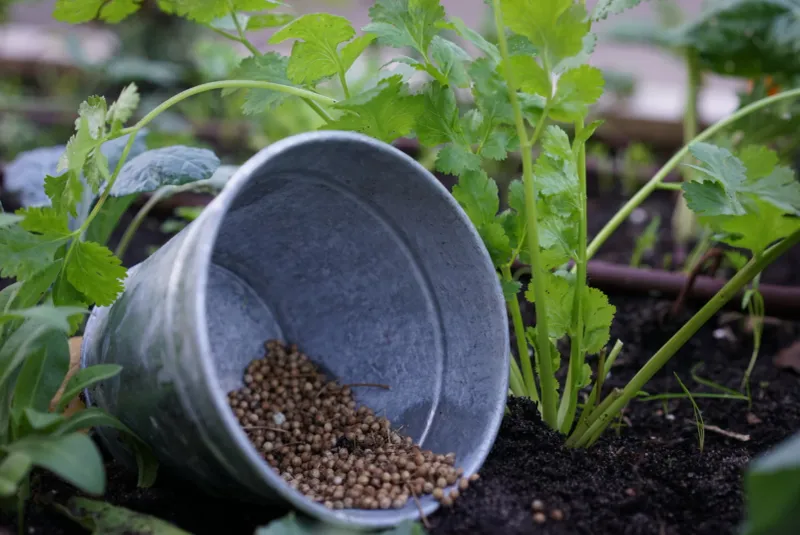
The flowers can also develop into coriander seed. Cilantro usually refers to the leaves and coriander to the seeds, but both come from the same plant.
Seed is a different goal from leaf harvest, so choosing it means giving up on pinching.
Patience matters here. Do not pick the seeds while they are green.
Wait until the seed heads turn brown or the plant begins to dry out.
Then Utah State University Extension describes a simple method: cut the heads and dry them in a paper bag so the seeds can fall into it. Shake the bag gently, then store the dry seed in a jar.
You can grind the seed for cooking or save some to sow later. Either way, a plant that has gone to flower still has plenty to offer.
Use the leaves you have
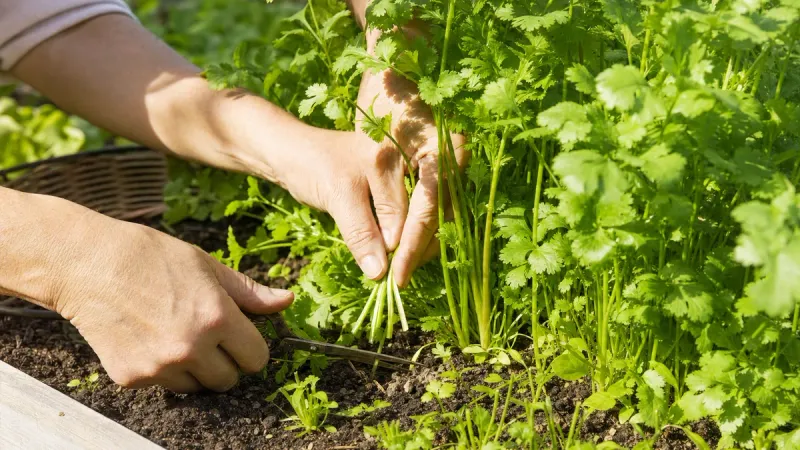
Take a quick look at the leaves before deciding anything. Plenty of bolting plants still have usable growth, especially lower down.
AgriLife recommends cutting exterior leaves when they are 4 to 6 inches long.
If you still want leaves, harvest them promptly instead of waiting. Flowering changes the plant’s priorities, and the foliage that grows on the stalk is thin and feathery rather than broad.
Taste matters too. Wisconsin Extension advises harvesting leaves before bolting because they may develop a disagreeable flavor afterward.
That does not make them poisonous or unusable. Nibble one and decide for yourself.
Leaves that taste harsh can often be mixed into salsa, beans, or cooked dishes where other flavors balance them out. Extension sources, including Oregon State, also list flowers, roots, and seeds as edible parts of cilantro.
Rinse whatever you pick under running water before eating.
Plan the next sowing for cooler conditions
Once you have decided about this plant, look ahead. For leaf crops, AgriLife generally recommends planting in February for an April harvest and again in September for a November harvest.
It also suggests weekly plantings for a continuing supply.
Those dates are general Texas recommendations. Texas is a big state, and your timing may shift with your region, microclimate, and the weather that year.
Small batches help. Sowing a little every few weeks, as Oregon State Extension describes, means you always have younger plants coming along when older ones start to flower.
Cooler conditions and afternoon shade can support steadier leaf growth. A spot shaded from late-day sun, or a bed beside taller plants, may help.
None of this guarantees a plant will never bolt. Think of it as stacking the odds in your favor, so a tall stalk in one row is not the end of your supply.
Choose what you want from the plant
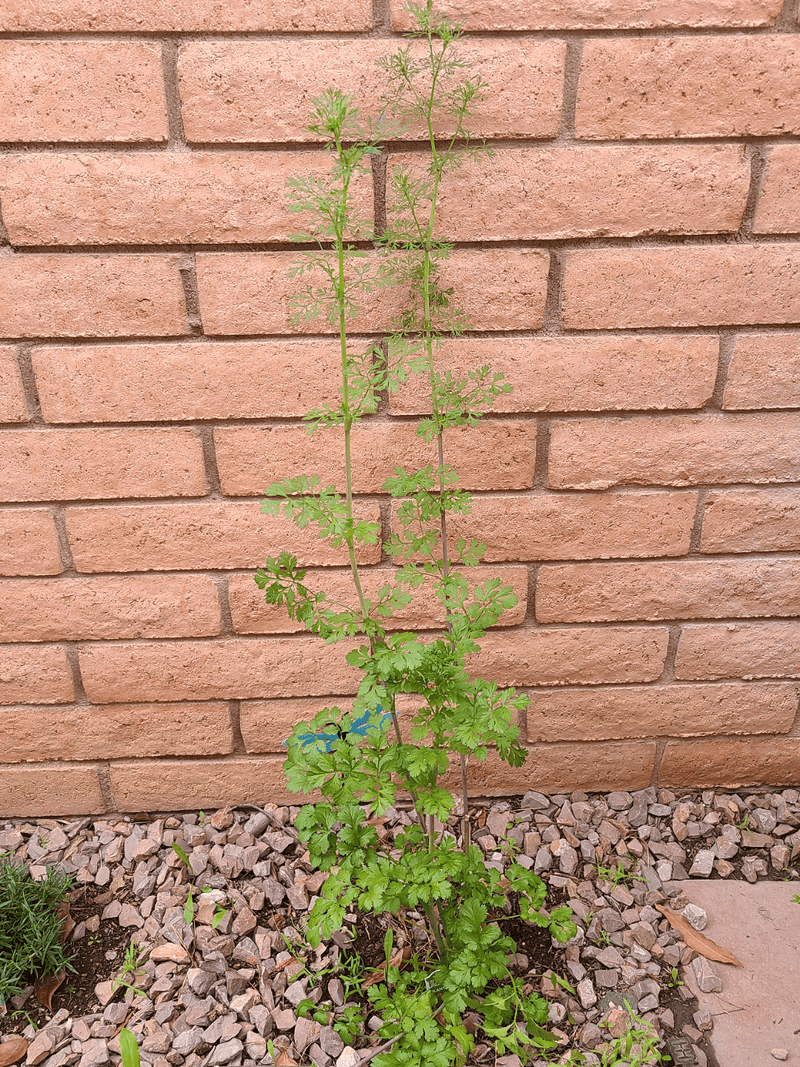
If leaves matter most, pinching flower stems may extend the harvest, as Maryland Extension notes, but it is not a dependable reset, especially once a tall stalk has formed. If flowers or coriander seed are the goal, leave the stalk alone.
Neither option promises a long return to leafy growth. Cilantro simply finishes its life cycle on its own schedule, and your job is to pick which part you want.
Share this story