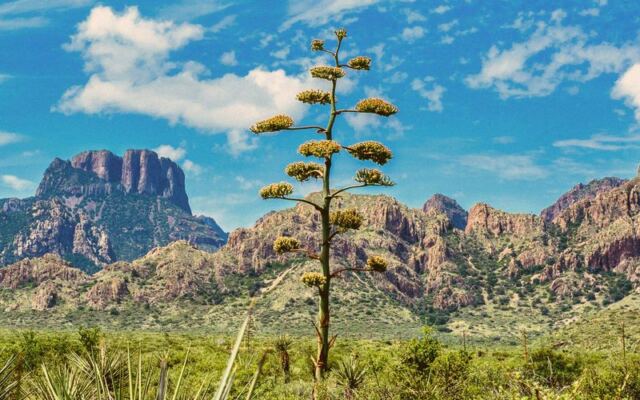
Agaves send up those tall stalks because it is time to flower and make the next generation. Many of them spend years storing energy before they take this big step.
Cutting the stalk has not been shown to reliably save the plant, so the real choice is whether to leave it for the show or remove it for safety or looks. Here is how to tell which path fits your yard.
What “Texas agave” can mean
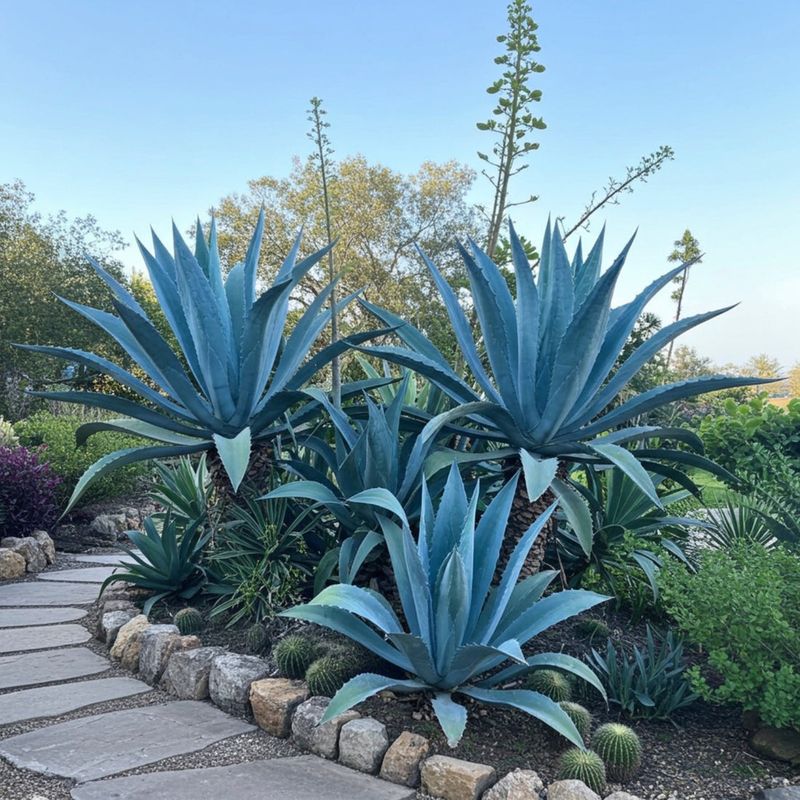
Texas does not have just one agave. The state is home to many agave species, so “Texas agave” is a loose label, not a single plant with a single schedule.
One well-known example is Agave americana. The University of Texas at Austin wildflower database lists it as native to South Texas, though it is planted in many other places, so the one in a neighbor’s yard may have been bought at a nursery.
Why does the name matter? Flowering age, survival after bloom, and the chance of baby plants all differ from species to species.
A stalk on a small, tidy agave may follow a different pattern than one on a giant blue-gray rosette.
Before you decide anything, try to identify your plant. Look at the leaf size, color, and spines, and compare it with a local nursery tag, a photo match, or a county Extension office.
Related plants can fool you, too. University of Arizona Extension notes that yuccas can look similar but behave differently after they bloom.
Once you know what you have, the species details in the next sections will make more sense.
The stalk serves the plant’s reproduction
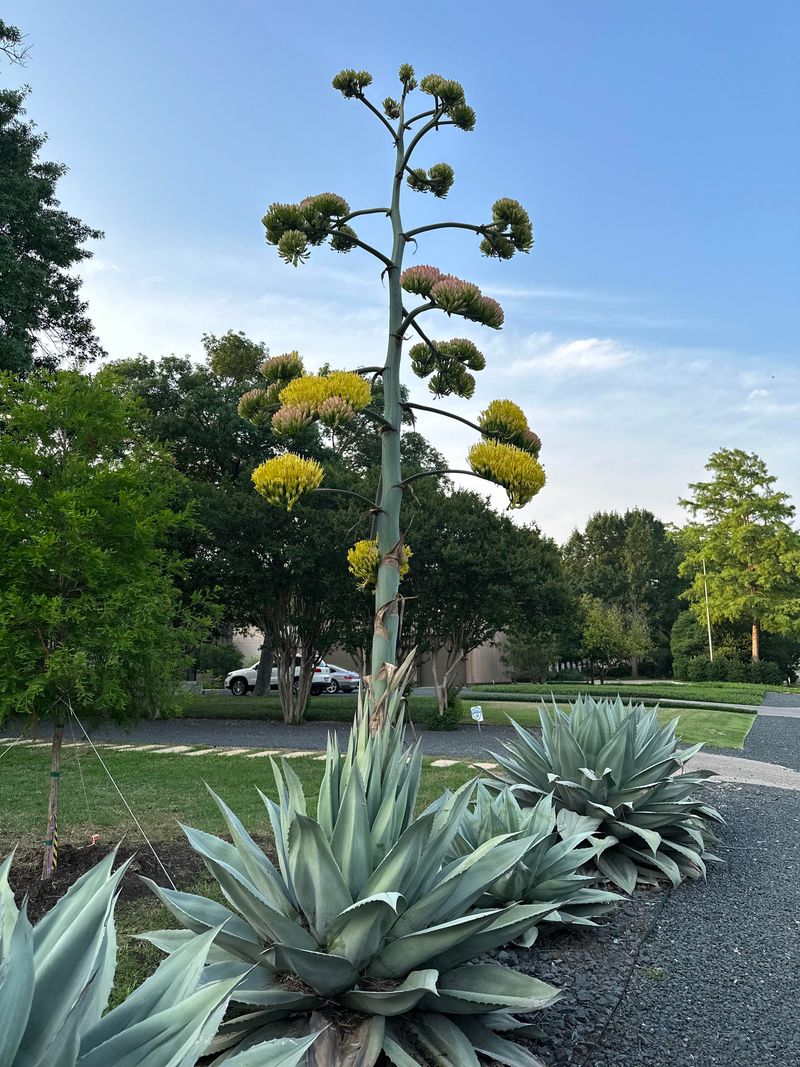
A tall agave stalk is not ordinary growth that needs trimming. It is how the plant lifts its flowers high into the air so pollinators can find them and seeds can form.
Many agaves grow for years before they get to this point, quietly storing sugars and starches in their leaves and core. Flowering is expensive.
In a study of Agave deserti, researchers measured a large draw on the plant’s reserves while it flowered, which helps explain why a stalk can shoot up so fast.
You may have heard that growers cut stalks off to protect agaves. That is true in one setting.
In commercial Agave tequilana fields, research on flowering in blue agave describes removing the flower structure early so the plant keeps its stored carbohydrates for the harvest.
That is a crop practice, done on purpose at a particular stage, for a plant grown for its sugars. It is not proof that trimming the stalk of a flowering garden agave will rescue the rosette.
Think of the stalk as the plant’s main project for this stage of life, not a branch gone wrong.
The century-plant name is not a timetable
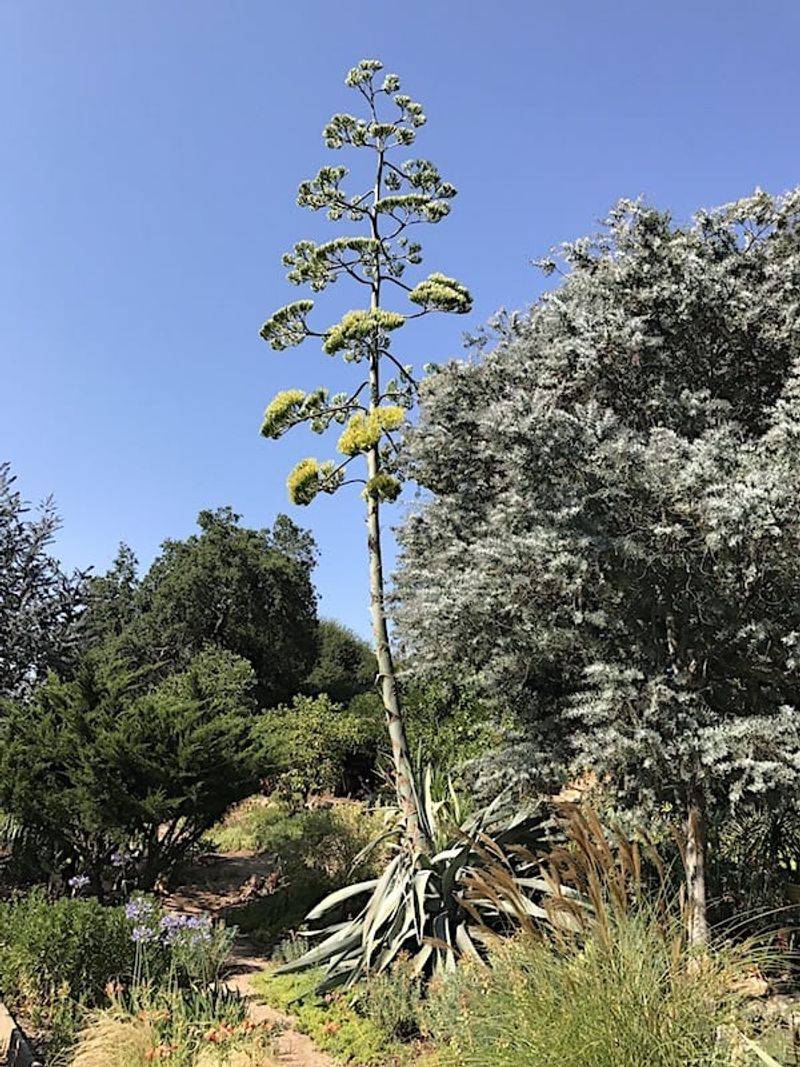
Nobody needs to wait a hundred years. “Century plant” is a nickname for a very long wait, and it stuck because agaves can seem to take forever to bloom.
Agave americana does grow for many years before it flowers, but the University of Texas at Austin says that wait is not a century. Its listed flowering months in Texas are June and July, so a stalk showing up in early summer is not a surprise for that species.
That month range belongs to Agave americana, not to every agave. Other species can flower at different ages and in different seasons, and growing conditions can shift the timing too.
If your plant starts a stalk in an odd month, do not assume something is wrong. It may simply be a different species or a plant responding to its site.
Use the nickname as a fun clue that bloom time is slow and uneven, then check the specific plant before guessing at dates.
The flowering rosette can decline while new plants take its place
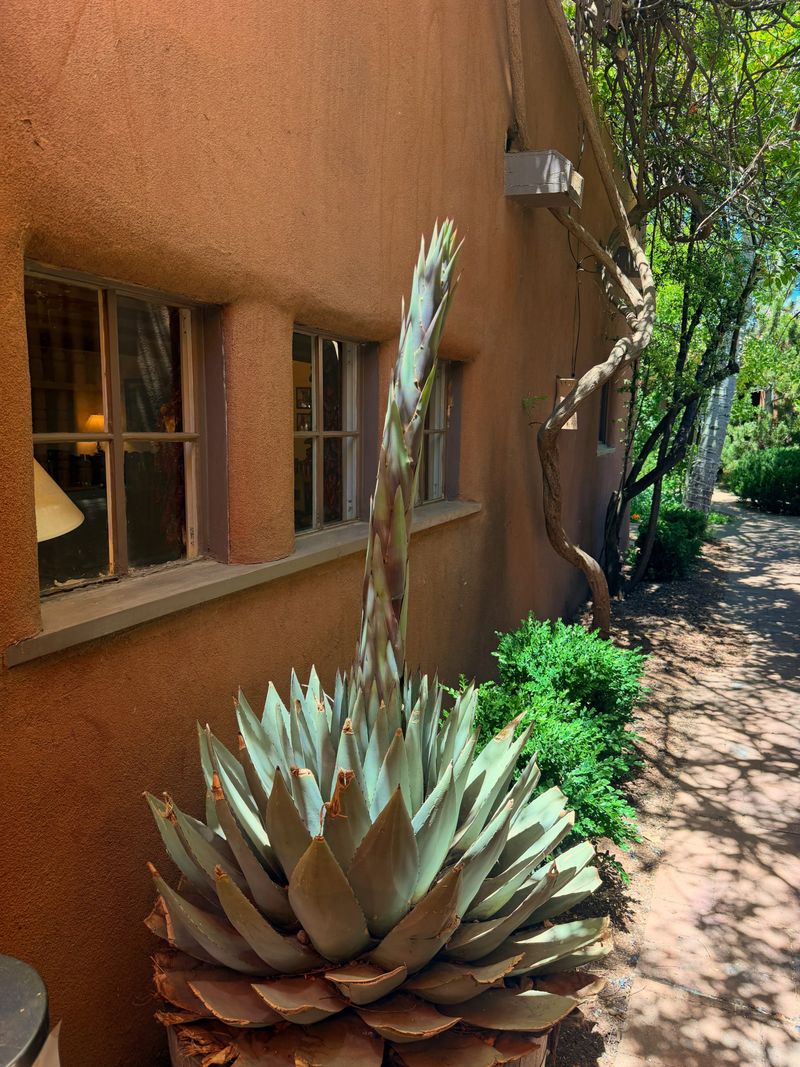
Many agaves flower once per rosette, and afterward that main rosette declines. The process is slow, though.
Stalk emergence, flowering, seed development, and decline are separate steps that can stretch across months, so a new stalk does not mean the plant collapses overnight.
Replacements often show up at ground level. Some agaves produce basal offsets, often called pups, and New Mexico State University Extension says these can be left in place or transplanted.
Some species also form tiny plantlets called bulbils on the flower stalk itself.
None of this is guaranteed. University of Arizona Extension points out that patterns differ among varieties, and offsets are common in some agaves but absent in others.
If you want to know whether pups are likely, look at the base of your plant now.
Yuccas are the useful exception to remember. They can look like agaves, but they can flower again and again without dying after bloom.
If your plant is actually a yucca, a stalk is not a final act at all.
Leaving the stalk preserves flowers and the chance of seed
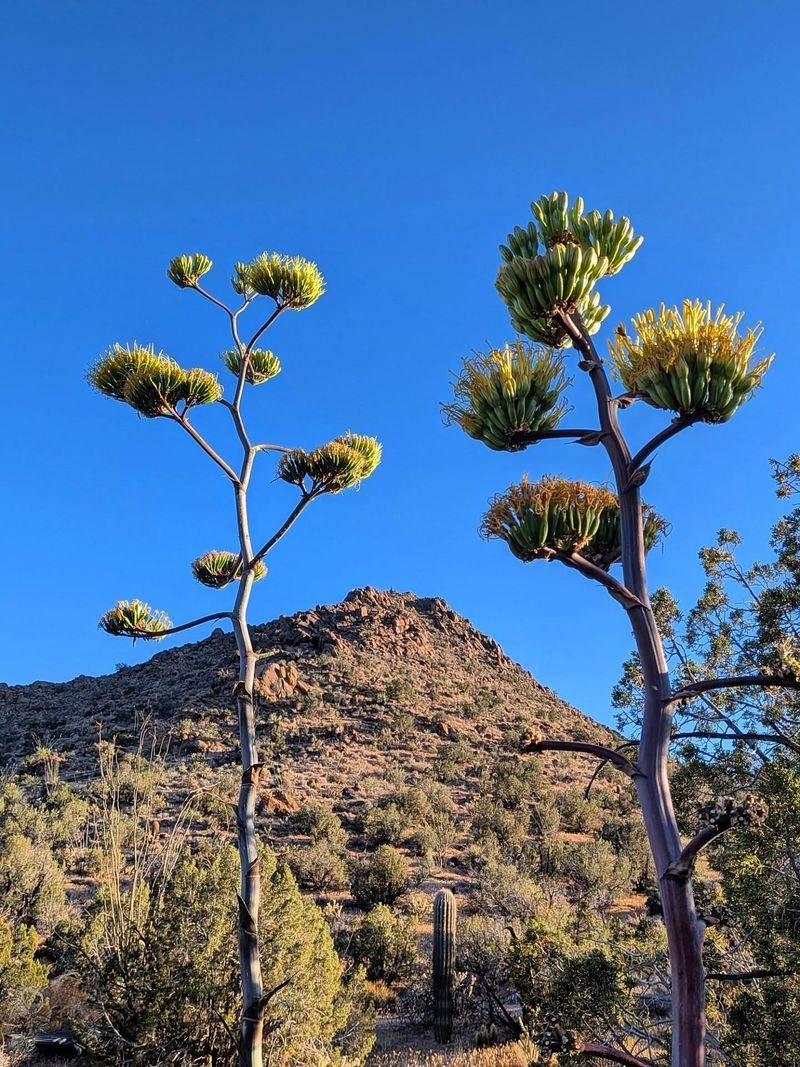
If the stalk stands safely, leaving it lets the flowers open and gives the plant a chance to finish its job. For many gardeners, that is the big payoff after years of waiting.
In some places, those flowers matter to wildlife. The U.S.
Fish and Wildlife Service describes bats feeding on flowering agaves and carrying pollen from plant to plant. That applies to some agave and location combinations, so it is no promise that bats will visit a particular Texas yard.
Pollination styles also vary, as shown in research on floral diversity in agaves.
Seed is possible but not certain either. It needs successful pollination, and the seed needs time to ripen.
If you want to collect it, wait until it has matured before removing the stalk, a point that fits with University of Nevada Extension pruning guidance.
Keep in mind that seedlings are not copies of the parent plant, while offsets are. A stalk left standing is mainly a bet on flowers, a bit of wildlife interest, and maybe some seed.
Removal can solve a hazard, not rescue the rosette
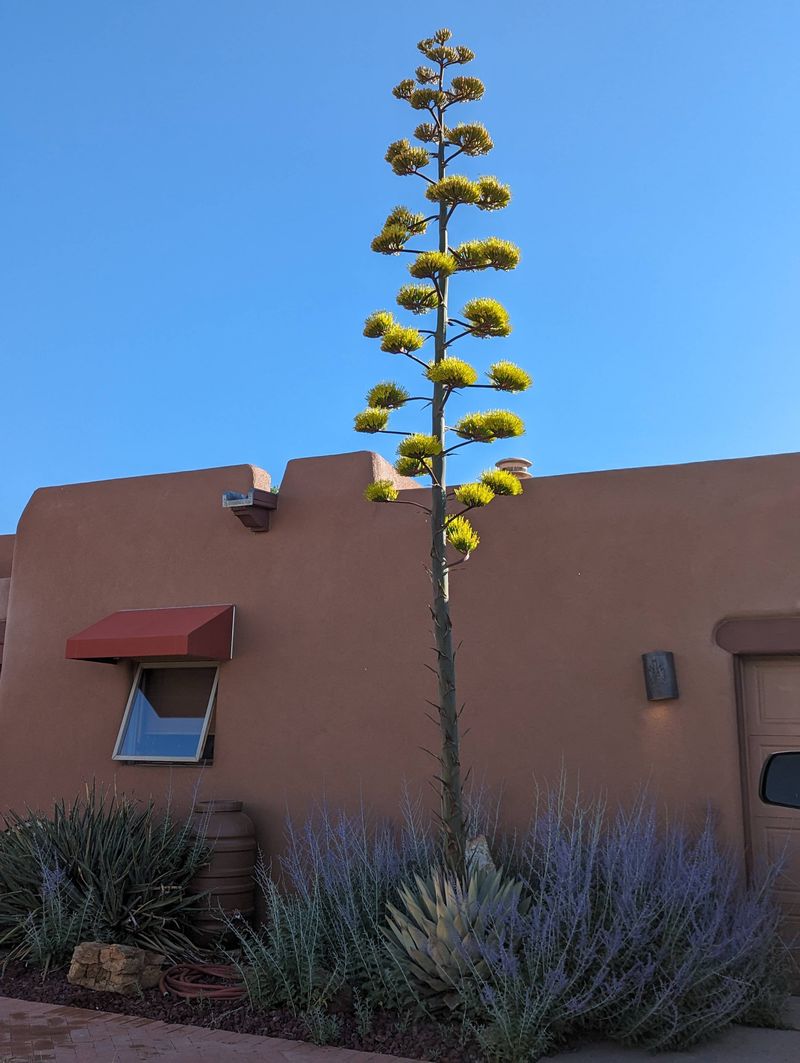
Sometimes the stalk needs to go. A stalk that leans, cracks, or hangs over a walkway, roof, fence, or utility line can become a problem, and that is a fair reason to remove it.
Appearance counts too. A dried stalk can look rough in a tidy front yard, and plenty of gardeners simply prefer a clean look.
University of Nevada Extension recommends removing the spike and plant after blooming, while keeping pruning of desert succulents minimal and informed.
What removal will not do is promise a rescue. Early flower removal in commercial blue agave is a managed crop practice, described in a research article on Agave tequilana, and it does not show that cutting a flowering landscape agave will save its rosette.
So ask two questions. Is the stalk a danger or a real eyesore?
And are you expecting the cut to keep the plant alive? If the answer to the first is yes, removal makes sense.
If the answer to the second is yes, adjust your hopes.
Choose a safe next step
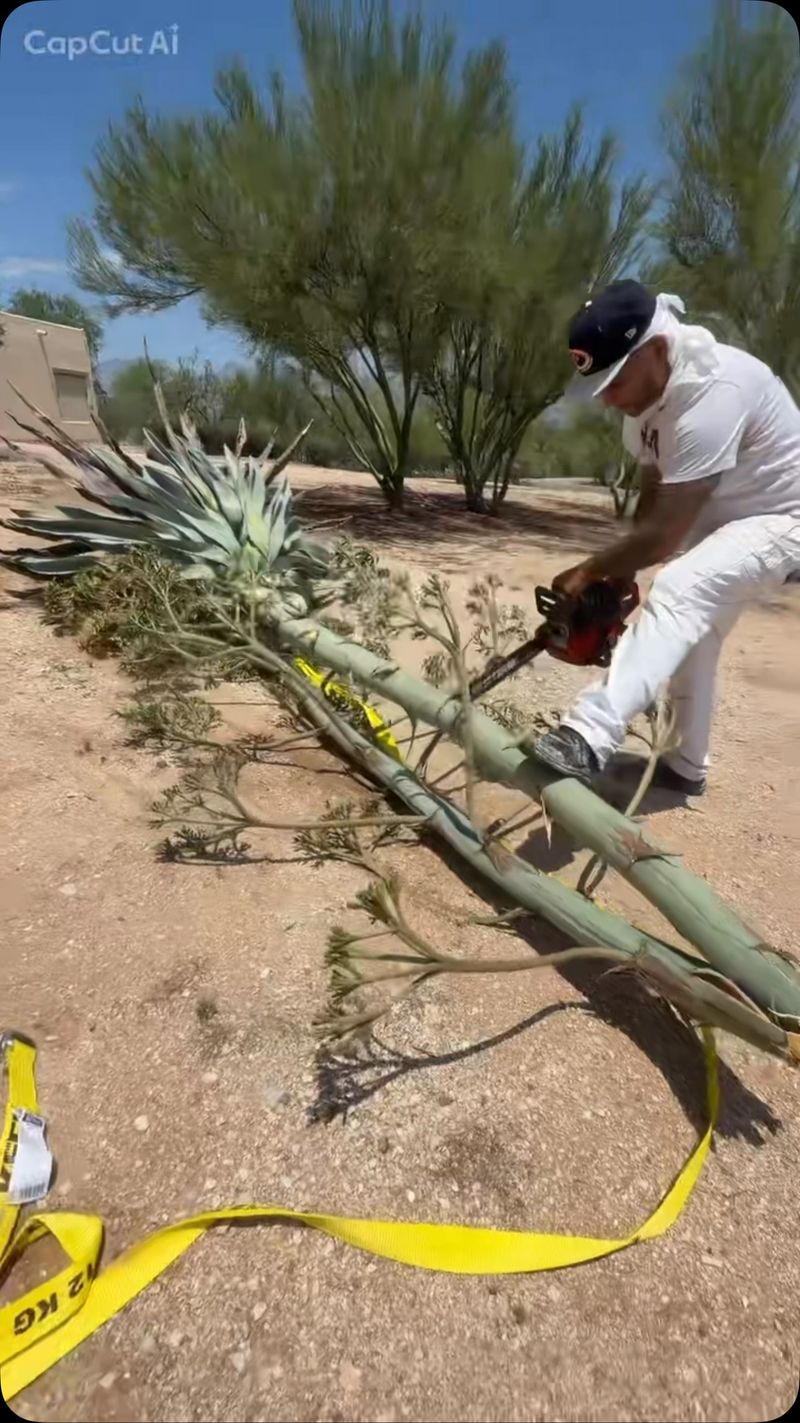
Here is a simple rule. Leave a safe stalk if you want flowers or possible seed.
Consider removal if it is a real hazard or you truly dislike how it looks. Call a qualified professional if the stalk is large or unstable.
Do not treat sawing as a casual chore. The leaves have sharp spines, and an FDA-hosted safety review describes irritating sap, including a reported skin reaction after cutting Agave americana with a chainsaw.
Neither choice is a promise that the main rosette will survive.
A stalk is a plant’s one big statement, so enjoy it or retire it safely.
Share this story