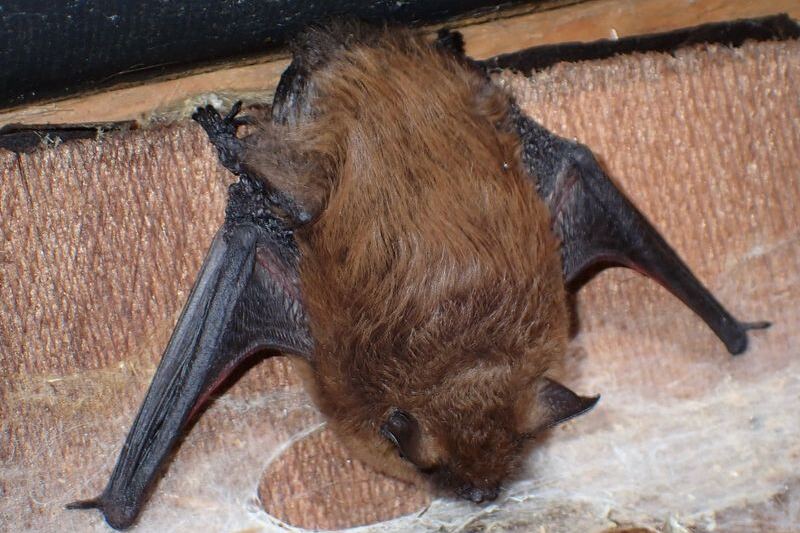
That little brown mouse in your Iowa garage could well be a deer mouse, and that matters because deer mice can carry hantavirus. As nights get colder, mice look for warm, quiet places like garages and sheds.
The bigger safety question is not how you catch the mouse, but how you clean up what it leaves behind. Here is what to know so you can handle it calmly and safely.
What a mouse’s color can—and can’t—tell you

A small brown mouse in your garage could be a deer mouse, but color alone will not settle it. Plenty of mice look brown at a glance, and a garage is a place where more than one kind can turn up.
Deer mice do have a few helpful clues. They typically have brown to reddish fur on top and a sharply contrasting white underside, including white feet.
If you get a good look at that two-toned coat, deer mouse becomes a real possibility.
Here is the catch. Iowa State Extension’s mammal guide notes that deer mice and white-footed mice can be difficult to tell apart, even for experts.
Both have pale bellies, and both are found around buildings. The guide lists the prairie deer mouse as the Iowa subspecies and also says white-footed mice are common in houses, garages, and sheds.
So a quick glimpse of a brown mouse near your lawn mower will not tell you its species. House mice also live in Iowa buildings, which adds one more possibility.
Instead of trying to name the animal, treat any signs of mice in an outbuilding as a reason to clean up carefully and close off the way in.
That approach works whatever the species turns out to be. It also keeps you from either panicking or brushing off the problem based on a guess about fur color.
Why mice use garages and sheds in winter
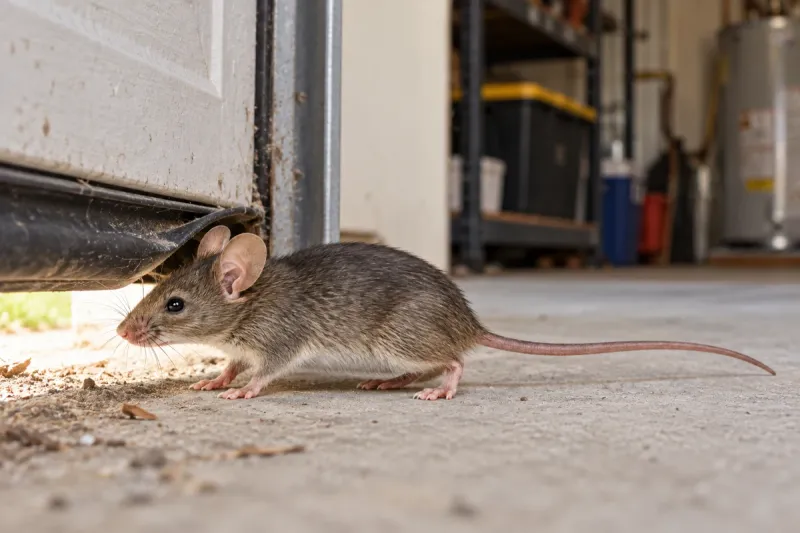
When the first hard frost hits, a garage starts to look like a hotel to a mouse. It offers shelter from wind, a stable temperature, and plenty of hiding places behind boxes, tools, and stored gear.
According to Iowa State Extension, deer mice and white-footed mice are seasonal visitors that commonly seek winter shelter in buildings they can enter. House mice are different, because they can live indoors all year.
That detail is useful. If you notice droppings in a shed in November, the mouse may be one of these seasonal visitors, but you cannot assume it is a particular species.
The same behavior is tied to more than one kind of mouse.
The Iowa mammal guide backs this up from the building side. Iowa State’s mammals reference says deer mice may enter homes and outbuildings, while white-footed mice are often found in houses, garages, and sheds.
Outbuildings are especially inviting because they are often quiet and full of clutter. Birdseed, pet food, and stored grass seed give mice a ready meal, and old cushions, paper, and insulation give them nesting material.
Knowing why they come helps you spot trouble early. Look for droppings along walls, shredded paper or fabric, and small gaps near doors, pipes, and rooflines before the cold really sets in.
How hantavirus exposure can happen
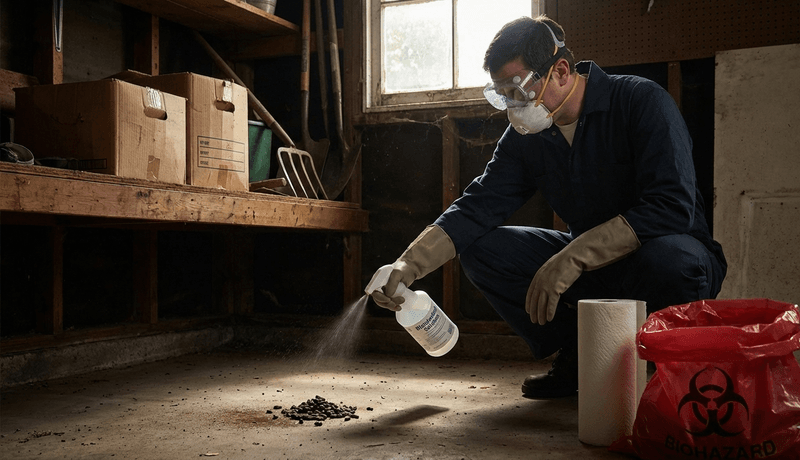
Hantavirus exposure is mostly about air and dust. CDC guidance explains that people can be exposed when contaminated rodent urine, droppings, or nesting material is stirred into the air, which is why sweeping a dusty shed floor is the habit to avoid.
Deer mice are among the rodents that can be reservoirs for hantaviruses linked to human illness in North America. A CDC clinician brief describes this, and other rodents are also associated with hantaviruses.
That does not mean every deer mouse, or every rodent, is infected.
You cannot tell whether a mouse carries the virus by looking at it, and you cannot tell from a dropping. Seeing a mouse in your garage does not mean you are at high risk, and it does not mean anyone has been infected.
Hantavirus disease is serious but uncommon. Iowa HHS reports 12 Iowa cases from 1993 through 2023, plus one additional Iowa case in 2026.
Those are statewide counts over long periods, so they do not measure the risk in one garage or from one animal.
A CDC study of patient exposures from 1993 to 2015 looked at how people with the disease were exposed, which reinforces that careful handling of rodent waste in closed spaces is the sensible habit.
The takeaway is simple and calm. You do not need to fear the mouse, but you should respect the dust and clean it up the safe way.
Clean a small amount of droppings safely
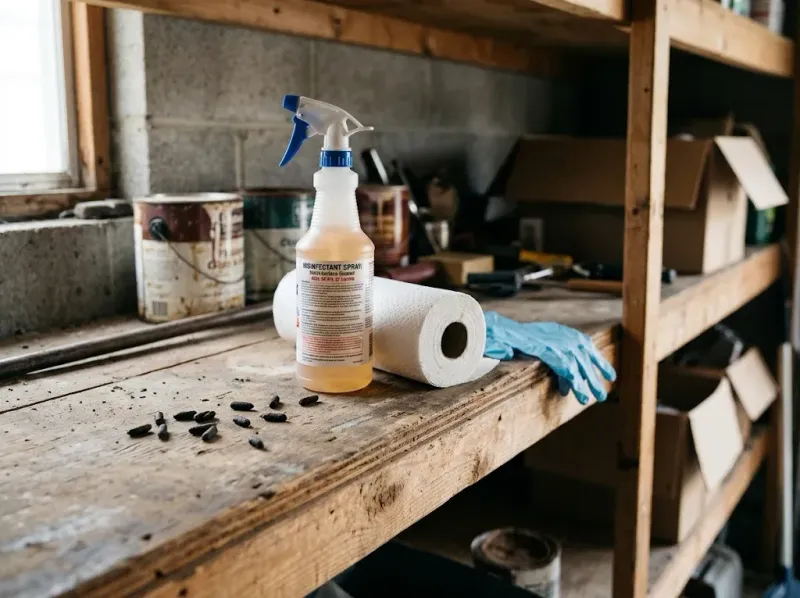
For a small amount of droppings in a shed or similar outbuilding, CDC’s cleanup steps are straightforward. Follow them in order, because the order is what keeps dust down.
First, open the doors and windows and leave the space for 30 minutes. This ventilation step applies to homes and outbuildings such as sheds and barns, not to vehicles, which have their own guidance.
Next, put on rubber or plastic gloves. Then thoroughly wet the droppings with a bleach solution or an EPA-registered disinfectant.
For bleach, mix 1.5 cups of household bleach into one gallon of water, and make it fresh each time.
Let the wet waste sit for five minutes, or for the time listed on the disinfectant label. After that, wipe it up with paper towels.
Then disinfect the surface where the droppings were, and finally wash your hands after you remove the gloves.
Just as important is what not to do. Do not sweep or vacuum untreated droppings, urine, or nesting material.
Doing so can lift virus-containing particles into the air, where you can breathe them in. Soaking everything first keeps the material from becoming airborne.
Wet cleaning may feel slow compared with a quick sweep, but it is the whole point. A few extra minutes with a spray bottle and paper towels is a small price for staying safe.
Know when to get more help
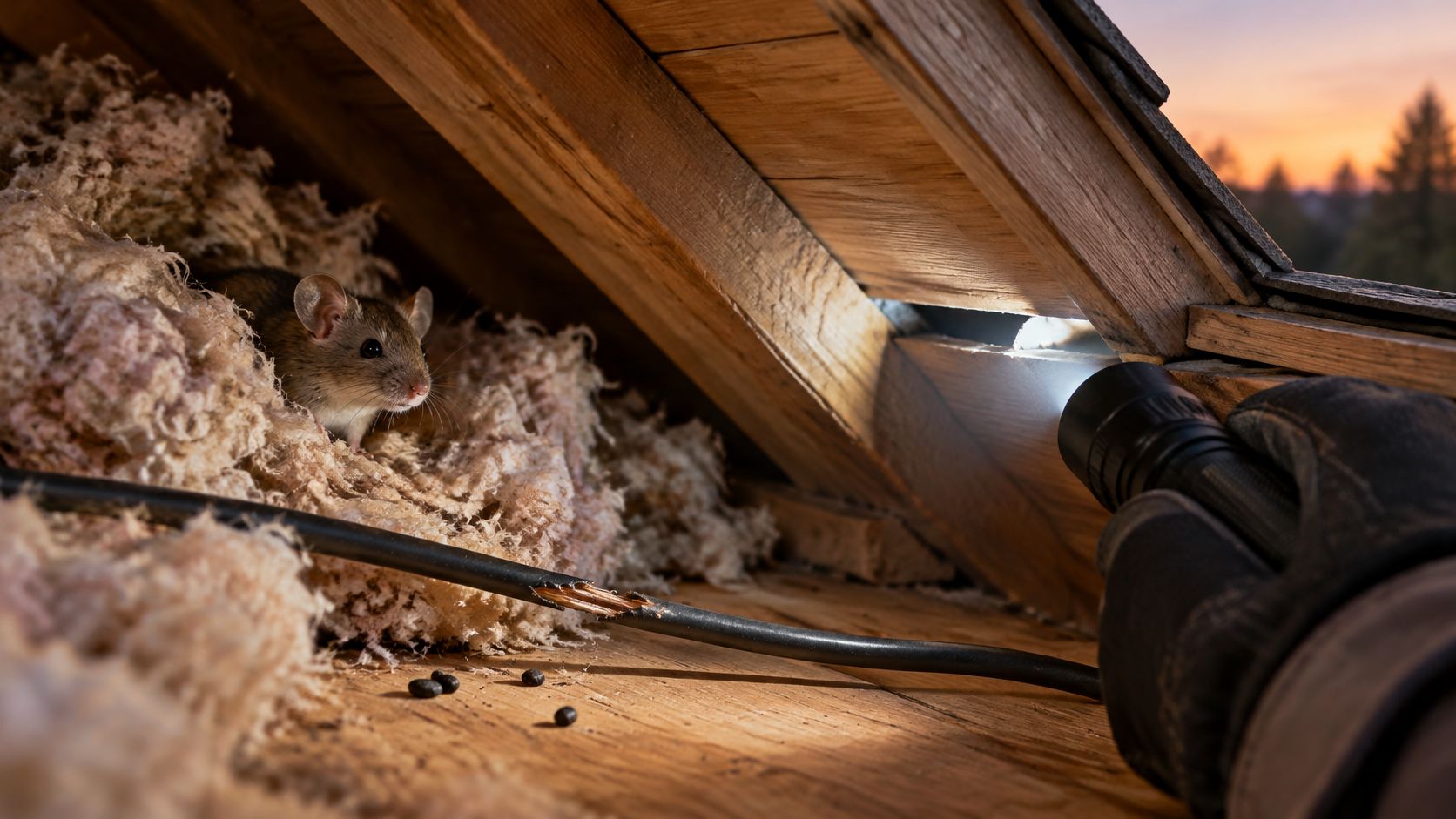
The steps for a small cleanup are not meant for every situation. A handful of droppings in the corner of a shed is a very different job from a space that has been overrun.
CDC’s guidance calls for added precautions, including respiratory protection, when you face a heavy infestation. Signs include lots of droppings, many nests, or a strong rodent smell.
In those cases, basic gloves and a household spray bottle are not enough.
Contaminated insulation is another red flag. Mice tear it up for nesting, and it is hard to disinfect without stirring up dust.
The same goes for contamination in places you cannot easily reach, such as wall voids or tight crawl spaces.
Also pay attention if you find evidence of rodents in heating or cooling ducts. CDC recommends professional help for rodents in ducts or inaccessible areas, because disturbing that material can spread it through the building.
If you are unsure which category you are in, treat it as the bigger job. Read the added precautions on the CDC page, or call a licensed pest control or cleanup professional.
Asking for help is a sensible, safe choice, not an overreaction.
Keep mice from coming back

Once the mess is cleaned up, the next job is closing the door on future visitors. Mice are small enough to squeeze through openings about a quarter inch wide, roughly the width of a pencil, so tiny gaps matter.
CDC’s seal-up advice covers three areas: rodent entry points, food and garbage, and garages and outbuildings. Walk the outside of the building and check around doors, pipes, vents, and where utilities enter.
Fill holes with materials that mice cannot easily chew through.
Inside, keep pet food, birdseed, and grass seed in tight containers, and use lidded trash cans. Cutting off food makes the space much less attractive.
Iowa State Extension also favors exclusion to prevent seasonal visits, a point made in its mouse damage management guide.
Trapping and other rodent control have a place too. CDC lists rodent control and exclusion as primary prevention strategies.
They work alongside safe cleanup, not in place of it, because each handles a different part of the problem.
The order is the key. Clean the waste safely first, then reduce access and food sources so the cleanup does not have to be repeated.
A garage that is sealed, tidy, and dull to a mouse is one that stays quiet all winter.
Share this story