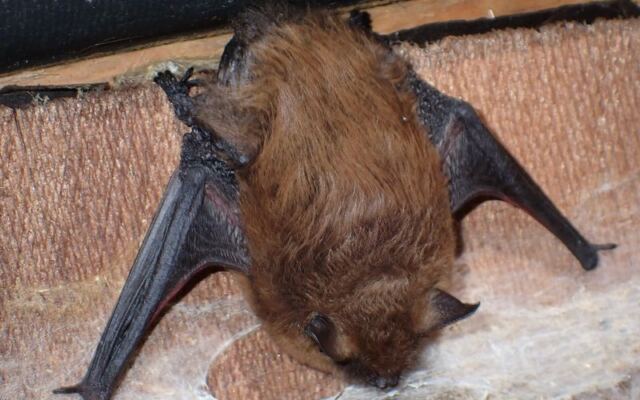
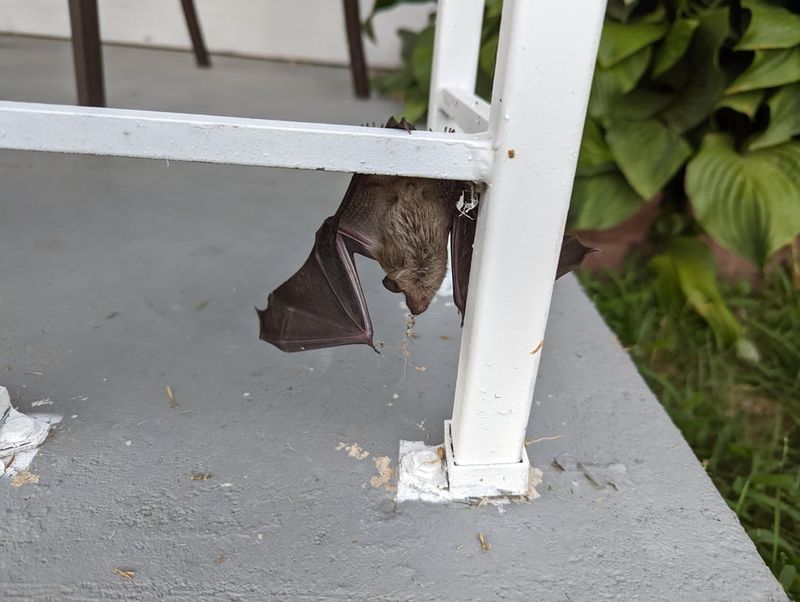
Big brown bats are the only Iowa bats known to spend the winter in buildings, so a bat tucked behind a shutter in January may be settled in for the cold months. That does not mean every small brown bat is a big brown bat, or that it is inside your house.
Knowing where the bat is, who might have touched it, and what time of year it is will guide your next step. A calm, careful response protects you, your pets, and the bat.
Big brown bats can overwinter in Iowa buildings
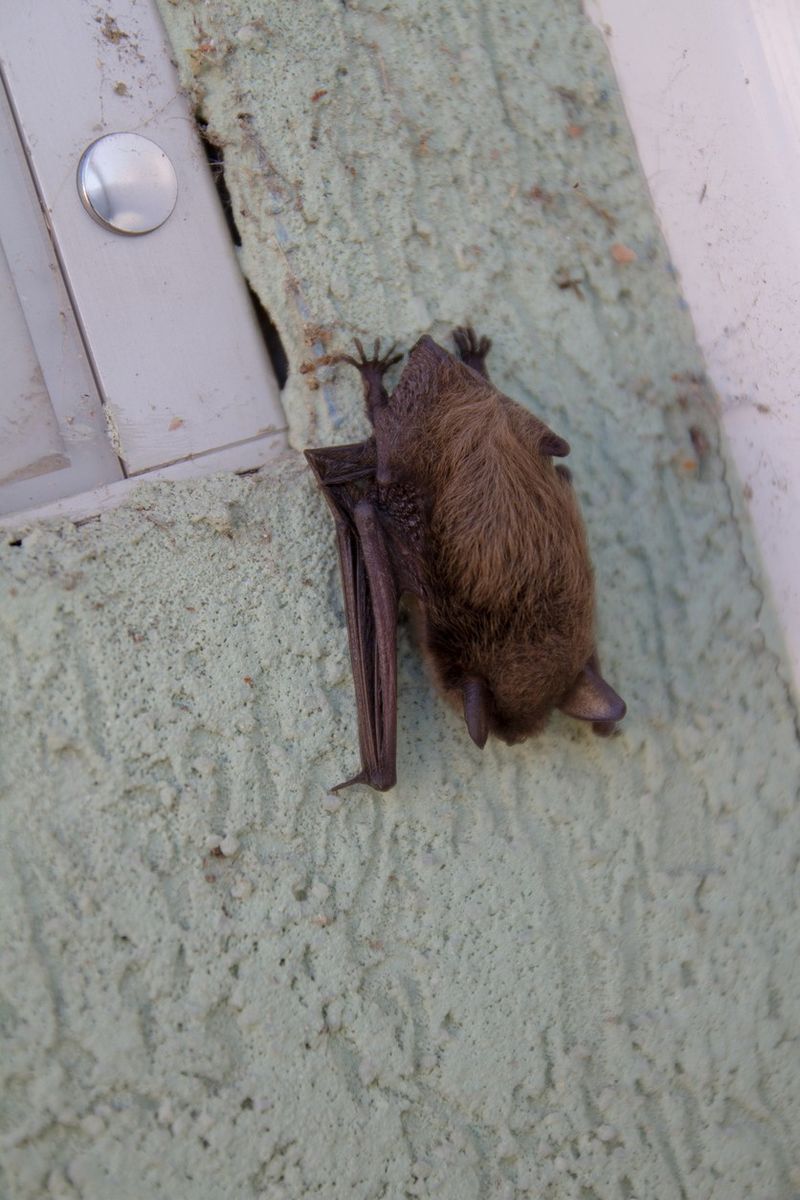
Iowa wildlife guidance says the big brown bat is the only Iowa species known to overwinter in buildings, according to the Iowa DNR Nuisance Wildlife Control Operator Manual. Because of that, a big brown bat could use a gap behind a shutter as a winter roost.
The key word is could. Nobody can promise that one particular bat will stay at one particular spot until spring.
Color and apparent size do not identify a bat’s species. Iowa has nine bat species, and several of them are small and brown.
Iowa HHS says species identification should be confirmed by an expert, so a homeowner’s guess from a quick look is not enough to rely on. The roost location is not a reliable clue either.
It also helps to separate two situations. A bat roosting outside behind an exterior shutter is not necessarily inside the building where people live.
A bat found in a bedroom, hallway, or living area is a different matter, with different health questions and different rules.
For now, the safest move is to leave a suspected winter roost alone. Note where the bat is, keep children and pets away from the spot, and read on to sort out which situation you have.
Most decisions about removal can wait until you know the location, the season, and whether anyone may have had contact.
Winter roosting depends on the bat and conditions
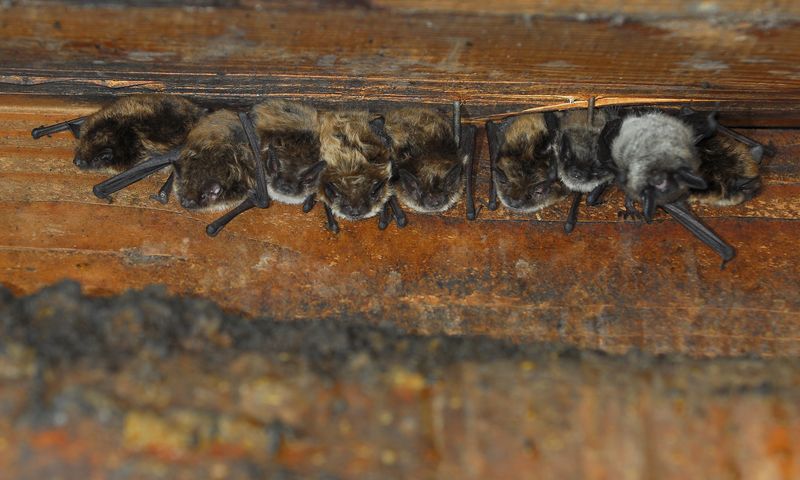
Big brown bats matter to Iowa homeowners because they handle cold better than many other bats. They tolerate near-freezing temperatures and readily use human dwellings, as the Iowa DNR manual describes.
That makes an attic edge, wall gap, or shutter space a believable winter home for this one species.
Hibernation is tied to temperature. Iowa guidance describes it as running roughly from November through March, depending on the weather.
A mild spell can bring a bat out of its sleep, and a hard freeze can send it back in. That is why you cannot predict what one bat will do on a given week.
Disturbing a sleeping bat has a cost. According to Iowa HHS guidance, disturbance can wake bats and make them burn extra energy.
Fat reserves have to last all winter, so repeated waking can leave a bat weak by spring. Tapping the shutter, shining a flashlight in, or poking at the gap are all things to skip.
None of this applies to every Iowa bat. Some species leave the state or use caves and mines, and some do not use buildings at all.
Treat this as a description of one species with one habit, not a rule for any bat you meet.
A bat outside the shutter may not be inside
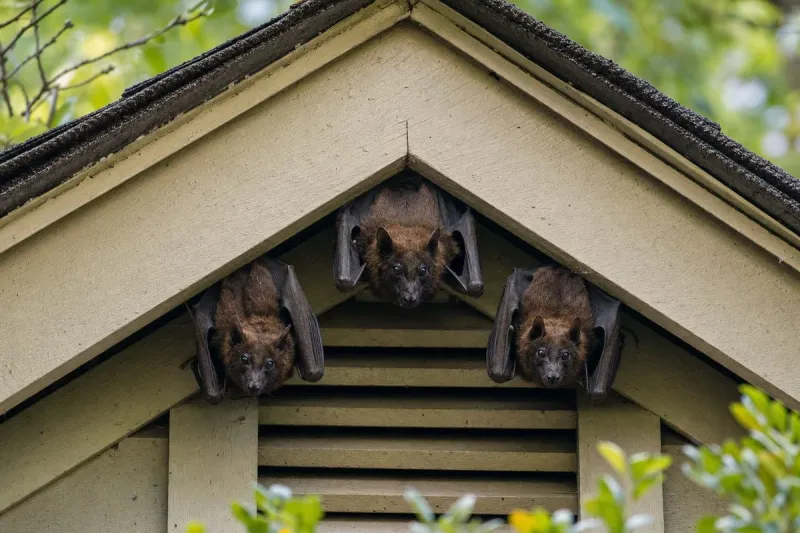
Spotting a bat at a shutter does not mean your house has a bat problem indoors. Bats may use gaps, eaves, and similar spaces on a building, and Iowa State Extension notes that some bats roost on the outside of homes without ever entering them.
A shutter gap can be exactly that kind of spot.
The best way to learn more is to watch, not poke. In warmer weather, stand back at dusk and look at the suspected exit points.
Seeing bats leave from the gap and fly off tells you something, and seeing them slip into a crack near a soffit or siding joint suggests they may be getting inside.
In deep winter, bats are often not flying at all, so you may see nothing. That is normal.
Do not tap the shutter, pull it off the wall, or shine a light into the gap to check. Looking from a distance and writing down what you see is enough for now.
Useful notes include the date, the exact location, how many bats you saw, and whether any droppings are on the ground below. Also check inside the house for signs such as sounds in walls, a bat in living space, or droppings near an attic hatch.
Save any plans for removal for later, because timing matters.
Rabies decisions depend on possible contact
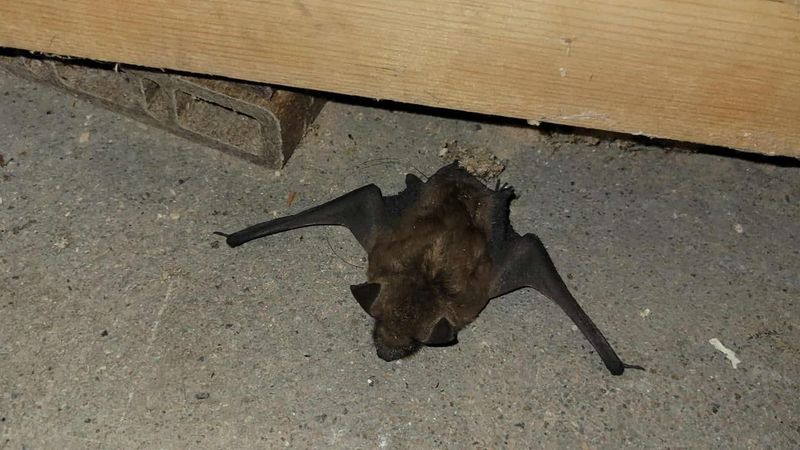
Seeing a bat does not mean it has rabies, and it does not mean anyone was exposed. What matters is contact.
Iowa HHS tells people not to touch bats, and its bat and rabies FAQ centers on whether a person or pet may have been bitten, scratched, or otherwise touched.
If that might have happened, contact public health or a clinician promptly. Bat teeth and claws are tiny, and a bite can be hard to see or feel.
That is why the question is not just whether you saw a bite, but whether someone could reliably rule contact out.
Iowa treats a bat in a room with a sleeping person, a young child, an intoxicated person, or anyone who cannot rule out contact as a possible exposure. Picture a bat found in a child’s bedroom in the morning.
The child cannot say for sure, so the situation needs follow-up even without a mark.
If testing or an exposure assessment may be needed, contain the bat safely without touching it. Close the door of the room, and if you can, cover the bat with a container and slide stiff card under it, without using bare hands.
Then call your local public health office or clinician for next steps. You can also find general advice on the Iowa HHS rabies page.
Also call about pets that may have had contact, since they can be exposed too. A bat outside on a shutter, with no one touching it, is a very different case from a bat that got into a living space.
Handle accumulated droppings with care
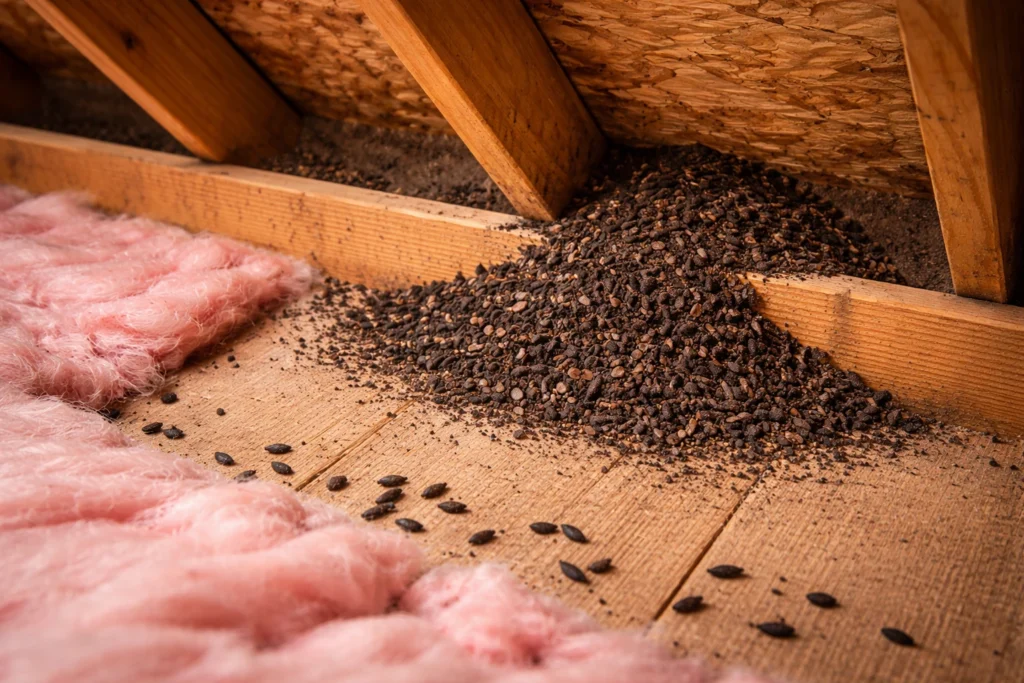
Droppings are a separate concern from rabies. Iowa guidance does not treat droppings as a rabies exposure.
The worry with droppings is a fungus called Histoplasma, which can grow in contaminated material and release spores into the air.
The risk comes mostly from disturbing it. A few pellets on a sill are not the same as a deep, old pile in an attic or wall space.
According to CDC and NIOSH guidance, people can be exposed when dusty, contaminated material is stirred up, so any single dropping does not automatically cause illness.
That is why the advice is plain. Do not dry-sweep or shovel dusty accumulations, because both put spores into the air.
Do not use a regular household vacuum or a leaf blower on them either, since these can spread fine dust through the room.
Large accumulations should go to professionals who specialize in hazardous-waste cleanup. If you see a heavy buildup in an attic, behind siding, or in a wall cavity, step away and call a qualified company instead of tackling it yourself.
For a small amount outside on the ground, simply keep children and pets away and avoid raking it dry. When you are unsure how much is there or what is underneath, ask a professional before touching anything.
Use the right season and method for exclusion

Exclusion means helping bats leave a building and then closing the way back in. It is the last step, not the first, and it only makes sense for a confirmed roost.
Start with the rule that applies to winter: do not disturb suspected hibernating bats.
For a colony inside a building, Iowa HHS recommends one-way exclusion, followed by sealing entry points only after the bats have emerged at dusk. A one-way device lets bats fly out but not back in.
Sealing comes afterward, once you are sure none are left inside.
Timing is part of the plan. The same guidance says to avoid the May 15 to July 31 pup-rearing period, when young bats cannot fly and would be trapped and left to die.
It also says to wait until evening temperatures are above 50°F so bats can leave and feed. Treat those as local planning guidance, not as permission by themselves to install a device.
The site and the species still have to be confirmed first.
Never seal an opening while bats may be inside. Iowa State Extension warns that trapped bats can die or move deeper into the house.
Skip the gadgets, too. Extension considers ultrasonic devices and mothballs largely ineffective as bat repellents, and mothballs add their own fumes to a home.
Patience and correct timing do more than any product on a store shelf.
Get Iowa guidance before removing a roost
The legal side depends on the bat’s species and where it is. Iowa Code §481A.42 has an exception that applies to bats found within a building occupied by people, and it expressly excepts the Indiana bat.
You can read the statute text to see the exact wording.
That exception is narrow. It does not settle the rules for a bat roosting on an exterior wall or behind a shutter, and it does not cover every species.
Since you cannot tell species by color or size, you cannot safely assume a given bat falls under it.
Federal status adds another layer. Iowa HHS’s building exclusion guide mentions federally protected Iowa species, but listing statuses change, and the tricolored bat has been described by the U.S.
Fish and Wildlife Service as proposed for listing rather than listed. Check current federal information instead of relying on an older count.
For multiple bats or a suspected roost, contact Iowa DNR wildlife staff or a currently licensed Nuisance Wildlife Control Operator. The DNR keeps a list on its nuisance wildlife control page, which is the place to confirm that an operator is currently licensed.
Ask any operator how they will confirm the species, how they will time the work around pups and winter hibernation, and how they will confirm that no bats remain inside before sealing. Good answers to those questions are a sign of a careful professional.
Check the location, contact risk, and season
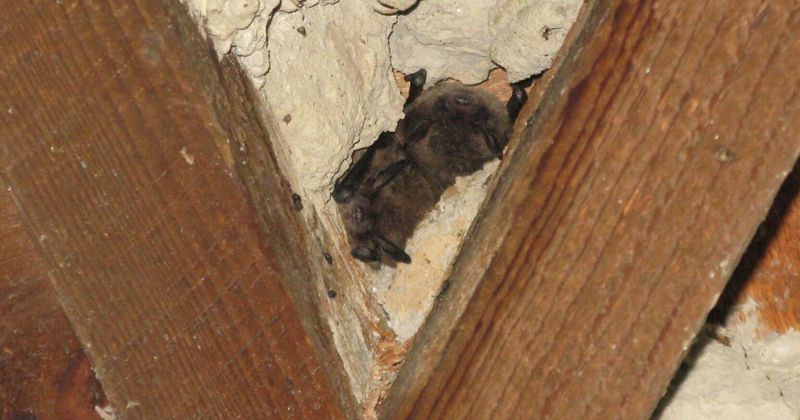
A brown bat behind a shutter does not tell you its species or whether it is in the house. Leave a winter roost undisturbed, act quickly if a person or pet may have had contact, and get qualified advice before any exclusion.
See the Extension guidance and Iowa HHS exclusion guide for details.
Every good answer here starts with four facts: where the bat is, who might have touched it, what month it is, and which rules apply. A quiet bat in a cold gap can wait for the right plan.
Share this story