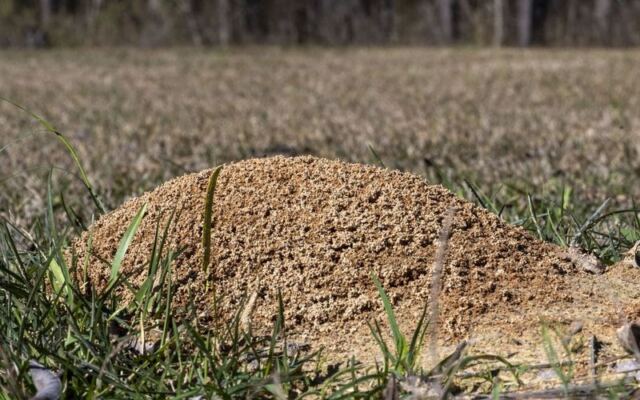
A fresh ant mound tells you that ants have been moving soil up from an underground nest. It is a real clue, and it is easiest to spot after a wet spell.
What it cannot do is grade your soil, so it helps to know what the clue means and what it does not. A few simple steps can help you decide whether to do anything at all.
A fresh mound shows ants have moved soil
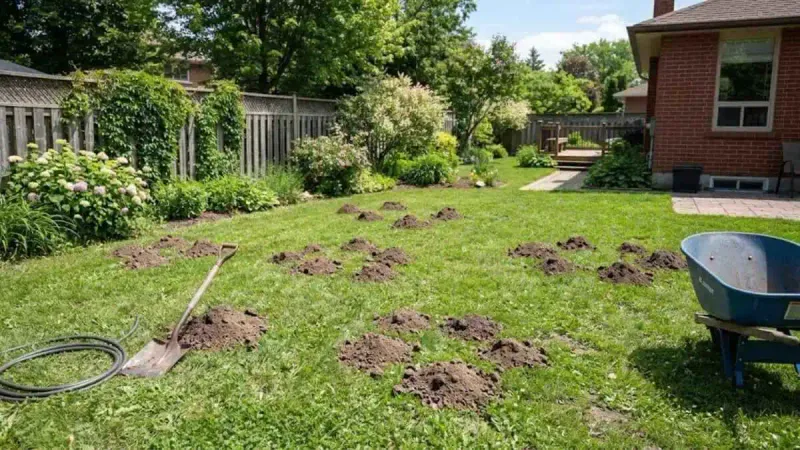
Look closely at that little pile of loose, crumbly soil, and you are looking at the result of work done underground. Ants dig tunnels and chambers, then carry the dirt up and drop it at the entrance.
Iowa State Extension says that lawn and garden ants move soil from underground colonies as they excavate or maintain their nests. A fresh mound simply means that work happened recently.
That is useful information, and it is also where the information stops. A mound is evidence of soil movement and ant activity.
It is not a measurement of how fertile, healthy, or well-drained your soil is, and it does not explain why the ants picked that particular spot.
Think of it the way you would think of footprints on a path. Footprints tell you someone walked by, but they do not tell you who the person was, where they were headed, or how they felt about the trip.
A mound gives you the same kind of limited, honest clue.
The gap between what you can see and what you want to know is the main idea for the rest of this article. If your question is about ants, the mound is a good place to start looking.
If your question is about nutrients or soil acidity, you will need a different tool, and later sections cover which one to use.
Most of the time, a fresh mound is no cause for alarm. It is a small sign of life in the yard, and you can decide calmly whether it bothers you or whether you would rather leave it alone.
Why mounds stand out in wet spring weather
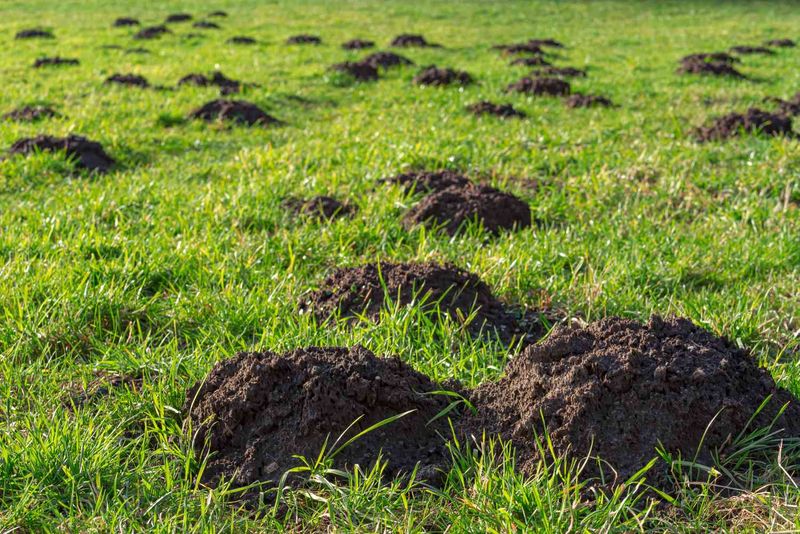
Spring rain has a way of making small things easier to notice. Damp soil is dark and soft, so a fresh pile stands out against green grass.
Iowa State reports that mound maintenance is especially common during wet spring weather, which helps explain why mounds seem to appear overnight after a storm.
Notice what that statement says. It describes a seasonal pattern in ant behavior.
It does not say that rain flooded a particular nest, and it does not say rain caused the ants to build the mound you are looking at. Timing and cause are two separate questions.
You may come across another explanation online, that ants build mounds to escape waterlogged soil. That idea shows up in guidance about imported fire ants, such as a North Carolina Extension fire ant resource.
It is specific to that insect and should not be used as a general reason for the mounds in an Iowa lawn.
So the practical takeaway is modest. If you see more mounds after a wet stretch in spring, you are probably seeing normal upkeep that is easier to spot.
You are not necessarily seeing a drainage problem, and you are not necessarily seeing a new infestation.
One helpful habit is to note when the mounds appear and whether they keep coming back in the same place through the season. That record is a simple observation, and it can guide your next step without jumping to a diagnosis.
Check that the bump is an ant mound
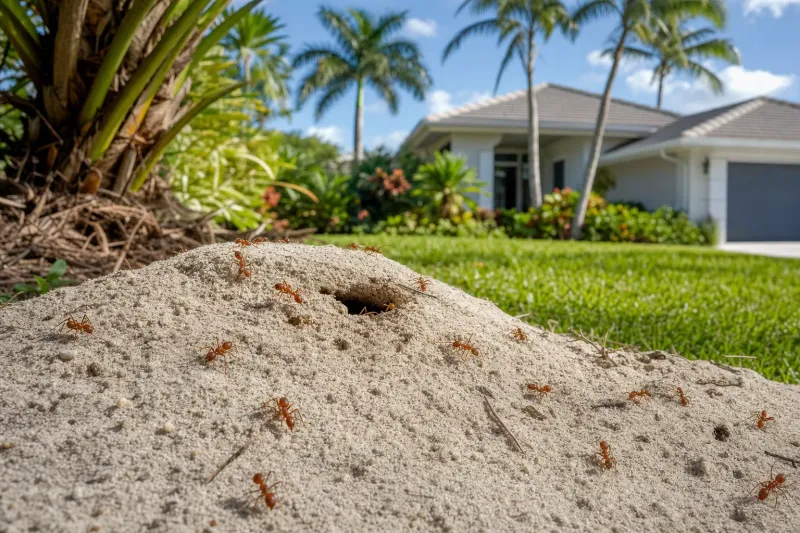
Not every bump in the grass belongs to ants. Before you decide what to do, it pays to confirm who made it.
University of Minnesota Extension notes that moles, nightcrawlers, and other causes can also produce bumps or mounds in a lawn, and each leaves different visual signs.
Moles tend to push up ridges or larger piles as they tunnel below the surface. Nightcrawlers leave small castings near their burrow openings.
Ants usually leave loose, fine soil piled around a small entrance hole. Looking closely, and perhaps checking again at a different time of day, can help sort these apart.
Field ants are one example of ants that nest in open areas. Iowa State describes field ants as feeding on insects and flower nectar, and they do nest in lawns.
But a mound by itself cannot tell you which species made it, so avoid guessing a species from the pile alone.
Carpenter ants are a separate matter. Iowa State says they nest in moist, decayed wood, not in soil.
A soil mound is not evidence of carpenter ants or of wood damage, so a mound in the yard should not send you worrying about your house.
If you cannot tell what made a bump, that is fine. Watch it for a few days, look for ants coming and going, and compare it with the descriptions above.
Careful looking beats a quick assumption every time.
Ant nests can change soil in different ways

Ants are active soil movers, and researchers have studied what that does. A peer-reviewed meta-analysis in the Journal of Animal Ecology found that ant nests can affect soil nutrients and plant performance.
That sounds like good news, but the details matter.
The same analysis reported substantial variation among studies. Effects depended on the ant species, the type of habitat, and whether scientists sampled soil from the nest itself or from the refuse the ants piled up.
Change the ant or the sampling method, and the results can change too.
That variation is why blanket claims fall apart. You may hear that ants always aerate and improve lawn soil.
The research does not support a universal benefit for every species, site, or lawn. Ants can modify soil, and the direction and size of that change vary.
It also means one mound cannot describe the soil around it. A nest may differ from the ground a few feet away, so the pile you see is a small, special sample, not a picture of your whole yard.
A rich-looking mound does not prove the lawn is rich, and a plain one does not prove the opposite.
A fair way to hold this idea is that ants can be soil modifiers, sometimes in helpful ways, but your fresh mound is not a report card. If you want real numbers on your soil, the next section explains a method that gives them.
Use a soil test to check fertility or pH

If you are wondering whether your soil is fertile or whether its pH is off, skip the guesswork and test it. Iowa State points gardeners to a laboratory test, and its soil testing resources for home gardeners recommend choosing a lab that gives lawn- or garden-specific results.
That way the advice you get fits what you are growing.
Collecting the sample well matters as much as picking the lab. Iowa State’s guidance on how to collect a soil sample cautions against sampling soil that is excessively wet or dry.
It also says not to sample immediately after applying amendments, since fresh fertilizer or lime can skew the results.
That advice has a handy side effect after a soaking rain. Even if mounds have you thinking about your soil, the ground may be too wet for a good sample.
Waiting for it to settle gives you numbers you can trust.
Keep in mind that a mound does not stand in for a sample. Ants moved that soil from below, and it tells you nothing reliable about nutrients or acidity.
Visual clues, such as color or crumbliness, cannot replace a lab report either.
Once the results come back, you will have specific recommendations instead of hunches. Those numbers will do far more for your lawn or garden than any amount of staring at an anthill.
Flatten a nuisance mound before using pesticide
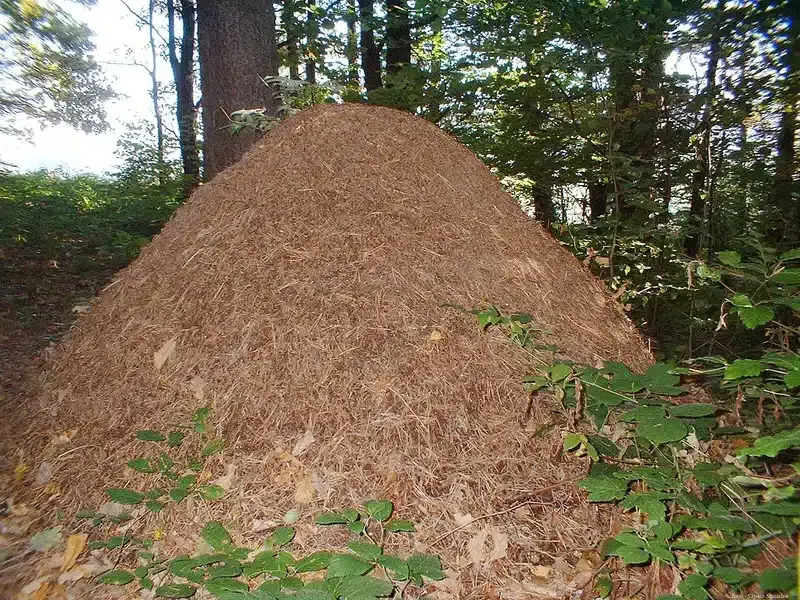
Plenty of mounds need no action at all. Iowa State says most soil-nesting ants it discusses are beneficial and do not require control.
A mound only becomes a job when it spoils the look of the lawn or gets in the way of the mower.
For those cases, start with the simplest fix. Iowa State recommends raking the mound flat or dispersing its soil with a forceful stream from a garden hose, repeated as needed.
In wet spring weather, the ants may rebuild, so a second pass is normal and not a sign of failure.
Pesticide comes last, not first. If you decide to consider it, the product label decides what is allowed.
Use only a product whose label permits the use you have in mind, follow the directions, and treat only the area that needs it instead of the whole yard.
Precautions matter here. The EPA’s tips for reducing pesticide impacts on wildlife warn that pesticides can harm non-target animals and advise keeping them out of water and storm drains.
That means avoiding application right before heavy rain and keeping products away from driveways, gutters, and ditches where runoff can carry them off.
There is no single product or recipe that suits every yard, so this article does not name one. Read the label, treat narrowly, and store leftovers properly.
A flattened mound is a small chore, and the ants will quietly remind you whose yard it also is.
Share this story