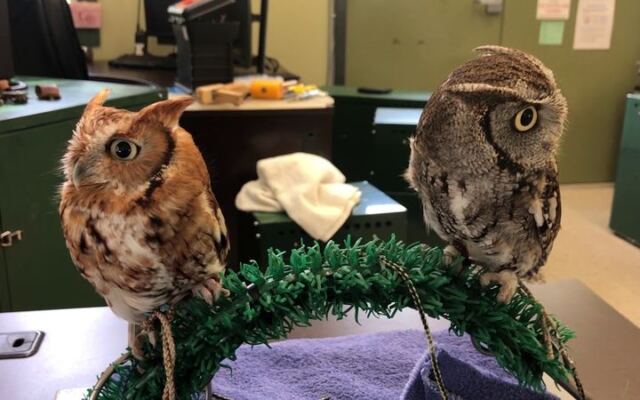
That small, shaky, horse-like call outside your window on a cold Kentucky night is most likely an Eastern Screech-Owl. These little owls live in the state all year, and winter nights are a good time to hear them.
Knowing what you are hearing can turn a spooky sound into a neighbor you can learn about. Here is how to listen, what the calls may mean, and what an owl nearby can and cannot do for your yard.
An Eastern Screech-Owl is a plausible local visitor
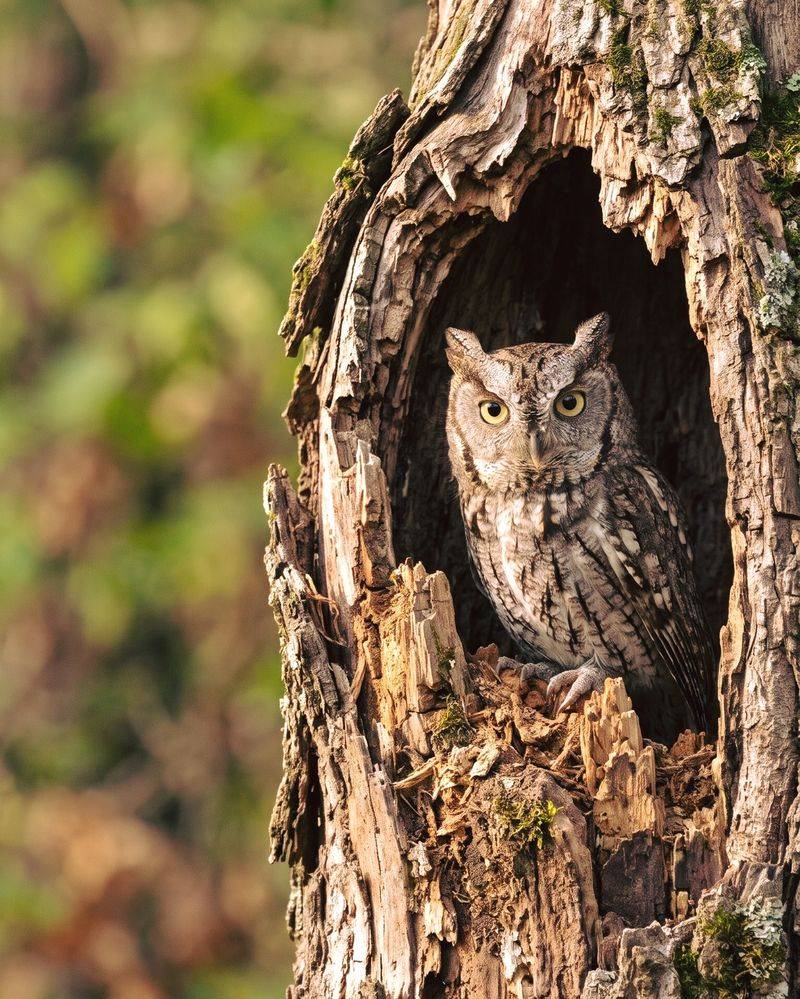
Kentucky has more owls than most people expect, and the Eastern Screech-Owl is one you could easily have close to home. Kentucky Fish and Wildlife lists the species as common and present year-round.
It is found in forested and semi-forested areas as well as semi-open farmland.
That mix of habitats covers a lot of ground, from wooded hollows to farm edges and neighborhoods with mature trees. So when a small owl-like voice drifts in after dark, a screech-owl is a reasonable first guess.
Think of it as a good candidate, not a verdict.
A written description of a sound cannot prove which bird made it. Kentucky has several other regularly occurring owl species, and some of them call in the same season.
Barred Owls, for example, have a very different, larger voice, and Great Horned Owls hoot deeply.
The best way to narrow it down is to combine clues. Notice how high or low the voice is, what kind of habitat surrounds your home, and whether you can catch a glimpse of a small, stocky, ear-tufted shape.
A short phone recording can also help you compare the sound with reference calls later. Each clue adds a little confidence, and none of them alone settles the question.
Listen for a whinny or a steady trill
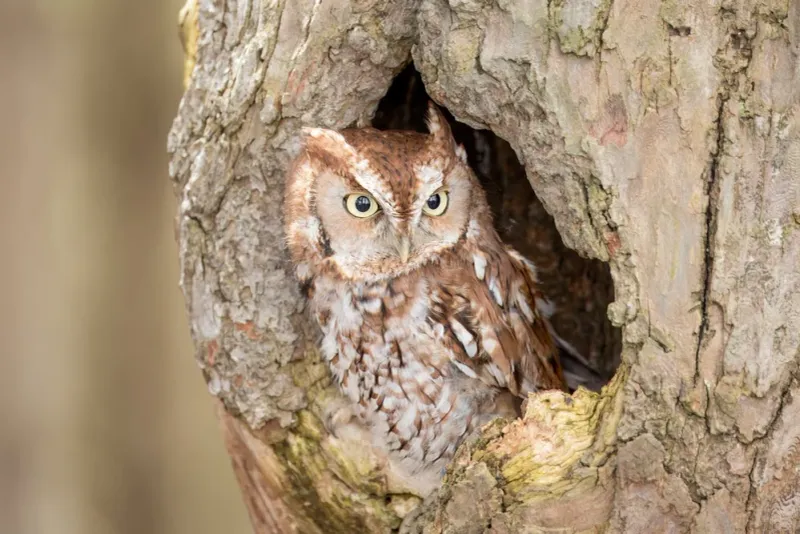
Despite the name, the Eastern Screech-Owl rarely screeches. Cornell’s All About Birds sound guide describes two familiar songs.
One is a descending whinny, a bit like a tiny horse running down the scale. The other is an even-pitched trill, a quavering tremolo that stays on one note.
The whinny falls in pitch from start to finish, which gives it that eerie, wobbly feel. The trill is steadier, like a soft purr carried across the yard.
Hearing both in one evening is common.
Both males and females sing, and pairs may sing back and forth to each other. If you hear two voices answering across the trees, that may be a pair, though a back-and-forth exchange alone does not tell you what the owls are up to.
Try listening for the shape of the sound. Does it slide downward, or does it hold steady?
Jot down what you hear, the time, and the weather. Then compare your notes with recordings from a trusted source.
Treat the match as a helpful clue rather than final proof, especially if you only heard the sound once and from a distance.
Winter calls can serve different purposes
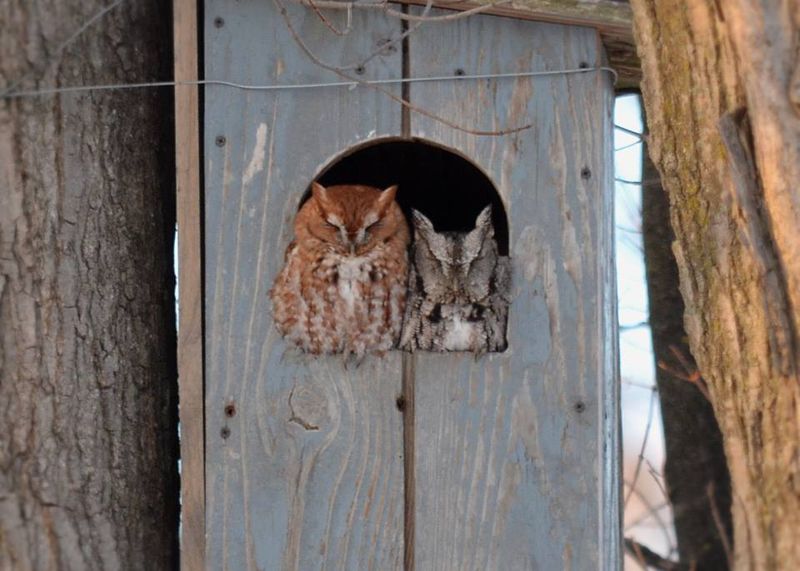
Cold months are not silent for these owls. Calling during winter can fit both territorial and social behavior as breeding season approaches, since nesting activity builds across the colder months into spring.
The two main sounds tend to do different jobs. According to Cornell’s sound descriptions, the whinny is typically territorial.
The trill can help pairs or family members keep in touch, and it may serve more than one social purpose.
That is a pattern, not a rule. One owl might whinny to announce its space, while another trills to a partner roosting nearby.
A single call tells you very little about what the bird intends.
It also helps to avoid pinning everything on early winter. Sources differ on exactly when calling peaks, so there is no single season trigger that explains every sound you hear.
A call might be territorial, social, or something else entirely, and you cannot read the motive from the sound.
If you want to learn more, listen on several evenings. Does the same voice return to the same area?
Does another answer from a different direction? Those patterns tell you a little about how the birds use the neighborhood, even if they leave the deeper story a mystery.
A call tells you less than you might think about your yard
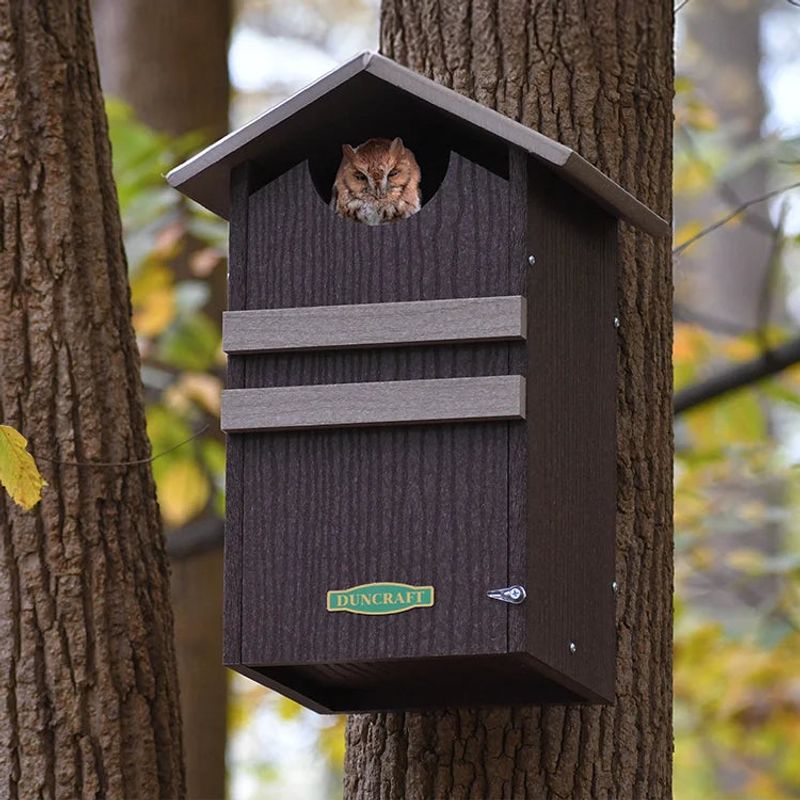
Hearing an owl does not mean it lives next door. Eastern Screech-Owls use wooded, partly wooded, and semi-open habitats, and Kentucky Fish and Wildlife notes that they nest in tree cavities and may use nest boxes.
Sound carries a long way on quiet winter nights.
A nearby call suggests the owl may use the local area. It does not show that a nest sits beside your window, or that the bird hunts regularly in your yard.
It may simply be passing through its territory.
Some people like to offer a nest box, and that is entirely optional. The Tennessee Wildlife Resources Agency recommends an entrance hole about 3 inches wide, placed at least 10 feet high near woods, fields, or wetlands.
It also advises adding a predator guard.
A box is not a promise. An owl may never move in, and one that does may not hunt near your home.
Think of a box as a small habitat project that might help, not a plan to bring in an owl on demand.
If you do put one up, enjoy it from a distance. Watching from a window is far better than checking inside.
Mice are possible prey, not a pest-control promise
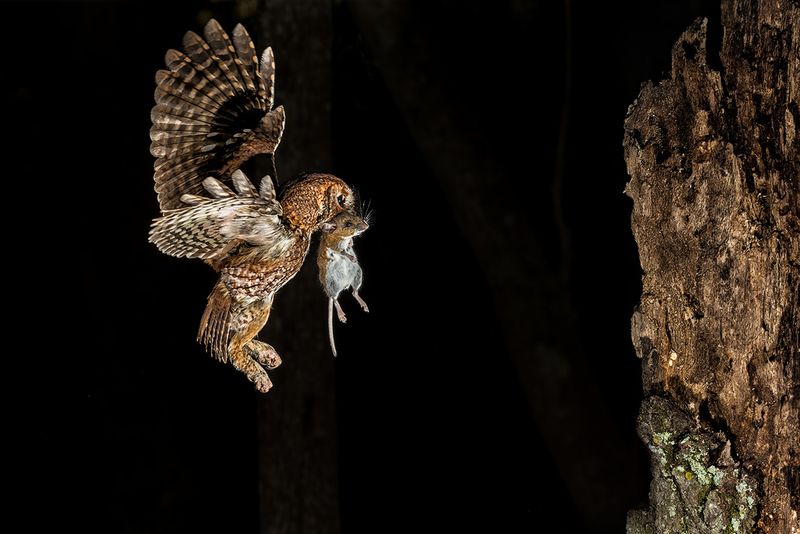
Screech-owls are not picky eaters. Their menu includes small mammals such as mice and meadow voles, plus birds, insects, earthworms, amphibians, and other animals.
A U.S. Forest Service review of the species lays out this broad diet.
That same review reports that meadow voles were the main prey in one Michigan study of winter pellets. Pellets are the coughed-up remains of an owl’s meals.
It is a useful snapshot from one place and time, not a forecast for Kentucky yards.
So what might the owl near you actually eat? Possibly a mouse or vole on one night, a beetle or earthworm on another.
Which prey it takes depends on what is available around it.
It also does not follow that the owl will thin out rodents at your home. It may hunt in fields or woods far from your house, and household mice may not be a big part of its meals.
Plenty of animals share these night shifts, and one owl is only a small piece.
If you have a rodent problem, treat it as its own task. Sealing gaps, storing food securely, and cleaning up spilled birdseed address the cause directly.
An owl overhead can be a pleasant bonus, but not a plan.
Keep poisoned rodents away from owls
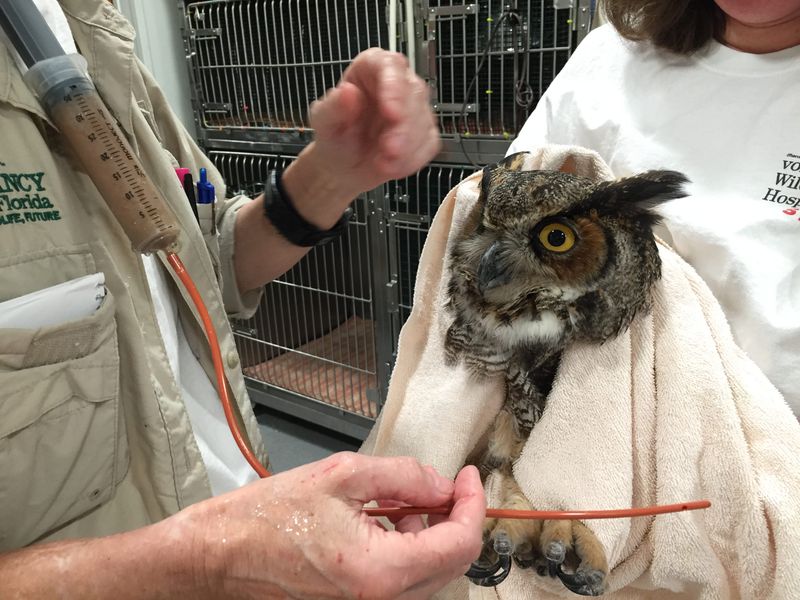
Rodent poison does not stay with the rodent. The Smithsonian’s National Zoo warns that an owl can be accidentally poisoned after eating a poisoned mouse.
EPA training materials describe this as secondary exposure, when a predator is affected by eating poisoned prey.
For that reason, avoid rodenticides where you can. Trapping, sealing entry points, and removing food sources keep the problem in check without sending poison up the food chain.
Rodent control should never rely on an owl to do the work, either.
Treat owls and their nests with distance. Do not handle, bait, or approach an owl or an active nest, even to get a better look or to confirm what it is.
A bird that seems calm can still be stressed, and a nest can be easily disturbed.
If you find a problem involving an owl or a nest, such as an injured bird, contact wildlife authorities. In Kentucky, Kentucky Fish and Wildlife is a good place to start.
Some neighbors are best appreciated from the porch, in the dark, with the window cracked open.
Share this story