Get the latest garden guides in your inbox →
Gardening Latest
  • General Gardening
  • Lawn Care
  • Plant Care
  • Composting
  • Soil Health
  • Backyard
  • Garden Muse Magazine
  • General Gardening
  • Lawn Care
  • Plant Care
  • Composting
  • Soil Health
  • Backyard
  • Garden Muse Magazine
  • News
  • Gardening Calendar
  • Garden Structures
  • Vegetable Garden
  • Vertical Garden
  • Raised Beds
  • Hydroponics
  • General Equipment
  • Community Gardens
Garden Themes
  • Spiritual Garden
  • Hydroseeding
  • Seeding and Laying Sod
  • Artificial Grass
  • Lawn Care Equipment
  • Plants
  • Trees
  • Planting Tools
  • Composting Basics
  • Fertilizer
  • Alternative Growing Mediums
  • Front Yard
  • Backyard Activities
  • Landscaping
Gardening Latest

Explore by state

Which state is your garden in?

Currently viewing Kentucky

All states

Northeast

  • Connecticut —
  • Delaware 34
  • Maine —
  • Maryland 21
  • Massachusetts 37
  • New Hampshire —
  • New Jersey 21
  • New York 30
  • Pennsylvania 30
  • Rhode Island —
  • Vermont —

Southeast

  • Alabama 20
  • Arkansas —
  • Florida 21
  • Georgia 21
  • Kentucky 35
  • Louisiana 19
  • Mississippi —
  • North Carolina 19
  • South Carolina 33
  • Tennessee 17
  • Virginia 20
  • West Virginia —

Midwest

  • Illinois 19
  • Indiana 22
  • Iowa 34
  • Kansas —
  • Michigan 21
  • Minnesota 19
  • Missouri 19
  • Nebraska —
  • North Dakota —
  • Ohio 21
  • South Dakota —
  • Wisconsin 35

Southwest

  • Arizona 20
  • Colorado —
  • Nevada —
  • New Mexico —
  • Oklahoma —
  • Texas 19
  • Utah —

West

  • Alaska —
  • California 20
  • Hawaii —
  • Idaho —
  • Montana —
  • Oregon —
  • Washington —
  • Wyoming —

No state matches that search.

Site menu

Gardening Latest
  • General Gardening
    • News
    • Gardening Calendar
    • Garden Structures
    • Vegetable Garden
    • Vertical Garden
    • Raised Beds
    • Hydroponics
    • General Equipment
    • Community Gardens
    Garden Themes
    • Spiritual Garden
  • Lawn Care
    • Hydroseeding
    • Seeding and Laying Sod
    • Artificial Grass
    • Lawn Care Equipment
  • Plant Care
    • Plants
    • Trees
    • Planting Tools
  • Composting
    • Composting Basics
  • Soil Health
    • Fertilizer
    • Alternative Growing Mediums
  • Backyard
    • Front Yard
    • Backyard Activities
    • Landscaping
  • Garden Muse Magazine

Explore

  • About GardeningLatest.com
  • Contact Us

Get the latest from the garden

New guides on lawn care, plants and backyard projects, sent when they go up.

Subscribe →

Follow

  • Facebook
  • X
  • Pinterest
  • YouTube
Kentucky Gardening

Why Kentucky Deer Are Rubbing the Bark Off Your Young Trees, and How to Stop the Damage Before Spring

Kentucky deer are rubbing the bark off young trees because bucks use their antlers on thin-barked saplings, and a sturdy…

HC

By Hattie Combs

November 26, 2026 · 6 min read

Why Kentucky Deer Are Rubbing the Bark Off Your Young Trees, and How to Stop the Damage Before Spring

Kentucky deer are rubbing the bark off young trees because bucks use their antlers on thin-barked saplings, and a sturdy barrier is the best way to stop more damage. Heavy rubbing can strip a trunk all the way around and kill a young tree.

A scrape alone does not mean the tree is doomed, though. Here is how to read the damage, protect your trees, and keep that protection working.

At a glance

Where
Kentucky Gardening
Hardiness zone
7 0 to 10°F
Read
6 minutes
Published
November 26, 2026

What a buck’s rub can do to a young tree
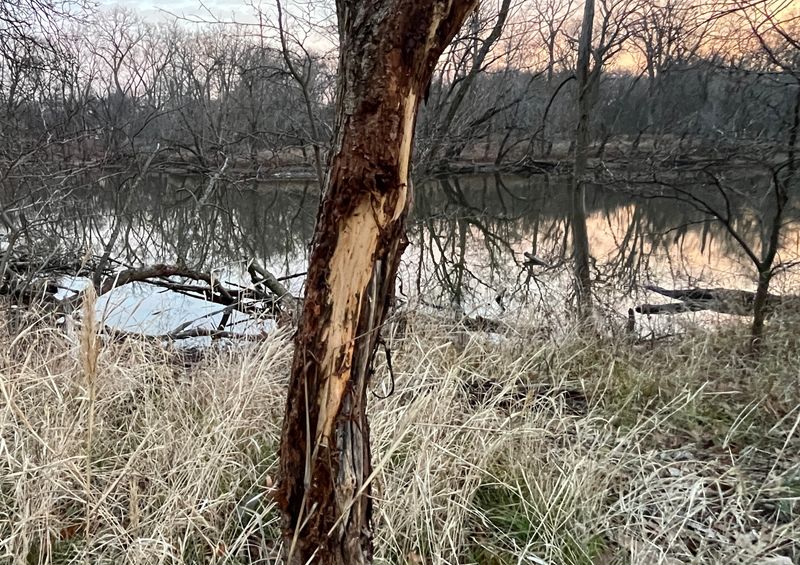
What a buck’s rub can do to a young tree
© Chicago Tribune

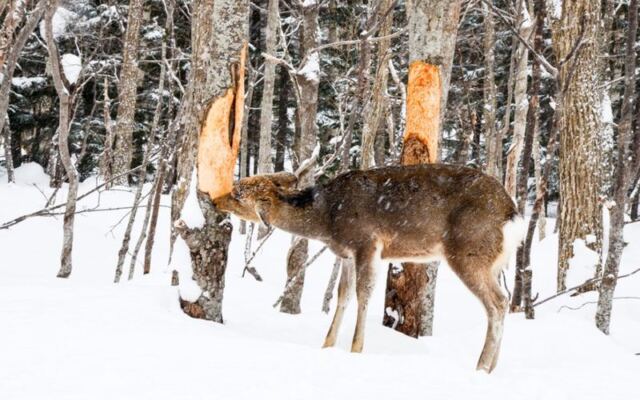
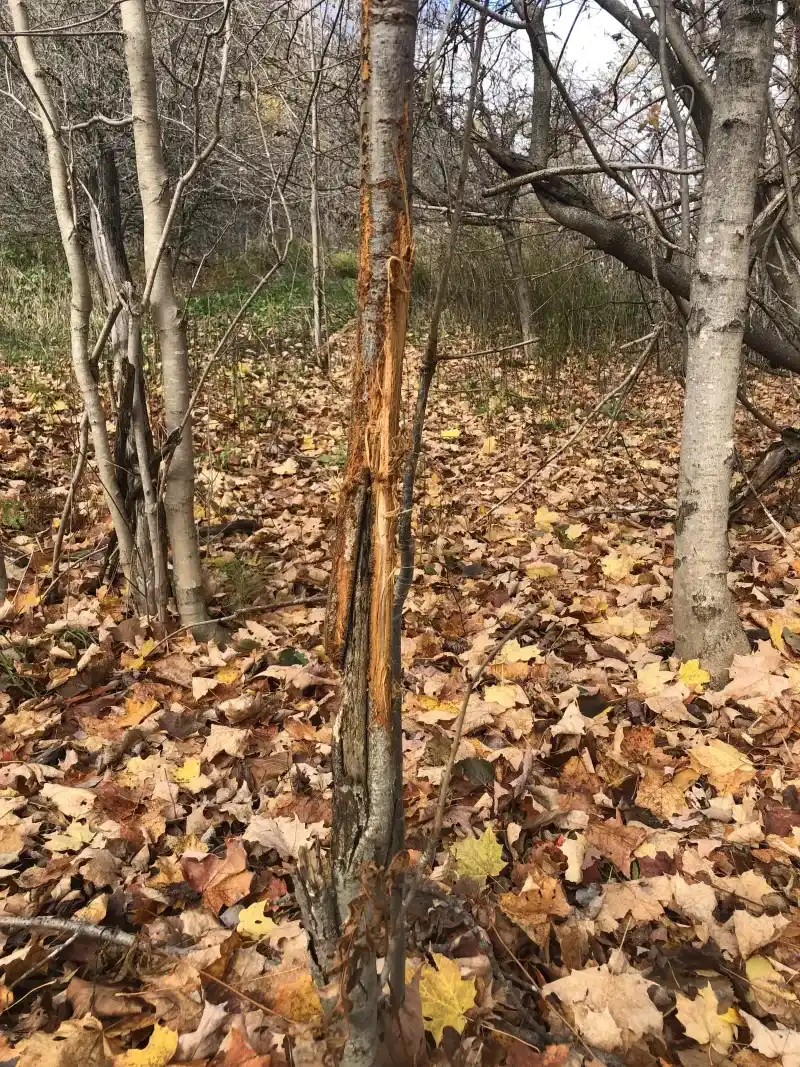
A buck rubbing a sapling is not gentle. Antlers scrape and shred the bark, and a determined buck can tear away strips and leave the wood underneath bare.

Young trees are an easy target because their trunks are slim, flexible, and covered in thin bark.

The harm goes deeper than looks. Just under the bark sit the cambium and phloem, living tissues that help the tree grow and carry sugars from the leaves to the roots.

University of Idaho Extension explains that antler rubbing can injure these tissues, and that is what makes a rub more than a cosmetic problem.

Girdling is the word for damage that runs around the trunk and cuts off that flow. It does not mean any patch of missing bark.

Iowa State Extension notes that severe injury, especially damage that circles the trunk, can kill a tree.

A wound on one side, or a shallow scrape, is a different story. Trees with partial injuries can survive, and the amount of trunk affected matters far more than the mere presence of a mark.

If you spot fresh damage, take it as a warning that a buck has visited, and that your tree may be visited again.

Rubbing can start before peak breeding activity
Rubbing can start before peak breeding activity
© to know the land

Bucks rub trees for more than one reason, and the timing is not limited to the peak of the rut. Early in the season, some bucks rub to shed the velvet from their hardened antlers.

Later, during the breeding season, rubs can work as a kind of signpost, a way of communicating with other deer. No single motive explains every rub you find.

Iowa State Extension describes one option: three sturdy stakes set around the tree, no more than 18 inches apart.

That mix is why waiting for the height of breeding activity can be a mistake. The Pennsylvania Game Commission, in its answers about deer, points to rubbing that begins around velvet loss in early fall.

Timing and intensity vary from place to place and from year to year.

Kentucky wildlife managers describe the state’s rut as fairly synchronous, with some regional differences, according to the state rut report. That is useful broad context, but it cannot tell you the day a buck will reach your maple.

Think of it as a general backdrop, not a deadline for one yard.

The practical lesson is to protect vulnerable trees before rubbing starts whenever you can. If you are reading this after you have already found damage, do not give up.

A barrier added now can still limit further injury, even though it cannot promise the tree will pull through.

Choose a barrier that can withstand antlers
Choose a barrier that can withstand antlers
© Woodland Tree Service

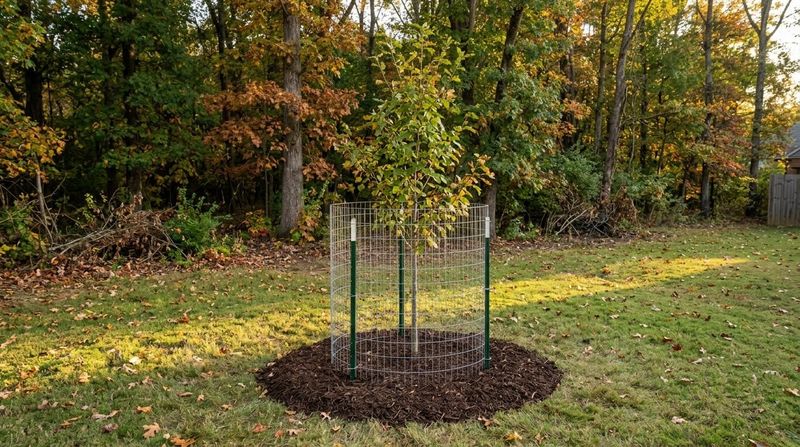
Stopping a buck from rubbing is a different job than stopping a rabbit from nibbling. Rub protection has to take a shove from a strong animal with antlers, so it needs to be sturdy and hard to push aside.

Iowa State Extension recommends sturdy barriers such as welded-wire fencing, set up so the deer cannot rub directly on the trunk.

Many trunk guards sold in garden stores are built for small animals or for browsing. A short spiral wrap can do that job well, yet a buck may simply rub above it or lean into it.

If part of the trunk is still within reach, the wrap has not solved the problem.

Look at height, stiffness, and how the guard stays in place. Check with your local extension office for advice on height and construction for your area, because the right setup depends on the sapling, the site, and how many deer pass through.

No single design or price tag works everywhere.

Sprays are another common temptation. According to University of Maryland Extension, repellents are not effective against antler rubbing.

A physical barrier is the dependable choice, and a spray is no stand-in for one.

Secure the guard and leave room for growth
Secure the guard and leave room for growth
© Wasco Nursery & Garden Center

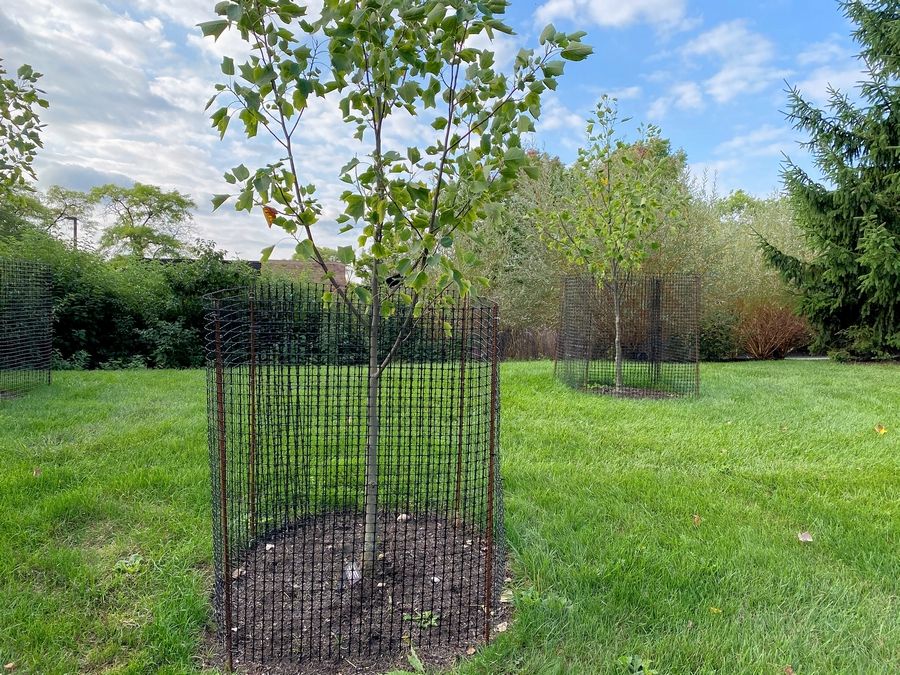
A good guard fails if a buck can knock it over. Anchor the barrier so it cannot be pushed or lifted out of place.

Iowa State Extension describes one option: three sturdy stakes set around the tree, no more than 18 inches apart. Treat that as an example, not a rule for every yard.

Space matters too. Keep the barrier from touching the trunk, so wind and movement do not scrape the bark.

The Maryland Tree Owner’s Manual advises leaving room between the trunk and the guard, avoiding abrasion, and adjusting or removing the guard as the tree grows.

Young trunks thicken faster than many people expect. A snug guard that fits in spring may pinch the same trunk a year or two later.

That is why the gap you leave on day one is part of the design, not an afterthought.

Plan to look the guard over now and then. Make sure the stakes are firm, the wire has not shifted, and nothing is rubbing the trunk.

When the rubbing season has passed and you used seasonal protection, you can remove or revise it, then put it back before the next season starts.

Check how much of the trunk the wound affects
Check how much of the trunk the wound affects
© Green Vista Tree Care

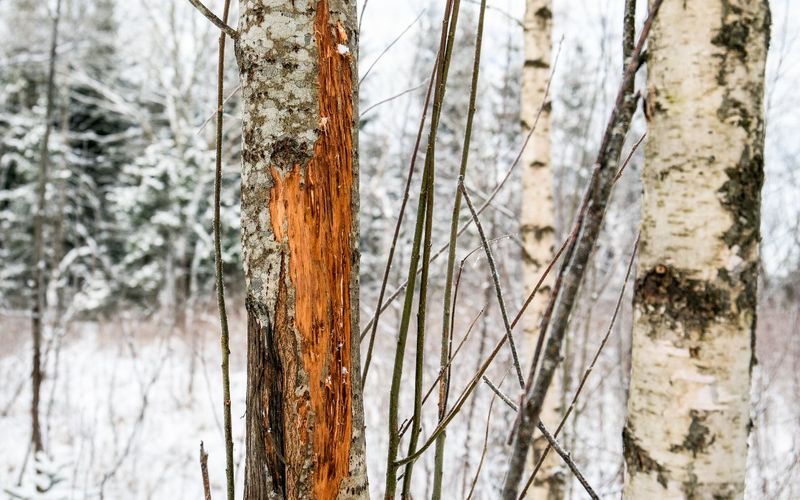
Before you decide a tree is lost, take a slow walk around the trunk. The question to answer is how much of the circumference is injured.

A strip on one side is a very different problem from a ring of missing bark that goes all the way around.

Partial wounds may survive. Complete girdling is much more serious, because the tree’s tissues are cut off around the whole trunk.

Guidance from University of Idaho Extension treats the extent of injury as the key factor. No one can give reliable odds from a photo or a description, so avoid guessing a survival rate.

It is tempting to paint or seal a raw wound. Resist that.

Iowa State Extension advises against wound dressings, pruning paints, latex paint, and other coatings as repairs for severe deer damage, since they do not help the tree recover.

If the injury is partial, protect the trunk and watch how the tree leafs out in spring. If the damage is severe, replacing the tree may be the best option, ideally with a new one that has a guard in place from the start.

A local extension office or certified arborist can look at a specific tree in person.

Keep checking protection after you install it
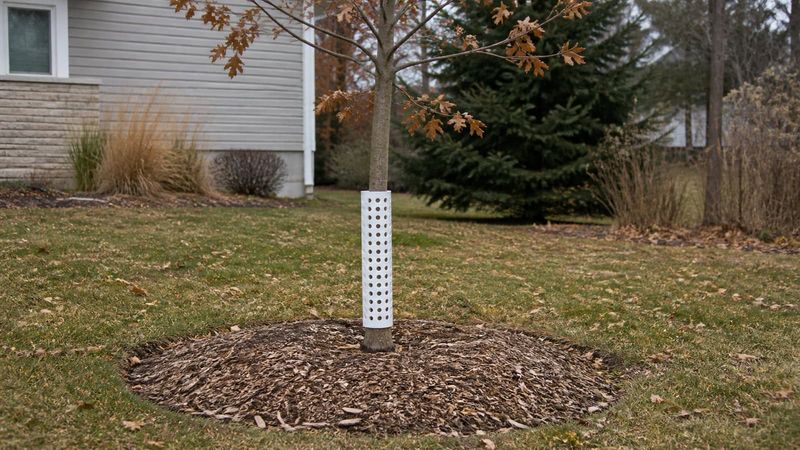
Keep checking protection after you install it
© Planet Natural

Protection works best when it goes up early and gets a regular look afterward. Put guards on your most vulnerable young trees as soon as you can, then confirm each one stays steady and clear of the bark.

Iowa State Extension backs sturdy, anchored barriers for this reason.

As the sapling grows, widen or replace the guard so it never squeezes the trunk, as the Maryland Tree Owner’s Manual advises. A good barrier can reduce further injury, but it cannot undo severe damage or promise survival.

A guard is a small fence you keep an eye on, and the tree rewards the attention.

Share this story
HC

Written by

Hattie Combs

More from Hattie Combs →

About Gardening Latest

Gardening Latest provides in-depth guides to maintaining and enhancing your garden and backyard. Learn how to make the most of the space you have and create a beautiful garden.

More about us →

Latest stories

  • Florida GardeningFlorida Is Full of Harmless Critters That Look Venomous, and These 7 Send People Running

    Florida Is Full of Harmless Critters That Look Venomous, and These 7 Send People Running

    7 min ago
  • Maryland GardeningThere’s an Invasive Tree Moving Through Maryland Neighborhoods, and Hand-Pulling Can’t Keep Pace

    There’s an Invasive Tree Moving Through Maryland Neighborhoods, and Hand-Pulling Can’t Keep Pace

    14 min ago
  • Iowa GardeningWhen Snow Falls in Iowa, These Six Birds Show Up at Your Feeder, and Here’s How to Tell Them Apart

    When Snow Falls in Iowa, These Six Birds Show Up at Your Feeder, and Here’s How to Tell Them Apart

    20 min ago
  • Virginia GardeningBefore You Stack Firewood In Your Virginia Garage, Check Corners For Black Widow Egg Sacs

    Before You Stack Firewood In Your Virginia Garage, Check Corners For Black Widow Egg Sacs

    26 min ago
  • New Jersey GardeningBefore Winter Hits, New Jersey’s Venomous Yard Critters Make Themselves Known In Late Fall

    Before Winter Hits, New Jersey’s Venomous Yard Critters Make Themselves Known In Late Fall

    33 min ago

Gardening by state

Stories for your state, and the hardiness zone most of it gardens in.

Keep exploring

Read next

All Kentucky Gardening →
Kentucky GardeningThat Hairy Spider Sprinting Across Your Kentucky Basement Floor This Winter Is a Wolf Spider, and It’s Hunting Your Crickets
Kentucky Gardening

That Hairy Spider Sprinting Across Your Kentucky Basement Floor This Winter Is a Wolf Spider, and It’s Hunting Your Crickets

3 hr ago
Kentucky GardeningOrange-Spotted Beetles at Your Kentucky Windows: Lady Beetles That Can Pinch
Kentucky Gardening

Orange-Spotted Beetles at Your Kentucky Windows: Lady Beetles That Can Pinch

18 hr ago
Kentucky GardeningThat Giant Black-and-White Bird Hammering Your Kentucky Tree Is a Pileated Woodpecker, and It’s Hunting Carpenter Ants
Kentucky Gardening

That Giant Black-and-White Bird Hammering Your Kentucky Tree Is a Pileated Woodpecker, and It’s Hunting Carpenter Ants

20 hr ago

More from Kentucky Gardening

  • Kentucky Yards Hide More Venomous Critters Than You’d Guess, And Late Fall Is When They Turn Up

    Nov 24
  • What Every Kentucky Gardener Should Do the Second a Saddleback Caterpillar Stings

    Nov 24
Back to top

Leave a response Cancel

Your email address stays private. Required fields are marked with an asterisk.

Gardening Latest

In-depth guides to maintaining and enhancing your garden and backyard: how to make the most of the space you have, and how to make it beautiful.

  • Facebook
  • X
  • Pinterest
  • YouTube

We may earn a portion of sales from products or services that are purchased through our site as part of our affiliate partnerships with retailers.

Explore

  • About GardeningLatest.com
  • Contact Us
  • Terms and Conditions
  • Privacy
  • Editorial Note:
  • FTC Disclosure

Newsletter

New garden guides and seasonal tips, straight to your inbox.

We’ll email you a link to confirm. Unsubscribe any time.

Almost there! Check your inbox and tap the link to confirm.

© 2026 Gardening Latest. All rights reserved.

Back to top