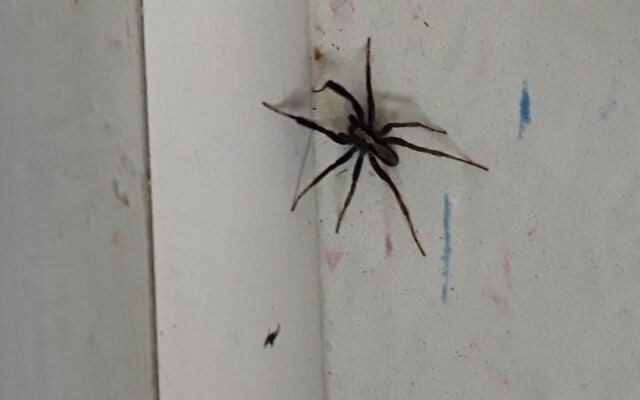
A big, hairy spider dashing across your basement floor in winter is very likely a wolf spider, and wolf spiders do eat crickets. Wolf spiders are common in Kentucky, and they chase down their food instead of waiting in a web.
They look scary, but they rarely bite people. Here is how to size up the spider, tell it apart from a brown recluse, and decide what to do next.
A wolf spider is plausible, but appearance alone cannot confirm it
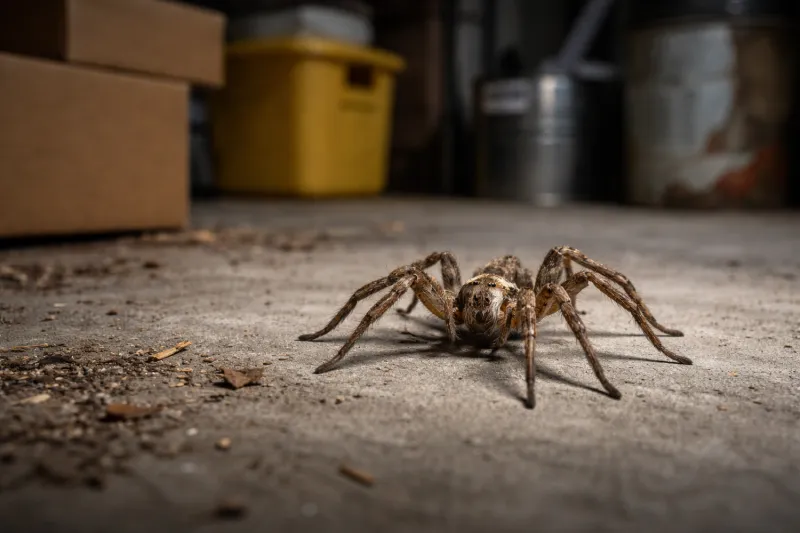
Picture the scene: you flip on the basement light, and something large, brown, and hairy bolts across the concrete. A wolf spider is a reasonable guess.
University of Kentucky Entomology notes that wolf spiders live in Kentucky, are generally large and hairy, and sometimes wander into homes. Some species reach about an inch in body length, so a startling size fits.
Still, a quick look is not enough to name the species. Being big, hairy, fast, and indoors does not prove a spider is a wolf spider, because other spiders can look similar.
Kentucky Extension also says wolf spiders found inside are often mistaken for brown recluses, which is one reason a careful look matters.
Think of what you saw as a clue rather than an answer. A wolf spider may be the most likely explanation, but a guess from across the room is still a guess.
The Kentucky Pesticide Education Program, in its health and structural pest guidance, also describes wolf spiders as common household visitors that are often confused with more worrisome spiders.
The best next steps are simple. Keep your distance, note where the spider is moving, and try to get a clear photo or a good look at its eyes and body shape.
The sections below explain which features matter and how to move the spider safely without touching it.
Wolf spiders hunt on foot, and crickets can be prey
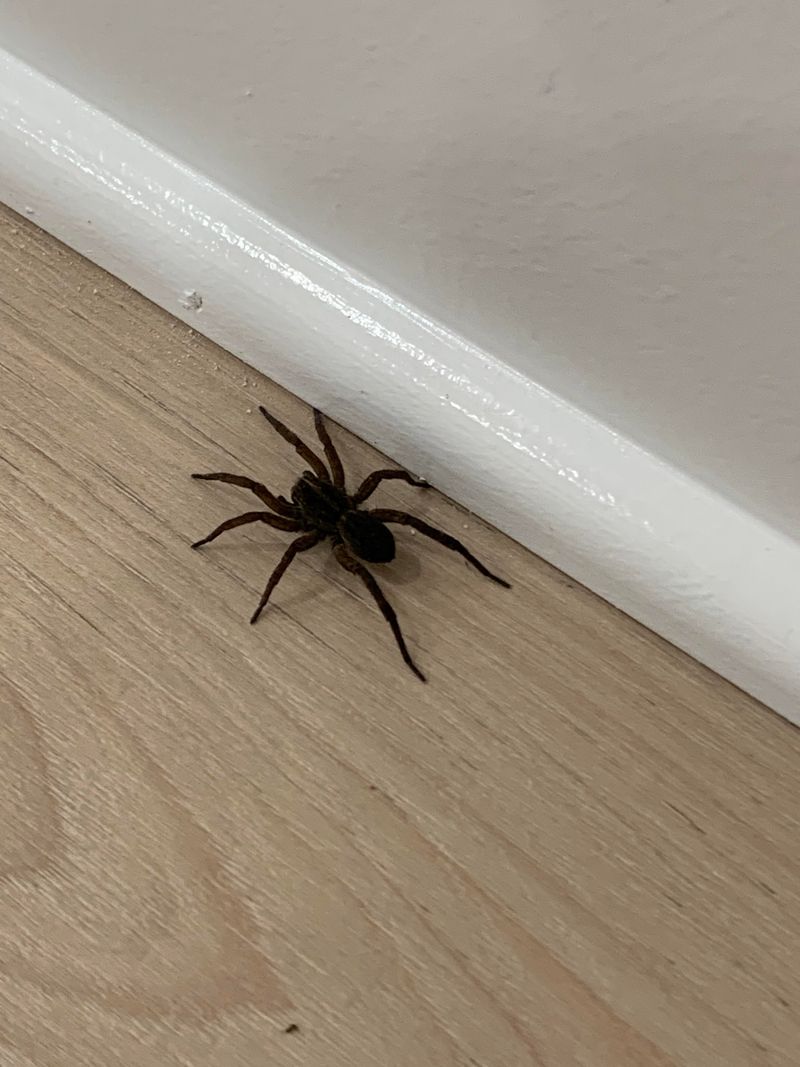
Wolf spiders do not sit in a web waiting for dinner. They roam the ground and chase down insects and other small prey, which is why you tend to see them moving fast across open floor.
Kentucky Extension describes them as active hunters that do not use webs to catch prey.
That hunting style makes crickets a believable meal. Clemson Extension lists crickets among the insects wolf spiders may eat.
Basements often have crickets wandering around, so the match is easy to imagine.
There is a catch, though. Knowing what wolf spiders eat as a group does not tell you what one spider is chasing on your floor.
It might be after crickets, or it might be after something else, or it might simply be passing through.
It also helps to keep expectations modest. A wolf spider may eat a few insects, but that is no promise it will clear out a cricket problem.
If crickets keep showing up, treat them as a separate issue to solve, and see the prevention section for ideas.
A winter sighting does not explain how the spider got indoors
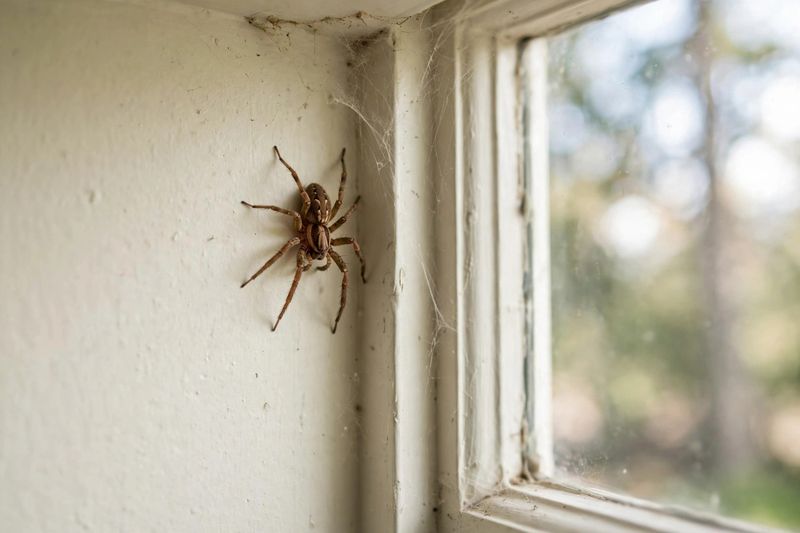
Seeing a spider in January makes people wonder how it got there. Clemson Extension says some wolf spiders may wander into homes before winter and then stay.
So a winter sighting fits that pattern.
Fitting is not the same as proving. Finding one in winter does not tell you when it came in or why.
It could have arrived months ago, or it could have been living in a quiet corner all along.
You may also hear that spiders come inside to escape the cold. That idea is too broad.
A Burke Museum article pushes back on it, though its discussion is about Seattle, so it is not a species-by-species rule for Kentucky.
The practical lesson is to focus on what you can control. Look for the gaps and dark corners where a spider could enter or hide, instead of trying to work out one spider’s travel story.
Eye patterns help distinguish wolf spiders from brown recluses
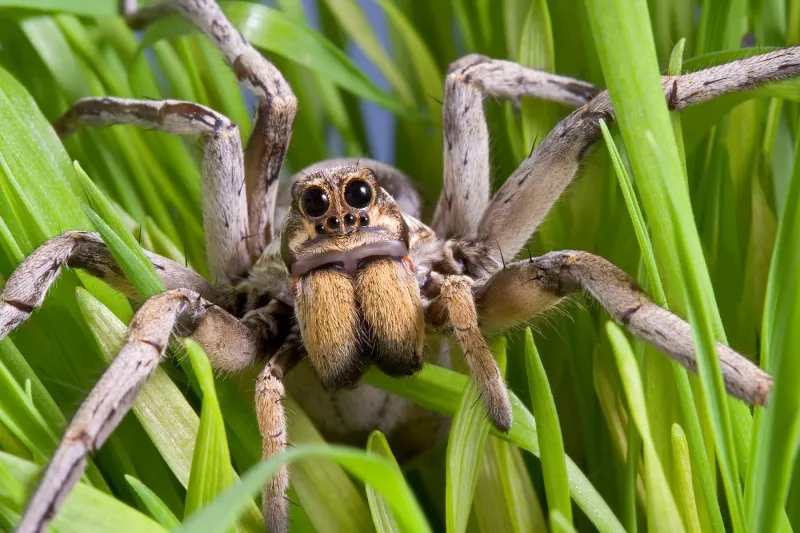
Eyes are one of the most useful clues. Wolf spiders have eight eyes, according to University of Kentucky Entomology.
A brown recluse has six eyes arranged in three pairs.
Counting eyes takes a close, clear view, and that is hard to get on a moving spider. Please do not pick one up or crowd it to get a better look.
A sharp photo taken from a safe distance, or a spider that is already dead or contained, works better.
Many people lean on the violin-shaped mark on a recluse’s back. According to Kentucky’s brown recluse fact sheet, that marking alone is not a reliable way to identify one.
Use the eye pattern and other features together.
Location will not settle it either. Brown recluses do occur in Kentucky and can turn up indoors, including in basements.
They are reported more often in the western part of the state, but that is not a reason to rule one out elsewhere.
If you cannot tell what you have, ask for help. The University of Kentucky recommends having a specimen confirmed by an entomologist or a knowledgeable pest-control professional.
A bite is uncommon, but avoid bare-handed handling
Wolf spiders rarely bite people. When one does, it can hurt.
Kentucky guidance does not consider a wolf spider bite medically significant, but that is not a promise that nothing will go wrong.
The simple rule is to keep your hands off. Kentucky Extension advises against picking wolf spiders up, since a frightened spider may bite.
You never need to touch one to move it.
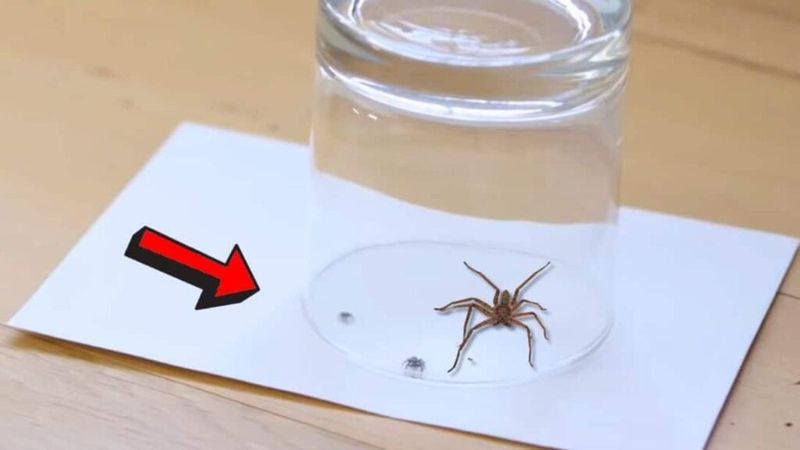
The University of California IPM program suggests catching spiders in a container. Place a jar over the spider, then slide a stiff piece of paper underneath before lifting.
You can also gently herd it into a container.
Carry it outside and release it away from the house. Since the species may be uncertain, this approach is safe whether it turns out to be a wolf spider or something else.
You can also leave it alone if it is not bothering anyone. Many people prefer to remove it simply for peace of mind, and that is a perfectly good reason.
Seal gaps, limit hiding places, and manage insect prey
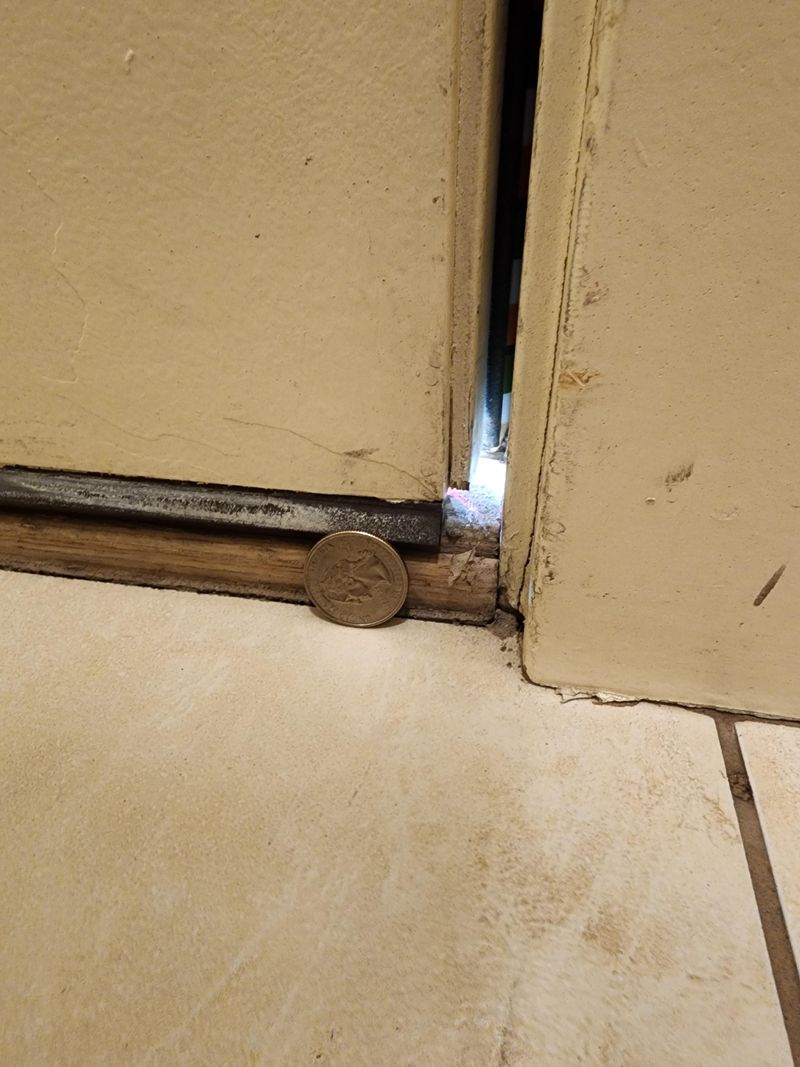
Prevention starts at the edges of your home. Seal cracks and gaps in the foundation and around windows and pipes, and keep screens and door sweeps tight.
The Kentucky Pesticide Education Program lists these steps for keeping spiders out.
Next, think about hiding places. Piles of boxes, stored items, and debris indoors and outdoors give spiders somewhere to tuck away.
Clutter does not draw spiders in, but it does give them cover, so tidying up makes them easier to spot.
Insects matter too, because they are potential prey. Utah State University Extension points to dealing with the insects that spiders feed on as part of control.
If crickets are getting in, fix the entry points and damp areas that help them.
No single step will guarantee a spider-free basement. Combine a few of these habits, and expect to still see an occasional visitor now and then.
Know which bite symptoms call for medical care

If you think a spider bit you, you do not have to identify the spider to know what to do. The American Heart Association and American Red Cross first aid guidelines give clear signs for when to get care.
Seek medical care if pain becomes severe or spreads beyond the bite site. Get checked as well if an open wound develops, or if symptoms begin to affect your body more broadly.
Call emergency services for trouble breathing, muscle rigidity, dizziness, or confusion. Do not wait to see whether these pass.
Keep these two questions separate. What the spider was and how the bite is affecting you are different problems, and symptoms are what guide your next step.
If you can safely capture the spider or take a photo, that may help a clinician, but it should never delay care.
Use the sighting as a clue, not a diagnosis
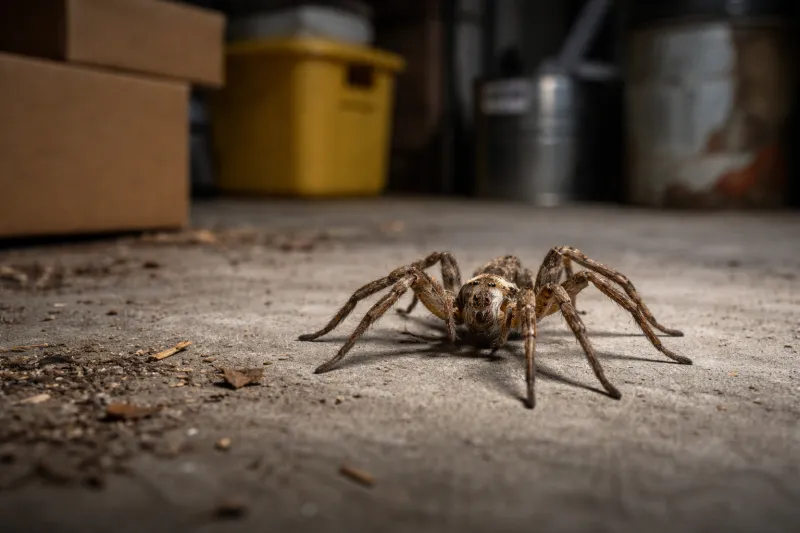
A wolf spider is a fair guess for a big, hairy sprinter in a Kentucky basement, and wolf spiders may eat crickets. But a sighting alone confirms neither the species nor its target.
Keep your hands off, and if a brown recluse is still possible, get expert confirmation, as the Kentucky wolf spider guide suggests.
Seal gaps, trim hiding places, and know the bite warning signs. A calm response is the best tool you have.
Share this story