Across Ohio, invasive trees keep coming back in yards, along roads, and at the edges of neighborhoods, and pulling or cutting does not always stop them. Two trees explain most of the trouble: tree-of-heaven, which sprouts from roots, and Callery pear, which spreads by seed.
They need different handling, so the first step is knowing which one you have. A few simple clues can save you hours of work and keep a good tree from getting cut by mistake.
Two invasive trees spread in different ways

Ohio has more than one invasive tree, and they do not behave alike. Tree-of-heaven, a tree that grows fast and sends up new shoots from its roots, is the one most often tied to stories of growth that returns after cutting.
Ohio ODNR lists tree-of-heaven as highly invasive and says it should not be planted.
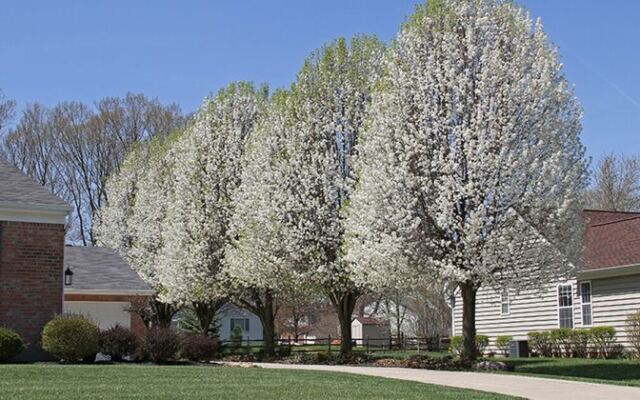
Callery pear is a different tree with a different habit. It was widely planted as an ornamental, and its seedlings now turn up away from yards.
A 2026 Ohio State Extension factsheet says Callery pear is common across Ohio and invades open areas such as roadsides and rights-of-way.
That difference matters for control. Tree-of-heaven is mainly a problem of roots and sprouts.
Callery pear is mainly a problem of seed traveling from planted trees into open ground.
It also helps to be clear about what the sources show. Ohio agencies and Extension document that both trees are invasive and explain how they spread.
They do not give a measured statewide rate of neighborhood expansion, so nobody can honestly say either tree is spreading faster than residents can remove it.
What you can say is that the way each tree spreads shapes what works. A method that suits one can fail with the other.
Before you grab a shovel or a saw, find out which tree is in front of you and how it is growing.
A small tree-of-heaven shoot may be tied to a larger root system
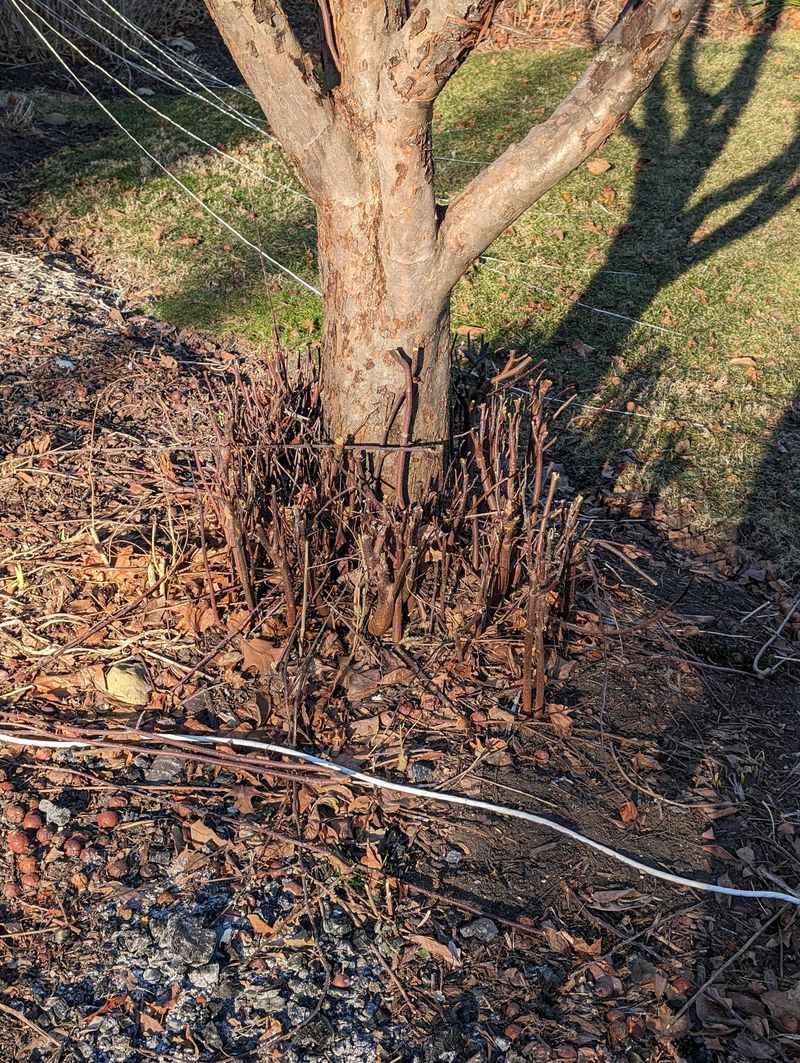
A skinny shoot a few feet from a mature tree-of-heaven looks like a baby tree. Often it is not.
Established plants spread by root suckers, which are shoots that rise from roots running underground.
A sucker shares the root system of the larger tree. It draws on stored energy that a true seedling does not have, so it can grow fast.
Penn State Extension notes that seedlings can be confused with root suckers, and that suckers are nearly impossible to pull by hand.
Picture a garden weed with one long taproot versus a shoot tied into a web of roots. Tugging on the sucker mostly snaps the stem near the soil and leaves the network in place.
The plant can then send up new shoots from what remains.
Location gives a useful clue. Several shoots in a line or a ring around a larger tree-of-heaven point to suckers.
A single small plant far from any mature tree is more likely to be a seedling.
Not every small shoot is an independent seedling, so avoid assuming so. If you can gently dig beside the stem and find a thick root running sideways, you are dealing with a sucker.
Treat it as part of a bigger plant, not as a quick pulling job.
Check the leaves before you remove a tree
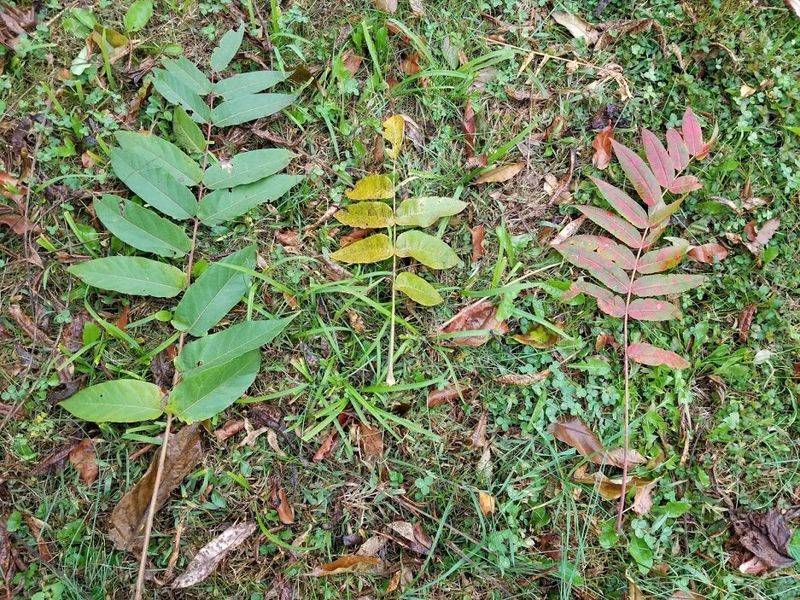
Leaves are your best tool for avoiding a costly mistake. Tree-of-heaven has long compound leaves made of many leaflets, and so do black walnut and staghorn sumac.
Cutting down a walnut or sumac thinking it is an invader would be a real loss.
Look at the leaflet edges. Penn State Extension says tree-of-heaven leaflets have smooth edges, while the look-alikes have serrated, toothed leaflets.
Run a finger along the edge and the difference is easy to feel.
Smell is a second clue. Crushed leaves and broken twigs of tree-of-heaven give off a distinctive odor that many people find unpleasant.
Try it on a leaf you pick, then wash your hands afterward.
Use both clues together instead of relying on one. A leaf that is smooth-edged and smelly points to tree-of-heaven.
A leaf with clear teeth along the leaflets points to something else.
If you still feel unsure, hold off. Take clear photos of the leaves, the bark, and the whole plant, and ask your county Extension office or a certified arborist to confirm.
Waiting a week costs little, while removing a tree you wanted costs a lot.
Pull young seedlings; do not just cut established trees
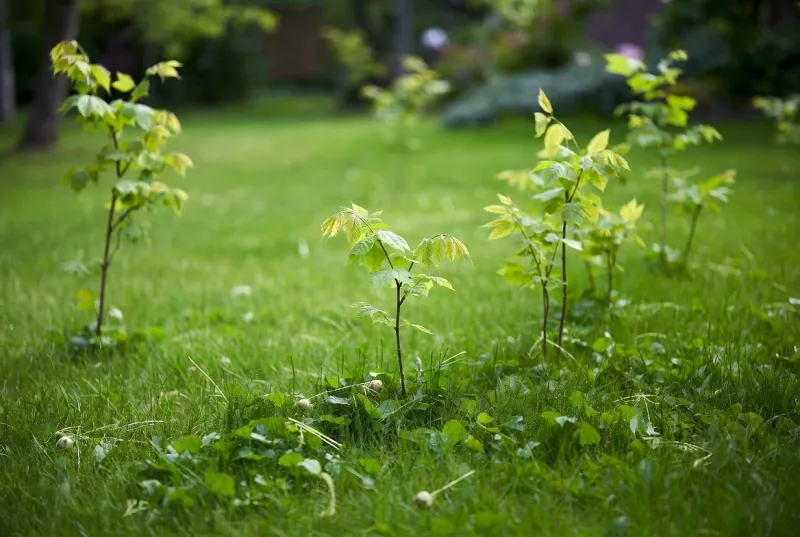
Size and age decide whether pulling makes sense. A very young tree-of-heaven seedling may be pulled if its entire root system comes out.
Damp soil helps, and so does steady pulling at the base instead of yanking the top.
Check the root after you pull. If the whole root came out, the job is done, though it is smart to look at the spot again later.
If the root snapped off, a sprout may follow.
Established plants are another story. Penn State Extension explains that repeated cutting or mowing alone is ineffective on established tree-of-heaven and can produce stump sprouts and root suckers.
Think of what a saw does here. The top is gone, but the roots are alive and loaded with stored energy, so the plant answers with a flush of new growth.
Neither cutting nor mowing should be treated as stand-alone control.
That is why a quick look at how the plant is growing comes first. A lone small plant with a thin root is a pulling candidate.
A cluster of shoots near a mature tree, or a stump already sending up sprouts, needs a plan that deals with the roots.
Callery pear spreads by seed, and removal needs follow-up

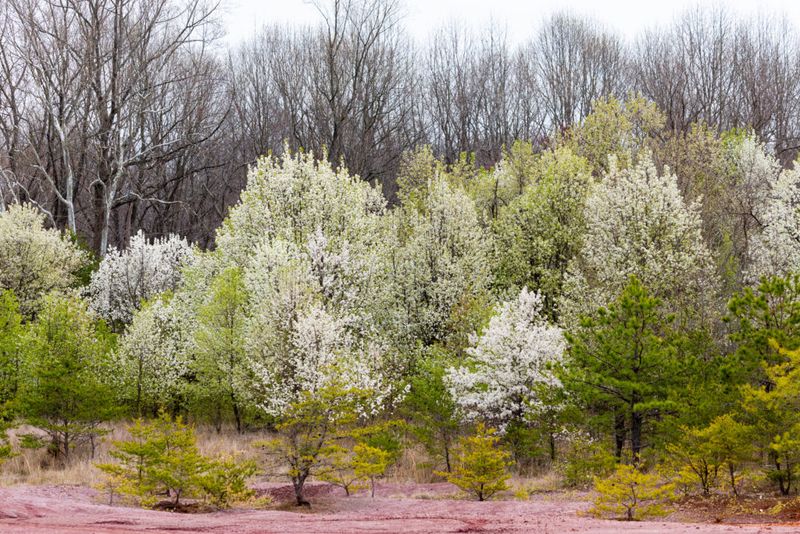
Callery pear came into neighborhoods as a tidy, showy street and yard tree. Its offspring now spread into open areas, especially roadsides and rights-of-way.
Birds and wind carry seed, so new trees can pop up some distance from where the parent stands.
Bradford pear is one cultivar of Callery pear, not a separate species. Ohio State Extension explains that the original Bradford cultivar could not produce viable seed by itself.
Later planting of other cultivars allowed cross-pollination, and that led to viable seed.
So avoid two myths. Not every Bradford tree makes seed on its own, and it is also wrong to say all Bradford pears are sterile.
For control, the same Extension guidance says small seedlings, usually under two feet, can be hand-pulled when the soil is moist enough to bring out the whole root system. Cutting seedlings or saplings without treating the remaining stump can lead to regrowth, and larger stems can sprout prolifically.
Plan on checking back. Extension advises monitoring treated sites for at least two years, because treated stems may resprout and new trees can grow from seed already in the soil or arrive by wind or birds.
Plan for roots, regrowth, and safe treatment
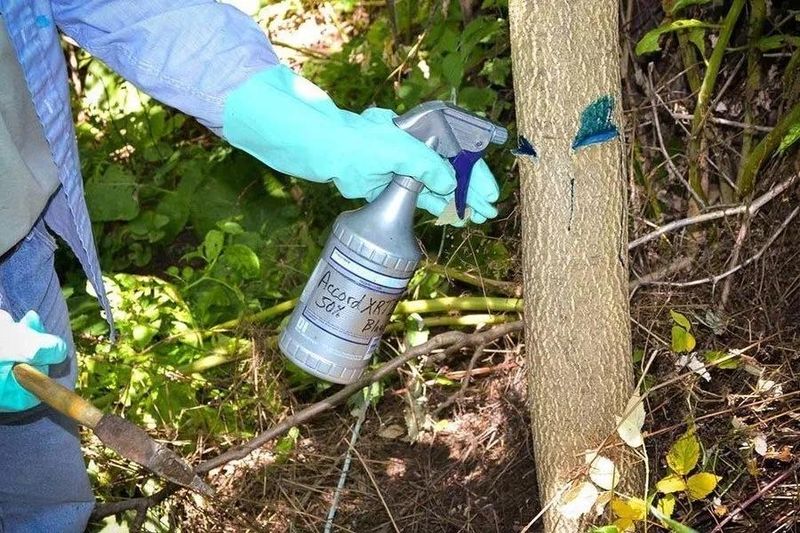
With established tree-of-heaven, the goal is to reach the roots, then keep watching for regrowth. Penn State recommends targeting the roots with a systemic herbicide treatment that is timed appropriately.
Its specific timings and methods are Pennsylvania guidance, not a ready-made Ohio prescription.
This article will not give a product name, strength, or recipe, and for good reason. EPA says pesticide labels are legally enforceable and govern where, how, how much, and how often a product may be used.
The right choice depends on your site, so read the current label and ask your local Extension office.
Site conditions can change the answer. Nearby desirable plants, slopes, and water all matter.
Check them before any treatment.
Callery pear brings its own cautions. The OSU Extension control guidance is aimed at natural or woodland settings.
It warns that treatments near water need products labeled for aquatic use, and that spraying tall foliage can cause overspray and safety problems for the applicator.
For large trees or hazardous limbs near a house, professional judgment is wise. Extension points homeowners to ISA-certified arborists for yard-tree removal, and ODNR also has Callery pear information.
Spotted lanternfly is a separate matter: it feeds on many plants, so removing a tree-of-heaven will not remove the insect.
What Ohio’s invasive-plant rules cover
Ohio has a list of invasive plants, and both Callery pear and tree-of-heaven are on it. The rules attached to the list focus on the plant trade.
The Ohio Department of Agriculture says it is prohibited to sell, propagate, distribute, import, or intentionally disseminate listed plants.
In plain terms, nurseries and sellers cannot move these plants through the market. The same goes for anyone who deliberately spreads them.
That is the ground the rules cover.
What the state page does not say is just as useful to know. It does not state that homeowners must remove trees already growing on their property.
A Callery pear planted years ago or a tree-of-heaven that showed up on its own is not made illegal to own by these listed restrictions.
This section sticks to what the source says and is not legal advice. If you have a specific situation, such as a property sale or a shared boundary, check with the Department of Agriculture or a local authority.
The rules also give homeowners a practical clue. If you are shopping for a new tree, skip listed species and pick a non-invasive native or other suitable tree instead.
That keeps the problem from growing.
Identify the tree and choose the right next step
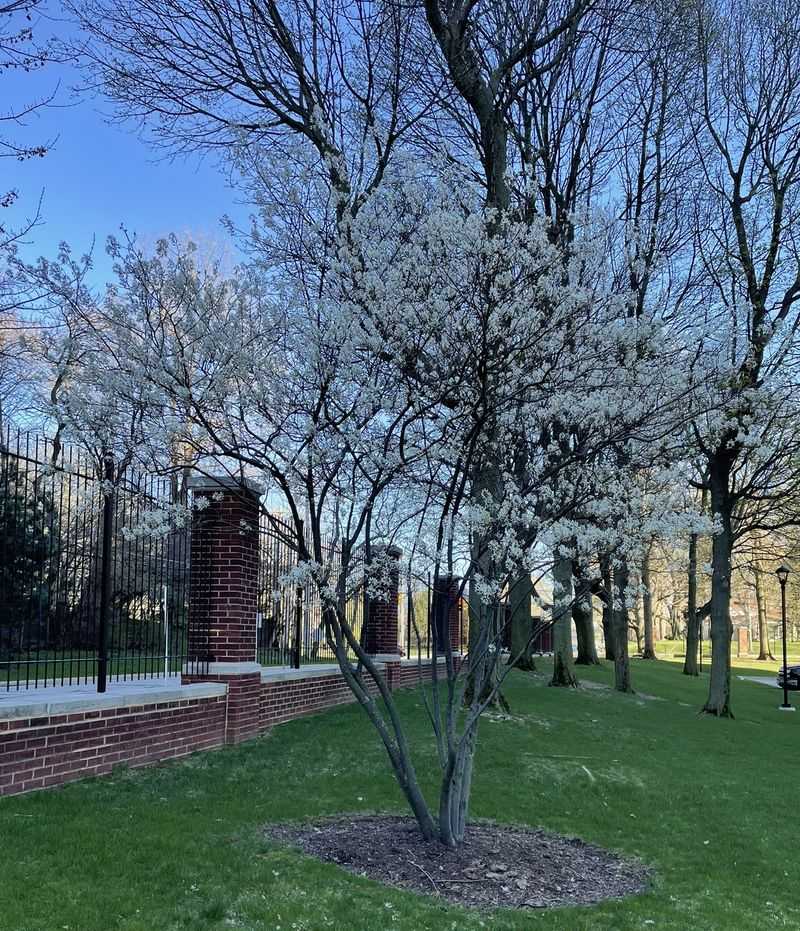
Start with identification, using the smooth leaflet edges and odor clues from Penn State Extension. For a small tree-of-heaven, ask whether it is a lone seedling or a sucker tied to a larger tree, and do not assume cutting ends the job.
For Callery pear, plan to monitor after control, as OSU Extension advises. Match any treatment to your site and the current product label.
The tree tells you what it needs, if you look closely first.
Share this story